Summary

... Read More

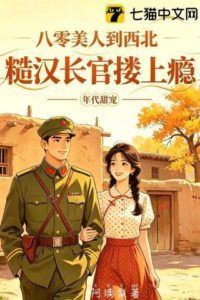
Xia Qingning, a fashion design student from the modern era, transmigrates into the body of a tragic character in a period novel written by her college classmate, Mo Chunxiao. She awakens in 1970s China, finding herself on the riverbank after escaping an attempted assault by a predatory workshop director. Rescued by a handsome soldier, she realizes she has inhabited the role of the novel’s unfortunate ex-wife, destined to suffer abuse, bear a disabled child, and ultimately commit suicide. The original owner was manipulated by Wang Mingfang, the scheming stepmother who orchestrated the protagonist’s ruin to secure advantages for her own daughter, He Shanshan.

The core conflict centers on Xia Qingning’s struggle to survive and reclaim her agency within a hostile family structure. Lu Jingzhe, the male lead and her legal husband, returns to the family home after four years in the army. He harbors deep resentment toward her, believing she seduced him while he was drunk, a lie planted by Wang Mingfang to force a marriage and disgrace the family. Upon his return, Lu Jingzhe is cold and distant, refusing to acknowledge Xia Qingning’s presence or accept Wang Mingfang’s hypocritical hospitality. He evicts his stepmother from the main house, exposing the tension between his moral rigidity and the family’s entrenched deceit.

Xia Qingning, unlike the timid original owner, refuses to be a victim. She confronts her bullies, including the gossipy neighbor Zhao Cuilan and the jealous He Shanshan, with sharp wit and unyielding confidence. When Zhao Cuilan publicly humiliates her, Lu Jingzhe intervenes, claiming the clothes she wears are his and threatening legal action against the slanderer. This act marks a turning point, as Lu Jingzhe begins to notice a profound change in his wife. Her transformation from a sullen, submissive girl into a poised and resilient woman challenges his preconceived notions of her character.

As the story progresses, Xia Qingning uncovers the financial abuse she suffered under Wang Mingfang’s management, discovering that her salary and cloth coupons were siphoned away over two years. Armed with this knowledge and a notebook detailing the embezzlement, she plans to expose the stepmother’s greed. Meanwhile, she navigates her complex relationship with Lu Jingzhe. He observes her competence and beauty, feeling an inexplicable attraction despite his lingering anger. Their interactions shift from cold avoidance to tentative cooperation, as she sews his clothes and he offers protection from further harassment.

The narrative direction moves toward Xia Qingning’s systematic dismantling of Wang Mingfang’s schemes. She anticipates the stepmother’s plots, such as the manipulation involving the workshop director Liao, and prepares to counter them with evidence. Her goal is not only to clear her name regarding the initial scandal but also to secure her independence and future. With the college entrance exam on the horizon, she aims to use her modern knowledge and skills to build a new life, leveraging her marriage to Lu Jingzhe as a foundation rather than a cage. The story sets the stage for a confrontation where truth will replace deception, and Xia Qingning will rewrite her tragic fate.

Latest Release
DateGroupRelease
2026-08-11shanghai fantasy c46
2026-08-11shanghai fantasy c45
2026-08-11shanghai fantasy c44
2026-08-11shanghai fantasy c43
2026-08-11shanghai fantasy c42
2026-08-11shanghai fantasy c41
2026-08-11shanghai fantasy c40
2026-08-11shanghai fantasy c39
2026-08-11shanghai fantasy c38
2026-08-11shanghai fantasy c37
2026-08-11shanghai fantasy c36
2026-08-11shanghai fantasy c35

Community Reviews

Rating(3.6 / 5.0, 43votes)
5 stars
10(23%)
4 stars
14(33%)
3 stars
11(26%)
2 stars
8(19%)
1 stars
0(0%)

Popular reviews

... Read More
There's something really interesting happening with the motif of clothing and identity in this passage. Xia Qingning is wearing men's clothes—Lu Jingzhe's clothes, specifically. On the surface, it's just practical. She fell in a river, she needed dry clothes, she borrowed some. But the way everyone reacts to it reveals so much about how this world judges women. Zhao Cuilan doesn't care about the practical explanation. She immediately jumps to "lover" and then "shameless." The mere fact of a woman wearing men's clothes is treated as evidence of moral corruption. The clothes become a symbol of how women's bodies and choices are constantly under scrutiny. Then Lu Jingzhe proves the clothes are his by showing the missing button and matching it to the spare in the pocket. This small detail—this button—becomes the piece of evidence that saves her reputation. It's almost absurd how something so tiny carries so much weight. But that's the point. In this world, a woman's honor can be destroyed by gossip and restored by a single button. The men's clothes also symbolize Xia Qingning's transformation. The original owner was described as always walking with her head down, lifeless, never daring to look anyone in the eye. Now she's wearing her husband's clothes—literally taking on his armor—and she's standing tall, looking people in the eye, demanding evidence. The clothes aren't just dry fabric. They're a costume of power. And Wang Mingfang's entire character is built around performance and disguise. She wears the mask of the selfless ex-wife, the loving grandmother, the peacemaker. But Xia Qingning sees through it. The text calls her "a snake wearing a mask of hypocrisy." That mask metaphor is everywhere in this story—everyone is performing, everyone is hiding something, and the question is who can see through the performance before it's too late.
... Read More
I need to talk about how this author builds atmosphere because it's genuinely impressive. The opening scene with Xia Qingning emerging from the river, wet and disoriented, immediately grounds you in a physical space. You can feel the cold water, the weight of wet clothes, the confusion. Then she stumbles into this courtyard and suddenly you're surrounded by people—Mrs. Wu changing coal briquettes in the stove, Zhao Cuilan with her mocking sneer, Li Qiulian watching from the sidelines. The compound setting feels lived-in. You can picture the narrow alley, the shared spaces, the kind of place where everyone knows everyone's business because there's nowhere to hide. The visual of Lu Jingzhe appearing behind the crowd is cinematic. Everyone's attention is on Xia Qingning and Zhao Cuilan, and no one notices him standing there in his army green uniform until he speaks. The text describes him as tall, sharp-featured, broad-shouldered—military bearing, cold and stern. When he walks forward and pulls Xia Qingning's hand to show the missing button, that's a moment that plays out like a scene in a film. The evidence is right there for everyone to see. What strikes me most is how the world feels constrained. This is a close-knit community where reputation is everything. Zhao Cuilan's gossip isn't just mean words—it's a weapon that could destroy someone's life. The military family connection gives Lu Jingzhe authority that scares people. Wang Mingfang's careful social positioning shows how every interaction is a performance. You're not just reading about characters—you're reading about people navigating a world where one wrong move could cost you everything. The setting also tells you about the era without being heavy-handed. Coal briquettes, state-owned factories, military uniforms, the Revolutionary Committee—these details place the story in a specific time and social context, and they matter to the plot.
... Read More
Okay, let me just say this: the scene where Xia Qingning SLAPS Liao Qiang is one of the most satisfying moments I have ever read. I literally gasped out loud. This woman who was described as timid, who used to endure everything without a word, who would barely speak to him without daring to raise her voice—she looked him dead in the eye and then SMACK. The author wrote it so simply: "There was a 'slap' sound." Just that. No fanfare, no elaborate description. And yet it hit like a freight train because we had spent so many chapters watching her get pushed around. But what really got me is the Wu Xiaodong dynamic. This kid is genuinely protective of her, and not in a creepy way—he's just a good kid who sees someone being bullied and wants to help. When he warns her about Liao Qiang, saying "don't get too close to that guy surnamed Liao. He's not a good person," it's so sweet and so naive. He has no idea that the "brave warrior" he's cheering about is sitting right behind him on the bike. That dramatic irony made me laugh out loud. And Liao Qiang himself—ugh, he is absolutely repulsive. The way he sniffs her neck and says he'd "willing to be shot for you" is the kind of predatory nonsense that makes your skin crawl. But what's interesting is how Xia Qingning reads him perfectly. She knows he's a bully, and bullies only respond to force. So she doesn't just slap him—she follows up with the nuclear option: "my husband is back... He's a battalion commander now." The power dynamic shift in that office is incredible. One moment he's closing the door and leaning in, and the next he's sweating and frozen. She went in there as a victim and came out as someone he will never dare touch again.
... Read More
Okay so let me just say — Pu Yue is one of the most interesting characters to drop into this story. That mole on her lip, the way the text specifically calls it out as "breaking the harmony of her face"? That's not accidental. The author is already telling us something about her before she even opens her mouth. And then the way she shifts from calling Xia Qingning "her" to being forced into calling her "sister-in-law" — that tiny detail is EVERYTHING. You can literally feel the disappointment in that moment. She wanted to test Lu Jingzhe, wanted to see if he'd correct her, and he just... didn't. He accepted it so naturally that Pu Yue got hit with her own trap. I love how Xia Qingning handled it too. She didn't get flustered or try to be humble. She just smiled and said "Okay, I'll eat more rice and not save money" when Pu Yue tried to throw that passive-aggressive dig about being too thin. Classic. That line made me literally snort out loud. And Lu Jingzhe's response — "Yeah, you don't have to save money anymore" — is so deadpan and sincere at the same time. He's still not being romantic about it, but the fact that he's already starting to care about her wellbeing? That's growth, people. Also, the malt extract scene at the end with He Shanshan literally drooling over it? I need to know what happens with her next. That girl is NOT innocent.
... Read More
Okay so this opening sequence is genuinely satisfying to watch unfold. You've got this woman who clearly isn't the same person as before—remember, the original owner was timid, submissive, never dared to look anyone in the eye—and suddenly she's standing her ground against Zhao Cuilan with actual backbone. The moment she looks sideways and asks "What's wrong with me?" I literally sat up straight. That's when I knew the game had changed. The plot structure here is really tight. It starts with a rescue scene (river, wet clothes, mysterious man), pivots to a public confrontation in the courtyard, and then ramps up the tension with each new character entering the frame. Lu Jingzhe appears at the perfect moment—like, right when Zhao Cuilan is pushing too far and Xia Qingning is about to lose her patience. The author knows exactly when to drop the hammer. But the real plot twist that got me was Wang Mingfang's reveal. On the surface she's this warm, welcoming ex-wife who's doing everything for the family. Then the narrative peels back one layer and you realize she's the one who orchestrated the original owner's downfall—tricked her into sleeping with the workshop director, swapped her job for her own daughter's, and eventually drove her to jump into a lake. That's not just a villain, that's a mastermind. And the ending? Xia Qingning dropping the bombshell that Wang Mingfang gave her son the idea to put her in Jingzhe's bed? Chef's kiss. The chapter cuts right there and I was absolutely screaming. The stakes just went from "neighborly gossip" to "life-or-death family war" in one sentence.
... Read More
I have to talk about the dialogue in this passage because it is genuinely excellent. Each character has a distinct voice, and I could tell who was speaking even without the name tags. Xia Qingning's dialogue is sharp, controlled, and increasingly bold. Her line to Liao Qiang—"You know that indecent assault can get you shot"—is delivered with this cold precision that shows how different she is from the original body. And then later: "I already told you to behave yourself. You didn't listen, so I have to teach you manually." That is SO good. It's dry, it's witty, and it's terrifying all at once. Wu Xiaodong's voice is completely different—young, energetic, a bit naive. "Qingning Jie, do you know? That guy surnamed Liao was beaten up today. His face is swollen." He's practically bouncing with excitement, and his dialogue crackles with that energy. The way he says "Haha... I wonder who the brave warrior was. It's so satisfying!" shows a kid who has no idea he's talking about the woman sitting behind him. He Shanshan's dialogue is pure venom. "What are you doing here?" "Don't buy it, don't buy it. You're not allowed to buy anything." She sounds like someone who has spent her whole life telling other people what they can't do, and it's coming out in these sharp, entitled bursts. And her desperate excuse—"This is my... sister-in-law. She can't use her salary to buy these things"—is so hilariously bad that you can't help but laugh. The shop manager's voice is authoritative and no-nonsense: "Even a temporary worker should have some professional ethics. If you don't want to do it, you can leave tomorrow." This is someone who has zero patience for nonsense. And the narrative voice itself—sometimes it's dry and observant, sometimes it dips into Xia Qingning's internal thoughts. The author's style feels natural, not overwrought. It's the kind of writing that gets out of the way and lets the characters shine.
See all reviews

Characters

See all characters

Custom lists

See all custom Lists