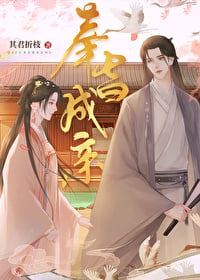
Married By Decree
+Add to Custom List
Genres:
Novel Info

Summary

... Read More

Xu Duanyi, known as Princess Jia Shun, is the sole foreign princess residing in the Great Xia Dynasty palace. Orphaned at six and raised by her aunt, Empress Dowager Zhao Yu, she holds a unique status as the Empress Dowager's most cherished companion. Since childhood, Xu Duanyi has harbored deep affection for Xie Qingya, the current Prince of Nanan. However, her life was complicated by political arrangements: she was betrothed to the Crown Prince, Wen Zhao, who died young, leaving her widowed and bound by tradition. Xie Qingya, once a radiant and heroic young man, has become the subject of scandal since his family fell from grace following a military ambush that killed his father and brothers. He now masquerades as a drunken wastrel, frequenting brothels and associating with disreputable companions, a transformation that has alienated his younger siblings and damaged his reputation.

The central conflict erupts when Xiao Baozhu, the daughter of the Duke of the Protectorate, demands the annulment of her engagement to Xie Qingya. Baozhu has fallen in love with a new imperial scholar and has secretly lost her virginity to him, creating a scandal that threatens the royal family's dignity. The Empress Dowager faces immense pressure from conservative officials who demand the engagement be honored to preserve political alliances. Simultaneously, Cao Da, the powerful Chief Eunuch, seeks to assert his influence over the Empress Dowager by proposing a solution that would bind Princess Jia Shun to the disgraced Prince of Nanan. Cao Da believes that by forcing this marriage, he can remind the Empress Dowager that his faction controls the palace and can dictate the fate of even the highest nobility.

Xu Duanyi, aware of the political maneuvering and her aunt's distress, makes a decisive choice. She approaches the Empress Dowager and voluntarily offers to marry Xie Qingya. Xu Duanyi reasons that since she has no desire to marry anyone else and wishes to protect her aunt from further anguish, she should be the one to enter the Nanan household. She also suspects that the Empress Dowager and Cao Da intend to plant a spy within Xie Qingya's home, and she prefers that role be filled by herself rather than a stranger who might uncover secrets. Her decision shocks everyone, including her maid Bixi, who fears for her mistress's safety given Xie Qingya's notorious reputation.

The imperial edict is issued, announcing the marriage between Princess Jia Shun and the Prince of Nanan. The news causes a uproar in the capital, as nobles and scholars who admired Xu Duanyi feel betrayed by the match. Meanwhile, Xie Qingya and his confidant, Mei Xuezhen, are thrown into disarray. They had been plotting to dismantle the Xiao family's influence and had hoped to use the Baozhu scandal to their advantage. The unexpected marriage of Xu Duanyi, a figure of immense moral authority and political significance, complicates their schemes. Xie Qingya remains outwardly calm but is internally conflicted, haunted by memories of his past and his complex feelings toward Xu Duanyi.

As Xu Duanyi prepares to leave the palace, she encounters Xie Qingya in the snowy streets. He is surrounded by angry mobs and a courtesan, maintaining his facade of decadence. When Xu Duanyi intervenes to stop the violence, Xie Qingya avoids her gaze, pretending not to recognize her. This encounter highlights the emotional distance between them and the masks they wear. Xu Duanyi departs for the Nanan residence, leaving behind the safety of the palace to enter a household filled with suspicion, political intrigue, and her own unspoken love. The story sets the stage for a delicate balance of power, where Xu Duanyi must navigate her new role while protecting her secrets and her heart.

Latest Release
DateGroupRelease
2026-08-11shanghai fantasy c69
2026-08-11shanghai fantasy c68
2026-08-11shanghai fantasy c67
2026-08-11shanghai fantasy c66
2026-08-11shanghai fantasy c65
2026-08-11shanghai fantasy c64
2026-08-11shanghai fantasy c63
2026-08-11shanghai fantasy c62
2026-08-11shanghai fantasy c61
2026-08-11shanghai fantasy c60
2026-08-11shanghai fantasy c59
2026-08-11shanghai fantasy c58

Community Reviews

Rating(3.6 / 5.0, 25votes)
5 stars
5(20%)
4 stars
9(36%)
3 stars
7(28%)
2 stars
4(16%)
1 stars
0(0%)

Popular reviews

... Read More
The external conflict is clear. Xu Duanyi is engaged to a prince who has publicly humiliated her by parading with another woman. The crowd wants to petition the emperor. Scholars want to shame him. But the real conflict is internal, and it is where the stakes feel highest. Xu Duanyi could walk away. She has status, wealth, a loving family, loyal servants. She could refuse the marriage and face scandal, but she would be free. Instead, she chooses to defend him publicly, to take on the crowd, to risk her own reputation for a man who cannot even look her in the eye. The stakes are not just political or social. They are emotional. If she steps forward, she admits that she still cares. If she stays silent, she preserves her dignity but loses him completely. Xie Qingyao's conflict is equally complex. He has lost his father and brothers. He has lost his reputation. He has lost the girl who waited for him. And yet he cannot stop himself from pushing everyone away. The text never explains why he behaves the way he does, and that ambiguity is the source of the tension. Is he punishing her? Is he punishing himself? Or is he simply too broken to reach out? The scholars at the end raise the stakes one final time. They say the princess is truly a fortune that others cannot even ask for. For the prince to be betrothed to her is his good fortune. But their words ring hollow because they do not understand what is actually at stake. This is not about fortune or good fortune. It is about two people who loved each other once and now cannot find the words to say it.
... Read More
Okay, let me just say this about Xie Qingya because I need to get it off my chest. The man is a walking contradiction and I am HERE for it. On the surface, he's the carefree prince who lounges in taverns surrounded by courtesans and gallops through alleys like he owns the city. But then you have that Mid-Autumn Festival scene where he's dressed in red, standing ALONE by the railing, gazing at the moon, and Xu Duanyi—watching from across the way—actually FEELS his loneliness. And the worst part? Neither of them says a word. They just... look. And then he goes back inside and becomes the loud, reckless persona again like that quiet moment never happened. And then here we are, years later, and he's being mobbed by angry suitors in the snow and the FIRST thing he does when Xu Duanyi shows up? He AVERTS his eyes. Not because he doesn't care, but because he DOES. That's the kind of character writing that makes you want to shake the author. He drew his sword ready to fight for her honor without even knowing it was her, and the moment he realizes—when his grip on the fan tightens—he can't even look at her. What is this man? But then there's Xu Duanyi, who spent over a year not seeing him, who remembers every detail of who he was before the palace walls and political marriages turned them into strangers, and who still runs toward him when he's in danger without a second thought. She doesn't hesitate. She just goes. And when she arrives, she checks if he's hurt BEFORE she addresses the crowd. That's not just care, that's a lifetime of unspoken feelings compressed into one instinctive movement. Their dynamic is built on this gorgeous, painful history. They knew each other when they were children—she followed him around like a shadow, he protected her when she was kidnapped, he showed her the world outside the palace. And then the engagement to her cousin happened, he went to war, and they became ghosts to each other. Now they're bound by marriage to people neither of them chose the way they wanted, and the tension between them is absolutely suffocating in the best way.
... Read More
I need to talk about the Empress Dowager scene because it completely wrecked me and I'm still not over it. Xu Duanyi goes to have breakfast with her aunt—the Empress Dowager—and everything seems fine until the word 'Qier' (her cousin, the late emperor) comes up. And this woman who has been so composed, so dignified, just... breaks. 'It's all the fault of the late emperor and that vile woman! If it weren't for them, Qier wouldn't have died!' And Xu Duanyi's reaction isn't annoyance or impatience. She gently takes her aunt's hand. She shows sorrow in her eyes. She stays and waits for her to calm down. She even hesitates about leaving because she's worried her aunt won't sleep well. This woman has been through hell—her fiancé died, she's being married off to someone else, she hasn't had real agency over her own life—and yet she's still the one holding everyone else together. But the emotional core of this whole passage is the scene between Xu Duanyi and Xie Qingya in the snow. She sees him being harassed, she tells her carriage to stop, and she walks toward him in that pale yellow cloak with her face hidden. The crowd doesn't recognize her, but HE would know anywhere. And when she calls out 'Stop!'—that single word that halts everything—he freezes. Not because he's afraid of the mob, but because he hears HER voice after who knows how many years. The most devastating detail? He was about to fight for her. He had his fan in one hand, sleeves rolled up, ready to physically defend the woman he's engaged to from a mob of angry men. And she appears, and he can't even look at her. The emotional weight of that moment—his protection instinct warring with his inability to face her—has been running through my head like a song I can't get out of my head.
... Read More
The opening scene is cinematic in a way that made me pause and literally reread it. Xie Qingyao riding his horse straight toward her, silver armor catching the sunlight, the gazes of onlookers hidden behind him. The author paints this image with economy, using just a few brushstrokes, but it lingers. You can see the young general, radiant and full of life, truly dazzling, and you understand immediately why Xu Duanyi lost herself for a moment staring at him. The winter setting is not accidental. Snowflakes flutter in the wind, some falling on Xu Duanyi. The wind whistles through the crowd. The accumulated snow blows off the sides. Cold is a recurring motif, and it mirrors the emotional temperature between these two characters. Even the hand warmer, passed from Xu Duanyi to Shiyu to Furong and finally back to Xie Qingyao, becomes a symbol of warmth that circulates but never reaches its intended recipient. The public square scene is where the worldbuilding shines brightest. Scholars in winter robes, the Drunken Flower Tower reference, the King of Nan'an residence, Magpie Alley, the Ming District of the northern city. The author drops these details naturally, weaving them into dialogue and action rather than exposition. You feel the cold, the crowd, the tension, the political stakes of a noble engagement playing out in public. Xu Duanyi's family residence on the other hand feels intimate and warm. Red plum blossoms in a vase, the scent of a brazier, Dongyu combing her hair, Shiyu's childish excitement about new clothes. These domestic scenes ground the story in sensory detail and remind you that beneath the political marriage and public scandal, there are people who just want to eat together and stay warm.
... Read More
There's something about the way this author writes physical spaces that makes me feel like I'm actually walking through the capital alongside these characters. The snow scene is a masterclass in environmental storytelling. You have the thick snowdrifts piled along the roadsides, the walls and tiles hidden beneath layers of white, the wind whipping up the curtain of Xu Duanyi's carriage. It's cold enough that Shiyu is worried about her mistress catching a cold, and Xu Duanyi is bundled in a thick cloak with a windproof hood and a hand warmer. But she still opens the window. She still wants to SEE the world. And then the world becomes LOUD. The commotion ahead, the crowd gathering, the angry shouts echoing through the snowy streets—it's cinematic. You can literally see it: the red fox fur coat against the white snow, the golden crown catching what little light there is, the fan in his hand like a weapon and a prop and a shield all at once. The image of him standing there, surrounded, looking bored and dangerous and utterly alone, is one of those frames that would make a still from a film and hang on your wall. But what I love most is how the world feels LIVED-IN. The palace isn't just a backdrop—it's a place where maids gossip, where incense keeps the Empress Dowager sleeping, where a princess can leave through the Eastern Hua Gate and suddenly the bustling capital opens up around her like a world she's been exiled from. The street vendors still out after snow, the scholars who gather around Xu Duanyi because she helped one of them, the courtesans who surround Xie Qingya in taverns—these aren't set pieces, they're people. The author has built a city that exists whether the main characters are in it or not, and that's what makes it feel real. The contrast between the quiet palace interior and the chaotic, snowy street outside mirrors the entire emotional structure of the story: order versus impulse, duty versus desire, silence versus the words they're both too afraid to speak.
... Read More
The dialogue in this text is deceptively simple. On the surface, characters say what they mean. But underneath, every line carries weight that the reader has to decode. The most powerful exchange is nearly silent. Xu Duanyi calls him Your Highness. He lowers his gaze to look at her. That's it. Two lines, and you feel the entire history between them. Xu Duanyi's public speech defending Xie Qingya is where the author shows real skill. You all think that the King of Nan'an is not a good match for me, but I think it is I who am not worthy of the prince. She turns the crowd's sympathy into her own vulnerability, and she does it with a voice that is calm, measured, and utterly devastating. She is not begging for their approval. She is stating a fact as she sees it, and the fact is that she loves a man who does not love her back. The scholars at the end provide contrast. Their dialogue is more formal, more performative. Just now, what the princess said, we have taken it to heart. The prince's past achievements are beyond our comparison. This is the voice of people who have learned to speak in public, to use words as weapons or shields. Xu Duanyi's voice is different. She speaks plainly, and that plainness is her power. Xie Qingyao barely speaks at all. Keep it. You talk too much. Those are his only lines in the key scene, and they reveal a man who has run out of words. He is impatient, distant, perhaps exhausted. The author trusts the reader to fill in the silence, and that trust is rewarded.
See all reviews

Characters

See all characters

Custom lists

See all custom Lists