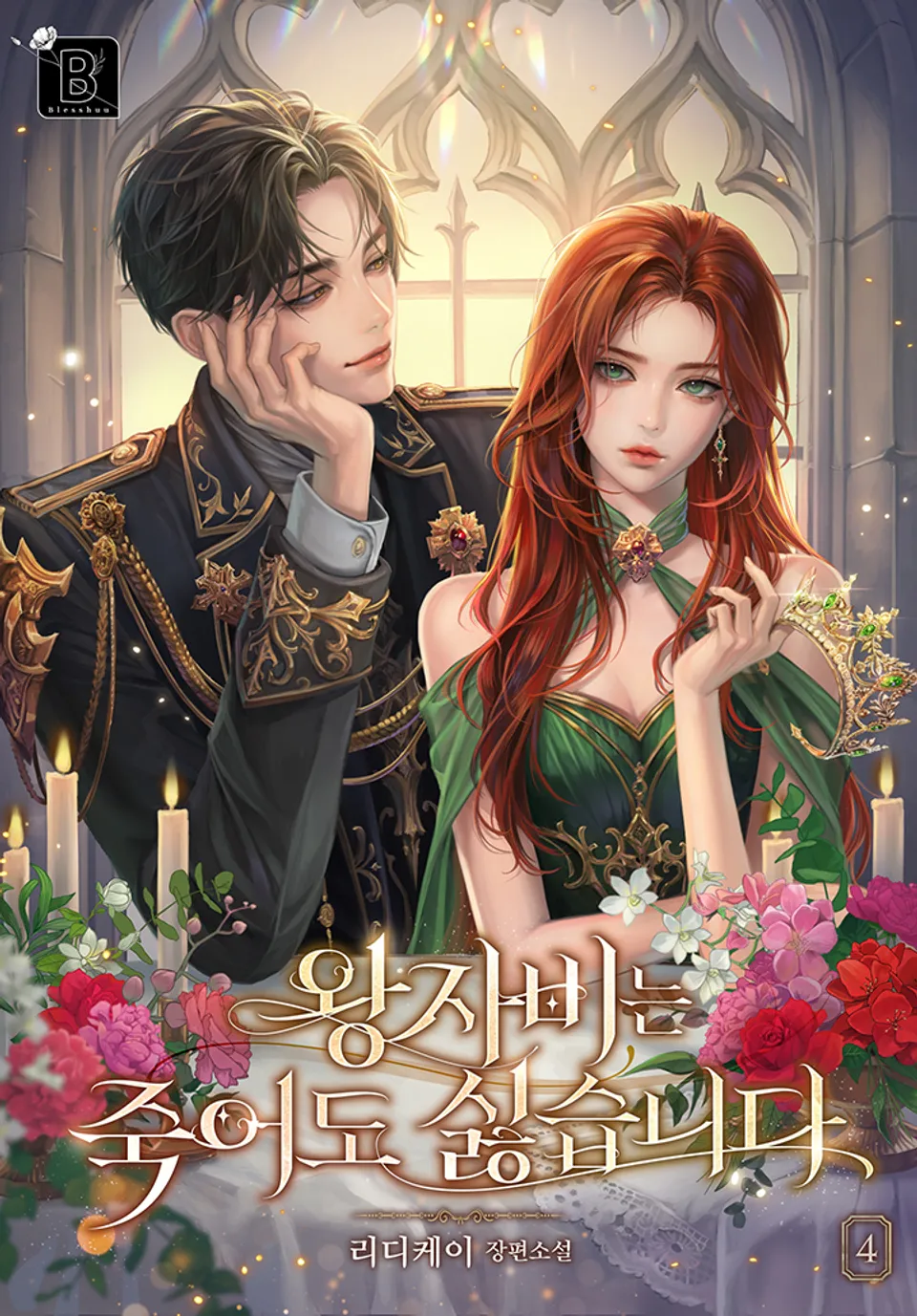
Marriage Proposal, Not Salvation
+Add to Custom List
Novel Info
  • Author:
  • Status:Ongoing

Summary

... Read More

Nikiel Ossinis, a PhD holder and part-time lecturer from Seoul, dies of a sudden cardiac arrest after pulling an all-nighter reading a flawed fantasy novel titled The Golden Bough of Sansvrian. He awakens in the body of the kingdom’s youngest prince, Nikiel Ossinis, who suffers from a withering, fragile physique and a reputation for cruelty and debauchery. The world operates under a magic system where a primordial black dragon, Nasiu, cursed the four founding noble houses—Balt, Boltwick, Griff, and Turun—with beast transformations. Only a royal heir with the blood of the founding king can calm the beasts, necessitating a marital union between the prince and the head of each house to maintain political stability and suppress the curse. The kingdom’s state religion venerates the Solar God Solius, and Nikiel’s body is infused with overwhelming holy power that causes him to cough up blood when unbalanced.

Upon waking, Nikiel initially denies his new reality but quickly adapts after realizing his physical condition is dire. His first interaction is with Grand Duke Yullan Balt, the head of the most powerful house, who transforms into a massive wolf. Yullan is cold, hostile, and openly contemptuous of the prince, yet possesses a fierce protectiveness that unsettles Nikiel. Concurrently, Nikiel meets Duke Raymon Boltwick, a man with a deceptive warm smile that masks sharp political acumen and deep-seated resentment toward Yullan due to past family tragedies involving Raymon’s sister. Nikiel recognizes Raymon as a character he admired in the novel and sees an opportunity to secure loyalty, though their interactions are fraught with tension and veiled hostility.

Nikiel decides to reject the predetermined path of the novel, which cast him as a heroic adventurer slaying the black dragon. Instead, he focuses on surviving the political minefield of forced marriages and rehabilitating his ruined body. He establishes a rigorous daily routine of exercise, balanced nutrition, and sunlight exposure, gradually transforming his weak frame into a healthier, more robust physique. This change attracts the attention of his servant, Paul, who is bewildered by the prince’s sudden turn toward discipline and humility. Nikiel also discovers a love for the world’s “magic science,” diving into studies of alchemy and mana theory with the enthusiasm of a former researcher.

A pivotal shift occurs when Nikiel rescues an injured black eagle from the palace forests. He nurses the bird back to health, showing it genuine compassion rather than treating it as a mere animal. The eagle, named Suri, forms a deep bond with Nikiel, staying by his side and displaying intelligence beyond ordinary birds. However, Nikiel begins experiencing vivid, unsettling dreams involving a naked man and a sense of heavy oppression, hinting at a spiritual or magical connection he does not yet understand. These dreams interrupt his peaceful routine, suggesting that his actions are drawing forces he cannot yet comprehend.

The political pressure mounts as King Ossinis attempts to orchestrate a marriage between Nikiel and one of the dukes, viewing his son’s amnesia as a convenient excuse to rush the union. Nikiel deliberately behaves erratically during a royal breakfast to deflate the king’s expectations and avoid immediate commitment. Meanwhile, his relationship with Yullan remains adversarial; Yullan warns Nikiel against participating in the upcoming Hunting Tournament, sensing danger that Nikiel interprets as another attempt to control his choices. Nikiel’s defiance grows as he refuses to be a pawn in the kingdom’s marital politics, even as his holy power continues to manifest in violent, uncontrollable ways.

The story reaches a critical turning point when Nikiel encounters a mysterious figure perched atop a tree in the royal gardens. The man’s gaze is described as mournful and ancient, and he speaks directly into Nikiel’s soul, declaring that Nikiel’s time is nearly up. The air grows cold, sounds vanish, and the world seems to freeze, isolating Nikiel from his surroundings. This supernatural encounter underscores the escalating stakes: Nikiel is not merely navigating court intrigue but is entangled in a fate woven by divine and draconic forces. His journey shifts from simple survival to uncovering the deeper truths behind the curse, the black dragon’s intentions, and his own role as the “Redeemer” in a narrative that has diverged significantly from the novel he once read.

Latest Release
DateGroupRelease
2026-10-03puffberry c98
2026-10-03puffberry c97
2026-10-03puffberry c96
2026-10-03puffberry c95
2026-10-03puffberry c94
2026-10-03puffberry c93
2026-10-03puffberry c92
2026-10-03puffberry c91
2026-10-03puffberry c90
2026-10-03puffberry c89
2026-10-03puffberry c88
2026-10-03puffberry c87

Community Reviews

Rating(0 / 5.0, 36votes)
5 stars
0(0%)
4 stars
0(0%)
3 stars
0(0%)
2 stars
0(0%)
1 stars
0(0%)

Popular reviews

... Read More
'The damned thing has risen beyond the horizon.' I've been sitting with this line for hours and it keeps unraveling in my head like a knot I can't quite undo. Let's start with the black eagle. A golden eagle — a creature of the sky, of freedom, of raw untamed power — is brought low by an arrow. Someone tried to kill it. And yet this creature, broken and bleeding, chooses to trust Nikiel. There's something deeply symbolic about a bird of prey, a natural predator, becoming vulnerable and then finding solace in someone who looks nothing like its kind. The magpie folktale reference the narrator drops is interesting too — in Korean tradition, the magpie repays kindness with gifts and good fortune. This eagle guards Nikiel while he sleeps. It stays close. It watches over him with those obsidian eyes that seem to see everything. Is it a guardian? A omen? Or something older? The feather Nikiel finds on the windowsill is a powerful image. The bird left voluntarily — it could have stayed, healed, remained in this protected space. But it chose to return to the sky. And yet it left this one piece of itself behind, like a token, a promise, a thread connecting Nikiel to wherever it went. Now the horizon. 'Risen beyond the horizon' — this immediately evokes the sun, which is also described as climbing over eastern mountains in the preceding scene. But calling it 'damned' is not something you'd say about a sunrise unless this is something different. An enemy? A curse? A prophecy fulfilled? The man on the tree stands motionless above Nikiel, and his eyes are made of 'the sorrow of the world' — this is not a random encounter. This is cosmic. Nikiel's nosebleed right as the voice speaks feels symbolically loaded too. Blood as a bridge between worlds. Blood as the cost of seeing what shouldn't be seen. The physical body betraying the threshold the soul is crossing. And beneath all of this — the theme of care. Nikiel cared for a wounded creature and was cared for in return. He feeds it, sleeps beside it, speaks to it gently. This same tenderness may be what connects him to the stranger on the tree, to the voice from beyond the horizon. What if the story is asking: in a world of magic and fate and cosmic stakes, is kindness the real power?
... Read More
Okay so the pacing here is actually kind of genius and I want to break down why because it's not obvious at first glance. We open with blood. Nikiel's muslin shirt is smeared with dark red and his knees nearly buckle — immediate tension, immediate concern. Is someone hurt? Is it him? Turns out it's the bird, and then the pace deliberately SLOWS DOWN. We get the falconer scene, the gentle treatment, the feeding, the sleeping arrangement. It's cozy. Domestic. Almost slice-of-life for a few pages. Nikiel eating flatbread with garlic and chili, watching the bird turn its head away from a offered bite of apple compote — this is the calm before everything gets turned upside down. And that's the move. The author lets us relax. Lets us settle into this warm, soft moment between a guy and his pet eagle, and then — BAM — the bird flies away, and the voice speaks, and the world freezes. The transition from Chapter 9 into 10 is particularly masterful. Chapter 9 ends with Nikiel falling asleep beside the bird, and we get this dream sequence that feels vaguely uncomfortable but not threatening. Then Chapter 10 opens with him waking up flustered, doing laundry in secret, rationalizing his way through confusion. It's funny, it's light, it's almost sitcom energy — and then he steps outside and the sky DARKENS for no reason. The shift is so abrupt it physically jolts you, which is exactly what should happen when a supernatural voice speaks directly into someone's soul. The cliffhanger ending is also noteworthy. 'The surreal hush le' — the text cuts off mid-sentence. Whatever comes next is going to be huge because we're literally caught mid-thought, mid-breath, suspended in that silence the author built so carefully.
... Read More
Beneath the comedy and the transmigration tropes, this text is wrestling with something surprisingly serious about bodily autonomy and agency. Nikiel arrives in a body that is literally being used against him — by a god's decree, by political marriage plots, by the very architecture of this society. His chronic hemoptysis isn't just a medical problem; it's a metaphor for divine violation. The Solar God's 'grace' has turned his body into a vessel for purposes he didn't choose. And yet — and this is the core of the story — Nikiel fights back the only way he knows how: through discipline. Exercise. Routine. Nutrition. He treats his new body like a research project, applying the same empirical methodology that got him killed in his previous life. The metaphor is almost too perfect: the man who died of overwork now systematically rebuilds his physical form in a world that wants to use that form as a bargaining chip. The recurring motif of blood is everywhere — Nikiel coughs it up constantly, it stains his lips when he grins at Yullan, it's the visible symptom of divine power overflowing. Blood here symbolizes both vulnerability and power. It marks him as weak, yes, but it also marks him as touched by the sacred. The same divine grace that makes him pregnant also gives him this supernatural constitution. And then there's the mirror scene — Nikiel looking at his reflected body, seeing the results of his labor. Mirrors are classic symbols of self-recognition, and in a story about inhabiting someone else's life, that moment of recognition is profoundly thematic. He's not just fixing a body; he's reclaiming ownership of self in a world that keeps trying to assign him a role. Every rep, every meal, every walk at 7:30 AM is an act of defiance against the narrative written for him.
... Read More
I need to talk about how this chapter moves because the pacing is doing some serious heavy lifting and I respect it. The chapter opens SO slow — literally in a bath. Paul washing Nikiel's hair, trimming his nails, this deeply domestic and intimate scene. Nothing urgent is happening. And I mean that as a compliment, because this quiet space lets us breathe and absorb all the details about how different Nikiel is now. The author pads the pacing intentionally here, giving us these small moments of tenderness between Paul and Nikiel that would've been impossible in the original storyline. But then — and this is where it gets smart — the chapter pivots. Nikiel notices Paul hasn't eaten, and suddenly we get this explosion of backstory about the OLD Nikiel. Forty lashes with a water whip. Slapping a noble's son. Tearing a lady's dress ribbon. The pacing accelerates HARD here, going from gentle bathing to violent revelations in a single beat. It's jarring in the best way. Then there's this brilliant comedic breather — Nikiel wanting to cut his platinum hair, Paul nearly fainting, the whole haircare routine exposition. You can feel the author letting us exhale before building tension again for the king audience. And the walk toward the White Flower Hall? Perfect tension management. Nikiel's internal monologue about the king being "no different from a professor" and having served worse bosses — that's humor as tension relief. But then he stops walking, Paul gives him a look, and we're back in serious mode. The chapter ends on this lingering note with Raymond watching him and the king making that sharp observation about staring. No cliffhanger per se, but that closing image of Raymond's almost-bashful smile while studying Nikiel? I need the next chapter immediately. The author knows exactly when to tighten the screw and when to let it loose.
... Read More
I came for the political marriage chaos and the Raymond tension. I did NOT come for the part where a guy in an undershirt gently wraps a wounded bird in his shirt and walks through the forest talking to it like it's a small child. But that's what made this passage land so hard for me. After all the maneuvering, the breakfast trap, the hallway confrontation—it's Nikiel finding this small, scared creature and choosing kindness. No agenda, no political calculation, just... 'Shhh, it's okay. I'm not going to hurt you. I'll treat you.' There's something really intimate about holding a wounded animal against your chest. The body heat exchange, the trust issue, the vulnerability of both creatures—one injured and trapped, the other exposed in just an undershirt carrying a bird through the palace forest. It's a quiet moment that completely changes the temperature of the story. And the obsidian eyes. The eagle looking back at Nikiel without flinching despite the pain—that connection feels significant. In stories like this, animals rarely appear without purpose. Whether this is foreshadowing, a metaphor for Nikiel himself (cursed, misunderstood, wounded but beautiful), or literally going to become some important character later, I'm invested. What also struck me emotionally is Nikiel's internal monologue about Paul's description of the original Nikiel's debauchery. 'With this kind of stamina, how on earth did he manage it?' The humor here masks something darker—the original Nikiel used his body as a tool for manipulation and conquest. The current Nikiel, who finds peace in gentle interactions with a wounded bird, is the opposite. That contrast matters. The scene ends with Paul freezing in shock at seeing Nikiel return alone, carrying something. Whatever that bird is wrapped in, Paul clearly has no idea what to make of this. And honestly? Same, Paul. Same.
... Read More
Let's talk about the absolute energy between Raymond and Nikiel because oh my god. Raymond walks in, sees Paul lingering outside, and his first comment is "You've yet to abandon your lecherous tendencies, I see, Your Highness." That is not a passive-aggressive remark. That is a declaration of war wrapped in politeness. And Nikiel's response? Pure confusion because he doesn't understand why two men talking alone is such a big deal. The culture clash is so funny until you realize Raymond is genuinely suspicious of him. But here's what got me — Nikiel's internal monologue. He feels his heart racing around Raymond and instead of owning it, he blames the original body. "Ever since Raymond had entered the room, Nikiel had felt an erratic pounding in his chest... soon realized it was a sign of sexual attraction. Nikiel himself had never once considered men as romantic interests, so the only explanation was that this body—Nikiel's body—was reacting to Raymond." MILDLY AFFRONTED BY THAT. The man is literally having a physical reaction to Raymond and he's like "not my problem, that's the host body's fault." This is comedy gold. But it's also setting up something real — the body remembers things the mind doesn't, and that's a classic trope that always works when done well. Raymond despises three things: people who want him for his looks, people who want him for his name, and Nikiel Ossinis — who apparently embodies all three. But then the narrative reveals that being near Nikiel actually calms the beast within him. The curse-bearer finds peace in the very person he claims to loathe. That's not just good character work — that's the foundation of a romance that's going to ruin us all.
See all reviews

Custom lists

See all custom Lists