Magic Academy's Genius Blinker - Reviews

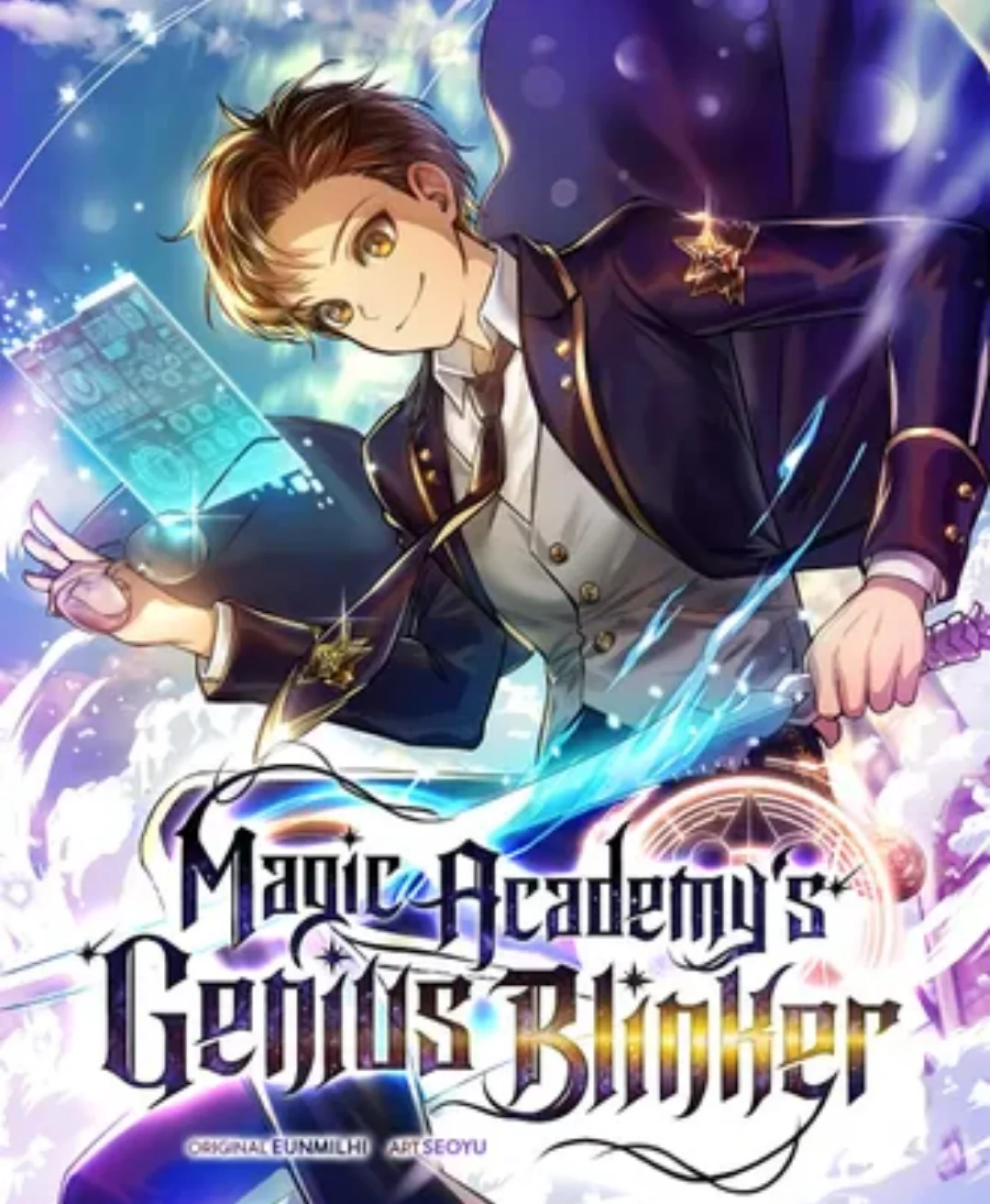
Magic Academy's Genius Blinker
+Add to Custom List
Sort
Add review
... Read More
Mana Leakage Disorder. A curse. A flaw that condemns you to the lowest class in a world where magic is everything. And yet—this is the very thing that makes him special. The whole setup is built on this beautiful inversion: what the world sees as weakness becomes his only path to strength. His body leaks mana, yes, but that constant leakage also gives him "Sixth Sense" and "Cognitive Acceleration." He can feel the traces of magic left behind by every spell, every enchanted arrow, every movement driven by power he can never wield himself. The thing that excludes him from the world is also what lets him see everything others miss. And Flash—this supposedly useless skill, the one that teleports you randomly and leaves you stunned—is the one ability he carved meaning out of through ten years of obsessive repetition. While every other player chased the meta, the strong characters, the optimized builds, he went the opposite direction. He found value where nobody else would look. I think the deeper theme here is about dedication versus adaptation. The game world rewards conformity—use the right magic, play the right character, follow the intended path. But our protagonist never followed anyone else's path. He persisted in something ridiculous until it became something extraordinary. And now, thrown into a broken world where his bizarre specialty might be the only thing that saves everything... It's almost poetic. Or maybe I'm just reading too much into a web novel. Either way, it hits.
... Read More
I'm not even gonna lie, I got genuinely emotional at the end of this sequence. Not because of some grand romantic moment or a tearful reunion—but because of something so small. After killing five people, after running for his life across icy cliffs and broken bones, Baek Yu-Seol finds a potion and drinks it. And the text says: 'The first potion he ever drank tasted bittersweet.' Bittersweet. That's the entire chapter in one word. He survived. He won. But look at what it cost him—his innocence, his safety, maybe pieces of his humanity he didn't know he had. The moment he collapses and can't stop his hands from trembling isn't fear of death anymore. It's the shock of what he's done. And then he forces himself up, scavenges the bodies, and keeps going. There's no cinematic swelling music here, no dramatic declaration. Just a kid who wanted to play a game and found out it was real. That scene where he looks at the corpses and then checks their pockets for money—there's something heartbreaking about that. He's not proud of it. He's not even thinking about it. He's just... surviving. And that lack of drama makes it hit harder than any sobbing scene ever could.
... Read More
The pacing in these chapters is absolutely ruthless and I respect it. It starts mid-action—which is already a bold choice—and never gives you a breather. The cliff section is tense but controlled, almost methodical, like the story is letting you catch your breath while Baek Yu-Seol carefully figures out the floating stones. And then the pursuers appear and BOOM, the tempo explodes. What's clever is how the author uses cooldowns as a structural device. Every time Flash goes on cooldown, the narrative tension spikes because you know something bad is coming. '[Flash cooldown: 2 seconds]' '[Flash cooldown: 1 second]'—those little brackets on their own are masterful. They turn a game mechanic into a heartbeat monitor for the scene. The combat flows in waves: approach, attack, setback, recover, escalate. And just when the fight seems like it might drag, the warrior gets taken out and we get this sudden, jarring quiet. 'Haah, haah...' Then the leg pain hits. Then the loot. The pacing of the aftermath is almost more important than the fight itself—because now the adrenaline drops and reality sets in. That transition from high-octane action to trembling hands searching dead pockets? That's where the chapter really earns its emotional weight.
... Read More
Let me just say it out loud: the stakes in this book are quietly devastating and I am HERE FOR IT. On the surface, it's an academy story. Kids go to magic school, take classes, practice spells. Easy. But underneath? Baek Yu-Seol is racing toward a True Ending that no one has ever reached in ten years of playthroughs. Every class he sits through, every book he buys, every conversation he has is a move toward something he can't fully explain. If he fails, what happens? Does he die? Does the world end? Or something worse — does he just loop back and try again, losing pieces of himself with each iteration? Eisel's stakes are personal and brutal. Her family fell from grace. She's poor at an academy built for the wealthy. Her fate in the original story was to die alone, shunned by everyone. And now? The plot has shifted. Flame took the protagonist role. Eisel's trajectory is even darker. She knows something is wrong — she sees Baek Yu-Seol in classes he has no business being in, and her suspicion is sharp. But she can't prove anything. She can only watch and wonder and feel that something is slipping away. Hong Bi-Yeon's conflict is internal but no less intense. A genius who can't perform under pressure. A daughter crushed by her mother's expectations. She's holding it together by sheer willpower, and the moment the class ends, she bolts. Not to study. Not to practice. She runs. That's not discipline — that's panic. And panic is dangerous when you're a magic user. The Divine Moons themselves represent stakes on a civilizational level. Twelve guardians who haven't awakened in a thousand years. When they gather, something 'extraordinary' will happen. The professor literally doesn't know what. Nobody does. The entire magical world is sitting on a timer, and the characters are too busy with grades and friendships to notice the clock.
... Read More
There's this recurring idea throughout these chapters that wands don't just get chosen—they CHOOSE. And that choice matters more than talent or ambition. Yuslek reaches for Edmary Etemiri with full confidence, backed by his faction's aura, and the wand rejects him with a mana explosion. He's told, quite literally, 'One must learn to understand and accept their limits.' That line isn't just about wand resonance—it's about understanding your place in a system that doesn't care about your connections or your pride. But Teripon is the real symbol here. It's described as unadorned, simple, yet carrying an 'undeniable air of nobility.' It doesn't go for the flashiest or the most ambitious. It chooses Baek Yu-Seol—a boy who didn't ask for it, who inherited it against his will, who now has to deal with the consequences of a choice made for him. Isn't that exactly what Flame's situation is? She didn't choose to be reincarnated into this novel world either. The wand that chose her path is now in someone else's hand. Then there's the devil's three questions themselves. They're called a trap—created to 'induce incorrect answers by accident.' The whole educational system at Stella Academy seems built on these kinds of traps: placement tests that determine your fate, remedial sessions that double as social sorting mechanisms, wands that validate or humiliate you based on mysterious criteria. Kyle sees this remedial session as his opportunity for recognition. Ma Yu-Seong sees it as entertainment. Baek Yu-Seol sees it as a threat to his peaceful life. And Flame? She sees it as information. The questions aren't just academic—they're a metaphor for the world itself, constantly asking you to solve something when the real test is whether you even understand what's being asked.
... Read More
This bookstore. I need to sit with it for a second. It's run by a perverted old man who pretends to doze off while scanning customers with mana — that detail alone tells me this world has layers. Magic is everywhere, even in places where you wouldn't expect it. The shop carries Maela's Lecture Notes written by a top student from ten years ago, and no one else has touched it. The hand stains on the pages don't bother Baek Yu-Seol — he likes them. 'Old magic books and notes had a certain charm.' That line made me pause. It's not about the utility of the book. It's about the human residue on it. Then there's the Divine Moon lecture, which is where the worldbuilding really explodes. The Progenitor Mage — also called the White Mage — who spread magic across the world, teaching elves natural magic, dwarves material magic, humans elemental magic. Then vanished. Left behind twelve guardians called Divine Moons, each guarding a continent. The Scarlet Summer Moon's flame is still visible in Alamanca's Deep Sea,缠绕着被锁链束缚的巨型章鱼. A vortex the size of five hundred meters frozen solid by the Blue Winter Moon at Levian's Coast. These aren't just lore dumps — they're VISUAL. I can see them. The red flame in black water, the ice-cracked storm. The academy itself has that feel — students crowding around talking about lunch menus, magic practicum classrooms with exploding scarecrows, lecture halls where you can tell the professor is nervous because there are barely enough students to fill seats. Every location has texture. You can smell the old paper in the bookstore, feel the tension in the practicum field, hear the grating voice of Professor Raiden making everyone uncomfortable. The world isn't a backdrop. It's breathing.
... Read More
I need to talk about the Hae Won-Ryang scene because it hit me differently than everything else in these chapters. After all the scheming, the wand drama, the political maneuvering—here's this guy who just notices Flame looks tired and says 'You don't look good. What's going on?' No hidden agenda, no calculating the benefits of showing concern. Just... real. And Flame's response? She deflects with humor about soup preferences. 'If you die, don't call me to the funeral. I don't like Yukgaejang. Prepare Sogogi Gukbap instead.' It's funny but underneath it, there's this raw honesty about her outlook—'I don't intend to live long.' That line came out so casually but it landed like a punch. This girl has been carrying the weight of knowing she's in a novel, knowing how the story goes, and she's still somehow maintaining warmth with people like Jecky and Hae Won-Ryang. And Jecky! The imitation subplot creeps me out in the best way. Flame notices Jecky copying her hair, her tone, her fashion, and it makes her uneasy. But instead of confronting it directly, she just brushes it off. That's not weakness—that's someone who's learned to observe carefully because survival depends on it. Their friendship feels real precisely because it has these small tensions beneath the surface. But the emotional core that really stays with me is Flame watching Baek Yu-Seol from across the room during remedial class. She sees how Ma Yu-Seong's attention keeps drifting toward him. She realizes this boy didn't just stumble into Class S—he played the system intentionally. And she's sitting there, analyzing, calculating, protecting herself, while everyone else is either bowing to Ma Yu-Seong's genius or gossiping about the new upper-intermediate resonate. The loneliness of being the only one who sees the board as a board must be exhausting.
... Read More
The structure here is really interesting because the author does something smart with the tonal shift between scenes. You go from this high-energy classroom confrontation—chalk crushing, pride shattered, Ma Yu-Seong制造atmosphere on purpose—and then it just... drops. Like a stone. Baek Yu-Seol walks out into a tattered hallway, there's a quiet beat, and then Hong Bi-Yeon is just *there*, leaning against the wall like she's been waiting. No dramatic entrance, no announcement. It's almost mundane, which makes it more eerie. Then the study room scene stretches out, and instead of resolving anything, it opens a completely new door. The 'compensation' setup feels like the author is braiding two plotlines together—Baek Yu-Seol's desire for the sword modification and Hong Bi-Yeon's need to understand creativity. And then the ending? He leaves immediately after the lecture, goes to Arcanium, wanders into a spooky abandoned-looking bookstore called the 'Nameless Bookstore' with a dozing old man inside. That transition from the warm tension of the teaching scene to the cold mystery of the bookstore is textbook misdirection. The reader thinks, okay, we got the payoff, the character moment is done, let's move on—and then suddenly we're in unknown territory. The chapter doesn't end on a cliffhanger per se, but it ends on a note of uncertainty that pulls you forward harder than any dramatic reveal would.
... Read More
There's this one line that won't leave my head: 'The only experience he had wielding a knife was cutting scallions while cooking ramen.' It's almost funny on the surface, but it's devastating when you think about it. That contrast—domestic, mundane, Korean apartment life against murder in a snowy mountain—captures the entire thesis of the story in a single sentence. The book is fundamentally about the collision between two worlds: the gamified comfort of knowing the rules versus the brutal unpredictability of reality. Every symbol in this passage reinforces that. The floating stones represent the illusion of control—you think you understand the pattern, but one mistake means death. Flash itself is symbolic: it's freedom and mobility, but also a resource that runs out, reminding you that even powers have limits. The blood on the money he loots is probably the most potent image. He literally picks up dirty, contaminated currency from the people he killed. In the game, that would be just points. Here, it's stained with evidence of what he had to become to survive. And the tutorial ending with 'By uniquely developing the story'—that's the theme screaming at you. This world doesn't want players. It wants people who will make choices the game never anticipated.
... Read More
I keep coming back to this concept of Mana Leakage Disorder, and I think it's doing way more symbolic work than the plot justifies. Yu-Seol became a mage accidentally—his body leaks mana instead of storing it, which in any normal context would be a disability. But here, that same disorder is what gives him cognitive acceleration, sixth sense, and the explosive release power he uses to fight. The thing that should have excluded him is what makes him survive. That's not subtle, but it's also beautifully consistent with the story's larger question: what does it mean to be strong? There's also the weight of inheritance running through this passage. Yu-Seol didn't choose this body. He inherited the physical stats, the muscle memory, the very shape of his hands from someone who lived before him. 'It feels like I've inherited a small part of the stats from my old character.' The line between gamer and game character, between observer and participant, blurs until it disappears entirely. And then there's the Academy itself—Stella, a place of learning and structure, waiting at the end of his journey. Is it salvation? Or just the next level of a game he can't quit?
... Read More
HONG BI-YEON'S RELATIONSHIP WITH HER MOTHER IS ABSOLUTELY DEVASTATING and I need to talk about it for a bit because it's one of the most well-written toxic family dynamics I've seen in fantasy lately. Let's start with the imagery: 'A lonely, dark room. Hong Bi-Yeon was sitting on her knees.' Just that alone tells us everything. She's on the floor, literally and figuratively. Her mother Hong Yi-El is described as 'Silver Thorn' - a nickname that sounds elegant but is actually just a warning. Thorn = painful. She pricks and bleeds. And the verbal abuse? 'Think of yourself as a bug.' She literally calls her own daughter a bug. But what makes this so painfully realistic is that Hong Yi-El isn't just evil - she's PROJECTING. 'You shouldn't be like me. If you grow up to be the shame of the kingdom like me...' Her entire existence is built on regret, and she's making her daughter carry that weight. That's not discipline - that's emotional abuse disguised as love. The line that wrecked me: 'I am doing this for you. You... have to become better than your sister.' Better than her sister. Not better than herself. Her value is relational, comparative. She's never allowed to just BE. And then Hong Bi-Yeon just says 'Yes, Mother' internally thinking 'I do not know.' She doesn't understand, she can't understand, but she's conditioned to comply. That disconnect between outer obedience and inner blankness? Chilling. Now here's the thing that makes this relationship even more interesting - Baek Yu-Seol KNOWS all of this from reading the 'game.' He sees her tags: '[Her mother is a bitch] [Guaranteed to die].' He's aware of her doom. And yet he can't do anything about it because he's positioned himself as a bystander. That's such a rich character dynamic - he sees her suffering, he understands the cause, but his own fear of exposure keeps him from helping. The guilt will eat him alive, I can feel it.
... Read More
I have to appreciate the dual-voice system here because it works on another level entirely. On one hand, you have Baek Yu-Seol's internal monologue—which is sharp, analytical, almost detached. He narrates his own survival like a strategy guide: 'Target distance, 8.70 meters.' 'The most efficient way to survive… Probably.' That voice sounds like someone who's been playing this world long enough to treat it like a game. But then there are moments where that voice cracks, and it's beautiful. 'It hurts. It hurts so much that I want to cry'—suddenly we're not in a game anymore. We're in a body that's bleeding and broken. The external dialogue is sparse but purposeful. The warrior's lines are almost theatrical—'Your reaction speed is unreal'—which makes sense because he's used to facing players who announce their moves. Baek Yu-Seol barely speaks at all, which is itself a statement. The narrative voice overall has this clinical precision that slowly gives way to raw sensation. And the system messages—'[Episode 1 completed]', '[EXP acquired]'—they're rendered in this flat, digital tone that contrasts beautifully with the visceral descriptions around them. It creates this constant tension between two realities: the gamified overlay and the bloody truth underneath.

Leave a comment

You must be logged in to leave comments. or
