Summary

... Read More

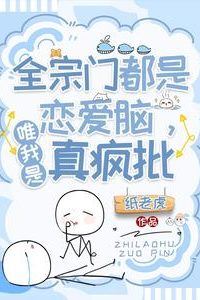
Dai Yao, a nineteen-year-old man burdened by debt and familial tragedy, is betrayed and murdered by his close friend Lin Qi. Desiring Dai Yao’s identity and the university admission he had earned, Lin Qi drowns him in an ice hole in a remote village. As Dai Yao dies, he reflects on his lonely existence as an orphan raised by his adoptive father, Li Mohan, who has been in a vegetative state following a car accident. Instead of fading away, Dai Yao awakens in a luxurious hotel bed next to a drunken stranger, Bai Chuan. Confused but relieved to be alive, he realizes he has been reborn to a time three years prior, before the cascade of misfortunes that destroyed his life.

The night of his rebirth begins with a traumatic encounter with Bai Chuan, a powerful and volatile man from the wealthy Bai family. Misunderstanding Dai Yao for a prostitute sent by a rival, Bai Chuan forces himself on the younger man. Dai Yao, accepting his fate as someone cursed to bring bad luck to those around him, does not resist. Afterward, he leaves without taking payment, viewing the incident as a settlement for a debt he incurred in his past life. Struggling with physical pain and infection, Dai Yao recovers over the course of a month, determined to change his fate this time. He discovers that his childhood home in the Xicheng District shanty town has a mysterious, expanded backyard that transforms into a desolate manor connected to a magical system.

The system, identified as the Shennong Manor, binds itself to Dai Yao and assigns him reconstruction missions. To secure a future for himself and his adoptive father, Dai Yao begins completing these tasks, which involve clearing weeds, removing rubble, and tilling the land. His efforts yield supernatural rewards, including spiritual jade, ancient farming tools, and magical fertilizers that cause crops to grow at accelerated rates. Simultaneously, Dai Yao faces financial pressure to pay for Li Mohan’s nursing home care. He pawns a jade pendant left by his adoptive father, receiving one hundred and twenty thousand yuan, which temporarily alleviates his financial crisis.

Shortly after securing funds, Dai Yao experiences severe nausea and vomiting. Suspecting a medical issue, he purchases pregnancy tests and is shocked to discover positive results multiple times. Despite his biological sex, the magical system has altered his physiology, resulting in a pregnancy. Initially terrified, Dai Yao eventually accepts the situation, viewing the child as companionship in his lonely life. He resolves to raise the baby, finding renewed purpose in protecting this new life.

Meanwhile, Bai Chuan becomes obsessed with the identity of the boy he slept with. The incident has disrupted his usual detachment, and he aggressively investigates Dai Yao’s background. Bai Chuan returns to his family’s estate to confront his father, Bai Ren, and stepmother, He Danshao, seeking to dismantle their schemes regarding the family inheritance. During this time, he learns that He Danshao is pregnant, further fueling his disdain for the family drama. Bai Chuan’s investigation leads him to Dai Yao’s student records and identity documents, revealing the young man’s true identity and location.

Dai Yao continues his work in the Shennong Manor, steadily rebuilding the land while managing his daily responsibilities. He visits Li Mohan at the nursing home, maintaining his dedication to his adoptive father despite the growing complications of his own life. The narrative establishes a dual trajectory: Dai Yao’s struggle to survive and thrive through the magical farming system and his unexpected pregnancy, and Bai Chuan’s relentless pursuit of answers about the mysterious boy who has captivated his attention. The story sets the stage for the inevitable convergence of these two paths, driven by the secrets of the rebirth and the magical systems now intertwined in Dai Yao’s existence.

The core conflict centers on Dai Yao’s determination to rewrite his tragic past while navigating the supernatural challenges posed by the Shennong System and the looming presence of Bai Chuan. As Bai Chuan closes in on Dai Yao’s location, the protective barriers of Dai Yao’s isolated life begin to fracture. The magical elements of the story provide Dai Yao with the means to survive, but they also introduce new vulnerabilities, particularly concerning the health of his unborn child. The interpersonal dynamics are strained by misunderstandings and power imbalances, with Bai Chuan’s wealthy and influential status contrasting sharply with Dai Yao’s humble origins. The story moves toward a resolution where Dai Yao must confront both the external threat of his past enemies and the internal changes brought about by his rebirth and supernatural bond.

Latest Release
DateGroupRelease
2026-09-26knoxt c22
2026-09-26knoxt c21
2026-09-26knoxt c20
2026-09-26knoxt c19
2026-09-26knoxt c18
2026-09-26knoxt c17
2026-09-26knoxt c16
2026-09-26knoxt c15
2026-09-26knoxt c14
2026-09-26knoxt c13
2026-09-26knoxt c12
2026-09-26knoxt c11

Community Reviews

Rating(3.9 / 5.0, 123votes)
5 stars
34(28%)
4 stars
39(32%)
3 stars
49(40%)
2 stars
1(1%)
1 stars
0(0%)

Popular reviews

... Read More
Okay so I need to talk about how this whole sequence is constructed because the author really knows how to string you along. It starts with the quest — find Fang Lu — and every beat builds: the bribe at the printing shop, the taxi ride where Yuan Xiaoyuan drops this devastatingly casual observation about the boss trying to force himself on her, then the staging of the delivery ruse. But here's what I love — Dai Yao thinks he's the one in control, the strategist. He's the one giving instructions: pretend to be delivery, hide on the side, catch them red-handed. Then the whole dynamic flips when Yuan Xiaoyuan reveals the recording. Dai Yao's reaction — just the question marks — hits so hard. He genuinely didn't know. All this time his best friend has been holding onto that recording, listening to it over and over, and Dai Yao had no idea. That reversal is peak plot craftsmanship. The stakes shift from a simple confrontation to something way more complicated. And then the ending with that half-heard line from the argument upstairs — 'The first three times you said someone seduced you' — the author refuses to give us closure on what happens next. Just leaves us hanging while Dai Yao pulls Xiao Yuan away. Brilliant tension maintenance.
... Read More
Let's talk about structure because this author is playing with fire and I respect it. We go from Dai Yao marveling at magically growing radishes to Bai Chuan suiting up in uncomfortable formal wear like we're in two completely different books. Most authors would insert a chapter break or a transition scene, but here? Just... cut. And it works. Why? Because both openings share the same energy — a man waking up to a new day, assessing what he has and what he lacks. Dai Yao opens his window and sees abundance; Bai Chuan opens his eyes and sees obligations. The pacing within each section is also deliberate. Dai Yao's morning routine — checking crops, eating steamed buns, recalling his past life as a laborer — unfolds at a meditative pace, almost meditative. Then Bai Chuan's section picks up speed: he's irritated, his follower is nagging him, the backstory drops fast and heavy. The author uses information density as a pacing tool — Dai Yao gets breathing room, Bai Chuan gets compressed exposition. And that excerpt from the opera — "梨花開,春帶雨" — it's placed right in the middle of family history like a haunting melody, slowing us down for exactly three seconds before the toxicity resumes. Brilliant. My only gripe: I want these storylines to collide soon, otherwise the alternating structure starts feeling gimmicky rather than purposeful.
... Read More
I keep coming back to Yuan Xiaoyuan in this passage because on the surface he's performing — the exaggerated shock, the pointing finger, the dramatic phone recording play — but something about it feels armor-plated. The narrator tells us directly that he was 'secretly laughing hysterically' because Qi Feng's expression was so amusing, but that laugh isn't joy, right? It's the laugh of someone watching their world collapse in slow motion and deciding to make it a show instead. And then there's that line Dai Yao has for him: 'Yuan Xiaoyuan has turned into a saint again.' This guy is constantly oscillating between protective and self-destructive when it comes to Qi Feng. Meanwhile Dai Yao — oh, Dai Yao carries so much in this scene. He's seen Yao's 'heartbroken expression' and his 'heart ached as if it were being cut by a knife.' Their bond here is the real star. This isn't just about exposing a cheater; it's about one person witnessing another person's pain and being physically affected by it. The fact that Dai Yao had a different, heavier past life that apparently shaped how he sees all of this — he forgave people who hurt Yao before, saw them hurt Yao again — makes his actions here feel almost fateful, like he's trying to rewrite history. And Fang Lu, sitting there 'clearly bewildered but still retaining her composure' while her relationship unravels — she gets almost nothing to say but her silence speaks volumes.
... Read More
I keep thinking about the pickled radish. Not the fresh white radish Dai Yao buys specifically to ease his nausea—that detail alone is a small miracle of physiological self-care—but the pickled version, the one he sells for one yuan a portion. It's the same ingredient transformed by time and salt, and that transformation feels deeply significant. The original radish is bitterness preserved. The pickle is bitterness made palatable, made desirable, made into something people line up for. This is the metaphor the whole chapter is building toward without ever stating it directly: survival is about transformation, not escape. You take what the world gives you—the sour plums, the radish, the nausea—and you process it into something you can sell. Bai Chuan's thread reinforces this in a darker key. He's confronted with someone who represents pure transactional desire, and instead of participating, he converts the encounter into something else entirely—a lesson, a boundary, a reminder of what he will and won't become. The card he leaves on the table is both payment and distance, a gesture that says: I acknowledge your need, I won't exploit it, and I'm leaving. Then there's the bun shop itself as symbol. It's not just a business—it's an act of self-creation in a place (Daijiayao) that the world has already written off. The fact that it operates with order—queuing, pricing, quality control—in a neighborhood described as having "poor security and a low-class population" is quietly revolutionary. Dai Yao isn't just selling food; he's demonstrating that chaos doesn't have to be the default. "Today's sales reached 1,500 yuan thanks to the addition of pickles." One yuan per portion. The smallest possible commodity, transformed, and it made the difference. Sometimes the revolution is one yuan at a time.
... Read More
The stakes in this chapter operate on multiple levels simultaneously and the author never lets you forget any of them. On the immediate level: Dai Yao needs to make money. Uncle Li's medical bills are a ticking clock. He just opened a bun shop with fifty catties of three different meats and has no guarantee anyone will buy them. On the deeper level: he's bonded to a spiritual device whose true purpose remains mysterious. Luo Bei explicitly says it has no ill intentions, but Dai Yao knows there's no free lunch — '吃人嘴软,拿人手短' — and he's already bracing for a price that hasn't been named yet. And then there's the stakes around Luo Bei himself: if he leaves the spiritual formation, he reverts to jade. Two thousand years of waiting compressed into a single existential threshold. The tension between these three layers is what keeps the chapter moving. Dai Yao isn't just wondering whether his buns will sell today — he's building a future that depends on a supernatural partnership, managing a system whose rules he's only beginning to understand, and doing all of it while physically exhausted from pulling radishes by hand. The scene where he cuts his arms sore and starts sweating but still asks Luo Bei to wash and shred the vegetables? That's commitment under pressure. That's someone who can't afford to stop even when stopping would make sense. And the system rejecting his leek seeds — that's a reminder that the world he's entering has its own logic, its own boundaries, and he's still learning which doors will open and which will slam shut.
... Read More
I have never laughed out loud at a line of dialogue this hard in my entire reading life. Bai Chuan, upon hearing that his 45-year-old stepmother-figure is pregnant, just drops this absolute bomb: 'Hey, dad, you are old but still vigorous ah? Congratulations!' The way he says it — flat, almost bored, like he's commenting on the weather — is genuinely one of the most savage moments I've encountered in fiction. He doesn't yell. He doesn't cry. He just stands there, watching his father's face go from hopeful to green, and delivers the perfect kill shot with a smile that isn't even really a smile. The supporting dialogue is equally sharp. The old woman coming in with 'I finally found you! I have good news for you!' — she genuinely thinks she's bringing joy. She has no idea she's walking into a nuclear explosion. And Bai Ren's reaction, lashing out at her: 'See? What's there to see! Don't you have eyes? Didn't you see that I was busy?' — the displacement of anger is so human and so ugly. What strikes me most is how each character's voice is instantly distinguishable. Bai Ren speaks in commands and frustrations. Bai Chuan speaks in cold observations. The old woman speaks in enthusiastic bursts. Even Bai Jinian, through reported speech, has a distinct voice — old-fashioned, pedantic, absolute. The author doesn't need narration to tell us who's talking. The dialogue carries the entire scene.
See all reviews

Custom lists

See all custom Lists