Summary

... Read More

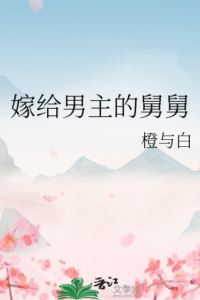
Lin Ruan, a frail and delicate young man, has lived for ten years as a servant in the Lan Mansion, Beijing. Originally sold by his impoverished family to the Prince Chun Residence as a child bride for the royal heir, he was later transferred to the current master, Zhan Xi, a descendent of the Qing dynasty who holds the title of Third Master. Zhan Xi is a powerful figure: a former royal prince who studied in Germany for five years and now operates as a prominent international businessman dealing in everything from luxury imports to military arms. Lin Ruan’s existence is defined by his subservience; he attends Yenching University during the day but returns to the Lan Mansion every evening to serve Zhan Xi, performing duties that range from cooking traditional dishes like cherry meat to warming the bed and attending to personal needs. Despite his high status as a servant, Lin Ruan remains humble, earning a monthly allowance and new clothes while maintaining a distant, fearful relationship with his master.

The central tension arises from the rigid class structures and unspoken rules governing the Lan Mansion. Uncle Tong, the stern butler, enforces strict protocols, constantly criticizing Lin Ruan’s manners and reminding him of his lowly origin. In contrast, Zhan Xi displays a complex mix of indifference and possessiveness. Although he allows Lin Ruan to attend school and addresses him with a casual familiarity, their interactions are charged with an underlying power dynamic. Zhan Xi frequently tests Lin Ruan, such as when he corrects the servant’s habit of addressing him as “Young Master” to instead use “Sir,” establishing a more intimate yet controlling dynamic. The narrative explores Lin Ruan’s internal confusion as he navigates his dual life between the academic freedom of university and the restrictive hierarchy of the mansion.

A significant turning point occurs when Lin Ruan introduces his classmate, Meng Zhen, to the Lan Mansion. Meng Zhen, coming from a wealthy merchant family, is awestruck by Zhan Xi’s grandeur and business prowess. Through this visit, Zhan Xi strikes a favorable business deal with Meng’s family, demonstrating his strategic acumen. However, the visit also exposes Lin Ruan to scrutiny from others, including Li Mingwen, a resentful classmate who harbors hostility toward Lin Ruan due to academic rivalry. Meanwhile, political tensions surface when a warlord’s representative, Mr. Wu, attempts to purchase illegal arms shipments from Zhan Xi. The situation escalates when Wu’s bodyguards threaten Zhan Xi, only for Young Marshal Gu Ji, Zhan Xi’s cousin and a military leader, to intervene and arrest Wu, highlighting Zhan Xi’s extensive network of influence.

The story further develops through Zhan Xi’s interactions with his circle, including his friend Xie Qingming, a scholarly connoisseur of antiques. During a visit, Xie Qingming brings a rare Northern Song Jun porcelain bowl, which Zhan Xi quickly identifies as a forgery based on the glaze patterns. In a surprising display of ownership and value, Zhan Xi reveals he possesses the genuine article, which he had kept for over a decade, and trades it for the forgery, indicating the piece’s deep personal significance. Throughout these events, Lin Ruan remains an observer, caught between his duty to serve and his emerging awareness of the intricate web of alliances, secrets, and transactions that define Zhan Xi’s world, leaving him perpetually uncertain of his own place within it.

Latest Release
DateGroupRelease
2026-09-25knoxt c15
2026-09-25knoxt c14
2026-09-25knoxt c13
2026-09-25knoxt c12
2026-09-25knoxt c11
2026-09-25knoxt c10
2026-09-25knoxt c9
2026-09-25knoxt c8
2026-09-25knoxt c7
2026-09-25knoxt c6
2026-09-25knoxt c5
2026-09-25knoxt c4

Community Reviews

Rating(3.9 / 5.0, 223votes)
5 stars
61(27%)
4 stars
73(33%)
3 stars
89(40%)
2 stars
0(0%)
1 stars
0(0%)

Popular reviews

... Read More
Okay so let me just say — the plot structure in these chapters is absolutely ruthless and I am here for it. We open with Lin Ruan being physically shoved into Fucha's courtyard like a sacrificial lamb, and then everything just cascades downhill from there. The setup is meticulous: Fucha toys with him, brings up her "godson" as this looming threat of masculinity, forces him into that horrifying physical violation, and then he literally vomits himself out of there. But what hit me hardest isn't even the violation itself — it's what happens NEXT. Zhan Xi finding him frozen and feverish, the physician helpless, the blood in the vomit. That's when the plot pivots from victim narrative to something far more dangerous: Zhan Xi's confrontation with Fucha. And the way tension builds there! The snow, the kneeling maids, the overcast sky — every element crams more pressure onto that courtyard scene. Then Shi Ning pulls a GUN in the palace. A literal gun. After years of these women living in insulated seclusion, they've never heard gunfire and Concubine Li herself "staggered back in fright." Chilling. The matron breaks almost immediately under Shi Ning's pistol — that's such a smart, economical plot beat. One weapon, one wave of Zhan Xi's hand, and the whole conspiracy unravels. But then Concubine Li steps in with her protection play, mentioning the two unmarried princesses. The chapter cuts off right at the moment of judgment and I am SCREAMING. Who gets sacrificed? What does Zhan Xi do? The pacing here is masterful — it doesn't resolve the Fucha thread, it deepens it, and now I can't stop turning pages.
... Read More
So this whole arc with Li Mingwen is genuinely satisfying because it doesn't give us easy answers. At first you just see this school bullying situation, and honestly it felt like it could go generic, but then the tea house scene completely reframes everything. Li Mingwen reveals the dorm backstory—Lin Ruan being the flashy rich kid, him watching from the shadows—and suddenly the hatred makes sense, even if it's still deeply wrong. What I love about the structure here is how the author withholds information strategically. We don't know about the Seventh Princess connection until Shi Ning drops that bombshell later. Then Li Mingwen himself calls Lin Ruan, which is both risky and kind of brave. The author keeps pulling threads from different directions—the political intrigue hinted at with banknote issuance, the palace scandal, the personal drama—all of it feels connected in a way that rewards close reading. That ending where Li Mingwen starts unpacking why he resents Lin Ruan? Chef's kiss. It's not a simple bully-victim dynamic anymore. The plot is getting morally gray in the best way. I want to see where this goes.
... Read More
This chapter hits me in the chest every time. Not because of the big dramatic moments, but because of how quietly everything unfolds between Lin Ruan and Zhan Xi. The greenhouse scene—god, that opening paragraph. You can almost feel the humidity, the heat, the way Lin Ruan's voice breaks when he finally says what he wants. It's so intimate without being explicit. And then Zhan Xi's response—so gentle, almost reverent. That line, “Young people are greedy, but they can't eat much, so they must slowly build up their appetite”—it's such a perfect metaphor for their whole relationship. Patience. Desire held in check. But then you flip to the next scene, and suddenly it's Fang Chengze's office, rain on the windows, politics hanging in the air like storm clouds. The shift is jarring, and I think that's on purpose. The story isn't letting Lin Ruan stay in that soft, private world for long. It's pulling him into something bigger, messier. And yet, throughout all that—the warlords, the magazine, the salon invitation, the wedding—it never leaves the emotional core. Remember the wedding scene? When Gu Ji shoves that random man out of the courtyard for cursing at Zhuang and Wu Yue, and Zhan Xi just… watches? And then he says, “As long as it doesn't harm anyone, anything goes.” It's not just about the marriage. It's about control, about love, about who gets to decide what's acceptable. Lin Ruan frowns and says, “That's too much,” and you can tell he's thinking about himself, about him and Zhan Xi. About how much of their own love might survive outside these walls. That's the thread that's been pulling at me all chapter long. The personal vs. the political, the private desire vs. the public eye. And somehow, this author weaves it together so seamlessly that you forget to breathe.
... Read More
There are two images from this section that I cannot shake, and neither of them is pretty. First: the boy in the lake-colored silk gown, androgynous, pretty-faced, wearing something that looks like a cheongsam. Then later, Wu Yue being dragged out barefoot, "bruises around his ankles and wrists" visible through the tug-of-war. The body as text. The body as evidence of what happens behind closed doors in places like Suyu Pavilion. And sandwiched between these moments of violence and display: Suanzi peeling peanuts. Idly. Methodically. The most mundane action in the most depraved space, and somehow that contrast is the most haunting thing about it. That's the author at work—never dwelling on the grotesque directly, but letting it leak through through objects and gestures. "You two don't look like you're here for pleasure. You're probably just curious." Yuxiang's line cuts right through the romanticism. This isn't a romantic world. It's a world where curiosity is the only safe desire.
... Read More
The tension in this chapter is unbearable and I mean that in the best possible way. Think about it — Lin Ruan is alone at night, wearing something that makes him feel exposed and vulnerable, and Zhan Xi walks in. He could leave. He could pretend he didn't see anything. But he doesn't. The door closing behind him is the moment everything changes. Lin Ruan's conflict is layered: he's curious about the dress but also uncomfortable in it, he wants to hide but also wants to be seen, he's dependent on Zhan Xi but clearly aware of the power imbalance. Zhan Xi's conflict is harder to read — he's composed, controlled, but there's irritation underneath when Lin Ruan can't quite give him what he wants. Their eyes meet and something shifts. The stakes here aren't about life or death; they're about something far more dangerous for these characters. Trust. Surrender. The point of no return. When Lin Ruan whispers "Sir" afterward, hoarse and injured, and Zhan Xi helps him rinse his mouth and tends to him — that tenderness after the storm makes everything so much more devastating. What have they both just lost? Or gained?
... Read More
I need to sit with this chapter because Lin Ruan's relationship with Hua Ying—and everything unsaid between him and Zhan Xi—hit different after reading it. On the surface, Lin Ruan is being this incredibly caring older brother figure to Hua Ying. He finds her in the chaos, he tells her not to worry about her luggage, he calms her down on deck. But the subtext here is ocean-level deep, and I'm still processing it. There's this one line that keeps looping in my head: "To have someone you can rely on—it must mean you've accumulated a lot of blessings before." Lin Ruan says this to Hua Ying, but the way he delivers it—quietly, looking at the sea, with this smile full of bittersweet memories—makes it clear he's not just talking to her. He's talking to the memory of someone else. Someone he lost or left behind. The sixteen months. The sheltered past he mentions. The fact that watching Hua Ying handle everything effortlessly made him think he could too—but the result was something he doesn't even finish saying. What happened? What was the result? And then there's Zhan Xi. God, Zhan Xi. The scene where he's on the ship, furrowed brows, clenching his fists, closing his eyes tightly—this man is internally shattering and the author communicates it all through physical description alone. No internal monologue, no dramatic declarations. Just a man who would rather die than leave someone behind but has no choice. When the chubby businessman tells him Lin Ruan bought four tickets, Zhan Xi's first reaction isn't relief—it's fear. "You'd better be telling the truth." His patience wearing thin. The threat from his men. He's trapped between being a leader who needs to get his people safe and a person who can't bear to lose anyone else. And then he says "Set sail." Two words. That's all it takes. The sound of a heart breaking in real time. Meanwhile, Hua Ying is completely unaware. She notices Lin Ruan looking nostalgic and asks if he loves Beijing. She says she wants to defend her own home by praising Shanghai. There's this lovely, innocent warmth between them—the kind of friendship where one person talks about远方 and the other tries to hold onto 近处. But Lin Ruan's final confession to her is what destroyed me: "I can't love this place because my heart already belongs to another city." Not Shanghai. Not wherever they're going. Another city entirely. And then the seagulls take flight. Lin Ruan looks up. And the chapter ends. I am not okay. The romantic tension between Lin Ruan and Zhan Xi has been simmering since chapter one and this chapter is the moment where the author finally lets it boil over without either of them saying a single word about it. Lin Ruan speaks of another city. Zhan Xi makes the hardest decision of his life. And they're on the same ship, heading somewhere new, but they can't yet see each other. This is agony. Beautiful, exquisite agony.
See all reviews

Custom lists

See all custom Lists