Light, Night, Stars, and Poetry
+Add to Custom List
Genres:
Tags:
Novel Info
  • Author:
  • Status:Ongoing

Summary

... Read More

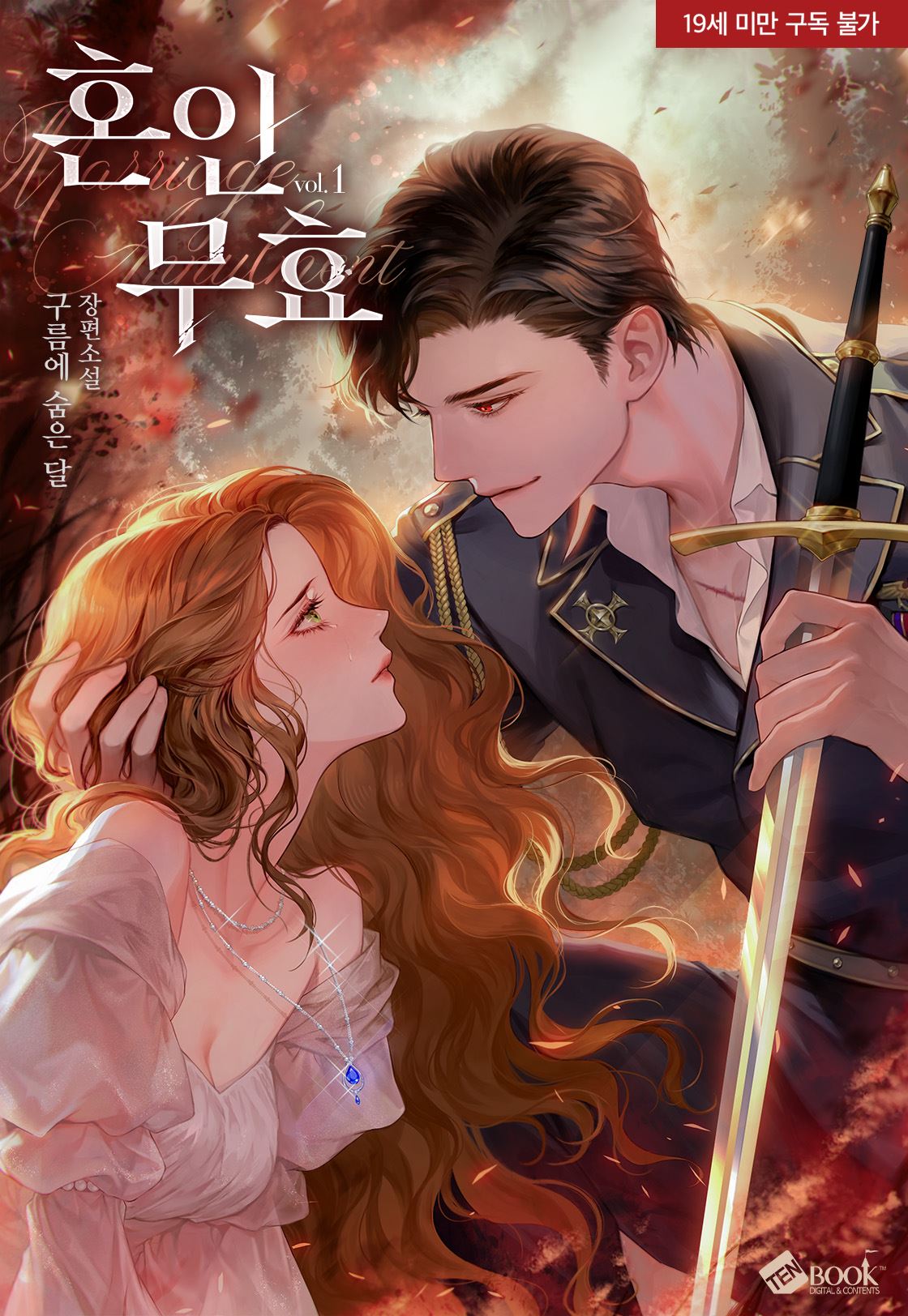
Dana Rowen is the princess of the Kingdom of Rowen, a nation blessed by the goddess of spring and protected by a legion of divine beasts contracted by the royal family. Her life in her previous timeline began with a seemingly perfect future. On her seventeenth birthday, she successfully contracted with Yentamien, a high-ranking divine beast, which earned her the attention of Queen Cladimien of the neighboring Heinz Kingdom. Queen Cladimien sought to secure this power for her son, Prince Ergart, leading to a political engagement between Dana and the prince. The wedding proceeded smoothly, but disaster struck during the reception when Prince Ergart collapsed after drinking from a poisoned cup. The poisoning was orchestrated by the Heinz Crown Prince, prompting Queen Cladimien to blame Rowen and declare war. King Taras, Dana’s brother and the ruler of Rowen, panicked as southern nobles surrendered to the invading Heinz knights. Taras attempted to flee the capital with the royal family, abandoning his subjects. When Dana tried to persuade him to stay and trust the loyal knight Lord Leonas, who was defending the borders, Taras struck her and imprisoned her. The royal family was captured and executed, while Dana was taken to Heinz as a prisoner. Facing burial alive in Prince Ergart’s grave, Dana pleaded with her divine beast, Yentamien, to reverse time. The beast agreed on the condition that she give up something significant.

Dana awoke on the morning of her seventeenth birthday, the day of her divine beast contract ceremony. She realized she had returned to the past, before the war, the poisoning, and the fall of her kingdom. Understanding that the contract with Yentamien was the catalyst for all her tragedies, she intentionally failed to summon the beast during the ceremony. The summoning circle remained dark, shocking the nobles and priests. King Taras, who feared his sister’s powerful beast due to his own mediocre contract, was visibly relieved. Dana used her failure as an excuse to request exile to Khalid, the northern estate of Rowen. She claimed she wanted to atone for her parents’ deaths, which she had caused by requesting the trip years earlier. Taras, eager to remove a potential rival and ease his own guilt, granted her wish and provided her with the administrative rights to the Khalid estate.

In her previous life, Dana had been ignorant and passive, hiding in the palace while her brother neglected the northern defenses. This time, she arrived in Khalid with a clear purpose. The north, guarded by the Vicar family, had been historically marginalized and under-resourced despite facing constant monster threats from the Dorbas Mountains. Dana met with Count and Countess Vicar, learning that the current Duke’s title was vacant and the region was struggling. She recognized that Rowen’s reliance on divine beasts had left its military weak and that the southern nobles were corrupt and disloyal. Determined to protect her parents’ kingdom, she decided to rebuild strength from the north, relying on human knights rather than magical legions. She requested an investigation into the mysterious carriage accident that killed her parents, suspecting foul play connected to the treason that would later doom the kingdom.

Throughout her stay, Dana reflected on her past behavior and the man she had once overlooked. She recalled Lord Kaiden Leonas, a lowborn knight from the north who had fought valiantly until the end. In her previous timeline, Taras had dismissed him as insignificant, but Leonas remained one of the few loyal defenders of Rowen. Dana resolved to change her fate by empowering loyal subjects like Leonas and the Vicars. She planned to remain in Khalid until she came of age, rejecting any marriage arrangements imposed by her brother. Her goal was to forge her own alliances and build a foundation capable of withstanding foreign aggression. As she explored the castle libraries and reviewed ancient documents, she sought knowledge about divine beasts and the history of Rowen to better understand the magic that had failed her. The story establishes Dana’s transformation from a passive victim of political intrigues into a proactive ruler ready to reclaim her destiny and save her nation from the catastrophic path it had previously followed.

Latest Release
DateGroupRelease
2026-10-03dusk blossoms c176
2026-10-03dusk blossoms c175
2026-10-03dusk blossoms c174
2026-10-03dusk blossoms c173
2026-10-03dusk blossoms c172
2026-10-03dusk blossoms c171
2026-10-03dusk blossoms c170
2026-10-03dusk blossoms c169
2026-10-03dusk blossoms c168
2026-10-03dusk blossoms c167
2026-10-03dusk blossoms c166
2026-10-03dusk blossoms c165

Community Reviews

Rating(0 / 5.0, 31votes)
5 stars
0(0%)
4 stars
0(0%)
3 stars
0(0%)
2 stars
0(0%)
1 stars
0(0%)

Popular reviews

... Read More
This passage is layered with symbolism so rich I could write an essay, but let me focus on what struck me most: the north as both wound and origin, and how the entire journey is really about Dana learning to hold both truths at once. Khalid isn't just a place—it's the birthplace of Rowen. The first king, Daischultz, made his divine beast pact there. The kingdom literally began in the north. But it's also where Dana's parents died. It's the site of her trauma AND her lineage. You can't separate them. The author makes this geometrically clear: the road she travels is the same road her mother and father traveled to their deaths. She's retracing steps while moving forward simultaneously. The vacant Ducal title of Khalid is another brilliant symbol. A position that should be filled, sitting empty like a missing tooth. The north is weakened precisely because the center (the capital, Taras's court) has abandoned it—not intentionally, but through neglect and political calculation. This mirrors Dana herself: she, too, has been treated as expendable, sent away, left to figure things out alone. The empty duchy and the powerless princess are the same picture viewed from different angles. Then there's Eluan Castle itself—a masterpiece modeled after the divine beast world of Elugard, built over generations, never finished by its creator. It's gorgeous and incomplete. And the drawing room? Perfectly preserved for seventeen years by people who maintained it for an owner who never came back. That image—clean sheets, drawn curtains, an aquamarine bracelet that once adorned the late queen's wrist—all waiting for someone who didn't know how to return. That's grief made architecture. The divine beast motif threads through everything. The kingdom was founded on a pact with a divine beast. The knights fight monsters from the Dorbas Mountains. Dana failed to contract with one. And yet—she's going north, to the very place where the first pact was made, to rebuild what was lost. The implication is almost mythic: maybe the divine beast chooses whom it chooses, but the covenant between Rowen and its protectors predates any single contract. Dana doesn't need a beast to belong to the north. I also can't stop thinking about the black garments of the Khalid knights. They're described as stained with monster blood—black as mourning, black as battle. But the text notes that with the ducal position vacant, 'this reputation no longer applied.' Their identity as defenders has been stripped away along with their leadership. That's not just worldbuilding. That's a statement about what happens when institutions lose their purpose. The final image—Dana running her hand along a carved table, remembering her mother sitting in the same chair—feels like the thesis of the entire novel. Memory is not paralysis. Remembering doesn't mean staying stuck. It means carrying forward. And Dana is finally learning that.
... Read More
Let me talk about how the author uses light and darkness as a narrative device because it's absolutely masterful. The opening scene is the banquet hall — white pillars adorned with green plants and flowers, a white instrument, Dana in sky-blue and white, her platinum hair catching light. The princess is described as 'a lone star in the night banquet hall.' But the soldier is in the DARKNESS. 'A spot not even lit by torches.' The visual contrast between her radiance and his shadow is the entire thematic framework of the first chapter compressed into a single image. Then fast forward to the prison. 'A sliver of light crept in' through the small window. Moonlight. The same moonlight motif from the banquet, but now it's cold, clinical, the only thing separating Dana from the crushing weight of the stone floor. And look at what happens — in the darkness of the prison, that thin moonlight 'appeared brighter than any light she had ever seen.' The symbolism is almost too on-the-nose but it WORKS because it mirrors her internal awakening. Light = awareness. Light = desire to change things. The wedding scene is another standout — 'warm spring brought clear skies and pleasant weather,' golden carriage, golden-haired prince, perfect preparations. Everything is meticulously described as beautiful and harmonious. And then the poisoning happens and the world drops out from under her. The author doesn't even need drama — the contrast between the lush, warm wedding atmosphere and the cold steel of the Heinz knights seizing the castle does all the work. The visual of Dana being dragged by the collar through the corridor while her maidservants watch helpless is also framed like a film — wide shots, slow motion, the sound of Taras's voice echoing. You can SEE this. The whole thing reads like a drama with a massive budget.
... Read More
The whole Kaiden Leonas backstory is basically a thesis statement on what this book is asking about merit versus birthright. He's described as having 'a robust and tall build, jet-black hair, sapphire-like eyes' — essentially the romantic ideal of a hero — but the text keeps coming back to how his 'rough nature,' his 'arrogance and rudeness,' and his 'obsession with status' overshadow everything. Taras calls him 'a lowborn man blinded by ambition for titles' and refuses to grant him anything beyond baron. Meanwhile minstrels are SINGING about him in city squares, claiming his swordsmanship benefits the country more than the king's divine beast. The irony is almost painful. The king who abandoned the capital and his people is being compared unfavorably to a commoner who died defending them. And then Dana's internal monologue reveals the deeper layer: she doesn't just want to give him a title out of justice. She wants to USE that title as a bargaining chip. Marriage as transaction. Status as currency. She's reproducing the same system that oppressed him, just from a different position of power. That's not something the text spells out — it's just there, simmering under every line where she plans her deal. Is she becoming the very person who sees people as tools? Or is she being pragmatic in a world where pragmatism is the only thing that survives?
... Read More
The first half of this chapter is almost meditative. Kaiden watches. He observes details—the bracelet shimmering between collarbones, the hem of the skirt, the small hand on the count's large hand. It's slow. Deliberate. Almost painful in its restraint. The author could have rushed this. Could have had him burst into the dressing room immediately. Instead, we GET the music ending. We GET the court poet reciting about Yurhemia, the goddess of spring. We GET Kaiden standing motionless while the world moves around him, like someone 'bound.' And then—Vicar appears. 'Sir Leonas. Follow me. It's an order.' Suddenly the pacing SHIFT. Every step becomes a heartbeat. The curtain parting. The scent hitting him. The trembling hand on the door. 'Thump. His heart dropped.' Then we cut to Dana's POV and the pacing does something even smarter—it SLOWS DOWN again, but for different reasons. She's pacing. Checking herself in the mirror.clasping sweaty hands. Building anticipation from the OTHER side. And then the door opens. The chapter structure is essentially: external observation → summons → approach → revelation → emotional counter-perspective → confrontation. It's a funnel. Everything narrows until we're left with two people and eight words. What I love most is how the author uses the transition from banquet to dressing room as a structural metaphor. Public → private. Noise → silence. Performance → authenticity. By the time we reach 'Marry me,' the entire chapter has been building toward that single moment of brutal honesty. No more nobles. No more counting. No more scripts. Just: you. me. now. And then— cliffhanger. Chapter ends. I SCREAMED.
... Read More
I need to talk about what's NOT being said in this chapter, because that's where the real tension lives. On the surface, nothing dramatic happens. A monk arrives. They discuss library access. Someone asks about marriage. Then three years pass. But underneath all of this, there is a conflict brewing that the characters seem to sense but can't quite name. Let's start with Dana's lack of a divine beast contract. The text tells us explicitly: she's 'the only member of the Rowen royal family in history who had not contracted with a divine beast.' In a kingdom where royal legitimacy is tied to divine contracts, that's not just a personal failing — it's a political vulnerability. Everyone in this chapter knows it. Hilda and Countess Vicar exchange glances when Dana deflects the marriage question. They're all performing normalcy while the foundation cracks. Noah sees this too, and that's why she goes to the library with this burning question: 'Is it truly the will of the divine, or is there some undiscovered truth?' If the divine beasts stopped contracting with the royal line for a reason — and Noah clearly thinks there IS a reason, not just bad luck — then the entire theological justification for the Rowen kingdom's power might be built on something that needs re-examining. And here's the thing that keeps me up at night: Noah is on a pilgrimage of silence. She literally cannot speak about what she discovers in that library. But she's also the only person in this entire narrative who seems capable of asking the right questions. She walks into Eluan Castle wearing rags, with no political power, no divine contract, no voice — and she's the one shaking the ground. The stakes escalate quietly through the chapter. Dana says she's 'steadily moving forward, unlike before.' She 'intended to create a better future.' But what future? What happens when she digs into those library texts and finds something that contradicts the official story? What happens when the northern lords realize the princess isn't just a decorative exile but someone actually investigating the source of their kingdom's power? Noah warns Dana: 'The divine doesn't provide answers to humans, and prayers are cries that go unanswered.' Maybe the real conflict here isn't about divine beasts at all. Maybe it's about what happens when someone starts asking questions that the gods themselves can't answer — and the people who've built their lives on those answers aren't ready for it.
... Read More
Okay can we just take a moment for Hilda because OH MY GOD. This woman is a masterpiece of character writing and I am not okay. In a text full of formal addresses, political maneuvering, and heavy historical exposition, Hilda cuts through like a knife wrapped in silk. She's Dana's lady-in-waiting, sure, but she's really her emotional anchor—and the author gives her a voice that is SO distinct it's almost unfair. The scene where they're in the carriage and Hilda starts teasing Dana about northern knights is pure gold: *'Yes. They say northern men are strong.'* The eyebrow raise. The whispered confession. The mischievous grin. This is a servant who could be any nameless background character, and instead she gets to be the funniest, most lovable person in the entire novel. Her motivation is transparent and hilariously honest—she's going north because her prospects in the capital are mediocre and maybe she'll marry a sturdy northern knight. No grand loyalty speech, no hidden agenda. Just a woman who wants a better life and is tagging along with her princess. And then—the masterpiece moment. Dana says something casually dismissive: *'There's no need to hold many gentlemen's hands.'* And Hilda's reaction is immediate, explosive, silenced-by-raised-eyebrows energy. She KNEW. She sensed something before Dana even admitted it to herself. That's not just good dialogue—that's character intuition written by someone who understands human psychology. The narrative voice itself is also worth praising. It stays tightly close to Dana's perspective but has this warm, slightly wry quality—like a friend recounting a story while occasionally side-eyeing the audience. Lines like *'She thought there was no need to show them the face of a princess supposedly fleeing in despair'* have this beautiful double register: Dana is performing for the crowd outside the carriage, but the narration is letting us in on the act. Even the formal dialogue works. Countess Vicar's greetings are stiff and proper, which perfectly contrasts with Hilda's warmth. It creates a tonal palette—formality versus intimacy—that mirrors the larger theme of the novel: duty versus desire, politics versus personal truth. One tiny note: some of the exposition-heavy passages (the history of Daischultz, the divine beast contracts, the geography of Vicanthia) read a bit like textbook entries. They're necessary, but they temporarily flatten the voice. I'd love to see the author find a way to weave that worldbuilding into character interaction rather than standalone information dumps. Still. Hilda. 10/10. Would follow her to the north myself.
See all reviews

Custom lists

See all custom Lists