Leda and the Swan
+Add to Custom List
Genres:
Novel Info
  • Author:
  • Status:Ongoing

Summary

... Read More
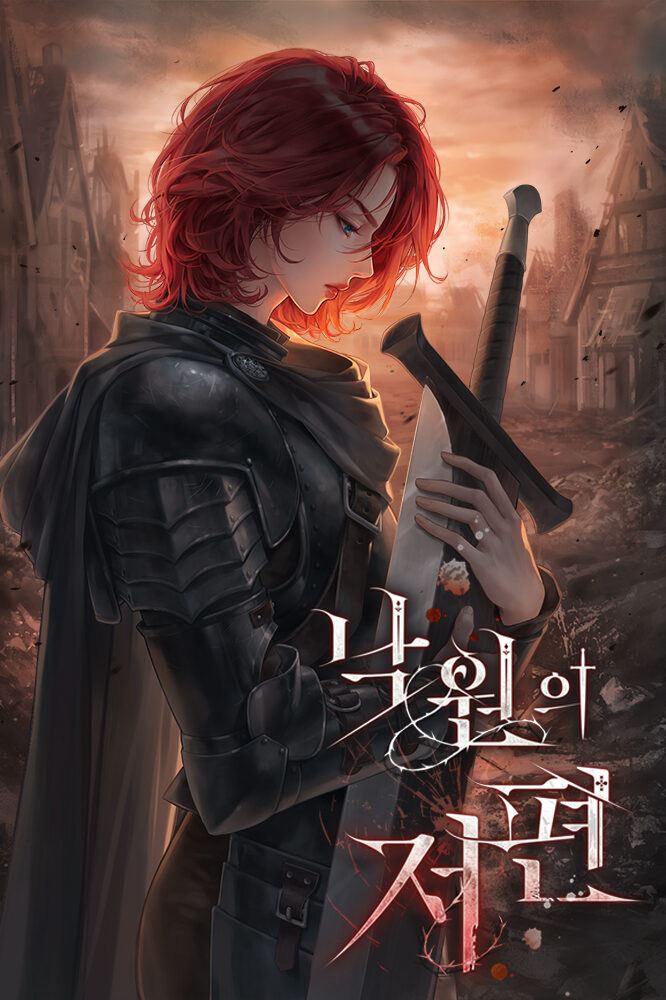
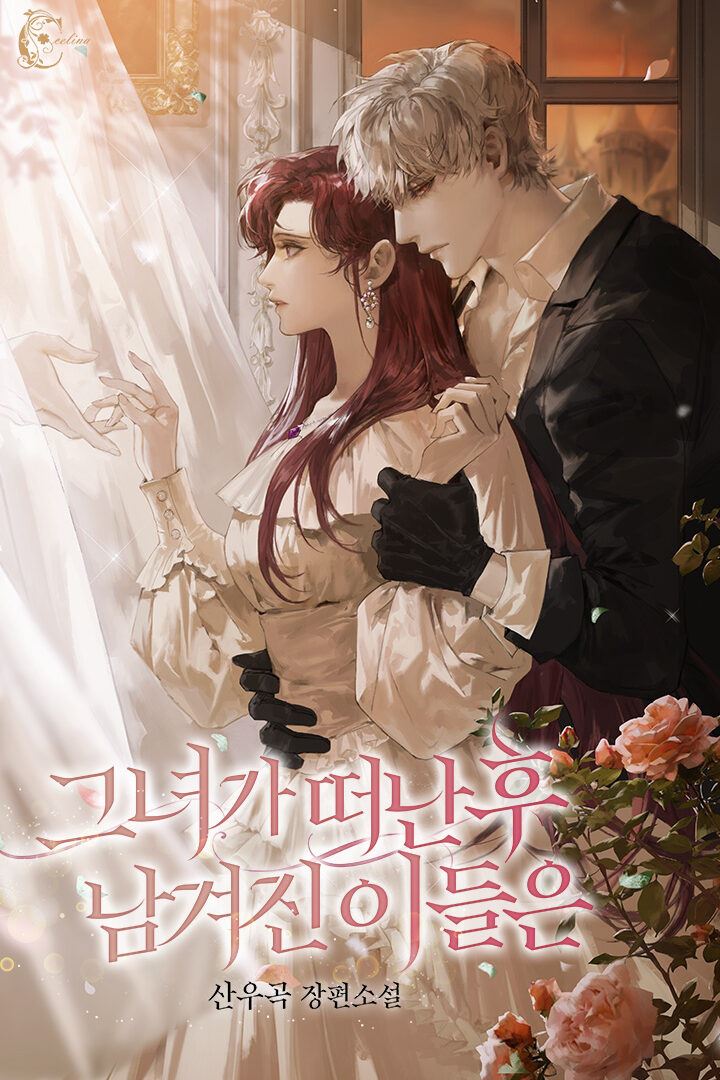
Leda Beatrice Weiss was the daughter of Testion Weiss, the loyal lord of Edelin, a strategic province of the Kingdom of Hanover. Despite her noble upbringing in a fortified castle known for its swan crest and ancient heritage, Leda’s life changed irrevocably during the midsummer Mainz Music Festival. There, she encountered Jupiter Schwarz, the ruthless Prince of the Greitz Empire, who had recently seized the imperial throne through violence. Jupiter, who possessed golden eyes and a cold, calculating nature, found himself inexplicably drawn to Leda’s innocence and warmth, capturing her hand during the Liberen Choir’s performance and refusing to release it even as the song ended.However, Jupiter’s romantic interest was overshadowed by his geopolitical ambitions. Seeking an ice-free port for the Greitz Empire, he demanded the province of Edelin from King Barth II of Hanover. When the king refused, Jupiter launched a swift military invasion. The conflict exposed deep fractures within House Weiss: Leda’s brother Darius advocated surrender to avoid bloodshed, while their father Testion chose to defend Edelin to the death, believing Hanover would eventually support them. When no reinforcements arrived and the king remained silent, Testion perished defending the fortress. His final act was to leave Leda and her dying mother with poison vials, instructing them to escape if he did not return.After Testion’s death, Darius surrendered the castle to Jupiter. In the treaty negotiations, Jupiter inserted a clause demanding Leda be taken into the Empire as a hostage to ensure Edelin’s compliance. When Leda learned of this, she accepted her fate, feeling that further resistance was futile given the deaths they had already suffered. She kissed her servant and secret admirer Sinclair goodbye—he gifted her a handcrafted pen—and departed for the Lourdes Convent near Kleve, where she would remain under imperial supervision for three years.Two years into her captivity, Leda attended a performance of The Flower Fairy ballet in Kleve. She encountered a composer named Dante, who had achieved immense fame with his new work. During the performance, Leda felt a strange déjà vu, particularly when Dante dedicated the piece with the words, “The master of my soul… May Beatrice’s winter nights ever be peaceful.” As the story progresses, Leda’s past with Jupiter remains a source of trauma, while her current life at the convent offers limited refuge. Meanwhile, Sinclair’s journey continues in parallel, driven by his unwavering devotion to Leda and his ambition to become a musician capable of standing by her side.
Latest Release
DateGroupRelease
2026-10-03dusk blossoms c95
2026-10-03dusk blossoms c94
2026-10-03dusk blossoms c93
2026-10-03dusk blossoms c92
2026-10-03dusk blossoms c91
2026-10-03dusk blossoms c90
2026-10-03dusk blossoms c89
2026-10-03dusk blossoms c88
2026-10-03dusk blossoms c87
2026-10-03dusk blossoms c86
2026-10-03dusk blossoms c85
2026-10-03dusk blossoms c84

Community Reviews

Rating(0 / 5.0, 36votes)
5 stars
0(0%)
4 stars
0(0%)
3 stars
0(0%)
2 stars
0(0%)
1 stars
0(0%)

Popular reviews

... Read More
The author absolutely weaponized atmosphere in these chapters. Like, they could have just told us 'the concert was fancy' but no — we get the painted ceiling called 'Bouquet in a Dream' with lovers flying through flowers and stars, eternal love defying gravity. And then immediately, the chandelier. Oh god, the chandelier. It once fell and killed people. Seat Five is forever empty. And Leda is sitting below it, feeling fragile and precarious, earthbound while everyone else soars. "They seemed to mirror her own feelings for the Prince." That line right there. The chandelier is hanging by a thread, ready to crash down at any moment. Just like her emotions for Jupiter. Just like her position in this empire. The setting isn't decoration — it's psychological architecture. And the abandoned palace where Pluto and Odinea meet? The desolate, dying courtyard reflecting his loneliness and hers. The thin drops of autumn rain on his shoulders. The way he brushes dirt from her book cover with careful hands. Every scene has this tactile, sensory richness — the damp scent of wood, the warmth of porcelain, the crimson velvet curtains embroidered with golden thread. You can FEEL these spaces. The grand staircase built of pale green marble and pink-hued onyx. Leda clutching the banister, shame pricking her with every step. The whole theater sequence reads like a film score — the golden eyes meeting in the dark, the hand that steadies her, then vanishes. Jupiter catches her swaying but never speaks. Not a word throughout the entire carriage ride, the entrance, the seats. Just that look. The worldbuilding here doesn't info-dump. It breathes through the environment. Every room, every object, every detail carries emotional weight. That's masterful.
... Read More
I came into these chapters thinking I knew the landscape, and then Sinclair showed up and the whole map got redrawn. Let me trace this: we've been following Odinea's story, Jupiter's coldness, Leda's secret feelings — and then BAM, a young man with brown hair appears at the opera, escorting some lady in blue, and Leda's world stops. "Sinclair!" Her vision swims. She wants to run to him but can't. He gets into a carriage with a completely different woman and vanishes. Then we get the flashback to Maria Calo finding him playing violin on a street in Mainz — young, barely twenty, playing a slow minor-key chaconne from memory, refusing money, asking only for a listener. She takes him in. He becomes the composer "Dante," refuses to use his real name, mentions Beatrice as his "Immortal Beloved" (a reference to Beethoven's unsent love letters, by the way, which is such a specific and devastating choice). And now Maria has spotted Leda watching Sinclair with that tangled expression — part joy, part sorrow — sitting in a carriage with the imperial black eagle. "Whoever she was, Maria decided, it warranted investigation." This is the plot moving like a freight train disguised as a waltz. Multiple secret identities (Dante/Discar, the hidden Prince Pluto), unrecognized romantic histories, a betrothal banquet that's about to explode, and Leda holding a piece of paper that connects her to this whole world. The author is weaving three separate threads — the imperial romance plot, the Sinclair mystery, and the Pluto/Odinea connection — and they're about to collide. The chapter ends with Angelo greeting Jupiter as "cousin" and mentioning the Kingdom of Hanover dispatched someone. More pieces falling into place. I am NOT ready for that betrothal banquet.

... Read More
Let me tell you about the violin. The gypsy mother's story of the devil's violin is EVERYTHING and I think it's the key to understanding Sinclair, Leda, and honestly the entire moral spine of this novel. "When that violin played a sad song, everyone wept, and when it played a joyful song, everyone laughed. Even the animals, the trees, the wind itself wept and laughed with its sound." That is not just a description of an instrument. That is a description of Sinclair himself. He is the thing that makes people feel too much. His music carries the weight of his mother's abandoned love, his father's violence, his own forbidden hunger for a girl he was told to serve. And Leda—she hears it. She always heard it. That's why she begged him to play with her, why she sat beside him turning pages she couldn't read, why she leaned close enough for her breath to hit his ear. The gypsy boy who received the devil's violin "only realized his sin afterward." Sinclair is that boy. His love for Leda is the sin. His restraint is the penance. Every time he calls her "my lady," he's punishing himself for wanting to call her Leda. But here's what haunts me: Leda's curse. "One day, you will bow your head and kiss the feet of those ruined by your sins." She believes in this with religious fervor. Not divine mercy—CURSES. She has replaced faith with vengeance and called it justice. And then we get the composer Dante writing about Beatrice—Dante and Beatrice, the Divine Comedy, earthly love transformed into divine guidance through suffering. Is Leda becoming her own Beatrice? Or is she the one who must walk through hell before she finds peace? The novel seems to be asking whether redemption is possible for people like Jupiter, and whether Leda's refusal to believe in it is protecting her or destroying her. I need to think about this more.
... Read More
I need to talk about Sinclair because I think I might be more obsessed with him than anyone has right to be. The barn scene is one of the most quietly devastating pieces of writing I've read, and it's devastating specifically because Sinclair doesn't do anything grand. No dramatic confession, no heroics. He just... sits. He remembers how his mother comforted him when his drunken father shouted, and he replicates that exact motion for someone else who's scared. 'Shall I tell you a story?' is the most ordinary sentence in the world and it carries so much weight because we know what shaped it. And that lullaby — 'May your winters always be peaceful and warm. As warm as the comfort you've given me.' — Sinclair is praying for HER peace while he's the one who grew up in a house where drunken men shouted. He's giving her the warmth he never had. This is selfless care disguised as a minor character moment, and I am NOT OKAY. Now cut to Jupiter. Frederick's entire thesis about him is chilling: 'A being without a single chink. A smile, but no heart behind it.' But then Frederick also describes the Mainz incident — the FIRST time Jupiter smiled without intent, without design. The girl he met, dined with, held hands with at a festival. And then the war happened and that girl became Lady Weiss 'blazing with grief and fury' and Jupiter's response was to claim her. The relationship geometry here is brutal. Sinclair gave Leda safety through storytelling and warmth. Jupiter gave her... well, we're still figuring that out. He saved her from the sea ('Because he still wanted her') but then didn't seek her out for months afterward. Now he's riding to the convent on a whim, which is completely out of character for a man who 'disliked impulsiveness.' Is this genuine feeling or just possessiveness wearing a different mask? I genuinely don't know yet and that uncertainty is keeping me up at night.
... Read More
The prologue sets up stakes that are DEVASTATINGLY personal and I am HERE for it. Leda is standing on a rock about to jump into dark water—and the man behind her is the one who SHREDDED her family. That's not just enemy territory, that's childhood intimacy weaponized. "The very hand she had once clasped with her own in Mainz. The large, warm hand she had clung to despite her shyness." The same hand that comforted her became the hand that destroyed her. That contrast is the most painful kind of betrayal. And yet—the twist? He jumps in after her. Why? Does he want to save her? Does he want to kill her in the water? Does he regret something? The text refuses to tell us, and that refusal is what makes the conflict so taut. Every word Leda speaks to him carries the weight of grief and rage: "I despise you." But she's trembling. Her eyes are bloodshot. She's standing on the edge of a cliff (literally and figuratively) and this man is the only thing anchoring her to the world. Meanwhile, the political stakes are building in parallel. Jupiter Schwarz isn't just some random handsome stranger—he's an imperial prince who has killed an empress, imprisoned his brother, and sent his own father into catatonic despair. "After killing so many, I find myself with little left to do." This is a man whose entire existence is conflict, and when he spots Leda—a woman moving like a swan through a festival city—he can't look away. The collision course is IMMINENT. There's also the class conflict simmering underneath, woven through Sinclair and Leda's conversation about music conservatories and the Greitz Empire's universities. Leda wishes she could study abroad, wishes music were equal, wishes her mother would let her chase her dreams. But she can't. She's a noblewoman with a controlling mother and a gilded cage. And yet she SNUCK OUT anyway. That small act of rebellion—leaving a dressed pillow in her bed—is huge for someone in her position. The pickpocket scene is another layer of tension. A child tries to steal from Leda while she's vulnerable. Jupiter stops him—not with violence, but with a casual trip of his foot. The boy stumbles, threatens to cry, and shoves the bag back before running away limping. Jupiter watches him go and recognizes the absurdity: this wasn't calculated. It was impulse. For someone who lives by cold calculation, that impulse is dangerous. It means he's still capable of unexpected reactions. It means Leda might wake up and look at him—and see something other than a monster. "At that instant, Leda felt a strange vertigo. Her knees nearly buckled... His face bore an impassive mask, yet his gaze struck her as dangerous..." She feels it. Something primal. And the fragment ending leaves us hanging on exactly what she feels.
... Read More
I need to talk about how this chapter handles one of the most interesting plot mechanisms I've seen in a while. Jupiter doesn't just take what he wants through brute force—he constructs scenarios where the other person feels like they've chosen their own path. The whole arrangement with Lourdes Convent is a masterclass in this. On paper, it's protective custody. In reality, it's a gilded cage. And the genius of it is that Leda herself seems to accept it with "surprising calm," which makes it all the more haunting. But the real plot twist here isn't structural—it's emotional. The entire chapter builds toward that moment in the rain, and honestly, it delivers. Jupiter finds her embroidery frame, gets scratched by a thorn, blood stains the swan feather. He pockets the handkerchief. Then he confronts her, kisses her fingers, and she slaps him. This is the first time the prince—the man who has never acted on impulse—loses control completely. The plot isn't just moving forward; it's cracking open something underneath. And then there's the transition to Princess Hestia. The abbess reveals that the princess has visited Lourdes yearly because of her lame leg, and now Leda is being reassigned to serve her at the palace. Is this mercy? A diversion? Or another layer of Jupiter's design? The narrative leaves it deliberately ambiguous, which is exactly right. We don't need answers yet—we need the discomfort of not knowing. The story trusts its readers to sit with that uncertainty.
See all reviews

Custom lists

See all custom Lists