Lady Michelin’s Blue Satin Ribbon - Reviews

Lady Michelin’s Blue Satin Ribbon
+Add to Custom List
Sort
Add review
... Read More
Let me start by saying the food descriptions in this novel deserve their own award category. Apple-braised bacon. Fresh apples already sold out. The marketplace going wild over recipes. This isn't just set dressing—it's worldbuilding that makes you hungry AND tells you everything you need to know about this society. The party at the grand ducal residence operates on so many levels. On the surface, it's a glamorous aristocratic gathering—jewelry, dresses, people exchanging polite greetings while secretly scanning for threats. But underneath, it's a battlefield. Every conversation Marcellus has with Edelle is a probe. Every noble watching them is calculating. When the pork incident happens (those pale, suspicious slices of meat destined to humiliate both the grand duke and Edelle), it's not comedy—it's assassination-adjacent violence disguised as culinary sabotage. The greenhouse scene with Liam later provides such a perfect tonal shift. After the suffocating pressure of the party, we get to see Edelle in her element—wiping tomatoes, humming tunes, discussing restaurant plans with someone who actually sees her as a person rather than a political asset. The contrast between these two worlds (the polished marble halls versus the earthy warmth of the greenhouse) really drives home what Edelle is fighting to protect: not just her family's status, but her own autonomy. Fonete itself feels incredibly alive. The new nobility trying to break into conservative circles. The territorial nobles consolidating power. The imperial palace where the crown prince rarely appears but somehow knows everything. The marketplace where rumors about Edelle and Eli spread faster than fresh apples sell. Every location serves a narrative purpose. I love that the author uses food as both comfort and weapon. The same apple-braised bacon that brings joy to the marketplace could have killed at the party. That duality creates this persistent undercurrent of danger beneath what should becelebratory scenes. Even when characters are laughing and dining, something could go wrong. The atmosphere maintains this perfect balance of warmth and threat that keeps you constantly engaged.
... Read More
I need to talk about the Grand Duke because something shifted. In every other scene he's been this impenetrable ice sculpture—perfectly dressed, perfectly composed, saying exactly what's needed and nothing more. But then at the sandwich shop, when Edelle says she "suffered" and he repeats it back in proper aristocratic pronunciation, and she tells him to put MORE emotion into it, and he just... sits there. Immobile. Those abyss eyes. And THEN later, when she's demanding the spoiled meat merchant go to prison and says both insults to him and danger to people make her angry, he actually LAUGHS. Out loud. Like, his blue eyes curve like flowers kind of laugh. Joseph and Edelle are staring at him in awe. This man who has apparently been incinerating everything that bothers him for seven years cracks a genuine smile over a woman complaining about food poisoning and social slights. I am not surviving this. Also the little detail that he's been coming to the sandwich shop ALMOST EVERY DAY and insists on picking up the order in person because "it gets cold on the way"—he's been seeking her out in the one place where she's most herself, behind a flour-dusted apron, and never said a word about it. That's either devotion or manipulation or both and I can't tell which and honestly I don't care.
... Read More
"Don't complain later that I've ruined your marriage prospects." "Ruined my marriage prospects?" "...So you are oblivious." "...What do you mean?"
... Read More
On the surface, this is a story about ribbons. Fake ribbons, real ribbons, stolen ribbons, ribbons hung by a count's daughter in the dead of night. But peel back one layer and you find something much richer about authenticity versus performance. The ribbons themselves are the perfect symbol. They represent Edelle's genuine passion — she created them because she loved food and wanted others to share that love. But the nobility has turned them into a status game. They scorn the trend as vulgar while lining up for the very thing they criticize. This is the novel's central irony and it's sharp as a knife: "They scorn it as vulgar, yet they covet the ribbon. Why? Because now the ribbon doesn't just signify a good restaurant — it creates restaurants with lines out the door. Who doesn't like money?" n Edelle's discovery at the convent — that revealing herself as the ribbon-hanger would shift attention from the ribbons to her, turning something she loves into a burden — is almost existential. It's about the commodification of passion, the way authentic desire gets twisted by social expectation. The herb garden connects to this too. It's a sacred space (men can't enter) that's also a playground. It represents something genuine — growth, nourishment, health — that exists outside the rigid structures of nobility and religion. Both Edelle and Eli are drawn to it for different reasons: she as a childhood sanctuary, he as a memory of his mother. And the ending of these chapters — Eli offering unlimited money for her food, Edelle refusing — frames the ultimate thematic question: can genuine art and passion survive when someone with power offers to buy it?
... Read More
Kyra is either the best or worst friend Edelle has ever had—I can't decide which. Her dialogue is pure electricity. "Just because nothing happened doesn't mean he's not interested, right?" —says the girl who absolutely lives to stir the pot. And Durant? Poor guy gets dragged into arguments he can't win. His resigned sighs and cautious phrasing against Kyra's spear-like jabbing creates this comedic rhythm that's impossible to skip past. The Marcellus conversations are where the dialogue writing really shines though. On paper, they're polite exchanges. In practice, they read like verbal combat. "What kind of relationship do you have with the Grand Duke, my lady?" —sounds like curiosity. Actually reads like interrogation. And Edelle's response? "If anything, we have a contractual relationship." Delivered with such casual dismissal while internally screaming. The gap between what characters say and what they mean? Chef's kiss. Liam's dialogue contrasts perfectly with everyone else's. Where Kyra fires, Marcellus prods, and Durant meditates, Liam simply OBSERVES. "Did Gale tell you that? He's such a blabbermouth." Short, warm, grounded. When he says "At least everything turned out well in the end, which is fortunate," there's this gentle exhaustion that makes you feel his loyalty without any grand declarations. The confession scene with Lucas—ah, that one hurts. "I knew how he felt, but..." —Edelle's internal narration captures the awkwardness perfectly. She thought ignoring it would work. She was wrong. The fact that she still respects his feelings enough to reject him properly rather than ghost him says everything about her character without needing a single dramatic speech. What strikes me most is how each character's voice is instantly recognizable. You could read a page with zero dialogue tags and know who's speaking. Kyra's rapid-fire challenges, Durant's defensive positioning, Marcellus's velvet-wrapped steel, Edelle's exhausted pragmatism, Liam's quiet competence. This level of vocal distinction doesn't happen by accident—it's crafted with intention and executed with precision.
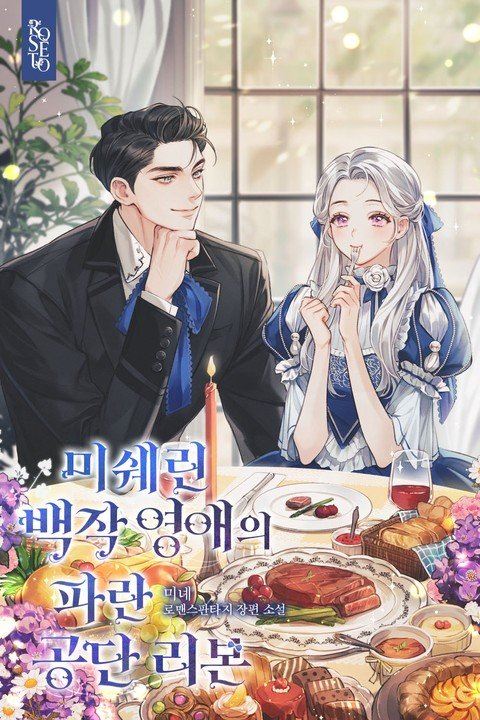
... Read More
"The Grand Duke kissed the back of your hand in front of all these people. How can you just let that slide?" Kyra basically screamed this the moment the party ended, and honestly? Same. You don't just casually perform a gesture that loaded with romantic and political implication and then pretend it was nothing. But here's the thing that actually got under my skin—not the hand kiss itself, but what happened AFTER. Edelle's internal monologue as she stood there blushing like mad is where the real character work lives. She keeps running through possible motivations: Was he being considerate? Testing the waters? Something darker? And the reader is left hanging alongside her, because Eli never explains himself. He just GIVES. The necklace. The public gesture. The mystery. Then you've got Durant, who goes from joking carefree brother to razor-sharp protective mode in one sentence. "Say something too, Kyra. This is all because you keep encouraging it." The sibling dynamic between these two is so well drawn—Durant's anger at the idea of someone bothering Edelle, Kyra's fearless goading, Edelle caught in the middle feeling guilty for both of their sakes. That poked-side scene? Pure comedy gold but also reveals how much pressure Edelle feels to keep everyone happy. And Lucas confessing to her while trembling? That made my heart hurt. Not because I'm shipping them (I'm not), but because Edelle's reaction shows such genuine respect for his feelings even while rejecting him. "She rejected him sincerely, respecting the sincerity of Lucas's feelings." That line says everything about her character. She doesn't play games. She doesn't string people along. She listens, she acknowledges, she lets them down gently. In a world full of political marriages and calculated alliances, that honesty is radical. But the crown prince scene... Marcellus watching Edelle with those "chillingly cold" smiling eyes? Created this unease in me that lingered long after the chapter ended. He's not just a rival—he's a predator who understands power in ways Eli apparently doesn't yet. And that conversation about business partnerships felt like a chess match disguised as small talk. Honestly, the relationship web in these chapters is so dense I could spend days analyzing it. Every glance, every interrupted sentence, every time someone grabs Edelle's arm—it's all loaded. I just want to know what Eli is actually thinking and why he gave her that necklace.
... Read More
Okay so I gotta talk about this whole deal where the Grand Duke asks Edelle to handle his party. At first it sounds straightforward — she's the best chef in town, why not? But then you start connecting dots and WOW. Kyra literally calls it a trap and honestly? She's right. Think about it. A young, unmarried Grand Duke asking a woman who hasn't even had her social debut to plan his residence party? That's not just rude social convention — that's suspicious. Because once she does this, suddenly everyone in Fonete knows she's involved with him. Rumors will fly. Her reputation gets tied to his. And what if the party goes wrong? Ten years of Michelin family reputation, gone. But here's what really gets me — the Grand Duke KNEW about the ribbons. When Edelle thought she was being clever hiding that she was the one who assigned the restaurant ratings, Eli just... let it slide? He knew everything and played along? That scene where he asked Durant if he was the heir and then casually mentioned rumors about Edelle looking like her brother — he was testing her, reading the room, playing chess while everyone else was playing checkers. And the rumor about Edelle and Lucas getting engaged?! From WHERE? The Coach Builder employees started it? This is already spiraling and we're only halfway through the chapter arc. The plot keeps layering complications on top of each other like an onion and I'm already crying.
... Read More
I don't normally comment on pacing but this section had me absolutely RUSHING through. Here's why: It starts with a relatively quiet scene — Edelle and Durant talking about the Grand Duke's offer. Normal sibling banter, internal deliberation. Then BAM, the rumor about Lucas drops and the energy completely shifts. Edelle goes from 'hmm maybe I should think about this' to 'what the actual hell is going on?' and I was right there with her. Then she walks to the sandwich shop and finds GRAND DUKE NORTON eating a sandwich with armed knights blocking the entrance. This is such a great reveal moment — we've been hearing about this mysterious Grand Duke for chapters and finally he appears in a mundane setting, hunched over a wooden table, eating street food. The contrast between his status and the setting is everything. And then just when you think the chapter is winding down with the ribbon reveal conversation, Kyra shows up and drops ANOTHER bomb — the engagement rumor is EVERYWHERE and nobody told Edelle? The pacing here is just chef's kiss. Every scene ends with a new piece of information that makes you immediately want to turn the page. The transition from the serious Grand Duke negotiation to the casual lunch with Kyra is also well done. It gives you breathing room but the moment you relax, Kyra pulls the rug out again. Can't catch a break and I'm here for it.
... Read More
There's a scene in here that I keep coming back to and I can't stop thinking about it. Lucas hands Edelle the nutmeg. She's glowing—'this will last me months, no, a year!'—and he can't help but smile along 'as if he had no choice.' That phrase. AS IF HE HAD NO CHOICE. That is the most Lucas thing ever written. He smiles when she's happy even though his happiness has nothing to do with her gratitude. He gives her something precious from another person's expedition without hesitation. He stays for dinner invitations she offers more out of politeness than genuine interest. And then immediately after, we cut to Edelle being thrown out of the kitchen because her knife skills are terrible, and Eli is there showing her around like a proper gentleman, and she's feeling wronged that no one at the Count's residence ever let her touch a whisk. Two different boys, two different kinds of care, and she doesn't even see the difference yet. The Eli moments are hitting different though. When he explains about the mansion and his family history, he's not performing vulnerability—he's just... telling the truth. And when she worries about whether it's appropriate to share personal stories, his response is 'you've shared personal stories with me too.' He's tracking every interaction, every exchange, like a ledger of trust. And then the eyes thing—the blue eyes that looked like ice now curving 'like flames'—that shift from cold aristocrat to someone who actually feels things is the most romantic beat in this entire chapter. I'm not crying, you're crying.
... Read More
There's something deeply symbolic about those ribbons, isn't there? Edelle started hanging them when she was eight—not as a corporation or an institution, but as a kid who found good food and wanted to share it. "To remember the hidden gems tucked away in Fonete's complicated alleyways." That's not just a review system. That's someone trying to map beauty onto a world that doesn't value it. The ribbons become a symbol of her entire mission: proving that delicious things matter, that taste isn't vulgar, that people deserve warmth in their food and their lives. And then there's the rebirth angle. She died from overwork in Korea and came back here, obsessed with eating well. "Having worked as a food service marketer in South Korea for a full decade, Edelle was determined to eat only delicious food in this life, if only to make up for her unjust death." That's not just backstory—that's the whole theme. She's living for the sensory joy she was denied before. The salt-and-pepper-only world represents stagnation, tradition without thought, nobles looking down on "vulgar" cravings. Her peaches and sautéed onions are rebellion. I keep thinking about how the fake ribbon shops lost customers when people realized they were fraudulent. That's the author saying: authenticity matters. You can't fake taste. You can't fake caring. Edelle's whole existence is about refusing to accept a bland world.
... Read More
Okay so let's talk about the structure here because this whole sequence is deceptively layered. You start with something utterly mundane—cilantro sandwiches being controversial—and by the end you've got engagement rumors, a rejected confession, a stolen restaurant, and a secret trading ship all tangled together. That's not an accident. The author uses the gossiping customers as a plot device twice: first to drop the Lucas-engaged-to-someone-else bomb, then again to show Edelle's face falling when her name gets dragged into it. And the reveal that the whole restaurant thing started because she rejected Lucas's confession? That came out almost casually, right after she was already venting about the theft. It landed like a second hammer blow. My favorite structural choice though is how the Grand Duke keeps appearing at the most unhinged moments—at the sandwich shop, then suddenly at her family's house—and each time he says less but reveals more about what he knows. When he quoted her line back at her with perfect aristocratic diction while she was mid-rant, that was the kind of moment where the plot bends toward something bigger. Who is this man really? What does he know? The author isn't telling us yet and I am OBSESSED.
... Read More
Let's talk stakes, because they are SO high right now and I am NOT okay with it. The restaurant opens in THREE DAYS. THREE. Days. And the Duke just pulled the rug out. Hundreds of thousands of lions invested—Edelle's family's money, their reputation, their future—all potentially gone because one arrogant duke decided a marquis family is more convenient than a count family. But here's what makes this genuinely tense: it's not just about money. It's about Edelle's agency. Every time someone tells her what to do—whether it's Lucas's father proposing a marriage-for-business deal, or the Duke offering her a pittance to write columnists for his new venture—they're trying to shrink her. To make her small again. And each time she refuses, she gets stronger. "No matter how much you pay me, I can't write a column for you. If the food isn't delicious, I have nothing to say about it." That refusal cost her the partnership. It might cost her the restaurant entirely. But she said it anyway. That's the kind of moment that defines a character. And then the trading ship opportunity is also at risk because of this fallout. One domino falling, and suddenly the whole chain is collapsing. TheMichelin family needs cash, they need investors, and now their most powerful ally has publicly abandoned them. Luke's 'help' made it worse, not better. The scene where she's sprawled across the bar table at Joe's Sandwich Shop, too exhausted to even care about his warm sandwiches, is devastating. She's not just tired—she's defeated. And yet, I have a feeling this is the moment right before everything flips. She's at her lowest, but she hasn't broken. The question is: what happens next, and how does she fight back? I need to know. I literally cannot stop reading.

Leave a comment

You must be logged in to leave comments. or
