Summary

... Read More

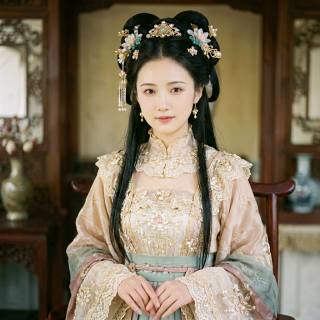
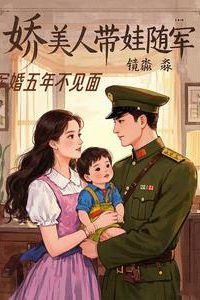
Bai Linglong, a top-tier physician from a modern medical clan, transmigrates into the body of the legitimate daughter of the Marquis of Southern Qi. Upon awakening, she finds herself drugged with an aphrodisiac by her concubine-born half-sister, Bai Xinyao, and Concubine Li, who seek to destroy her reputation and seize her status. Desperate, she escapes into a neighboring room and encounters Nangong Yan, the King of Zhennan, who is suffering from a chronic poison. Using her medical knowledge and a special spatial system inherited from her past life, she neutralizes the drug and treats his poison, an encounter that binds their fates together. Upon returning to her courtyard, Bai Linglong discovers her spatial system has accompanied her, granting her access to rare herbs, advanced medical knowledge, and teleportation abilities. She resolves to fight back against her enemies rather than remain the meek victim the original host was known to be.

Concubine Li and Bai Xinyao, furious that their scheme failed, fabricate a story that Bai Linglong eloped with a man. When Bai Linglong returns, she confronts them in the Marquis’s study, slapping Concubine Li and exposing their lies with cold precision. The Marquis, though angry at the disruption, punishes the concubine by halving her allowance and confines Bai Linglong to her courtyard for half a month, a decision that allows the antagonists to plot further. Undeterred, the mother and daughter seek out a sorcerer from the Western Regions who specializes in Gu parasites. They purchase a lethal Soul-Eroding Gu, intending to poison Bai Linglong during her upcoming birthday celebration. However, Bai Linglong, having overheard their plans, uses her spatial powers to secretly transfer the poison from her food to Bai Xinyao’s plate. The curse takes effect on Bai Xinyao, causing agonizing pain and near-death symptoms that the household physicians cannot treat.

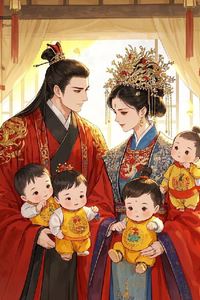
Concubine Li, desperate to save her daughter, pays the sorcerer a hefty sum for an antidote. The sorcerer extracts the Gu parasite, saving Bai Xinyao but leaving the conspirators humiliated and defeated. Still unwilling to accept loss, Concubine Li recruits her cousin, Zhou Wu, and a Jianghu poison master to assassinate Bai Linglong during a temple pilgrimage. Bai Linglong anticipates their move and uses her spatial abilities to fake her own death, appearing to fall off a cliff while secretly escaping with the family’s treasury. She relocates to Qingyan Mountain, where she purchases land and builds a secluded residence, accompanied by a loyal servant girl named Xiaocui whom she had rescued from thugs. There, she discovers she is pregnant with quadruplets, a fact she keeps secret while preparing for a peaceful life away from the Marquis’s residence.

During a trip to town, Bai Linglong witnesses a complicated childbirth that local doctors have declared fatal. Using her spatial hospital, she performs a cesarean section, saving both mother and child. The miraculous surgery attracts the attention of the local physician, Doctor Zhang, who begs to become her apprentice. Bai Linglong accepts him, sharing medical texts and establishing a reputation as a miraculous doctor. Her fame eventually draws the attention of the Chen family, whose young master suffers from a mysterious illness. As Bai Linglong prepares to descend the mountain to treat him, the King of Zhennan, Nangong Yan, continues his relentless search for the woman who entered his room months prior, unaware that she is the same person he now seeks. The story concludes with Bai Linglong balancing her new life as a mother and healer while remaining a target for those who wish to reclaim her or destroy her, setting the stage for further conflicts with both her familial enemies and the powerful king.

Latest Release
DateGroupRelease
2026-08-11shanghai fantasy c154
2026-08-11shanghai fantasy c153
2026-08-11shanghai fantasy c152
2026-08-11shanghai fantasy c151
2026-08-11shanghai fantasy c150
2026-08-11shanghai fantasy c149
2026-08-11shanghai fantasy c148
2026-08-11shanghai fantasy c147
2026-08-11shanghai fantasy c146
2026-08-11shanghai fantasy c145
2026-08-11shanghai fantasy c144
2026-08-11shanghai fantasy c143

Community Reviews

Rating(3.9 / 5.0, 10votes)
5 stars
4(40%)
4 stars
1(10%)
3 stars
5(50%)
2 stars
0(0%)
1 stars
0(0%)

Popular reviews

... Read More
Let me be honest with you—this batch moves like a freight train and I am here for it, but I also want to talk about the places where the author seems to be running out of breath. Chapter 10 is pure momentum. The carriage breaks, the assassins attack, Concubine Li and Bai Xinyao gloat, they go home and fake cry, the Marquis falls for it, and then—cut to Bai Linglong sitting safely in an inn. That transition is brutal. One paragraph she's being attacked by assassins at a cliff edge, the next she's sipping tea in Taohua Town. The author doesn't even give us the moment of escape. We just... arrive at safety. It's efficient, sure, but it also means we miss the catharsis of seeing how she pulled it off. Chapter 11 is where the pacing really picks up. We go from the inn to the marketplace, to fighting thugs, to adopting Xiaocui, to buying land, to building a house, to settling on Qingyan Mountain—all in one chapter. Months pass in a few paragraphs. "Months later, an exquisite residence rose at the foot of Qingyan Mountain." That's it. That's the whole montage. And while I appreciate that the author doesn't want to bog us down with construction details, I also kind of wish we'd gotten more of that process. The building of a new life should feel earned, not skipped over. But then Chapter 12 slows down beautifully. The quadruplet reveal is paced perfectly—Xiaocui notices the belly, comments on it, Bai Linglong checks her pulse, the shock builds, and then the reveal. It's a quiet scene, but it's loaded with tension and emotion. The author knows when to slow down and when to speed up, and this is a great example of the latter. Chapter 13 starts with more downtime—Bai Linglong teaching Xiaocui medicine, enjoying her pregnancy, drinking from the spiritual spring. It's a nice breather, but it does feel a little thin. We're told she's teaching medical skills and researching multiple pregnancies, but we don't really see it. It's summary instead of scene, which is fine in moderation but starts to feel like the author is coasting. And then—bam—the clinic scene. A pregnant woman in labor, an old woman begging, a closed door, a crowd of helpless onlookers. The pacing here is sharp and urgent, and it pulls us right out of the tranquil mountain life and back into danger and drama. Overall, the pacing is mostly effective. The author understands that serial fiction needs to keep moving, and they deliver on that promise. But there are moments where the speed comes at the cost of emotional depth, and I wish there were more scenes that let us sit with Bai Linglong's victories instead of rushing to the next one.
... Read More
So the title. I need to address the elephant in the room—Bai Linglong is referred to as "Miraculous Doctor" constantly. Like, everywhere. The servant kneels and calls her that. The patients in line use it. Even the mysterious man, who is clearly up to something, still defaults to it. At first I thought it was repetitive, but honestly? It works. It tells you everything you need to know about her reputation in this world without a single exposition paragraph. People don't just respect her—they worship her. And that's fascinating because the dialogue around her always matches that energy. The young servant doesn't just ask for help; he falls to his knees and says, "The doctors in the city have all given up. Only you can save him!" That's not just dialogue; that's worldbuilding through speech. The patients' voices are distinct too. The middle-aged woman who says "saving lives is paramount" sounds like a genuinely kind person. The tattered old man worried about cost feels real—his fear isn't of death, it's of being a burden. And Bai Linglong's own dialogue? She never grandstands. When she tells the mysterious man, "if I discover anything amiss or if you are hiding something from me, I will cease to treat this matter immediately," it's firm but not theatrical. It's the voice of someone who knows her worth. The narrative voice itself is interesting too—it's third-person limited, staying close to Bai Linglong's perspective, but it doesn't over-narrate. It trusts the dialogue to carry the emotion. The only thing that slightly pulled me out was when some of the translations felt a touch stiff, like "his eyes fla" cutting off mid-word in the last chapter. But that's probably a batching issue. Overall, the dialogue here feels purposeful. Every line reveals character or advances the plot. I haven't encountered a single exchange that felt like filler.
... Read More
There are so many layers to this batch that I think the author might not even be fully aware of them. Let me try to unpack a few. The most obvious symbol is the spiritual spring. It's described as "clear" and shimmering, with "wisps of spiritual energy" rising from its surface. This isn't just a magical convenience—it's a symbol of renewal, of something pure and untouched that exists in contrast to the corruption of the Marquis's mansion. The spring is where Bai Linglong goes to heal, to plan, to prepare. It's her secret source of power, and it's also a metaphor for the inner strength she's discovering within herself. She doesn't need the mansion's wealth or status; she has this spring, and it's enough. Then there are the peach blossoms. Xiaocui suggests planting them, and Bai Linglong agrees. Peach blossoms are a classic symbol in Chinese literature—they represent spring, renewal, beauty, and sometimes even romantic love. But in this context, I think they represent something more personal: the future Bai Linglong is building. These flowers will bloom in soft pink shades, and they'll be her children's first view of the world. They're a promise of beauty and growth in a place that was once just empty land. The contract that Xiaocui is clutching—"Selling Myself to Bury Grandfather"—is another powerful symbol. It represents the complete erosion of dignity that poverty can cause. This little girl would rather sell herself than let her grandfather go unburied. It's a devastating image, and it's also the catalyst for Bai Linglong's transformation from victim to savior. She was just saved from assassination, and now she's saving someone else. The cycle of violence and betrayal is interrupted by an act of pure compassion. And the quadruplets themselves—four babies, four lives, four reasons to fight. In a story about family betrayal and political intrigue, the arrival of new life is the ultimate act of defiance. Bai Linglong could have ended her life when she faked her death. She could have disappeared completely. Instead, she chose to bring four new beings into this cruel world and give them a chance. That's not just a plot point; it's a thematic statement. The closed door of the medical clinic at the end of the batch is also worth thinking about. It represents helplessness, the limits of ordinary people's power, and the kind of crisis that will inevitably pull Bai Linglong back into action. She's built a peaceful life, but the world won't let her stay in it. The door is closed, but she's about to open it. What I find most compelling about this batch is how it balances personal survival with broader social commentary. The thugs bullying Xiaocui, the helpless crowd at the clinic, the Marquis's mansion built on betrayal—these aren't just plot devices. They're glimpses into a world where the powerful exploit the weak, and where a woman with no power has to become extraordinarily powerful just to survive. Bai Linglong's journey isn't just about escaping danger; it's about reclaiming agency in a world that keeps trying to take it away.
... Read More
I have to talk about the atmosphere in these chapters because the author really knows how to paint a picture. Let me start with the medical hall itself—the crowded line of patients, the tattered old man with rheumatoid arthritis, the anxious scholar worried about his seizures and the imperial exam. It feels lived-in. You can smell the herbs, hear the murmurs, feel the exhaustion on Bai Linglong's face as the sun sets. But then—and this is where it gets interesting—the story pivots to that courtyard. "The moonlight cast a hazy glow, and the surroundings were eerily quiet, with only the sound of their footsteps echoing along the empty road." Chills. Actual chills. The contrast between the warm, bustling medical hall and this desolate, almost haunted courtyard is masterful. And the courtyard itself—"a slightly dilapidated courtyard" with "no signs of life"—it's not just a setting, it's a character. The rustling in the shadows, the dimly lit room, the patient whose complexion is "as pale as paper." Every sensory detail pulls you deeper into this world. I also loved the detail about the door making an "ee-ya" sound when it creaks open. Tiny things like that make the world feel tangible. The author doesn't over-describe; they pick the right details and let you fill in the rest. By the time Bai Linglong is walking back with Xiaocui, stroking her belly, dusk settling around them, I felt like I was right there beside her. The worldbuilding here isn't about exposition dumps or infodumps—it's about atmosphere, about making every location feel distinct and alive. And that final image of the patient's wife waiting anxiously at the entrance, voice choked with tears? That's the kind of scene that sticks with you long after you've finished reading.
... Read More
I have a love-hate relationship with the dialogue in this batch, and I think the hate part says more about my expectations than the actual writing. Let's start with Concubine Li and Bai Xinyao because their dialogue is exactly what you'd expect from cartoon villains, and honestly? It's kind of refreshing. "Haha, Bai Linglong, you little vixen, you've finally died!" — Concubine Li "Mother, from now on, the Marquis's Mansion will be ours!" — Bai Xinyao They don't even try to hide their evil. They gloat openly. They laugh out loud at the thought of murder. And then they put on a performance for the Marquis that's so over-the-top it's almost comedic. "Father, on our way to the temple, we were attacked! Sister... she was pushed off the cliff by the assassins while trying to protect us." The word "while trying to protect us" is the kind of line that makes you want to throw the book across the room. It's so deliberately manipulative, so shamelessly performative, that it's almost impressive. These characters aren't subtle, but they're consistent. They're villains who know they're villains, and the dialogue reflects that. Bai Zhentian's dialogue is equally straightforward. "This is outrageous! How dare they attempt to assassinate my daughter right under my nose!" He's a father grieving a daughter he barely seems to have known, and his anger is genuine but also shallow. The author doesn't waste time making him complex—he's an obstacle, a symbol of the family's dysfunction, and his dialogue serves that purpose. Now, Bai Linglong's dialogue is where things get interesting. She's a woman who has been betrayed, attacked, and forced to fake her death, and yet she doesn't speak in grand monologues or philosophical reflections. Her lines are practical, direct, often quiet. "Baby, from now on, it will just be the two of us. Your mother will do everything in her power to keep you safe and help you grow up peacefully." That's it. No dramatic speech, no vengeful declaration (well, okay, there is one later: "Concubine Li, Bai Xinyao, and everyone who's in the Marquis Bai Zhentian Mansion, just wait and see. Once I safely gave birth to my child, you will pay dearly for your past actions!"). But even that feels more like a private vow than a public threat. Xiaocui's voice is the most distinctive in the batch. She's young, innocent, deeply grateful, and her dialogue reflects all of that. "Sister, your great kindness is beyond my ability to repay. I am willing to be your servant for life!" and "As long as you like it, Sister. You are carrying four little treasures; you need to nourish yourself well." She never questions, never challenges, never has an opinion that isn't rooted in service and care. It's a narrow voice, but it's an honest one, and it contrasts perfectly with Bai Linglong's more guarded, strategic speech. The townsperson dialogue is functional but forgettable—"Oh dear, this poor girl..." and "Yeah, and no one is doing anything about it." These are filler lines that establish the setting but don't add character. That's fine for background voices, but it does make the world feel a little flat in those moments. Overall, the dialogue serves the story's purposes well. It's not going to win any literary awards, but it's clear, functional, and mostly consistent with each character's role. The villains are villainous, the hero is restrained, and the supporting characters fill their niches without drawing too much attention.
... Read More
Okay, I need to talk about this one moment because it genuinely got to me. Bai Linglong is lying in bed, tossing and turning, and the baby in her womb moves—like, actually moves, as if sensing her anxiety. And she just whispers, "Be good, baby. Once I, your mother resolves this matter, I'll spend all my time with you." That's it. That's the whole thing. No big dramatic speech, no tears, just this quiet, aching promise from a woman who is already carrying so much and still choosing to run toward danger instead of away from it. What got me was how natural it felt. She's four or five months pregnant, her mobility is limited, and yet when that mysterious man shows up, she doesn't hesitate. Not because she's reckless, but because the alternative—turning away from someone suffering—is literally impossible for her. The maternal instinct isn't just directed at her own child either. Look at how she handles the young woman and her dying brother. She pats the girl's shoulder, tells her not to worry about money, feeds the feverish child medicine drop by drop while murmuring encouragement like "Little friend, drink this medicine, and you will get better." This woman's capacity for care is almost frightening. And then there's the undercurrent with Xiaocui—her servant, her friend, the one who worries aloud about conspiracies while Bai Linglong stays calm. Their bond feels real, not manufactured. Xiaocui isn't just a sidekick; she's the emotional barometer of the story. When she says her heart hasn't stopped racing, I believed her. I kept waiting for some romantic subplot to surface, but honestly? The emotional core here is so much richer than that. It's about duty, sacrifice, and the quiet love between a mother and her unborn child. That's what I came for, and that's what stayed with me.
See all reviews

Characters

See all characters

Custom lists

See all custom Lists