Kick the Ex-Husband, Seize the Property, and Marry the Scumbag's Superior - Reviews

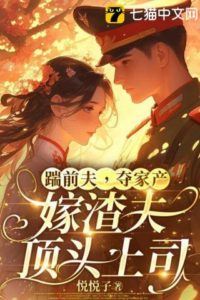
Kick the Ex-Husband, Seize the Property, and Marry the Scumbag's Superior
+Add to Custom List
Sort
Add review
... Read More
Okay so let me just say — the opening of this book is NOT playing around. Ruan Zheng wakes up and the very first thing she encounters is some drooling simpleton shouting about having babies while lunging at her. And her reaction? She kicks him across the room. Immediately. No hesitation, no screaming, just pure survival instinct. That's the plot hook right there — this isn't a girl who's going to sit around being victimized. The transmigration setup is classic but executed with real urgency. She doesn't get a warm welcome or a gentle tutorial — she gets a flood of someone else's memories and a body that's already covered in blood. The original host had just killed herself by slamming her head against a wall, and Ruan Zheng shows up at that exact moment. Talk about bad timing. But what really made me sit up was her decision to NOT follow the original plot. The original Ruan Zheng was supposed to die here, take the blame, and become the slandered widow. Instead, Ruan Zheng decides to live — and not just survive, but make everyone who hurt her feel like they have a fishbone stuck in their throat. That's a much more interesting motivation than simple revenge. The system dropping at the end was a nice twist too. Resurrection Armor for three days? Go back to the modern era, stockpile supplies, then return to the 1960s to become a supermarket operator? That's a whole different genre shift happening right there. I was not expecting that at all.
... Read More
I started this book at 11 PM. It is now 3 AM. I have no regrets except that my eyes are burning. The pacing is absolutely relentless. Chapter 1: transmigrates into a horror situation, escapes, meets the male lead, heads to the city. Chapter 2: kicks down the door, destroys her husband verbally, exposes the conspiracy, collapses, gets a system. That is TWO chapters and we've already had the inciting incident, the confrontation, the first major twist, AND the system activation. Most novels take ten chapters to get this far. This one does it in two and still has room to breathe. What I love most is how the author controls the tension. Every scene ends on a note that demands you read the next one. Chapter 1 ends with Ruan Zheng deciding to hide and then immediately running into Song Zheng — a perfect pivot from survival mode to something more hopeful. Chapter 2 ends with her consciousness floating above her body and a system voice asking if she wants to bind. That cliffhanger is brutal. The scene transitions are also smooth. She goes from the village hut to the woods to the county town to the military compound and it never feels rushed despite covering a huge distance. The author knows exactly when to speed up (the escape sequence) and when to slow down (the confrontation scene, where every line of dialogue lands like a punch). I'm already obsessed. Send help.
... Read More
The pacing here is absolutely ruthless, and I mean that in the best possible way. Chapter 5 starts with Ruan Zheng half-conscious, dreaming the original plot, waking up furious, and within the same chapter confronting Zheng Xiujie. That's an incredible amount of narrative ground to cover, and the author handles it with surgical precision. There's no wasted scene, no filler dialogue. Every exchange moves the plot forward or reveals character. The transition from the dream sequence to the confrontation is seamless — she wakes up and immediately sees Zheng Xiujie blocking the door, and the reader understands instantly that her nightmare has become her reality. The pacing accelerates from there: Ye Wentao enters, the argument escalates, the ward patients intervene, and then — just when you think it's over — Auntie Wu arrives with food and a moment of warmth. That food scene is crucial pacing. It's a breather, but it's also character development. Ruan Zheng's explanation about stuffing food because she's afraid someone will take it away — it's heartbreaking and it tells us everything about her past without a single exposition dump. And the System's internal monologue during this scene is perfectly timed comedy relief. Then Chapter 6 hits like a freight train. Zheng Jianguo arrives, the three conditions are stated, and the power dynamic shifts completely when she reveals her true bargaining chip. The chapter ends on a cliffhanger — Zheng Jianguo looking at her carefully, veins bulging — and I literally had to stop reading and process what just happened. The structure mirrors a fight scene: opening exchange, escalation, intervention, moment of respite, then the real battle begins. And by the end, Ruan Zheng has gone from victim to negotiator to someone holding the entire family's fate in her hands. That's not just good pacing — that's masterful narrative engineering.
... Read More
The Yiwu shopping sequence is one of those scenes that just rolls off the page like a freight train. Ruan Zheng moving from grain to dried goods to fresh produce to fruit to seeds to pharmacies to condoms to baked goods — it's chaotic, it's overwhelming, it's absolutely perfect for someone who has three days to prepare for a transmigration. What I love is how the author grounds this in specific, sensory details. 'One thousand jin of apples, one thousand jin of pears, one thousand jin of bananas, one thousand jin of Ponkan oranges, one thousand jin of Satsuma oranges, one thousand jin of ice oranges.' The repetition creates a rhythm, like she's checking items off a mental list. And then: 'The last two were particularly expensive in winter, but when she thought about how the 1960s hadn't yet cultivated varieties like Qilin watermelons or Dandong strawberries, she couldn't bring herself to give up these favorites.' That's such a small detail but it tells us everything about her priorities — she's not just surviving, she's trying to maintain some quality of life. The hospital scene is where the worldbuilding really shines. The enamel mug on the bedside table. The doctor who can only prescribe 'nutritional supplements' and send her home. The onlookers who've never heard of concussions and immediately assume the worst. The prescription that becomes a valuable commodity because it allows coupon-free purchases. These aren't just background details — they're the actual mechanics of survival in this era. And the ration coupons! I love that Ruan Zheng had an epiphany about this mid-shopping spree. 'Circulate? Ruan Zheng had a sudden epiphany and immediately went online to search for various ration coupons.' That moment of realization — that food alone isn't enough, she needs the currency of this era — shows how thoughtfully the author has built this world. Money doesn't work the same way. You need the right paper to buy the right things.
... Read More
Okay so first of all — the body goes with her. I did a double take when Ruan Zheng vanished from the Yiwu market and ended up in the hospital body. Soul transmigration is so last season. Having the physical body arrive means she can actually interact with the world, eat the food she stockpiled, get hurt, die. The stakes are real. That's a smart narrative choice because it removes the usual cheat of being an invisible ghost observer. Then immediately — murder attempt in chapter 4. Wang Jinhua tries to strangle her. Not some slow-burn family drama, no, straight up attempted murder within the first few chapters. And Ruan Zheng's response? She doesn't just survive, she weaponizes the entire social system. The way she escalates from 'help me call the police' to a full theatrical performance about feudal oppression, human rights violations, revolutionary martyrs — it's brilliant. She reads the room, understands what will make people on her side, and plays to it. The concussion diagnosis is another plot gem. In a time period where 'eat well and rest' is basically a terminal sentence, she turns a medical limitation into social sympathy. The onlookers' reactions — going from curiosity to genuine horror — show how the author understands 1960s social dynamics. Ruan Zheng isn't just smart, she's strategically intelligent. She knows exactly which buttons to push. The shopkeeper scene at the end though — 'You're planning to cross over too, aren't you?' — that's the kind of plot twist that makes you laugh out loud. It recontextualizes everything. This isn't a one-time event, it's an ongoing phenomenon, and this guy is running a crossover supply business. The world is bigger than we thought.
... Read More
Let's talk about stakes, because these chapters are a masterclass in escalating tension without a single physical fight. On the surface, Ruan Zheng is a hospital patient with a concussion. But she's also the only person who knows the Zheng Family's darkest secret—that Zheng Wanyin was swapped at birth, that Zheng Jianguo secretly replaced his own daughter, and that he knows it. This information is her weapon, and watching her wield it is genuinely thrilling. The stakes shift constantly throughout these chapters. First it's about survival—Ruan Zheng nearly died from Wang Jinhua's assault. Then it becomes about justice—forcing the Zheng Family to acknowledge what they've done. Then it morphs into something even more interesting: economic independence. Six hundred for a job, a thousand with compensation for her health. She's not asking for mercy; she's negotiating terms like a business deal. But the real stakes are emotional, and they're hidden in plain sight. Liu Xiangqin's refusal to acknowledge Ruan Zheng as her daughter isn't just cruelty—it's a threat to Ruan Zheng's entire identity. If no one claims her, she doesn't exist in this family's power structure. And yet, Ruan Zheng turns this into leverage by forcing Liu Xiangqin to negotiate rather than command. The Song Family's fear of rumors affecting Song Changjiang's career adds another layer of stakes. The Wei Canmou chicken story is terrifying precisely because it shows how a small domestic dispute can spiral into political destruction in this world. Ruan Zheng knows this, which is why she's careful—not threatening the family directly, but extracting compensation before they come after her. And the suspense? Unrelenting. Every time Liu Xiangqin seems like she might soften, Song Yao intervenes. Every time Ruan Zheng gains ground, a new complication emerges. The chapter ends with Liu Xiangqin beginning to reflect—just for a moment—before the narrative cuts away. That's the kind of cliffhanger that makes you immediately open the next chapter.
... Read More
The sensory details in this book are doing SO much heavy lifting and I need to talk about it. Opening image: Ruan Zheng opens her eyes, reaches up to steady herself, and finds her hand covered in blood. That's it. That's the hook. You don't need to know what happened yet — the blood is enough to make you keep reading. Then there's the village setting. The thatched hut, the cold floor, Wang Jinbao crying and kicking his legs like a tantrum-throwing child despite being forty-something. The image of him with drool running down his chin while shouting about having babies is simultaneously horrifying and almost absurdly dark-comedy. The author balances the horror with these moments of grotesque realism that make the world feel lived-in. And the journey sequence — Ruan Zheng walking until her legs feel like lead, vision darkening, then sneaking into a house and ending up in the back of an ox cart. The driver hands her a piece of flatbread that's "dry and hard" but she forces herself to swallow it. These small details — the dry bread, the slow cart ride from morning to dusk — they ground the story in a physical reality that makes the transmigration feel less like fantasy and more like survival. The contrast between the filthy village and the military compound where Zheng Xiujie lives is also doing a lot of work. One place is about poverty and desperation, the other is about appearances and status. Ruan Zheng moves between them and the world feels real because of these sharp contrasts.
... Read More
I am still not over the scene where Ruan Zheng kicks open the door and absolutely DESTROYS Zheng Xiujie. Let me just quote the best part: "Devoted body and soul to A'Yao? I spit on that! If you were truly so loyal, you should have remained alone until death, instead of letting someone stand in the spouse column, enjoying all the rights of a husband while shirking the duties. That's not loyalty—that's being a whore and erecting a chastity arch!" I SCREAMED. I actually made noise in public reading this. The metaphor is so precise and so brutal. A chastity arch is supposed to be a monument to purity and devotion — and she's calling him out for building one while secretly being a complete fraud. That's not just an insult, that's a cultural sledgehammer. And then the shift — she goes from this fierce, unstoppable force of nature to suddenly collapsing and weeping in front of the Women's Federation members. It's almost like she needed that second performance to make sure everyone believed her. But honestly, I think part of it was real too. She just spent so much adrenaline on that confrontation that her body couldn't handle it. The emotional journey from the very beginning is also incredible. She wakes up in a nightmare, accepts her transmigration in one second, and then makes a choice that changes everything — instead of dying like the original host, she chooses to live and fight. That moment of decision, when she realizes her existence itself could be a weapon against them, that's when the story really grabs you by the heart.
... Read More
There are so many layers to unpack in this chapter, and the symbolism is doing heavy lifting without ever feeling heavy-handed. The dirt-eating is the most devastating image in the entire text. It's not just a detail about starvation — it's a symbol of how the system failed her. She wasn't just hungry, she was eating clay that made her sicker, a physical manifestation of how every solution offered to her only made things worse. The bloating belly that eventually bursts is almost allegorical — the accumulated suffering of eighteen years can only hold so much before it destroys you. Then there's the duck imagery. "Like a duck that suddenly flies away just as it reaches your mouth." This metaphor is doing so much work. It's about scarcity, about loss, about the particular cruelty of having something just out of reach. But for Ruan Zheng, it's not one duck — it's countless ducks flying away for eighteen years. The ordinary person mourns one lost duck; she survived a lifetime of them. The swapped identity — Zheng Wanyin's true parentage — is the central symbolic element of the entire novel. It represents everything that was stolen from Ruan Zheng: her name, her family, her place in the world. And now she's using that stolen identity as leverage, which is beautifully ironic. The thing that was supposed to destroy her is now her weapon. The hospital room itself is symbolic — it's a liminal space where she's neither dead nor fully alive, neither the tragic character from the novel nor completely free. She's in between, and that's where her power comes from. The System, trapped in her head like an ugly potato, represents the original plot trying to hold her in place. But she's already outgrowing it. And the foot-washing water the ward patients splash on Zheng Xiujie and Ye Wentao? That's the community cleansing the toxic elements from their space. Small but significant.
... Read More
I need to talk about Ruan Zheng because this character is genuinely impressive. She starts as a relatable modern person — panicking about money, maxing out credit cards, buying durian and cherries because why not, you know, you're gonna die in three days anyway. That's human. That's real. But then the body transmigration happens and suddenly she's in a hospital bed with a murder attempt on her hands. Watch what she does next. She doesn't freeze. She doesn't cry helplessly. She grabs an enamel mug, smashes it on her attacker's head, screams for help, and then launches into the most convincing performance of her life. The original host was clearly traumatized — forced marriage, impotent husband, mother-in-law who literally sold her to another man. Ruan Zheng takes over this wrecked body and immediately starts fighting back. Her relationship with the System is also fascinating. It's not a subservient master-servant dynamic. The System has its own personality — it refuses to help with illegal schemes, goes offline when she pushes too hard, calls itself an 'outstanding graduate System.' There's actual banter here. And Ruan Zheng respects its boundaries. When she considers illegal money-making, she stops herself: 'given the current domestic police response speed, the money would be swiped in the morning, and she'd be detained by the afternoon.' That's not just smart — that's someone who understands consequences. Wang Jinhua is the villain we love to hate. The fact that she tried to strangle a newly arrived consciousness in a hospital bed, with witnesses potentially around, shows how desperate and vicious this woman is. And her reaction when handcuffed — 'My son is a war hero, and my husband is an active-duty military officer' — is peak antagonist energy. She genuinely believes power protects her. It doesn't. And Zheng Xiujie, the disabled fiancé, is mentioned but we haven't really seen him yet. I'm curious how that relationship will develop. He was abandoned by his mother for a mentally impaired uncle — that's a guy who probably has his own grievances.

Leave a comment

You must be logged in to leave comments. or