Summary

... Read More

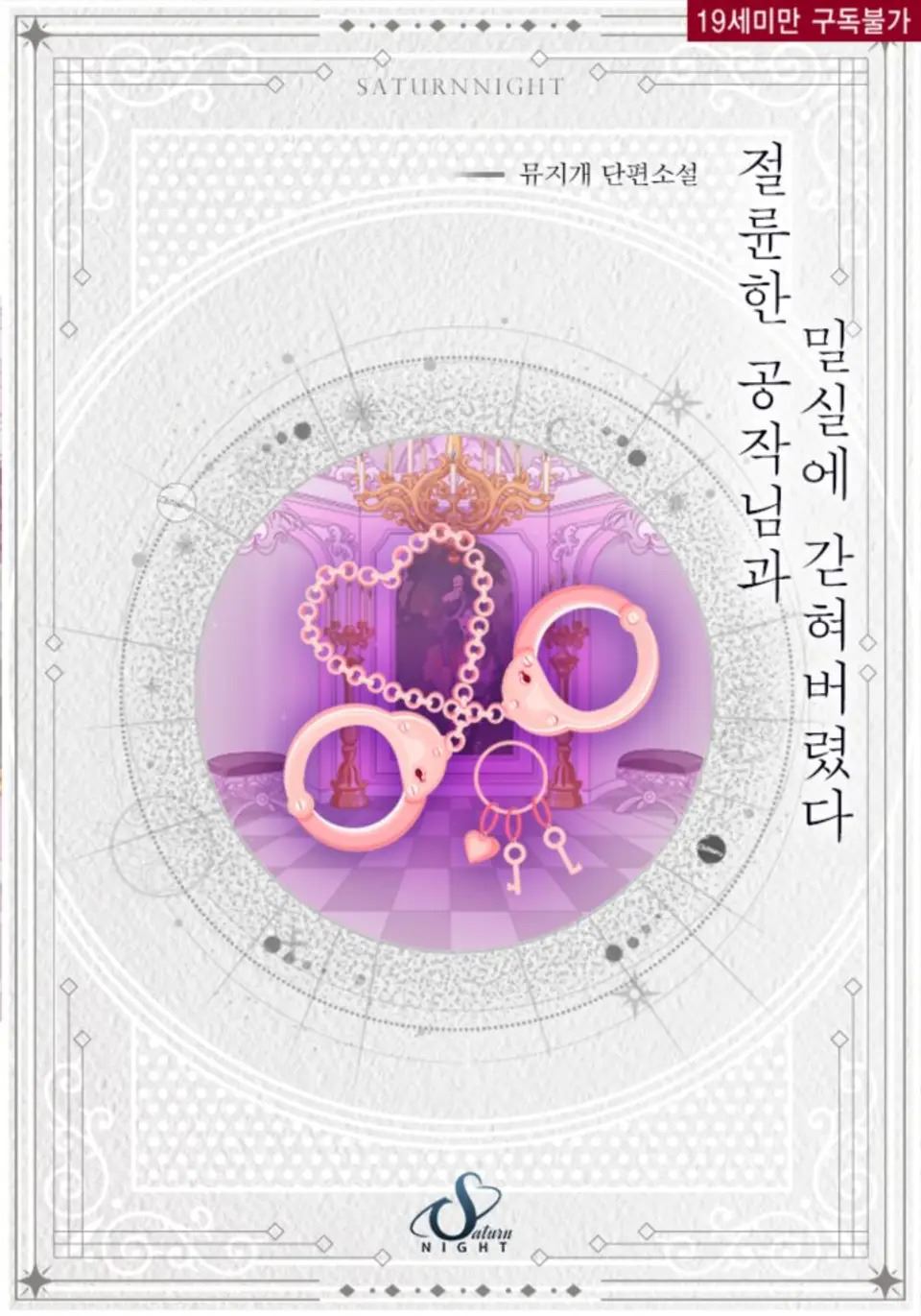
Mo Lin is a jewelry designer who operates a small studio with her college roommate, Cheng Lulu. Her family background is complicated; her father died early and her mother remarried and formed a new family, leaving Mo Lin to be raised by her grandmother. Five years ago, Mo Lin entered into a contract marriage with Jiang Yuanmu, a successful tech entrepreneur. Their union was not based on romance but on mutual necessity. Mo Lin’s grandmother was terminally ill and desperate to see her granddaughter settled, while Jiang Yuanmu needed a marriage to appear mature and responsible for his business aspirations. They met through a blind date arranged by Jiang Yuanmu’s aunt, Jiang Yu, after an awkward encounter where Mo Lin accidentally overheard Jiang Yu scolding her nephew about his unrealistic standards for a spouse. The two quickly realized they shared similar values: efficiency, clear boundaries, and a lack of emotional demand. They drafted a comprehensive prenuptial agreement that defined their roles, finances, and even social obligations. The contract was set to expire in exactly five years.

The story begins on the final day of their marriage contract. Mo Lin arrives at a café near Jiang Yuanmu’s office with divorce papers, expecting a smooth and amicable dissolution. She views Jiang Yuanmu as a perfect five-star husband because he respected all agreed-upon boundaries and never imposed his will on her. However, Jiang Yuanmu, who is deeply engrossed in a critical business meeting, fails to answer her call. When his assistant informs him of her presence and intent, Jiang Yuanmu abruptly cancels his schedule and descends to the lobby. Upon seeing Mo Lin, he hangs up on her and retreats back to his office, an action that confuses and unsettles her. Mo Lin, assuming he is avoiding the paperwork due to some urgent matter, signs the agreement herself and leaves it with his company’s receptionist, effectively ending the legal bond from her side. She then proceeds to pack his belongings from their shared apartment, presenting him with a clean break.

Unbeknownst to Mo Lin, Jiang Yuanmu experiences a sudden and intense panic upon realizing the contract has no automatic renewal clause. He had never considered the possibility of life after Mo Lin, nor did he identify his feelings for her beyond the framework of their partnership. Overwhelmed by a strange physical and emotional discomfort he cannot articulate, he decides he must prevent the divorce. He hires movers to remove his items from the apartment, not to leave, but to create a situation that forces continued interaction. Later that night, he consults his assistant Xiao Li and Xiao Li’s girlfriend Bei Bei for advice on how to win someone back, treating the situation with the same analytical rigor he applies to business deals. Despite his confusion, he resolves to renew the contract. The following day, he visits Mo Lin’s jewelry studio unannounced and proposes a renewal, offering his property as an incentive. Mo Lin refuses, stating her desire to have a child and raise it in a traditional family, which complicates their existing agreement prohibiting sexual relations.

As Mo Lin recounts their history to Cheng Lulu, the narrative reveals the depth of their calculated compatibility. They negotiated every aspect of their life together, from holiday visits to financial contributions, creating a harmonious but emotionally detached existence. Mo Lin’s decision to end the contract stems from her original goal of satisfying her grandmother, who has since passed away. Now that her primary motivation is gone, she wishes to pursue motherhood, a path that requires a different kind of relationship than the one she shares with Jiang Yuanmu. Jiang Yuanmu, however, remains entrenched in his rational worldview, struggling to comprehend why a perfectly functioning partnership should end simply because time has elapsed. The core conflict lies in their diverging understandings of the marriage: for Mo Lin, it was a means to an end that has now been achieved; for Jiang Yuanmu, it is a fundamental part of his identity that he cannot imagine relinquishing. His refusal to accept the divorce sets the stage for a complex negotiation where business logic clashes with unacknowledged emotional attachment.

Latest Release
DateGroupRelease
2026-09-26knoxt c42
2026-09-26knoxt c41
2026-09-26knoxt c40
2026-09-26knoxt c39
2026-09-26knoxt c38
2026-09-26knoxt c37
2026-09-26knoxt c36
2026-09-26knoxt c35
2026-09-26knoxt c34
2026-09-26knoxt c33
2026-09-26knoxt c32
2026-09-26knoxt c31

Community Reviews

Rating(4 / 5.0, 209votes)
5 stars
69(33%)
4 stars
69(33%)
3 stars
64(31%)
2 stars
7(3%)
1 stars
0(0%)

Popular reviews

... Read More
Okay so let me just start by saying this chapter sequence is actually doing some really smart narrative work without me even realizing it until I re-read. On the surface you've got two couples on two sailboats. Cheng Lulu and He Ye on one, Mo Lin and Jiang Yuanmu on the other. But the way the author structures their conversations and movements is essentially a mirror setup - both couples are working through the same core problem: they love each other, they have history, they broke apart, and now they're figuring out if reunion is possible. That's not coincidence, that's deliberate parallelism. Cheng Lulu's whole section at the beginning where she's talking to Mo Lin about how unfair He Ye was back then but also how she understands him now because they were poor and struggling... that's basically Mo Lin's storyline previewed in miniature. When Cheng Lulu admits she's fallen for him again, you already know Mo Lin is about to say the exact same thing. The author is letting us hear it from the outside first before we get the intimate version. And then the fall into the sea - is that really an accident? The navigator bumps into Mo Lin, she's unbalanced, her injured hand won't grip properly, she goes over. It feels coincidental but in a novel this tightly wound about fate and second chances, I'm not sure coincidence exists. The sun rises. The boats drift closer. She falls. He swims. They meet. Everything lines up like dominoes. The confession in the water is the payoff of all that setup. "I think I have changed too" - that line hits differently because we've watched both characters grow through separate but parallel journeys. And ending on them sharing one boat... classic structural resolution. Two boats became one. Just like they were always meant to be.
... Read More
Let me just say—this entire chapter is basically a pressure cooker. Think about it. You have Jiang Yuanmu sitting across from He Ye, a man who attended his wedding five years ago, both pretending everything is fine, both being incredibly polite about it, and then BAM, Mo Lin walks into the frame and suddenly every conversation thread snaps taut at once. The setup is so clever: Ji Ming is the designated comic relief here, the one keeping the surface calm, while underneath everyone is absolutely unraveling. And then He Ye, who we think is going to stay composed, just loses it entirely and strides over to that lively table. The author basically takes four separate character threads and knots them into one explosive moment. Jiang Yuanmu sees the back of Mo Lin's head, someone touching her waist, He Ye sees his own chaos playing out in real time—it's all happening simultaneously and the author forces us to sit in that uncomfortable awareness. I also love that Mo Lin is the only one who doesn't seem to understand the gravity of the situation. She catches Jiang Yuanmu's eye, politely nods, and goes right back to eating her fries like nothing happened. Meanwhile the men around her are internally exploding. That contrast is what makes this scene genuinely brilliant.
... Read More
I have to spend a moment on the sunrise scene because the author absolutely weaponized the imagery here and I am not okay. "The sky and sea, once indistinguishable, began to separate as the sunrise illuminated the ocean." Think about that image. Two things that were one becoming two. That's basically the entire emotional thesis of these chapters. Then Cheng Lulu says something that sounds simple but is devastating in context: "I never realized that the sun rises like this every day when we're not watching." And then she goes on about how they've been trapped in the city working and missing all these beautiful scenes. It's funny on the surface but underneath it's about two women who spent years so consumed by survival and ambition that they didn't notice love was happening without them. The visual of the two boats is gorgeous. "These two boats could never fully approach each other—contact would mean an accident, and in severe cases, one might capsize. Yet they couldn't drift too far apart either." That is the most precise metaphor for long-distance complicated relationships I have ever read. You can't crash into someone, but you can't lose them either. You maintain that delicate balance. And then the sea itself becomes the setting for the most honest moment in the book. Warm water. Salty. The buoyancy. The weightlessness. It strips away everything - no deck, no rails, no social performance. Just two people in the open ocean who finally stop pretending they don't want each other. The text says the salty water felt like tears but the kiss tasted like honey. That's not just pretty writing, that's the author compressing the entire emotional journey into a sensory detail.
... Read More
I cannot stop thinking about this one exchange. You know how most romance novels do these big confessions and dramatic moments? This author is out here making the entire emotional breakthrough happen in a car and an elevator. Let me walk through it because it's everything. Mo Lin says 'Mr. Jiang' and he raises an eyebrow—he knows exactly what she's doing. She's drawing a line. And he keeps crossing it. 'Do you need me to apologize?' he laughs. He's not mad, he's actually amused by her resistance. Then the moment: she finally says 'thank you for picking me up, Yuanmu.' Not Mr. Jiang. Yuanmu. And his response? 'You're welcome, Ms. Mo.' Teasing her right back. That's not just flirting, that's them meeting each other on equal ground. He's acknowledging the shift without making it a big production. What kills me is how Jiang Yuanmu handles the situation when she's overwhelmed with work. He doesn't complain. He doesn't say 'we barely see each other.' He just... takes care of the dog, sends the money, accepts her partial repayment quietly. When she tries to split the Border Collie fund, the 3000 yuan sits in the message box untouched because he doesn't even reply. He's not keeping score. He's just being there. Meanwhile Mo Lin is living under the same roof and hasn't realized how much she's been missing because she's been too busy thriving. That moment when she 'felt a pang of guilt'—she noticed the dog had grown into an adolescent and she missed it all because of work. That's the kind of quiet emotional beat that makes you feel for these characters so much.
... Read More
What I love about these chapters is that the biggest conflict isn't shouting or drama—it's silence. Jiang Yuanmu doesn't say a word when he sees the boxes. He doesn't call Mo Lin to ask what's happening. He just stands there, head starting to ache, and calls his assistant to move things. Meanwhile Mo Lin opens her door, sees everyone, and instead of demanding answers, she's wondering why HE hasn't sent the agreement. Both of them are waiting. Both of them are holding back. The stakes here aren't life-or-death—they're something harder. They're about whether two people who shared a home for five years can acknowledge what that home actually meant. Xiao Li practically screams it: 'They used to be the perfect couple that everyone at the company admired.' The external perception versus internal reality gap is where all the tension lives. Everyone thought they were happy. The assistant thinks the boss has deeper feelings. The wife thinks the husband is deliberately dragging his feet. Nobody knows the truth—not even them. And that final image of the car headlights, Xiao Li petrified, someone watching from the shadows—this is where the stakes spike. Because now we're not just dealing with a divorce. We're dealing with secrets. Someone is observing. Someone knows something. The moment the moving scene ends and those headlights appear, the genre subtly shifts from domestic drama to something with actual danger lurking underneath. Who's in the car? And more importantly—what does Jiang Yuanmu know that he hasn't told Mo Lin?
... Read More
The pacing here is masterful. The author takes their time with Mo Lin's preparation - the formal attire, the light makeup, the careful document check. Nothing rushes. We're settling into this quiet moment with her, savoring the irony of her smile. Then BAM - the past floods in through memories of their first meeting. The flashback structure works because it's anchored in sensory details (the same café, the same spot) rather than exposition dumps. We learn about their motivations organically: her grandmother's illness, his need for a respectable marriage, their blunt negotiation. The dialogue is sharp but the delivery is patient - the author lets us sit with each revelation. But then the present snaps back in Chapter 2 with that jarring title: 'How did such a wonderful day take such a bad turn?' The shift is brutal. We were comfortable in her relief, and suddenly something went wrong. The assistant Li's panic creates immediate stakes - this isn't just paperwork, this is disrupting a carefully maintained world. And Jiang Yuanmu's calm exterior while reading documents? That's the real tension. Something's coming. The pacing between her peace and his composure creates this electric undercurrent. By the time the chapter ends with Xiao Li 'grabbing his thinning hair,' we're hooked. What broke the equilibrium? Why did a smooth day turn sour? The author knows exactly how to pull the rug.
See all reviews

Custom lists

See all custom Lists