Summary

... Read More
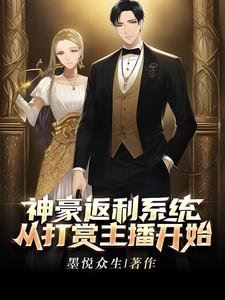
Jiang Feng is a delivery rider living in A City who suffers from amnesia following a head injury. Although he lacks memories of his past, he harbors an inexplicable intuition that he was once a person of great importance, though he suppresses these delusions to focus on making a living and paying tuition. His days are marked by grueling labor in extreme heat until he enters a dilapidated antique shop. There, he witnesses a confrontation between a wealthy businessman named Liu Junlu, who is surrounded by a suffocating dark aura, and a Taoist priest named Fu Yuan. Jiang Feng perceives Liu as deeply wicked and feels a surge of righteous indignation regarding a bone bowl Fu Yuan carries containing a tormented soul.That evening, while exhausted in his rental apartment, Jiang Feng is attacked by a fierce ghost. Instead of fear, he radiates an overwhelming pressure that forces the spirit to kneel. His consciousness merges with an ancient, judicial entity known as the Judge, revealing his true identity as a divine official from the underworld. Through this power, he interrogates the ghost, Liu Feng, who reveals that Liu Junlu murdered his pregnant wife and child and hired Taoists to obstruct justice. The Judge summons Liu Junlu’s soul, reducing his lifespan by twenty years and sentencing him to suffering in the underworld after death. This intervention infuriates Fu Yuan, whose attempt to reclaim the case is thwarted by the Judge’s authority, forcing her to retreat and heed warnings about interfering with karmic retribution.Meanwhile, a livestreamer known as Spicy Crayfish organizes a paranormal exploration at a notorious abandoned building, a site built on a sealed ley line disrupted by broken guardian statues. They trick Jiang Feng into delivering food there, hoping to prank him. Inside, the group triggers a spiritual trap, and one member, Xie Yu, is possessed by a ghost seeking to steal his identity. Jiang Feng enters the room, casually collects his payment from the possessed man, and dispels the spirit with a simple strike. When the remaining participants beg for help, Jiang Feng attempts to leave, indifferent to their plight, until he encounters Liu Junlu, now a ghost trapped in the building after being forced to jump to his death by a vengeful spirit.Jiang Feng and Liu Junlu navigate a spatial anomaly within the building before emerging onto the fourth floor, only to be pursued by the vengeful spirit Feng Nansheng. Feng Nansheng is intercepted by Zong Ce, a rogue cultivator who claims to rule over life and death. Zong Ce wields a fake version of the Judge’s Reincarnation Pen, a tool that can alter the Register of Merits and Demerits. He attempts to extract Jiang Feng’s soul but is repelled when Jiang Feng’s divine nature manifests. The real Judge fully emerges from Jiang Feng’s body, exposing Zong Ce’s fraud and capturing Feng Nansheng for her crimes of slaughtering wronged spirits and disturbing the natural order. Zong Ce escapes, but the Judge sentences Feng Nansheng to face the Mirror of Sins and discards Liu Junlu from the building. Jiang Feng returns to his mortal state, unaware of the supernatural events, and leaves the site. Liu Junlu is found dead, and his estate is legally transferred to Jiang Feng due to the businessman’s prior desperation. As Jiang Feng walks home, he dismisses a lingering ghost, returning to his mundane life while carrying the latent power of a divine judge.

Latest Release
DateGroupRelease
2026-10-01hiraeth translations c79
2026-10-01hiraeth translations c78
2026-10-01hiraeth translations c77
2026-10-01hiraeth translations c76
2026-10-01hiraeth translations c75
2026-10-01hiraeth translations c74
2026-10-01hiraeth translations c73
2026-10-01hiraeth translations c72
2026-10-01hiraeth translations c71
2026-10-01hiraeth translations c70
2026-10-01hiraeth translations c69
2026-10-01hiraeth translations c68

Community Reviews

Rating(0 / 5.0, 44votes)
5 stars
0(0%)
4 stars
0(0%)
3 stars
0(0%)
2 stars
0(0%)
1 stars
0(0%)

Popular reviews

... Read More
The author keeps coming back to Half Moon Lake and I think that's deliberate—this place is basically a character at this point. First you have the horror of Tian Doudou's skin literally ripping off in a classroom, and then just a short walk away, under willow trees and cicada song, this girl is muttering about financial theory on the edge of the water. The contrast is insane. One scene is clinical white and bright lights and the smell of antiseptic, the other is green shadows and sound and that awful stillness of someone who's already made up their mind. The hospital ward scene is equally haunting. Tian Doudou sitting motionless "like a meditating monk" while tears fall straight down because she's too terrified to move her face. The nurse telling her not to cry because tears will corrode her skin—this is body horror at its most clinical, delivered with the calm detachment of a weather report. And then the vice dean showing up with the exact same condition. Two people, same disease, no explanation. The ordinary setting of a university hospital makes it feel infinitely worse somehow. Jiang Feng's apartment with the electric fan is such a grounded, mundane contrast to all the supernatural chaos. He comes home, sits in front of a fan, calls a Taoist priest. This is the rhythm the author establishes—supernatural dread punctuated by utterly normal moments. It makes the weird stuff hit harder every single time.
... Read More
Okay, I need to be honest with you—I laughed, I screamed, I absolutely lost it reading this chapter. But there was one moment that genuinely got to me, and it wasn't even the scariest part. It was when that girl knelt on the ground and started begging the ghost. Not just any begging—she was offering PAPER MONEY and Taoist rites like she was negotiating with a disgruntled landlord. "We were wrong, please let us go, we'll burn paper money when we get back. Really, we're sorry, I can even invite a Taoist priest to perform rites for you." The sheer desperation in that moment, the way her words just dissolved into unintelligible sobbing by the end—that's the kind of raw human emotion that makes horror actually hurt. These aren't action heroes; they're regular kids who thought exploring an abandoned building would make for good content, and now they're facing something that doesn't care about their livestream numbers. But what really broke me was the contrast. You have these people at their absolute lowest point—frozen against walls, convulsing, crying, one of them becoming a puppet for a male ghost—and then Jiang Feng walks in and his biggest concern is whether he's being PAID PROPERLY. The emotional whiplash between the genuine terror of the group and Jiang Feng's complete nonchalance is incredible. It's almost like the universe itself is saying: your fear is real, but so is the absurdity of surviving it. And Liu Junlu, who I assumed was one of the good guys, turns out to be DEAD the whole time. The fact that nobody noticed he was missing until the very end—when the girl counts heads and realizes the math doesn't add up—is devastating in the quietest way possible. One of them is gone, screaming into the void, and the survivors were too panicked to even notice they had less people than they thought.
... Read More
Can we talk about how the heat in this story isn't just weather, it's A FEELING? The opening line 'the weather is very hot' and Jiang Feng acknowledging it's a useless sentence because he can't string together useful words while sweating through his clothes—that immediately puts you inside his body. Sunburned arms, peeling blisters, sweat trapped under a sun hat. The author doesn't just tell you it's hot, they make you feel like you're clinging to a wall in that antique shop inhaling cool air like a dried-up fish. And then the shop ITSELF—just a meter and a half of walkway, a thick curtain hiding the inner room, an old man with a white beard and merchant shrewdness. It's cramped and ancient and feels like a place where something could happen any second. Which it does. The contrast between the mundane (takeout delivery, a hot day, a rental apartment) and the supernatural (a rotting face hanging from the ceiling, golden eyes flashing, the Register of Merits and Demerits appearing from nowhere) is so well calibrated. Nothing feels forced. The underworld bureaucracy existing alongside modern A City with its electric scooters and live-streaming paranormal explorers—it just works. The world feels layered, like reality is thin in places and the supernatural bleeds through naturally. And that unfinished building at the edge of town, the suicide hotspot, the urban legend? The story is clearly building toward MORE supernatural encounters. The world is expanding and I am HERE for it.
... Read More
"Evidence." Two words. Jun Heng puts her phone away and says two words and I laughed out loud. That is SO Jun Heng. She's there at a life-or-death moment and her first instinct is to document everything. The contrast between her casual energy and the sheer gravity of the scene is comedy gold, but it never undercuts the tension because the author knows exactly how to balance it. Luo Xiaomei's voice is the most distinct though. When she's unraveling, her dialogue is fragmented, almost stream-of-consciousness: "That's why she liked wearing the floral-padded jacket from when she was five years old. Her life had ended from that moment on." That's not just dialogue, that's narrative bleeding into her internal voice. And then later, deadpan: "Even if you're lying, I'm still very happy." Understatement of the century. The way she says it while crying? Devastating. Senior Brother Jiu Tian speaks in absolutes. Short sentences. No filler. "Good and evil have their own destiny." "It's human hearts that are monstrous." He doesn't explain himself. He doesn't need to. Every word carries weight because he says fewer of them. Jiang Feng's voice is the most grounded—pragmatic, slightly self-deprecating. "I don't want dead people's things. It somehow felt like taking a bribe." That's such a specific, human way to frame it. He's not being humble, he's being honest about how it feels. And the group chat at the end? Pure personality through text. Jun Heng's joke about "wrong incense-burning posture," Chu Xuanliang's deadpan correction, Huang Yu's aggressive "Hehe"—you can hear every voice without a single narration tag. The author has clearly spent time listening to how different people actually speak.
... Read More
Okay, so the plot just took a sharp left turn and I am not even mad. We went from a police procedural about Liu Junlu's suspicious death straight into supernatural bureaucracy. The Taoist Association steps in, and suddenly Jiang Feng is not just a delivery guy who saw a ghost but a person of interest. The structure here is so clever because it mirrors a detective story but with eschatological rules. Chu Xuanliang comes in with hostile intentions, prepared for a spell battle, only to find a guy who just wants him to take the annoying ghost with him. That subversion is great. And then the reveal about Luo Xiaomei? That is where the plot stops being about 'who killed Liu Junlu' and becomes a chilling family drama with magical consequences. The pacing is masterful. You think you're reading a mystery, then you get a ghost story, then you get a tragedy about rural neglect. The subplot of the smashed stone statue is still hanging there, unanswered, which keeps the background tension high. But the foreground plot—Luo Xiaomei's desire to see her parents—is devastatingly simple. The fact that her 'home' is now occupied by the people who sold her out is a plot twist that hits way harder than any combat scene. I loved how the narrative moved from the cold, procedural interrogation of Jiang Feng to the dusty, sun-baked courtyard of her childhood home. The transition grounded the supernatural in a very real, very gritty socioeconomic reality. And that ending? 'Vigorous black qi burst from her body'? The stakes just skyrocketed from 'ghost wants closure' to 'ghost is about to snap and kill everyone.' I need to know what happens next immediately.
... Read More
Okay so I need to talk about the statue scene because literally that one moment shifted the entire energy of this chapter. The whole setup before it feels like a typical horror prank video—this group of kids going into a haunted building for clicks, nothing new, right? But then the guy picks up a shovel and SMASHES the thing, and it CRACKS open like an eggshell despite them struggling to even move it earlier. What?? That detail hit me so hard. It was such a clean pivot from comedic livestream vibe to actual wrongness. And the way the author handled the aftermath—everyone just goes quiet, some girls get goosebumps out of nowhere—I felt that transition in my gut. It wasn't loud or dramatic, just a creeping sense that something had been broken that shouldn't have been. Then later when we cut to Jiang Feng walking toward that white candle with the wind blowing ash toward him, and the impossible detail about northwest winds in summer, the plot threads started weaving together. Who is this delivery guy really? Why is some wealthy businessman following him around begging like he's a god? And what the hell happens at that building? The narrative was pulling me in two directions at once and I couldn't look away.
See all reviews

Custom lists

See all custom Lists