Summary

... Read More

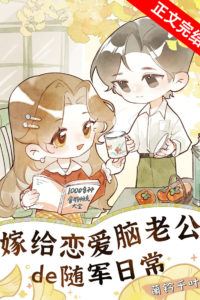
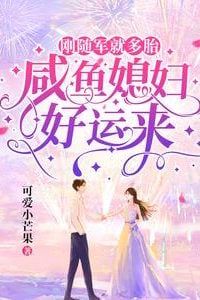
Jiang Qian is a twenty-year-old primary school teacher in a rural Chinese brigade during the late 1960s. Although she appears to be a local resident, she is actually a transmigrator from the twenty-first century who arrived two years prior. In her previous life, she was a successful food blogger with over a million followers. Upon transmigrating, she discovered a mysterious spatial dimension with a capacity of one hundred cubic meters where time stands still. Utilizing her savings, she had stockpiled vast quantities of food, gold, and essential supplies before her transition, ensuring she would be prepared for any hardship in this new era. Her body, originally weak due to an incomplete soul, has gradually strengthened as she adapted to her new identity. Jiang Qian lives with her father, Captain Jiang, her mother, Zhou Guiyun, and her three older brothers, along with their families. The household is large and close-knit, with the brothers working in agriculture and the fourth brother employed in the city.

The central conflict begins when Jiang Qian’s fiancé, Wang Hesong, arrives to cancel their engagement, which was scheduled for the following day. Wang Hesong, a junior official in the town, claims he cannot give her happiness and attempts to leave with a melodramatic speech. Jiang Qian, refusing to be humiliated, slaps him twice and publicly terminates the engagement herself. She later discovers the true reason for his betrayal: her cousin, Jiang Yue, has seduced Wang Hesong and is pregnant with his child. Jiang Yue is also a transmigrator who entered this world as a supporting character in a novel. Aware that the original plot dictates she will marry a soldier named Han Shiguo and become a widow, she seeks to steal Jiang Qian’s superior match to secure her own survival and happiness. Jiang Yue’s family, who had previously relied on the Jiang family’s financial support, covers for her deception.

Following the broken engagement with the Wang family, Jiang Qian’s mother, Zhou Guiyun, learns that the Han family’s engagement to Jiang Yue has also been dissolved. Seizing the opportunity, she arranges for Jiang Qian to meet Han Shiguo. The matchmaker, Zhang, enthusiastically promotes Han Shiguo as a deputy battalion commander who is tall, handsome, and highly eligible. Han Shiguo had actually spotted Jiang Qian helping his mother on the street and was immediately impressed by her character and appearance. He insists on offering substantial betrothal gifts, including the coveted "three turns and one bell"—a radio, bicycle, sewing machine, and watch—along with a dowry of forty-eight legs, far exceeding what the Wang family had offered. Jiang Qian, recognizing the value of this match and finding Han Shiguo physically attractive, agrees to the meeting.

The story progresses as the Han family visits the Jiang household to formalize the new engagement. Han Shiguo’s mother and father are eager to please, and Han Shiguo himself displays genuine interest in Jiang Qian. Meanwhile, Jiang Yue, unaware that her scheme has backfired, suggests that Jiang Qian take her place with Han Shiguo, secretly hoping that Jiang Qian will suffer the same tragic fate as the original novel’s heroine. Jiang Qian remains oblivious to her cousin’s malicious intent, viewing the situation as a stroke of good fortune. She accepts the marriage proposal, and her family celebrates the union with a prestigious military officer. Jiang Qian also arranges for her third sister-in-law, Su Zhirou, to take over her teaching position, ensuring the family’s income remains stable despite her impending marriage.

As the narrative continues, Jiang Qian prepares for her wedding to Han Shiguo. She maintains her secret space, using it to provide herself with better food and comfort while keeping her advantage hidden from her family and neighbors. The dynamic between the two transmigrators sets the stage for future conflict, as Jiang Yue’s knowledge of the plot contrasts with Jiang Qian’s independent spirit and preparedness. Jiang Qian’s calm and capable demeanor endears her to Han Shiguo, who sees her as an equal partner rather than a mere trophy wife. The story establishes a foundation of domestic stability and romantic development, while the underlying tension of Jiang Yue’s envy and the looming changes in the political landscape provide a backdrop for Jiang Qian’s new life.

Latest Release
DateGroupRelease
2026-08-11shanghai fantasy c188
2026-08-11shanghai fantasy c187
2026-08-11shanghai fantasy c186
2026-08-11shanghai fantasy c185
2026-08-11shanghai fantasy c184
2026-08-11shanghai fantasy c183
2026-08-11shanghai fantasy c182
2026-08-11shanghai fantasy c181
2026-08-11shanghai fantasy c180
2026-08-11shanghai fantasy c179
2026-08-11shanghai fantasy c178
2026-08-11shanghai fantasy c177

Community Reviews

Rating(3.8 / 5.0, 25votes)
5 stars
9(36%)
4 stars
7(28%)
3 stars
4(16%)
2 stars
5(20%)
1 stars
0(0%)

Popular reviews

... Read More
Okay, I need to talk about Sun Shi's dream sequence because honestly? That was the most entertaining part of this entire batch. The woman is unhinged and I love it. She dreams about Han Shiguo becoming a big shot and Jiang Qian as a military officer's wife, then gets SO mad in the dream that she dreams her own daughter is pregnant with Wang Hesong's child and wants an abortion—then her daughter bleeds out in the dream and she wakes up terrified. This is a woman who literally cannot stop catastrophizing. And the best part is her daughter-in-law's face when Sun Shi shuts her down about not being able to read. The family dynamics here are so juicy. Meanwhile, the main plot with Han Shiguo and Jiang Qian is progressing in this really sweet, low-key way. They're basically courting on a bicycle and it's adorable. But I'm more invested in the second branch's chaos. Will Sun Shi try to sabotage this marriage? She clearly is already plotting something given how she was up all night fuming. That dream about the abortion felt like the author foreshadowing that Sun Shi might actually try something drastic. What do you think—will she make a move?
... Read More
The opening image of this whole batch is just so vivid to me. Jiang Qian sitting on the back of Han Shiguo's bicycle, riding through the village, and every single neighbor is watching. The older ladies are especially enthusiastic. She's blushing, stuck there like an ornament while Han Shiguo handles all the conversations with her relatives. There's something so cinematic about this—a young man pedaling steadily through a rural Chinese village in the 1970s, his future wife behind him, everyone stopping to watch and gossip. The detail about them walking from the village to the city on foot for school, coming home once a week just to pick up food supplies, living at school the rest of the time—it paints such a clear picture of what daily life was like. No cars, no shortcuts, just distance and determination. And the fact that Jiang Qian and her brother were among the few from surrounding villages who got to attend high school in the county town? That single detail tells you everything about how precious education was and how much her parents' decision to send them meant. The world feels lived-in and real, not just a backdrop for the romance.
... Read More
"And there it was—she could clearly feel it! Firm abs!" Jiang Qian kept a calm expression, but inside, she was screaming. I literally made a noise when I read this. The author had me right there. She's sitting behind him on a bike, hits a rock, instinctively grabs his waist, and feels his abs through薄薄 layers of clothing. She's never been in a relationship before, she's blushing, she lets go immediately and grabs the back seat instead. And Han Shiguo? He's internally celebrating while casually saying "hold on tight" like he didn't just experience the romantic equivalent of a nuclear explosion too. The contrast between their internal states is everything. He's thrilled she touched him; she's short-circuiting. And then she pivots to asking about his army training and giving him advice about taking care of his health—"You're not a machine. Even machines need to stop sometimes, get a little oil." That line made me smile so hard. She's trying so hard to act normal and composed while clearly flustered, and he's just... melting. This is the kind of wholesome, awkward, genuine romantic tension that I live for. No drama, no misunderstandings, just two people who actually like each other figuring it out together.
... Read More
I've been thinking about this bicycle ride and how much meaning the author packed into what seems like a simple scene. A bicycle in this era and setting isn't just transportation—it's a status symbol, a means of freedom, a shared space for two people who are figuring each other out. Han Shiguo owns one, which signals that he's done well for himself despite coming from a poor farming family. He's pedaling, she's riding along—there's something almost symbolic about that. He's the one providing the momentum, but she's choosing to be there. And the road itself is bumpy, full of rocks and uneven surfaces, which causes her to grab his waist. Life isn't a smooth ride, but they're on it together. Then there's the recurring motif of education and self-improvement. Han Shiguo studied on his own to get a high school diploma while serving in the army. Jiang Qian got into a competitive school recruitment exam. Both of them seized opportunities that weren't handed to them. "No strength, no luck. Strength is the foundation for luck," Han Shiguo says—and honestly, that's the thesis statement of the whole novel. The second branch family, meanwhile, represents what happens when you rely on scheming instead of substance. Sun Shi dreams of glory without earning it. The theme keeps coming back to this idea: you have to put in the work, or you'll end up dreaming about it instead of living it.
... Read More
I started reading this batch at 10pm and somehow two hours passed and I was still going. Not because of some cliffhanger or massive plot twist, but because the author just knows how to keep you turning pages through sheer momentum. Let me break down why this works so well. The batch opens with family approval and banter—light, warm, establishing that everyone likes Han Shiguo. Then it cuts to the second branch, where Sun Shi is having her meltdown. That contrast is brilliant pacing. You go from the warm, happy family scene to this cold, scheming woman who can't sleep because she's imagining her rival's daughter marrying a battalion commander. Then Chapter 21 drops us onto the bike ride—two hours of conversation that somehow never feels slow. The author uses the physical journey (village to county town, over two hours of cycling) as a container for character development. Every topic they discuss reveals something: his education, her family, their values, his height (yes, really), her brother's job. By the time they arrive at the county town, we feel like we've actually spent time with these characters. And it ends on that note—"if he could marry such a good girl, he would surely ha"—cutting off mid-thought. Classic hook. The pacing never drags because every scene has a purpose, even the quiet ones.
... Read More
Let me just say—this man is playing 4D chess and Jiang Qian doesn't even realize she's in a game yet. Watch this exchange: "In the future, when it comes to our family's matters, we'll discuss them together, okay?" He just slipped "our family" into conversation like it's totally normal. And Jiang Qian's internal reaction? "She wasn't so easily fooled... jumping straight into 'our family' so soon wasn't something she could accept just yet." She changes the subject immediately. Smart girl. But Han Shiguo isn't fazed—he just keeps pedaling and pivots to asking about her fourth brother. No pressure, no awkwardness. He's confident enough to try and calm enough to handle rejection in real time. That's a character who knows what he wants and isn't going to be rattled by a gentle deflection. And Jiang Qian's dialogue is equally great. She's reading from her novel knowledge—"while her hands-on experience was zero, her theoretical knowledge was quite rich"—and it shows in how she steers conversations, asks the right questions, gives him space to talk about himself. When she says "You're not a machine. Even machines need to stop sometimes, get a little oil, change some parts"—that's such a specific, slightly awkward but genuinely caring way to tell a man to take care of himself. It's not a romantic line from a movie, it's something a practical, book-smart girl would actually say. The author gives each character a distinct voice and I can tell who's speaking without looking at the dialogue tags.
See all reviews

Characters

See all characters

Custom lists

See all custom Lists