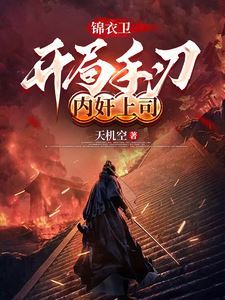
Jinyiwei: Starting by Killing a Traitorous Superior
Novel Info

Summary

... Read More

Jiang Chen, a modern man, transmigrates into the body of a low-ranking Jinyiwei officer in a martial arts version of the Great Ming Dynasty. Upon waking, he finds himself drugged alongside twelve fellow warriors by his own commander, Li Chengqi, who plans to sell them to the Demonic Sect in exchange for cultivation resources. Facing imminent death, Jiang Chen activates the Demon Subduing System, a supernatural interface that rewards him for eliminating evil. He receives a newbie gift containing the Thirteenth Level Dragon Elephant Prajna Skill, a supreme martial art that instantly shatters his meridians and forces a breakthrough from a third-rate martial artist to the peak of the Xiantian Realm. The surge of power manifests as the legendary Dragon Elephant Chorus, a deafening roar of divine energy that shocks both his betrayer and the Demonic Monk Jueming, a Houtian Realm expert they had come to capture.

Before Li Chengqi and Jueming can react, Jiang Chen strikes with blinding speed. He crushes Jueming's iron-hard skull with a single palm, demonstrating power far beyond his previous realm, and then assassinates the fleeing Li Chengqi with a chopstick to a vital point. The act is cold and calculated, driven by Jiang Chen's desire to secure the Sin Points awarded for their deaths rather than risk losing his advantage. He wakes his subordinates with an antidote and presents the evidence of Li Chengqi's treason to Commander Wu Tao at the Pacification Bureau. The discovery of a ledger detailing the sale of Jinyiwei agents to the Demonic Sect causes an uproar. Meng Wangjin, the Azure Dragon Envoy, presides over the aftermath, demoting the corrupt Li Muqing and promoting Jiang Chen to Probationary Battalion Commander for his loyalty and strength.

With his new status, Jiang Chen gains authority over fifty subordinates and access to the Bureau's resources. However, his peace is short-lived as he detects a powerful presence lurking near his residence. A Grandmaster Realm martial artist, identified as a Demonic Emissary, confronts him, offering Jiang Chen a choice: submit and help transport blood slaves, or die. Jiang Chen refuses and engages the enemy in combat. Although his standard Jinyiwei saber is shattered by the Demonic cultivator's superior weapon, Jiang Chen closes the distance and defeats the opponent through brutal hand-to-hand combat, ultimately crushing his head into the earth until he expires.

After killing the emissary, Jiang Chen discovers a token and a sealed letter bearing the name Situ Lang, one of the Four Garrison Commanders of the Jinyiwei. The letter suggests a secret correspondence between a high-ranking court official and the Demonic Sect. Recognizing the extreme danger of possessing such evidence, Jiang Chen chooses not to report it immediately. He understands that involving himself in a conspiracy at this level could be fatal given his current standing. Instead, he disposes of the body in a secret well and uses the system to draw from the Sin Points he has accumulated, obtaining a Blood Sabre, cultivation pills, and other resources to further strengthen himself. As he prepares for the impending arrival of the notorious Flower-Picking Bee Huang Fei, who seeks revenge and has targeted a local noblewoman, Jiang Chen must navigate the treacherous politics of the Jinyiwei while building his power base in a world where strength dictates survival.

Latest Release
DateGroupRelease
2026-10-01lightnovelasia c438
2026-10-01lightnovelasia c437
2026-10-01lightnovelasia c436
2026-10-01lightnovelasia c435
2026-10-01lightnovelasia c434
2026-10-01lightnovelasia c433
2026-10-01lightnovelasia c432
2026-10-01lightnovelasia c431
2026-10-01lightnovelasia c430
2026-10-01lightnovelasia c429
2026-10-01lightnovelasia c428
2026-10-01lightnovelasia c427

Community Reviews

Rating(4.2 / 5.0, 30votes)
5 stars
15(50%)
4 stars
6(20%)
3 stars
9(30%)
2 stars
0(0%)
1 stars
0(0%)

Popular reviews

... Read More
Can we just take a moment to appreciate how the author uses Ma Zhong as a narrative tool? This guy literally stares at Jiang Chen with "doubt and disdain" and says: "Do you think we are all fools?" And then—without any fanfare—Jiang Chen demonstrates True Qi Emission and Ma Zhong's entire worldview shatters. "True Qi Emission! You are a Xiantian Realm expert!" The text says Ma Zhong's voice carried "a trace of disbelief and deep shock" and honestly, that understated reaction is more powerful than any screaming scene could be. It's a brilliant character moment because Ma Zhong represents EVERY reader who's ever thought "this can't be real." When he breaks, we break with him. The author doesn't need to tell us Jiang Chen is strong—we experience the revelation THROUGH Ma Zhong's eyes. But what really got me was the Jinyiwei Warriors' collective transformation. They went from seeing Jiang Chen as "an unknown Third-Rate Martial Artist who usually bullied those weaker than him" to "looking at him as if he were a monster." That single sentence captures the entire social hierarchy of this world in one devastating observation. Respect isn't earned through virtue here—it's taken through demonstration. And Jiang Chen just took it in the most public way possible.
... Read More
Here's the thing that keeps me up at night — not in a good way, honestly — and it's the timeline. THREE DAYS. That's it. Huang Fei is arriving in three days, and he has his sights set on Su Baiwei. And the text makes it CLEAR that NO woman targeted by Huang Fei has ever escaped. Let me repeat that: no one. This isn't some vague threat, this isn't 'maybe he'll try.' This is a guaranteed predator locking onto his prey, and the clock is already ticking. What makes this stakes hit even harder is that Jiang Chen's own reasoning is almost disappointingly pragmatic — he brought Han Yong's corpse to the Pacification Bureau because merit points matter to him. Not because he's a hero, not because Su Baiwei means anything to him personally, but because catching Huang Fei could net him ten thousand merit points. That's ten times what an ordinary Grandmaster would earn!
... Read More
Two images keep haunting me: the completely burned-out candle and the guard's nail-less fingers. The candle isn't just a plot device—it's a metaphor for time running out, for a life consumed to create an illusion. It burns until nothing remains, then the mechanism triggers, mimicking violence without a hand ever touching the window. That's the whole premise: appearance as weapon. Meanwhile, the guard's hands are raw evidence of truth extracted through pain. She gave everything physically to protect a princess who can't speak for herself. And the princess herself—reduced to a face behind masks, a voice silenced, a body turned to pus—symbolizes the erasure of female agency in this court. Wang Guifei uses the princess's image as a pawn; Wu Zetian's regime treats her as a secret to be guarded or discarded. Jiang Chen sees through the trick, but he doesn't free her—he just exposes the machinery. The real tragedy isn't the kidnapping; it's that everyone in that palace is already a substitute for something else.
... Read More
Okay so let me just say — the way this section pivots from an action beat into a full-blown conspiracy reveal is chef's kiss. One minute Jiang Chen is literally smashing a guy's face into dirt, and the next he's squinting at a letter like his whole world just tilted. The "Situ Lang" reveal hit me hard. Like, of COURSE the Jinyiwei internal politics are tangled af. The fact that a Grandmaster-level disciple would be carrying a personal letter from one of the Four Garrison Commanders? That's not coincidence, that's a wire waiting to snap. What I love is that the author doesn't just dump the info and move on. Jiang Chen sits with it. He questions whether it's real, whether it's a frame-up, whether he should even care. And honestly? His decision to NOT get involved immediately is the most believable thing about him. He's still a fledgling martial artist in a world where guys like Situ Lang eat people like him for breakfast. The plot is basically daring him to make a wrong move, and every path looks like a trap. Also — the body in the dry well scene? Chilling. Just casually disposing of evidence like it's trash. Shows how deep the rot goes in this world.
... Read More
Okay, so this whole kidnapping arc is a masterclass in misdirection. The princess vanishes from a sealed room, the window's torn, footprints are missing—everyone assumes an external assassin. But Jiang Chen pieces together that it's a fake-out. Wang Guifei didn't kidnap her; she replaced her with a look-alike maid who'd been imitating the princess's routines for weeks. Then she poisoned the real one, dissolved the body, and used a timed candle-and-rope mechanism to swing the window open after the fact. That way, the palace searches frantically by day, scattering true qi everywhere, making it impossible to tell if she was smuggled out or not. The brilliance is in the timeline compression—Wang Guifei didn't just hide the princess; she turned the investigation into a smokescreen. And the moment Yu Chaoen rips the needles out of the maid's face and Princess Yuling stares back? That's the kind of reversal that makes you slam the book shut and immediately re-read the previous chapters to spot the clues you missed.
... Read More
There's this passage that kept circling back in my head: "In the Jinyiwei, a world where strength is respected, strength is everything. With enough strength, one can soar to the top and become someone above all others." This isn't just worldbuilding—it's the central thesis of the entire story. The text keeps coming back to this idea that in a corrupt system, power is the only currency that matters. Li Chengqi used demonic pills to climb. The Warriors dream of promotion for access to better cultivation manuals. Even Jiang Chen, despite his moral compass, understands that hiding his strength would cost him respect. The antidote to the fainting powder is another symbol I can't stop thinking about. Jiang Chen could have let the Jinyiwei die. He chose to save them—not because he's blindly loyal, but because it aligns with his own code. The antidote represents the thin line between survival and sacrifice that runs through this entire narrative. And then there's the manual itself. Dark silk wrapping, dense words and charts, evidence of betrayal that spans multiple ranks. It's not just a plot device—it's the physical manifestation of systemic rot. The institution that was supposed to protect the empire was being eaten from within. That's the story underneath the wuxia spectacle, and I think the author knows it.
See all reviews

Custom lists

See all custom Lists