Is There Really Such a Good Thing in This World?
Novel Info
  • Author:
  • Status:Ongoing

Summary

... Read More

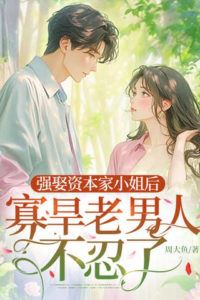
Lu Meng, a modern woman with a history of dropping out of school and running a bubble tea shop, dies after a skateboard accident and transmigrates into the body of Zhangsun Lumeng. She awakens in a bridal chamber during her wedding night to Prince Jian’an, Wu Linxuan, as the wife of a notorious tragic romance novel. The original heroine endured a decade of physical and emotional abuse, ultimately dying before being posthumously honored as Empress. Lu Meng, armed only with her memory of the plot and a desperate desire to survive, immediately faces a crisis when Nanny Wu, the prince’s head housekeeper and wet nurse, serves her tea laced with a potent aphrodisiac. Believing the drug’s effects require a man to cure them, Lu Meng lashes out, biting and grappling with Nanny Wu until her maids intervene. She then requests a bath, which successfully neutralizes the drug’s effects, allowing her to清醒ly assess her situation.

Realizing she has no system, no memorized memories, and no path to escape this dangerous era, Lu Meng adopts a strategy of calculated vulnerability. When Wu Linxuan arrives for their wedding night, he is amused by her cowardly demeanor; unlike the original heroine who pounced on him, Lu Meng keeps her head bowed and avoids physical contact. She accuses Nanny Wu of drugging her to teach her submission, framing it as a threat to Wu Linxuan’s authority. Impressed by her apparent timidity and dependence, Wu Linxuan dismisses Nanny Wu and promises Lu Meng a lifetime of luxury in exchange for obedience. Lu Meng eagerly accepts, viewing the prince not as a romantic interest but as a financial provider who offers protection without demanding intimacy.

The following morning, Lu Meng wakes before dawn to escort the prince to court, a duty she performs reluctantly. She quickly discovers that Wu Linxuan despises the ceremonial formality and orders her to stop. Later, she is summoned to the palace to pay respects to the Empress Dowager, a powerful matriarch who favors the Fourth Prince, Wu Lincheng, her grandson. Wu Lincheng had previously desired Lu Meng’s character in the original plot but lost her to his rival. The Empress Dowager intends to humiliate Lu Meng by making her kneel for a prolonged period in the scorching sun. Anticipating the abuse, Lu Meng uses a modern scraping technique to bruise her own neck, then fakes a fainting spell under the heat. The Emperor witnesses the marks, interprets them as signs of marital intimacy, and erupts in anger at the Empress Dowager’s cruelty, further alienating her faction.

Wu Linxuan visits Lu Meng’s quarters later that day, suspicious of her self-inflicted injuries. During their confrontation, Lu Meng accidentally spills scalding tea on him and subsequently splashes cold well water on his burns. In the washroom, she tends to his injury, maintaining her mask of fear while internally laughing at his discomfort. Wu Linxuan, misinterpreting her actions, believes she is scheming to gain his favor through cunning and obsession. He remains haunted by the ambiguous nature of her bruises but decides to keep her close to unravel her secrets. That evening, misunderstanding the symbolism of red bean porridge traditionally served after consummation, Lu Meng accidentally eats uncooked beans. Wu Linxuan assumes she is fantasizing about bearing his heir, deepening his suspicion that she is both foolish and dangerously delusional.

Despite the growing tension, Lu Meng secures her position by relying on Nanny Xin, a new attendant appointed by Wu Linxuan. She learns to navigate the household dynamics, avoiding the original heroine’s fate by rejecting romantic entanglements and focusing on survival. The political landscape shifts as the Emperor reprimands the Fourth Prince and rewards the Sixth Prince, destabilizing the Empress Dowager’s influence. Lu Meng continues to play the role of a timid, submissive consort, hiding her modern wit and strategic mind. As she settles into her new life, she balances the luxury provided by the prince against the constant threat of palace intrigue, determined to rewrite her tragic destiny through careful maneuvering and self-preservation.

Latest Release
DateGroupRelease
2026-09-26akknovel c44
2026-09-26akknovel c43
2026-09-26akknovel c42
2026-09-26akknovel c41
2026-09-26akknovel c40
2026-09-26akknovel c39
2026-09-26akknovel c38
2026-09-26akknovel c37
2026-09-26akknovel c36
2026-09-26akknovel c35
2026-09-26akknovel c34
2026-09-26akknovel c33

Community Reviews

Rating(0 / 5.0, 30votes)
5 stars
0(0%)
4 stars
0(0%)
3 stars
0(0%)
2 stars
0(0%)
1 stars
0(0%)

Popular reviews

... Read More
I need to talk about this one moment. Wu Linxuan reaches out his hand to help her up. Just a simple, normal gesture. And Lu Meng — who has literally been calculating and performing since the moment she woke up in this body — panics and nearly trips over her own robes scrambling away. Not because she's afraid of him specifically, but because she knows the tropes. She knows that in any romance novel, this is the moment where the clumsy heroine falls into the hero's arms and somehow their lips meet. All her efforts would be wasted! And Wu Linxuan's reaction — 'Is my consort so timid that she sees me as some kind of beast?' — that's where it gets interesting. He's not offended. He's curious. There's a flicker of something almost vulnerable in how he studies her. For a guy who's clearly used to people either submitting to him or plotting against him, her irrational fear of his touch is... novel. It makes him pay attention. Not in a romantic way yet, but in a human way. He notices her as someone worth understanding rather than just possessing. That subtle shift? That's the start of something. And Lu Meng, oblivious to it, is just over here mentally congratulating herself on not being eaten by the male lead.
... Read More
I need to talk about the Fourth Prince because he is doing that thing where he thinks he's the romantic hero but he's actually just a walking red flag for the protagonist and I am SCREAMING. He deliberately falls behind after the council meeting just to confront Wu Linxuan, and his opener is 'I never thought Third Brother could be so cruel.' Like. BRO. You had a thousand women in your harem who you called 'sister' and 'little sister' while simultaneously maintaining all of them, and now you're standing here playing the worried best friend? 'That kind of beauty... Third Brother really could bring himself to harm her.' And then he asks if it's because she 'once intended to marry me.' The subtext is you think she'll come cry to YOU because you're the emotionally available option, and I just... *sigh*. The contrast with Wu Linxuan is doing so much work here. Wu Linxuan is cold, barely acknowledging she exists, and when he does address her it's 'Stop pretending. Get up and explain yourself to me.' No softening, no hesitation, just pure bureaucratic threat delivered while physically gripping her throat. And Lu Meng's internal response? Not 'oh my god he's going to kill me' but 'you don't mess with the boss! She was counting on the male lead to protect her prosperity and honor for life.' She's in SURVIVAL MODE. She's looking at this terrifying man and calculating whether he's a threat to her job. And the relationship between them right now is basically: he suspects she's faking everything, she's actually just tired, and they can't even be in the same room without him physically grabbing her neck and him spilling scalding tea on his own leg. The dynamic is so much 'two idiots orbiting each other while not realizing they're the same frequency.' I wonder when Wu Linxuan's suspicion flips from 'she's manipulating me' to 'wait, is she actually just... sleeping on me?' Because that would be the most devastating reframe for a guy who clearly thinks deeply about everything.
... Read More
The opening image of this whole sequence is so vivid I could see it on screen: the Empress Dowager's hall, the sun beating down mercilessly, Lu Meng kneeling on hard stone, her neck already killing her, and this poor girl who just wanted to do the right thing slowly losing consciousness. "I am weak, and I feared that kneeling too long would make me ill." This single line carries so much world-building. We're in a place where women literally kneel for hours as display of respect, where fainting isn't just physical collapse—it's a social grenade. The etiquette is a weapon, and not knowing how to wield it means you're vulnerable. Then there's Wu Linxuan's courtyard—this place where he's deliberately isolating her. "This place was absurdly far from his own courtyard." The geography itself tells you everything about power dynamics. He controls distance. He controls proximity. When he helps her up, they're "uncomfortably close"—the narration even flags it with that almost-parodic awareness that romance novel proximity = impending kiss. But then she just wants to call a maid and change her clothes. The subversion is delicious. The bathing scene afterward has this strange domestic intimacy layered over political paranoia. He's checking his burns while simultaneously running mental simulations of her possible schemes. The steam, the heat, the physical vulnerability of being half-dressed—all of it contrasts with how armored he is emotionally. And the dining scene! The red bean porridge arriving like a plot device disguised as dessert. Xin Ya's knowing smile as she watches Lu Meng chew raw beans. The whole sequence feels like a stage play where only half the cast knows the script. One detail that stuck with me: "the sun was already leaning west" when Wu Linxuan finally comes out. Time passing, heat giving way to evening—the atmospheric shift mirrors how the power balance in the room subtly changes. Lu Meng thinks she's survived; Wu Linxuan is just getting started analyzing her.
... Read More
Okay so I'm genuinely irked by how the plot keeps sliding Lu Meng deeper into a box she didn't choose. Like, the whole arc here is structured as escalation-by-delegation. First she's stuck holding lanterns at god-knows-what time. Then Wu Linxuan offloads Nanny Wu to some countryside estate—"to reflect," he says, which sounds less like concern and more like political housekeeping. Then Nanny Xin drops in like a chess piece from a different game entirely, and suddenly the palace summons land on her lap with zero runway to prepare. What I'm noticing is that every "convenience" Wu Linxuan grants her is actually a constraint. He lets her hold the lantern—fine. But that means she's visible to him at dawn, dressed up, performing wifely diligence. He tells her about the palace visit—generous, right? But now she has to walk into the Empress Dowager's courtyard with a new, untested attendant and absolutely no rehearsal. The plot is building a scenario where her agency keeps shrinking while the expectations keep climbing. And the worst part is she literally cannot opt out. She's the consort now. The title is a noose made of silk ribbons. "So there's no morning greetings in the palace, but they're waiting to ambush me there instead? Come on, what's a consort even doing in the palace?" That line just nails it for me. She keeps treating this whole arrangement like a job she didn't apply for, except the HR department is a prince and the boss is the Empress Dowager. The subplot with Nanny Xin feels like the author planting a safety net—this crisp, decisive woman who can handle the logistics so Lu Meng isn't spiraling. But even that's a setup for a future conflict, because Nanny Xin was transferred from Meilan Garden, and Wu Linxuan "specifically" assigned her. That's not a kindness. That's surveillance with a soft face. And the whole thing ends with her kneeling in the sun, dizzied, the announcing maid still not back. The plot has cornered her into the most undignified position possible—waiting, silent, in the heat—and I am convinced the next page is where the real knife twist happens. Is the Empress Dowager going to be the villain I think she is? Because the name Anhe Hall, the layers of gates, the eerie quiet—it all feels like the story is telling me to hold my breath.
... Read More
There's this one image that stuck with me for hours—the neck covered in red and purple marks from Lu Meng pinching her own skin, spread out on the ground as the maids try to carry her, and the Emperor seeing it all. It's horrifying and almost darkly funny at the same time because those marks are completely manufactured, yet everyone treats them as devastating proof of abuse. The imperial physician—a guy who's seen every rare disease and injury imaginable—looked at 21st-century scraping therapy marks and was completely baffled. That detail alone made me laugh out loud. It's such a specific kind of culture clash that the author keeps dropping without making a big deal about it. The whole palace world feels lived-in too. You get the heat of the sun on stone, the shadow of the courtyard, the wooden stiffness of the Empress Dowager's servants suddenly scrambling to life, the way two maids struggle to lift Lu Meng because she's wrapped in so many layers of clothing. There's a physicality to this world that most palace dramas skip over—they just tell you 'it was hot' and move on. Here you can feel the weight of the fabric, the ache in the knees, the dizziness. And the irony of it all: the Empress Dowager wanted to publicly humiliate someone, and instead created evidence that made her look like aabuser. The setting itself became her downfall.
... Read More
Let's talk stakes, because this chapter is quietly raising them with every page. On the surface: Lu Meng fainted at the Empress Dowager's hall. That's it. Small thing, right? Wrong. Because the Empress Dowager now sees her as weak and expendable, the emperor saw his son "tormenting" a woman and lost control, and Wu Linxuan is now firmly convinced Lu Meng is playing some long game he hasn't deciphered yet. Three powerful people have now formed opinions about her based on a misunderstanding, and none of those opinions are favorable. That's not a small problem—that's a survival crisis wrapped in silk. But the real conflict here isn't even between characters. It's between Lu Meng's genuine desire to just do her job and the impossible world she's dropped into where every action has triple meanings. She wants to light lamps on time, learn etiquette, not cause trouble. The world responds by treating her simplest gestures as declarations of war. Wu Linxuan's internal monologue reveals the deeper stakes: "A fox always reveals its tail eventually." He's not just suspicious—he's waiting. And waiting is worse than direct hostility because it means he's building a case against someone who hasn't even committed a crime. The punishment he's planning is hypothetical, imagined, and therefore unlimited. What keeps me hooked is that both characters are simultaneously the hunter and the hunted. Wu Linxuan thinks he's investigating Lu Meng, but Lu Meng is also investigating him—trying to read his moods, calibrate her responses, survive his whims. The power dynamic keeps flipping and we never quite know who holds the cards. And the irony? If they could just TALK to each other for three seconds, all of this would resolve in ten minutes. But they can't, because the entire premise of their world demands that vulnerability equals death. "Who could say she truly had no schemes?" Wu Linxuan asks himself. And the answer is: she's just trying to eat dinner in peace. That's the tragedy and the comedy all at once.
See all reviews

Custom lists

See all custom Lists