Summary

... Read More

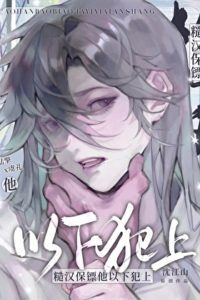
Yu Chengsong is a top-tier Alpha student at Xiyuan City No. 1 Middle School, known for his rebellious behavior, frequent fights, and skipping classes. Despite his poor disciplinary record, he is a genius academically, a fact that frustrates his teachers but keeps him enrolled due to his exceptional grades. His home life is dysfunctional; he lives with a volatile, mentally unstable mother who favors his younger, disabled brother, Yu Chengdi, and frequently takes out her aggression on the children. Yu Chengsong endures this abuse with sarcasm and detachment, often protecting his brother from his mother's wrath while navigating his own painful facial scar from a previous incident involving his mother.

The central conflict begins when Yin Gu, a new transfer student, joins Yu Chengsong's class. Yin Gu presents himself as a model Omega student—polite, well-behaved, and academically gifted—but Yu Chengsong immediately senses something underlying his perfect demeanor. Their first interaction is charged with tension, as Yu Chengsong detects a faint scent of blood pheromones on Yin Gu, indicating he is also a high-level Alpha hiding his true nature. The homeroom teacher, Lao Li, assigns them to be desk mates, hoping Yin Gu’s steady personality will positively influence Yu Chengsong. Yu Chengsong agrees, though largely out of curiosity and boredom, setting the stage for a complex relationship.

As they spend more time together, a dynamic of mutual teasing and hidden agendas emerges. Yin Gu consistently challenges Yu Chengsong’s provocations with calm, witty retorts, while Yu Chengsong becomes increasingly intrigued by Yin Gu’s enigmatic past. A key turning point occurs when they visit the school infirmary to treat a wound on Yu Chengsong’s face. During this private moment, Yu Chengsong reveals fragments of his traumatic family history, admitting that his injuries are often self-inflicted or caused by his mother’s erratic behavior. Yin Gu listens without judgment, responding with a mixture of sympathy and playful banter that creates an unexpected bond between the two.

The narrative further develops through their interactions with peers. Yu Chengsong’s friend, Zhou Zheyu, provides comic relief and insight into the school’s social hierarchy, while Yin Gu’s past as a student union president at his previous school hints at a deeper, more troubled history that he keeps guarded. Rumors swirl around Yu Chengsong’s reputation as a bully, but his actions reveal a code of conduct where he only retaliates against those who provoke him and protects the weak, such as his younger brother.

The story direction shifts as Yu Chengsong and Yin Gu navigate school politics and personal vendettas. Yin Gu’s presence disrupts Yu Chengsong’s solitary routine, forcing him to engage with someone who sees past his rebellious exterior. Meanwhile, Yin Gu appears to be gathering information or watching someone, suggesting he transferred schools for a specific, perhaps dangerous, purpose related to his family or past. The tension escalates when Yu Chengsong discovers that Yin Gu is not merely a good student but someone capable of matching him in power and cunning.

By the end of the provided chapters, the relationship between Yu Chengsong and Yin Gu evolves from suspicion to a fragile alliance. They share moments of vulnerability, such as eating together and covering for each other’s absences, while maintaining their competitive edge. The introduction of external threats, including hostile students and Yu Chengsong’s unstable family, sets the stage for future conflicts that will test their growing trust. The story positions itself as a coming-of-age narrative within a high school setting, blending elements of romance, mystery, and psychological drama as the two protagonists uncover each other’s secrets.

Latest Release
DateGroupRelease
2026-09-26knoxt c72
2026-09-26knoxt c71
2026-09-26knoxt c70
2026-09-26knoxt c69
2026-09-26knoxt c68
2026-09-26knoxt c67
2026-09-26knoxt c66
2026-09-26knoxt c65
2026-09-26knoxt c64
2026-09-26knoxt c63
2026-09-26knoxt c62
2026-09-26knoxt c61

Community Reviews

Rating(4 / 5.0, 404votes)
5 stars
134(33%)
4 stars
140(35%)
3 stars
130(32%)
2 stars
0(0%)
1 stars
0(0%)

Popular reviews

... Read More
Okay so the alley scene? That one stays with you. Let me just say: Yu Chengsong squatting outside the restaurant with Zhou Zheyu, both of them lighting up cigarettes and staring down the road like they're planning a war. 'Each of them had a cigarette and looked at the road they had to take with fierce eyes.' The prose is so matter-of-fact about it too, no drama, just two guys in an alley who look like they've got blood on their hands before they've even thrown a single punch. And then there's the ride home—Yu Chengsong asleep against Yin Gu's back, city noise blurring into white noise while Yin Gu pedals through all of it like it's nothing. These scenes feel lived-in, not staged. The small restaurant near the school, the alley where you can talk freely, the cramped home where Yin Gu is doing homework while coding on his laptop. This isn't a generic teen drama setting—there's weight to these places. You know what happens when you leave the alley, you know what's waiting in that apartment. The world of this book has texture.
... Read More
Okay so I need to talk about the whole medicine thing because THIS is where the author really shows us who Yin Gu is without actually saying it. He doesn't just bring medicine because he's nice — he brings it and then immediately calls in the debt. "You owe me once." The casual way he says it, like they're trading stocks or something. And Yu Chengsong's reaction? He actually pushes Yin Gu toward the teacher instead of going himself, throws a peace sign and lip-syncs 'Fighting.' Bro is not subtle at all.
... Read More
I have to talk about this chapter because the way the plot unfolded here was genuinely clever. The whole setup with Doctor Zhou walking in on them after their 'fight' was perfectly constructed. Think about it—Yu Chengsong had just been through something painful, Yin Gu was holding him, pheromones everywhere, and the doctor literally says 'Had a fight?' and they just go with it. The lie was so natural because they actually did fight, just... differently. What struck me most was the narrative economy here. The author didn't need a million words to explain what happened. We see Yu Chengsong winching in pain, the physical closeness, the kiss that happens almost accidentally, and then boom—Doctor Zhou walks in and suddenly they have to cover their tracks. The plot doesn't slow down for exposition. It just keeps moving, and that's why it works. Also, the detail about Zhou Zheyu catching Yu Chengsong in class later? That's classic plot threading. The school scene sets up future conflict while giving us breathing room. The author knows when to advance the plot and when to let characters exist in their world. And honestly, the humor in Yu Chengsong's line 'We just like to fight on the bed' made me laugh out loud. The way he tried to deflect by claiming the floor was dirty? Pure comedic timing wrapped into plot progression. The lunch break sequence where Yin Gu offers to ride the bike was also a nice plot beat—they're establishing their routine, their normalcy even after what just happened. This isn't just filler; it's world-building through action. Yu Chengsong admits he's sleepy, almost falling off the bike, and Yin Gu handles everything. That's character-revealing plot work right there. I kept waiting for some dramatic confrontation or revelation, but instead we got... quiet domesticity with snacks and watermelon. And you know what? That's the better storytelling choice. The plot didn't need fireworks; it needed to show that these two are learning to exist together without performing. The 'fight' on the bed becomes less about violence and more about claiming each other, and the plot mirrors that shift perfectly.
... Read More
The dialogue in this chapter is absolutely devastating in the best way. Let me start with the very first exchange and work through why it's so sharp. Yu Chengsong says 'If I lie to you, I'm a dog.' And Yin Gu deadpans 'Alaska hus—' before being interrupted. This is comedy gold. It's a complete joke reference — Yu Chengsong promises not to lie, Yin Gu starts to say 'Alaska husky' (a breed of dog, implying Yu Chengsong would literally become a dog if he lied), and Yu Chengsong cuts him off with 'Hello. Little golden retriever.' They're bantering about dog breeds like it's a normal conversation. This is the kind of dialogue that makes you laugh out loud because it's so unexpectedly specific. Then there's the fangirl scene where Yu Chengsong tries to tell Yin Gu he almost went deaf from the screaming, and Yin Gu responds with perfect obliviousness: 'Really? I didn't hear it clearly.' And Yu Chengsong fires back: 'Then you are already deaf.' This is classic deflection dialogue — neither of them is actually addressing what's bothering him. He's annoyed, she's teasing, and the conversation slides past the real feeling like oil on water. The Yin Gu voice is particularly distinctive. When he's being coquettish, he drops to this low whisper: 'Brother Song is the strongest, Brother Song is the most handsome, our Brother Song is the most powerful!' The shift from normal speech to this performative teasing creates such a clear auditory difference. And Yu Chengsong's response — 'Your coquettish voice is already very domineering. I don't even need to exaggerate it.' — is such a Yu Chengsong thing to say. Dry, observant, slightly exasperated, but clearly entertained. The narrative voice itself has this wonderful quality where it sometimes intrudes with commentary ('Such small, seemingly insignificant touches can sometimes stir up more fantasies than an embrace') and sometimes steps back to let the dialogue carry everything. The author's voice feels like a friend who's reading along with you and occasionally leans over to say 'can you believe this?' The tone is consistently warm and slightly ironic, never pretentious, and the humor emerges naturally from character rather than from authorial winking at the reader.
... Read More
The dialogue in these chapters is deceptively simple. On the surface it's just banter—quick, sharp, almost playful—but every line is doing three things at once and I am exhausted from keeping up. Take this exchange: "Because I owe you a favor?" "Or is it because you want to see it?" "I—" "You do as you are told." "I won't change if you don't say it." Four back-and-forths and the entire power dynamic of their relationship is mapped out. Yin Gu refuses to be maneuvered. Yu Chengsong can't bring himself to admit desire directly. The subtext IS the text here. And the narrator's voice—god, the narrator. "Simply. Amazing." Two words standing alone like that. Then the elaborate description of the skirt's color, the lace, the way it fits an alpha body but reads as coquettish anyway. The prose shifts between razor-sharp dialogue and almost cinematic visual detail, and it works because the author trusts the reader to feel the weight without spelling it out. My favorite moment of pure voice: "Ah, who doesn't like such a sl*tty b*tch?" That internal monologue just shattered the entire romantic tension for a second and pulled me right back to reality. Perfect tonal whiplash.
... Read More
The imagery in this chapter is unexpectedly gorgeous and I want to unpack it. First, the kitchen: "The glow of the old yellow bulbs spilled down, coating the two of them in a soft golden hue that felt warm and comforting, like the warmth of a real home." Golden light, old bulbs, two men in a tiny kitchen—the whole frame is cinematic. You could shoot this scene and it would win awards. Then there's the sound design of the apartment. "The soundproofing in this kind of old building was remarkable, speak a little louder and the neighbors next door could make out your words; shout, and everyone above, below, and on both sides would hear you loud and clear." This is such a specific, tactile detail. It's not glamorous but it's alive. The walls are thin, the world is noisy, and it's EXACTLY what Yin Gu needs after growing up in that cold, precise household where nothing was ever allowed to pile up. And the toilet paper! Yu Chengsong folds layers of toilet paper beside the basin because the food is hot. Such an ordinary, mundane detail that somehow makes the whole scene feel more real. This is worldbuilding through texture, not exposition.
See all reviews

Custom lists

See all custom Lists