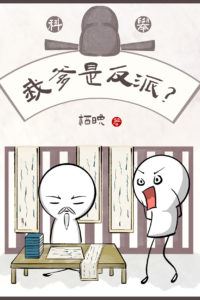
Is My Dad a Villain?
+Add to Custom List
Genres:
Novel Info
  • Author:
  • 栖晚
  • Status:Ongoing

Summary

... Read More

In the Daliang Dynasty, during the twelfth year of Jingrui, Jiang Zhimiao awakens in the body of a one-year-old infant in a poor farming household. He is the son of Jiang Qingshi, a handsome but seemingly idle scholar, and Lin Guilan, a capable woman who married him against her family's wishes. Jiang Zhimiao, a teenager from a previous life who died saving a drowning child, finds himself in a fractured extended family. The Jiang household is headed by Old Master Jiang, a hypocritical patriarch who favors his youngest son, Jiang Jinyao, and his scheming third wife, Madam Feng. Jiang Qingshi, the third son, has been suppressed and financially exploited by his elder brothers, Jiang Wujiang and Jiang Wenjiang, and their wives, who view him as a useless burden despite his scholarly ambitions.

The core conflict centers on the family's declining wealth and the bitter struggle for the last remaining family asset: a liquor shop. The second daughter-in-law, Yuan Yuexian, is particularly hostile toward Jiang Qingshi and Lin Guilan. She accuses them of stealing family valuables to fund Jiang Qingshi's studies, not realizing that Lin Guilan’s dowry supports them. The tension escalates during a family meal when Yuan Yuexian publicly humiliates Lin Guilan, implying she had improper relations with a local butcher. Jiang Qingshi, who has been playing the role of a submissive weakling, suddenly reveals his true nature. He coldly confronts Yuan Yuexian, exposing a secret about her son that forces her to apologize publicly. This display of hidden strength shocks his family and solidifies his resolve to separate from the toxic household.

Jiang Qingshi uses the confrontation as a catalyst to demand a division of the household. He accepts the family's offer of two dilapidated, pigsty-derived rooms in exchange for leaving the main estate. Old Master Jiang, eager to remove the "burden" and protect his secrets regarding his gambling addiction to cricket fighting, agrees immediately. Jiang Qingshi, Lin Guilan, and their son move into the run-down property. Despite the poor conditions, the family is united and free from the harassment they faced in the main house. Jiang Zhimiao, observing his parents, realizes that his father is not the idle scholar he appears to be, but a calculating man who has orchestrated their escape to pursue his goals without interference.

With their new independence, Jiang Qingshi and Lin Guilan begin to build a life for themselves. Jiang Qingshi reveals his plan to Lin Guilan: he intends to take the county examinations in the upcoming February. He explains that the nearby waterway trade brings merchants and travelers to Xichun Town, creating a market opportunity. He encourages Lin Guilan to use her culinary skills to sell cooling teas and drinks at the dock during the summer heat, rather than returning to the labor-intensive tofu business. Lin Guilan, supportive and admiring of her husband's insight, agrees to the plan. She also begins to shed her previous restraint, feeling empowered by Jiang Qingshi's promise that she can be her true self in their new home.

As they settle into their new life, Jiang Zhimiao struggles with the challenge of communicating his adult intelligence while maintaining the appearance of a toddler. He observes his father's sharp perception, noting that Jiang Qingshi is already suspicious of his son's unusual behavior and quick wit. Despite this, the family enjoys a period of relative peace and happiness. Jiang Qingshi focuses on his studies, while Lin Guilan prepares to launch their small business. The story moves toward their economic improvement and Jiang Qingshi's eventual rise through the imperial examination system, marking a decisive break from the oppressive Jiang family hierarchy.

Latest Release
DateGroupRelease
2026-08-11shanghai fantasy c55
2026-08-11shanghai fantasy c54
2026-08-11shanghai fantasy c53
2026-08-11shanghai fantasy c52
2026-08-11shanghai fantasy c51
2026-08-11shanghai fantasy c50
2026-08-11shanghai fantasy c49
2026-08-11shanghai fantasy c48
2026-08-11shanghai fantasy c47
2026-08-11shanghai fantasy c46
2026-08-11shanghai fantasy c45
2026-08-11shanghai fantasy c44

Community Reviews

Rating(4.3 / 5.0, 13votes)
5 stars
5(38%)
4 stars
7(54%)
3 stars
1(8%)
2 stars
0(0%)
1 stars
0(0%)

Popular reviews

... Read More
Can we just take a moment to appreciate how distinct Jiang Qingshi's voice is? Because this man speaks like he swallowed a Confucian textbook and it's the funniest thing ever. "Miao'ge, a true man should stand tall between heaven and earth and must never be delicate. You're almost two years old now and still can't even walk properly. How will you achieve great things in the future? It's all because you're usually too pampered... You absolutely cannot be like those slow-flying, clumsy birds." SAYING THIS TO A TODDLER. The fact that he delivers this with a 'serious expression' while holding a book and not once considering that maybe the child needs water or food is peak character writing. And then when Jiang Zhimiao presses his belly to signal hunger, Jiang Qingshi's internal monologue is: 'Have you gained weight? Are your clothes too tight?' His voice is so formally rigid, so steeped in scholar rhetoric, that it creates this hilarious gap between what he intends and what actually happens. He means to be inspiring; he comes across as a robot programmed with ancient wisdom with no understanding of human needs. But the author also gives him moments where his voice shifts—like when he looks at Lin Guilan and says 'Wife, though you were born into a farming family, your vision and insight extend far beyond that. You will reach even greater heights in the future.' That's not stiff scholar-speak; that's genuine admiration, and it sounds completely different. The man has range, he's just emotionally selective. Lin Guilan's dialogue is equally distinct—practical, warm, slightly self-deprecating. 'Husband, I'm just a simple farm woman. All I want is for our family to live peacefully and smoothly.' She grounds every scene she's in. And the villains? The thin man's 'Why not come with us brothers? You can take turns serving us, one day each, hehe' is exactly the kind of sleazy dialogue that makes you want to throw the book at the wall. Good writing makes bad people sound believably bad without becoming cartoonish. These two men are repulsive but they feel real, and that's why the scene works.
... Read More
The opening scene of this book is just *chef's kiss*. Let me paint it for you: summer night, just rained, Fan Family Village surrounded by ponds and paddy fields, frogs croaking incessantly, sweltering heat. And in one house at the east end of the village, a faint yellowish light still glowing from a window. A woman fanning a wooden cradle, a man writing by a chipped porcelain bowl with a single wick burning rapeseed oil. That image of the nearly-depleted oil lamp is doing SO much work. It's not just atmosphere—it's literally the family's entire economic situation condensed into one visual. They're burning expensive oil late into the night for his studies, and the fact that it's almost gone tells you everything about their poverty without a single word of exposition. The dim, flickering light dancing across his brow bones and warm eyes? That's cinematic. I could see this as a film opening. And then the contrast hits you—this intimate, almost sacred domestic scene gets shattered by the second sister-in-law's coarse voice outside, screaming about who they're trying to impress with their midnight studying. The shift from that soft, yellow-lit tenderness to the harsh, noisy intrusion of the extended family is jarring in the best way. It immediately establishes the central tension: this small, loving unit against a world that wants to consume them. The morning scene by the stove is equally vivid. Lin Guilan coughing from the smoke, her mother-in-law sitting at the lacquered table drinking tea like nothing's wrong. You can practically feel the humidity, the heat, the exhaustion. And then Jiang Qingshi appears and takes the heavy pot from her—this small gesture that says more about their partnership than any grand declaration ever could. The world feels lived-in and real. Every detail serves the story. The tofu business she mentions, the family property dispute that split them from the main household, the reputation of the father as a 'wife-killer'—all of this builds a world that exists beyond these pages.
... Read More
There's something so cinematic about the way this whole moving sequence plays out. You've got the ox cart, Jiang Qingshi helping Lin Guilan up with that tender gesture that still makes her face flush after all this time, and then the retreat into this natural bamboo grove where the cart can't go further. The imagery just — it paints itself. And then the house. Oh man, the house. A tiled roof half collapsed, torn window paper fluttering in the wind. Lin Guilan looking at this disaster and saying "this is much better than I imagined! Well... the environment is elegant and quiet!" and you just know she's trying SO hard to be optimistic for her family. Meanwhile their son is over there thinking "What was the difference between having this house and having none at all?" But what I love is how the setting keeps shifting and each one tells you something about where they are in their journey. They start in the Jiang family compound — a place where Lin Guilan had to swallow her pride and play the perfect subordinate daughter-in-law. Then they're on the road, literally leaving everything behind. Then this bamboo grove, this wild untamed place where they're starting from nothing. And now this half-collapsed house that the Fan brothers are helping them fix. The Fan brothers themselves add so much texture to the world. They're tanned young men in short jackets, carrying wood and stones, straightforward and grateful. Fan Cheng draining the sour plum drink in one go and exclaiming how refreshing it is — these are people who feel real, who exist outside the main family drama and give the story this sense of a wider community. And Lin Guilan offering them more drinks and snacks, saying "come by anytime" — she's already building something here. The tofu shop was survival, but this? This feels like the beginning of something else. That business idea brewing in Miao'er's head about a tea stall for travelers... the world feels alive and full of possibility, not just trapped in this one rural village.
... Read More
Okay so I need to talk about Jiang Qingshi because this man is a whole vibe and I am here for it. Everyone in that family — his stepmother, his brothers, even Yuan Yuexian — looked down on him as some useless pretty face who just sat around reading books. And honestly? He let them think that. That is some next-level patience right there. But then you get these little glimpses into his actual brain and it's wild. Like when he's watching Lin Guilan hold their son and he's just... thinking about how she's simpler than she looks, like a pure white rabbit in his eyes. And then there's the whole flashback to when they first met — he dropped his pouch on purpose! He deliberately made her pick it up just to see her blush! That man played the long game from day one and I respect it so much. What really got me though is how he frames their whole situation now. He says something like: "In front of me, you can always laugh when you want to laugh and be angry when you want to be angry, without having to worry about anyone else." And Lin Guilan — who spent years swallowing her pride and suppressing her temper in that toxic family — just melts. You can practically see her worldview cracking open. The Fan brothers showing up out of nowhere to help them fix the house? Jiang Qingshi clearly planned that. He helped them before, lent money, saved them from scammers — and now they're repaying the favor. This man doesn't just play chess, he's playing 4D chess while everyone else thinks he's just sitting there looking pretty. And Jiang Zhimiao — the kid — he figures it all out basically immediately. He realizes his dad isn't harmless at all, that his mom might seem like the head of the family but actually his dad is the one steering the ship. The boy's got a whole adult soul in there and he's just sitting there watching his parents have this sweet moment like... yep, I knew it. This family is gonna be just fine.
... Read More
There's something deeply moving about the central image of this opening: a nearly depleted lamp burning rapeseed oil late into the night, while a woman fans her baby and a man studies. It's such a simple image, but it contains the entire theme of the story. The lamp oil represents everything—they're spending their last resources on hope, on the belief that education will change their fate. It's almost sacrificial. And when it finally burns out, the darkness that follows isn't bleak—it's intimate, protective, a space where they can be themselves away from the watching eyes of the extended family. Then there's the tofu. Lin Guilan mentioning that she'll go sell tofu once their son is older—"I shouldn't let this skill go to waste." This small detail is enormous. She's not just a scholar's wife; she has her own skills, her own identity, her own source of pride. The 'Tofu Beauty' nickname from before her marriage isn't just cute backstory—it's evidence that she was someone before she became someone's wife. And she's willing to put that identity to work, not out of obligation, but out of love for her family. The family structure itself is a symbol. The Jiang family was once prominent, but divided—Old Master Jiang's three marriages, the competing wives, the property disputes, the 'wife-killer' reputation. This broken extended family stands in contrast to the small, loving unit that Jiang Qingshi and Lin Guilan have built. The theme is clear: family isn't about blood or tradition or hierarchy—it's about who shows up, who protects you, who chooses to love you despite everything. And Jiang Zhimiao's transmigration adds another layer. He died as an orphan who saved a drowning child—someone who gave everything for others and received nothing in return. Now he's in a body surrounded by people who would give everything for him. The guilt he feels about occupying their son's body, the determination to be a good son in return—it's a meditation on second chances, on debt and gratitude, on what it means to deserve the love you're given. The recurring motif of restraint—stopping before intimacy because the baby is nearby, enduring family conflict to protect her husband's position, the mother-in-law's calculated cruelty—all of this points to a deeper question: what do we sacrifice for the people we love, and when does sacrifice become self-erasure?
... Read More
The pacing in these chapters is honestly masterful and I want to dissect it because the author knows exactly what they're doing. We start in this warm, almost idyllic domestic space. Lin Guilan's business is thriving, she's buying a cow, she's thinking about the future. Jiang Qingshi is studying. Jiang Zhimiao is... well, suffering through walker training, but it's played for laughs. The tone is light, cozy, like a slice-of-life story about a family slowly building something better. Even the mind-reading subplot is handled with humor—the kid's frustration at his father's impenetrable mind is funny, not ominous. Then—bam. Early autumn. The sky brightens. Lin Guilan rises early to make pastries. And suddenly Jiang Zhimiao 'senses something faintly amiss.' The shift is so smooth you almost don't notice it happening, which is exactly how the author wants it. The unease creeps in the way real danger does—not with a bang but with a wrongness you can't quite name. The two men approach, and the pacing accelerates rapidly. First the thin man's lewd comment, then the fat man's physical advance, then Auntie Zhao getting shoved aside like she's nothing. Each beat comes faster than the last. Lin Guilan strikes with the ladle, the thin man gets furious, and then—the child acts. The resolution comes in a single breath: Jiang Zhimiao stands, the man kicks, Lin Guilan catches him, and suddenly he's walked. What's brilliant is how the author uses the walker setup from earlier as dramatic irony. We've been watching Jiang Zhimiao struggle in those 'heavy shackles' for chapters, and the payoff is that when it matters, he doesn't need them. The training his father forced on him accidentally prepared him for this exact moment. Not because the father was wise, but because the father was rigid and the child persevered anyway. That's a subtle but powerful structural choice—the 'villain' of the walker scene becomes unintentionally helpful later. And the cliffhanger ending? Perfect. The text cuts off right as Lin Guilan lifts him and says 'you learned to walk,' which is simultaneously a victory and a reminder of how vulnerable they all are. I was left wanting the next chapter immediately.
See all reviews

Characters

See all characters

Custom lists

See all custom Lists