Inyouchuu ~ Exorcisms of the Lewd School ~ - Reviews

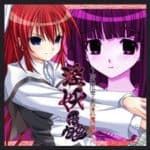
Inyouchuu ~ Exorcisms of the Lewd School ~
+Add to Custom List
Sort
Add review
... Read More
There's something oddly poetic about the elemental system in this chapter. Takeru keeps reciting the counters—Water beats Fire, Water beats Wind, Wind beats Earth—as if memorizing them will somehow save her. But her element (Wind) is directly countered by the demons' Fire, and the only element that could help her (Water) is represented by the liquid drenching her. The very thing that should be her strength becomes the vehicle of her undoing. It's almost like the universe is saying: you prepared for the wrong battle. And then there's the deeper layer about what 'holding back' means. Takeru's entire arc seems to be about restraint—controlling her ki, controlling her reactions, controlling whether her sister hears anything. The tentacles are literally forcing her to surrender that control, drop by drop. The phrase 'the body of a maiden remembers it' feels like the thesis statement of the whole series: experience doesn't necessarily make you stronger, sometimes it just makes you more aware of what you're vulnerable to. She thought she'd overcome her fears, but the body has its own memory, and it doesn't care about her tactical plans.
... Read More
Okay so I have to talk about this plot because honestly it's throwing me for a loop in the best way. The whole setup starts off seeming like a straightforward demon extermination gig—twin exorcist sisters go undercover at an all-girls school, kill some tentacle monsters, rinse and repeat—but then the author keeps layering on weird details that make you go "wait, what?" Like, first of all, the demons keep spawning faster than they can kill them. That's classic horror escalation right there, but then you find out the students were doing ghost hunts and summoning stuff before the demons even showed up. And Takeru's theory that the rich girls probably conjured demon-like appearances by accident using their own ignorance? That's genuinely clever worldbuilding disguised as plot exposition. It makes the school feel like a place where things went wrong in a very specific, almost accidental way rather than some grand evil scheme. And then there's the peeping Tom subplot—someone was stealing underwear and peeking into changing rooms. At first I thought, "ok gross, classic pervert villain setup," but then Takeru casually drops that demons don't do that kind of thing, which immediately made me realize this isn't a normal demon problem. The human element is tangled up in here somehow, and I am deeply curious about what the boss actually is. Is it a demon? A human? Something else entirely? The mystery is not even pretending to rush toward answers and I am HERE FOR IT. Also the fact that Mikoto's shoebox is full of love letters while she's trying to gather intel? That's such a fun character detail that doubles as plot setup. I need to know who these girls are writing to her about.
... Read More
The elemental system in this story isn't just combat mechanics — it's a metaphor for how characters relate to each other and to their burdens. Water beats Fire. That's not arbitrary. Mikoto, who uses Wind, literally can't save her sister from a Water-type curse on her own. She needs an external force — rain, a pool, anything Water-related — to counteract the damage. And then she summons wind anyway, a tornado that scatters the remains. So Wind and Water work in tandem even though they're technically opposed in the elemental cycle. That's the whole theme right there: none of these characters can survive alone. The sister who relies on her sister, the strong one who needs help, the newcomer who insists on sharing the burden. The stuffed cat on Mikoto's wrist — I keep coming back to this detail. It's mentioned twice in the same paragraph during the fever scene, and then again when she clenches it while vowing revenge. It's a comfort object, sure, but it's also a totem. Something soft and harmless in a world where her sister was nearly consumed by tentacle demons. She's clutching the one thing that represents innocence while standing at the edge of violence. Masumi's perfume smelling like "the damp and wet atmosphere of the deep forest" — there's symbolism there too. She smells like nature, like something ancient and untamed, despite being dressed in a school uniform and claiming to be part of the Disciplinary Committee. She's not as ordinary as she seems, and the text hints at it without saying it outright. And the glasses. Takeru without her glasses doesn't look "calm and collected at all." The glasses are her armor, her mask of composure. When she's stripped of them by illness, we see the real person underneath. Mikoto noticing this — that's the moment that breaks her heart.
... Read More
Okay so I need to talk about Mikoto for a second because honestly? She broke me in these chapters. Like, on the surface she's being absolutely destroyed by everyone and everything, but underneath all the humiliation and pain, there's this one thread that just won't snap. Save Takeru. That's it. That's her entire compass. And every time she thinks she's going to shatter completely, that thought pulls her back. I found myself actually rooting for her in this weird, uncomfortable way. There's this moment where she's pinned down, her body betraying her, her shame reaching levels I can't even describe, and she just stares at Masumi with this glare like, I will not lose. I will not lose and still save my sister. That line hit me harder than anything else in the text. It's not romantic love, it's not friendship in the traditional sense, it's this brutal, desperate sibling bond that's the only thing keeping Mikoto's humanity intact while everything else strips her down. I kept re-reading that section where she's scolding herself to stay focused, trying to pull her thoughts back from this white void. She's literally falling apart and the only thing anchoring her is love for her sister. That's... that's some serious emotional endurance. I don't know how I feel about the way the story uses her body as the battlefield for that emotion, but I can't deny it works on some deep level.
... Read More
This chapter is a masterclass in escalation. It starts with individual touches — a bite on the ear, a kiss on the nape — relatively contained, almost gentle. Then it moves to thighs and lips, then to the youma waking up, then to the tentacles, then to fingers inside the panties, then to full removal of clothing, then to the asshole being invaded. Each step raises the stakes just enough to make you keep reading. The author never lingers too long on any single sensation before pushing it further. That's smart. But the pacing isn't just about physical escalation — there are micro-pauses for breath. Mikoto's internal monologue ('N, not good... This doesn't look good at all') acts as a reset button between waves of action. It's like the author knows the reader needs a moment to process before the next hit. The ritual reveal ('Woman shall assault woman, upsetting the balance of this world') is a brilliant narrative pause — a philosophical beat in the middle of pure carnal chaos. And then Masumi's offer at the end? Perfect cliffhanger timing. It stops right when the tension peaks. I immediately wanted Chapter 41.
... Read More
I keep coming back to Takeru's dialogue because it's so aggressively minimal and it works so damn well. That first "No." — one word, full stop — and you immediately understand her entire worldview. She doesn't elaborate. She doesn't soften the blow. She just draws a line. Compare that to Mikoto's dialogue: "Eh!? Ah!" "Uh, uhh, I'm okay!" "Fueh?" This girl stammers through half her lines and it's absolutely charming because it makes her feel real. She's not performing confidence, she's reacting in real time. And Masumi! Oh my god, Masumi's dialogue is a whole different flavor. "I am a Disciplinary Committee member. That is why I won't forgive sexual harassment." Polite, precise, almost formal — but then the text reveals her eyes are full of criticism while her lips smile. The gap between what she says and what she means is where the author's voice really shines. The narrative narration itself is worth talking about too — all those italicized thoughts, the onomatopoeia (Paaaaaaa, Hyun! Shupan!, Bachi bachi bachi!), the way the prose dips into Mikoto's head and comes right back out. It's fast, it's informal, it's occasionally chaotic in the best possible way. This isn't literary fiction trying to prove itself. This is a book that knows exactly what it is and executes it with style.
... Read More
"……Eh!?" A pair of small hands clasp around my hands. This moment with Masumi completely caught me off guard — and it made me think about how Mikoto handles intimacy and vulnerability. She's completely closed off from everyone except her sister, and even with Takeru, their dynamic is built on Mikoto feeling like she's constantly failing her. Read this exchange and it hits different: [Don't, make that kind of face…… It's totally unlike you, Mikoto……] Takeru, burning up with fever, is still trying to comfort HER SISTER. That's the kind of bond that makes you sit back and go "damn." Mikoto's entire motivation in this chapter is guilt-fueled. She blames herself for Takeru getting cursed, she blames herself for splitting up during the battle, and she basically loses her mind walking into class like a wounded animal. The fact that Masumi reaches out and grabs her hands — literally breaking through Mikoto's anger — feels like the first time someone's actually seen Mikoto as a person instead of just the strong older sister. And Takeru? Even unconscious or half-conscious, she's the anchor. Mikoto doesn't remember her ever being sick. EVER. That detail about Takeru always taking exceptional care of her health makes her current state infinitely more terrifying. It's not just that she's hurt — it's that this is alien to who she is, which raises the stakes dramatically. The three of them together by the end — Mikoto desperate, Takeru broken in bed, Masumi formally declaring she won't allow outsiders to risk their lives while she does nothing — that's the beginning of something. A trio. I'm not sure if I trust Masumi yet but I'm invested in seeing where this goes.
... Read More
Tail nods vigorously and starts tugging his arm. Partway down to the observatory where Tail and England had previously met, Gallard contacts one Officer Freemen to take notice of the event.

Leave a comment

You must be logged in to leave comments. or
