Into the Story : The Prime Minister's Transmigrated Wife
+Add to Custom List
Genres:
Novel Info

Summary

... Read More

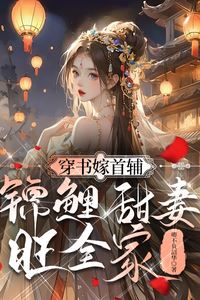
Jiang Sui, a woman from the twenty-first century, transmigrates into the body of a fifteen-year-old girl in a rural Qing Dynasty village. The original Jiang Sui was the adopted daughter of the Jiang family, suffering severe abuse from her adoptive mother, Chen Jinhua, after her adoptive father died. She was forced into hard labor, malnourished, and treated as a servant while her adopted sister, Jiang Qiaoqiao, lived in comfort. Jiang Sui finds herself in a desperate situation when a matchmaker arrives with an old engagement contract. The contract binds Jiang Qiaoqiao to Xiao Hechuan, the fourth son of the Xiao family. Although Xiao Hechuan was once a child prodigy destined for the imperial examinations, he suffered a head injury years ago that left him with the mental capacity of a child. The Xiao family, fearing for his future, hopes to fulfill the betrothal to ensure someone cares for him.

Jiang Qiaoqiao vehemently refuses the marriage, fearing it will ruin her prospects of marrying a respected scholar, Mr. Zhang. Her mother, Chen Jinhua, initially plans to sell Jiang Sui to a wealthy landlord with unusual fetishes for a high bride price. However, Jiang Sui, aware of the plot and desperate to escape her abusive household, steps forward and volunteers to take her sister’s place. She argues that accepting the marriage will protect Jiang Qiaoqiao’s reputation and prevent gossip from reaching Mr. Zhang. Chen Jinhua, realizing she can still extract some value or at least remove the burden, reluctantly agrees after negotiations with the Xiao family settle on a bride price of five taels of silver.

Jiang Sui marries into the Xiao family, where she encounters a starkly different environment. Mother Xiao, the matriarch, is kind and welcoming, immediately showing concern for Jiang Sui’s thin frame and shabby wedding attire. She provides Jiang Sui with better clothes and shoes, and gives her personal savings as a gift. Xiao Hechuan, though mentally childlike, is gentle and deeply affectionate toward his new wife. He insists on caring for her, bringing her warm water and protecting her from any perceived slights. Jiang Sui, initially viewing the marriage as a strategic move for survival, finds herself touched by the genuine warmth of her new family, particularly the bond between the siblings and the respect shown to her.

Life in the Xiao household is not without tension. The family includes three other sons and their wives. The second daughter-in-law, Zhou, is quiet and resentful due to her inability to conceive after three years of marriage. The third daughter-in-law, Liu, is pregnant, nosy, and prone to causing conflict. Liu frequently belittles Jiang Sui and spreads gossip, particularly targeting Xiao Lanlan, the youngest sister, whose horoscope is rumored to bring bad luck to potential husbands. Despite these interpersonal frictions, Jiang Sui navigates the family dynamics with caution and politeness, earning the friendship of Xiao Lanlan, who invites her to gather mushrooms in the mountains.

During a mushroom foraging trip, Jiang Sui and Xiao Hechuan discover a wild roe deer and a wild boar trapped in a ravine. Recognizing the value of this find, Jiang Sui secretly signals Xiao Lanlan to fetch the rest of the family while she and Hechuan keep watch. The discovery provides the family with a significant source of food and potential income, strengthening Jiang Sui’s position within the household. As she settles into her new role, Jiang Sui remains aware of the novel’s plot: Xiao Hechuan is destined to recover his intelligence and become a top scholar. She plans to support him, hoping to secure a stable and comfortable life for herself, regardless of romantic love.

Latest Release
DateGroupRelease
2026-08-11shanghai fantasy c32
2026-08-11shanghai fantasy c31
2026-08-11shanghai fantasy c30
2026-08-11shanghai fantasy c29
2026-08-11shanghai fantasy c28
2026-08-11shanghai fantasy c27
2026-08-11shanghai fantasy c26
2026-08-11shanghai fantasy c25
2026-08-11shanghai fantasy c24
2026-08-11shanghai fantasy c23
2026-08-11shanghai fantasy c22
2026-08-11shanghai fantasy c21

Community Reviews

Rating(4.6 / 5.0, 11votes)
5 stars
9(82%)
4 stars
0(0%)
3 stars
2(18%)
2 stars
0(0%)
1 stars
0(0%)

Popular reviews

... Read More
This chapter is rich with symbolic meaning, and I want to explore the deeper themes beneath the surface. The butterflies on Jiang Sui's feet are the most obvious symbol—what Xiao Hechuan sees as magical creatures, but Jiang Sui knows is just a birthmark. This represents the difference between their worldviews: he sees wonder and magic everywhere, while she sees reality and practicality. But maybe the symbolism goes deeper—maybe it represents how Jiang Sui herself is like a butterfly, transformed by her time travel, beautiful but marked by something she can't change. The cold feet are another powerful symbol. Jiang Sui's coldness represents her emotional guardedness, her preparedness to leave, her fear of vulnerability. But Xiao Hechuan warms her feet, and gradually her whole body warms, and she finally sleeps peacefully. This is physical warmth representing emotional warmth, the thawing of a guarded heart. The hidden purse is symbolic too—Mother Xiao secretly giving Jiang Sui money, hiding it from the other daughters-in-law. This represents hidden kindness in a world of family politics, the idea that true care exists beneath the surface of outward appearances. The firecrackers symbolize celebration and new beginnings, but also the loud, disruptive nature of change. Jiang Sui's life has been completely disrupted, and these firecrackers mark the beginning of something new. The woodshed where the adopted daughter lives symbolizes the harsher realities of this world—those who are different, those who are unwanted, those who have to live in the margins. And the kang itself, this heated platform where so much intimate dialogue happens, symbolizes warmth, family, and the domestic sphere where relationships are built. These symbols work together to create a story that's about more than just a marriage—it's about finding warmth in unexpected places, about the transformation of guarded hearts, and about the hidden kindness that exists even in complex family dynamics.
... Read More
The atmosphere in this chapter is absolutely vivid, and I want to focus on how the author builds this world through sensory details. The firecrackers outside—the loud, celebratory sounds that mark this as a wedding day in a rural Chinese village. The kang, that heated brick bed platform, which becomes this intimate space where so much happens. The foot washing basin carefully placed next to the kang. The new handkerchiefs prepared by Mother Xiao. These aren't just decorative details—they ground the reader in a specific time and place. The April setting matters too. Spring cold has just passed, but nights are still chilly, which explains why they need the kang and why Jiang Sui's feet are so cold. The author also builds this world through the family dynamics. You have the village chief who renamed Xiao Hechuan from Xiao Cheng because he thought the original name didn't suit such a smart child. You have the superstition around Xiao Lanlan's horoscope—that she's destined to bring bad luck to any husband. These cultural details make the world feel lived-in and authentic. The banquet leftovers, the chickens and ducks and fish, the neighbor aunts helping clean—all of this creates this sense of a close-knit community where everyone knows everyone's business. And the woodshed where the adopted daughter has to live? That's a dark detail that shows the harsher side of this world. The scene where Mother Xiao sneaks out with her purse, looking around to make sure no one sees her, adds this layer of secrecy and hidden economies within the family. The world feels real because it has both beauty and brutality existing side by side.
... Read More
Okay so I need to talk about this mushroom-foray-turns-into-wild-game discovery because honestly it was one of those moments where I just sat there going "oh my god" and then immediately flipped ahead to see what happens next. The setup is so clever. You have Jiang Sui and Xiao Hechuan up in the mountains, and there's this faint noise from a ravine. Jiang Sui is alert, worried about predators, but Xiao Hechuan is just pure curiosity in human form. He wants to peek. And you know what? The author could have just had them find mushrooms and called it a day, but instead—boom—roe deer and wild boar, both injured, both right there for the taking. I love how Jiang Sui immediately shifts into survival mode while Xiao Hechuan is still processing the "meat every day" part like it's some abstract concept. "Isn't there meat already lying there?" — Lanlan literally had to explain to her fourth brother that the dead animal down there equals food. The man was not getting it at all. What really sold me was the cover-up strategy. Lanlan sending the other villagers to a completely different spot for kudzu roots? That's not just luck, that's strategy. She understood the stakes immediately — whoever finds it gets it, and in a village this size, word spreads fast. The whole "keep it secret until dark" plan felt so grounded in how rural communities actually work. The narrative arc from peaceful mushroom picking to sudden life-changing discovery in one afternoon is tight. No filler, no dragging. Just cause and effect, curiosity leading to discovery leading to action. The author knows how to use a simple excursion to deliver a major plot turning point without it feeling forced. I appreciated that the mushrooms were still there as a backup — it showed Jiang Sui isn't reckless, she's just lucky enough to stumble into something way better. Also, the subplot with Liu being kept in the dark? Perfect comic relief between the serious mountain scenes. The author uses her gossip-driven desperation as a counterpoint to the actual tension of the discovery. I laughed out loud at Zhou deliberately refusing to tell her anything.
... Read More
Okay, I need to talk about the scene where Xiao Hechuan warms Jiang Sui's feet because honestly it completely wrecked me. Like, here's this man who literally has the mental age of a child, and he's being more thoughtful and caring than most adults I know. He carefully brings in foot washing water, he notices her cold feet, and he just... takes them and puts them against his calves to warm them. And Jiang Sui's reaction? She's petrified, her heart in her throat, but also—here's the thing—her whole body becomes warmer, and she finally feels safe enough to sleep. The emotional arc in this chapter is incredible. You have Jiang Sui going from this guarded, prepared-to-leave state to actually feeling warmth and safety. There's this moment where she thinks, 'She didn't know if Xiao Hechuan would still be so considerate after he recovered,' which is both heartbreaking and hopeful. The author also does something really subtle with the butterfly birthmark scene. Xiao Hechuan sees the mark on her ankle and says 'Look, my wife, there are butterflies on your feet!' and Jiang Sui has to explain it's a birthmark. This child-like wonder he has, this genuine delight in something so ordinary—it's so tender. And then Mother Xiao giving her that secret purse of money, whispering not to tell the others. That's this weird mix of maternal warmth and family politics. The emotional complexity of having a mother-in-law who actually likes you in a household full of drama is not something I expected to feel so strongly about. But the real emotional gut-punch is Jiang Sui's internal monologue about planning to divorce him. She's already preparing herself for heartbreak while he's just... being sweet. The contrast between her guarded heart and his open kindness is everything.
... Read More
There's something really interesting happening with the concept of luck in these chapters, and I think the author is building a theme around it without being heavy-handed about it. On the surface, Jiang Sui is just having a really good day of mushroom picking. The mushrooms are growing like crazy, the family is happy, everyone's working together. But then they find the animals in the ravine, and suddenly the scale of "luck" changes entirely. It's not just about having a good harvest — it's about survival, about feeding a family that's been struggling financially after the wedding expenses. The mushrooms represent something different from the meat. The mushrooms are steady, reliable, something you can count on if you know where to look. They're the result of years of knowledge passed down, of routine and hard work. The meat — the wild boar and roe deer — that's pure chance. That's the universe throwing something unexpected your way. I keep thinking about how Jiang Sui's entire situation mirrors this. She's in a new body, a new family, with no guarantee of anything. The mushrooms are the routine she's building — the daily foraging, the drying, the selling. But the ravine discovery? That's the kind of luck that changes everything. It's the narrative equivalent of a plot twist that also happens to be genuinely advantageous. The contrast with Liu is the thematic key here. Liu is pregnant and uses it as an excuse to do nothing, to take without contributing. She's the anti-mushroom, anti-meat — she wants the reward without the search. Mother Xiao sees this and quietly compensates by giving Zhou fabric, by valuing the daughter-in-law who actually works. The theme isn't just "luck is good" — it's about who deserves the luck, and who's just taking up space. The dappled sunlight through the chestnut trees while Jiang Sui wipes Xiao Hechuan's sweat — that image feels symbolic too. Light and shadow, warmth and effort, beauty earned through labor. Everything in this text seems to be pointing toward the same idea: what you get is connected to what you put in.
... Read More
The pacing in this chapter is masterful, and I need to break down how the author controls the reader's experience. It starts slow—with Jiang Sui sitting on the kang, the atmosphere awkward, Xiao Lanlan coming in to chat. This deliberate opening gives the reader time to absorb the setting and characters. Then the pacing accelerates with the introduction of the entire Xiao family through Xiao Lanlan's explanation. We get all these characters in quick succession: the eldest son with his dead wife, the second son's infertility struggles, the third son's pregnant wife who's already established as a gossip, and finally the fourth son himself. This rapid-fire introduction creates this sense of a full, complex world suddenly opening up. The wedding ceremony itself is handled efficiently—the auspicious time, the bowing, the kowtowing to the village chief. It doesn't drag. Then there's this beautiful shift to the intimate wedding night scene. The pacing slows down again, becoming more tender and personal. The foot washing, the butterfly discovery, Mother Xiao's secret purse visit—all of these moments breathe. And then that ending! Xiao Hechuan watching Jiang Sui sleep, her waking up startled, his guilty frown. The chapter ends on this note of tension and possibility. The author also does something smart with the sister-in-law conflicts. The argument between Liu and Zhou happens quickly, almost casually, which makes it feel like real family dynamics—quick bursts of tension that are defused by Mother Xiao's authority. The structure moves from public (wedding, banquet) to private (bedroom, intimate moments), which mirrors Jiang Sui's own journey from outsider to someone finding her place in this family.
See all reviews

Characters

See all characters

Custom lists

See all custom Lists