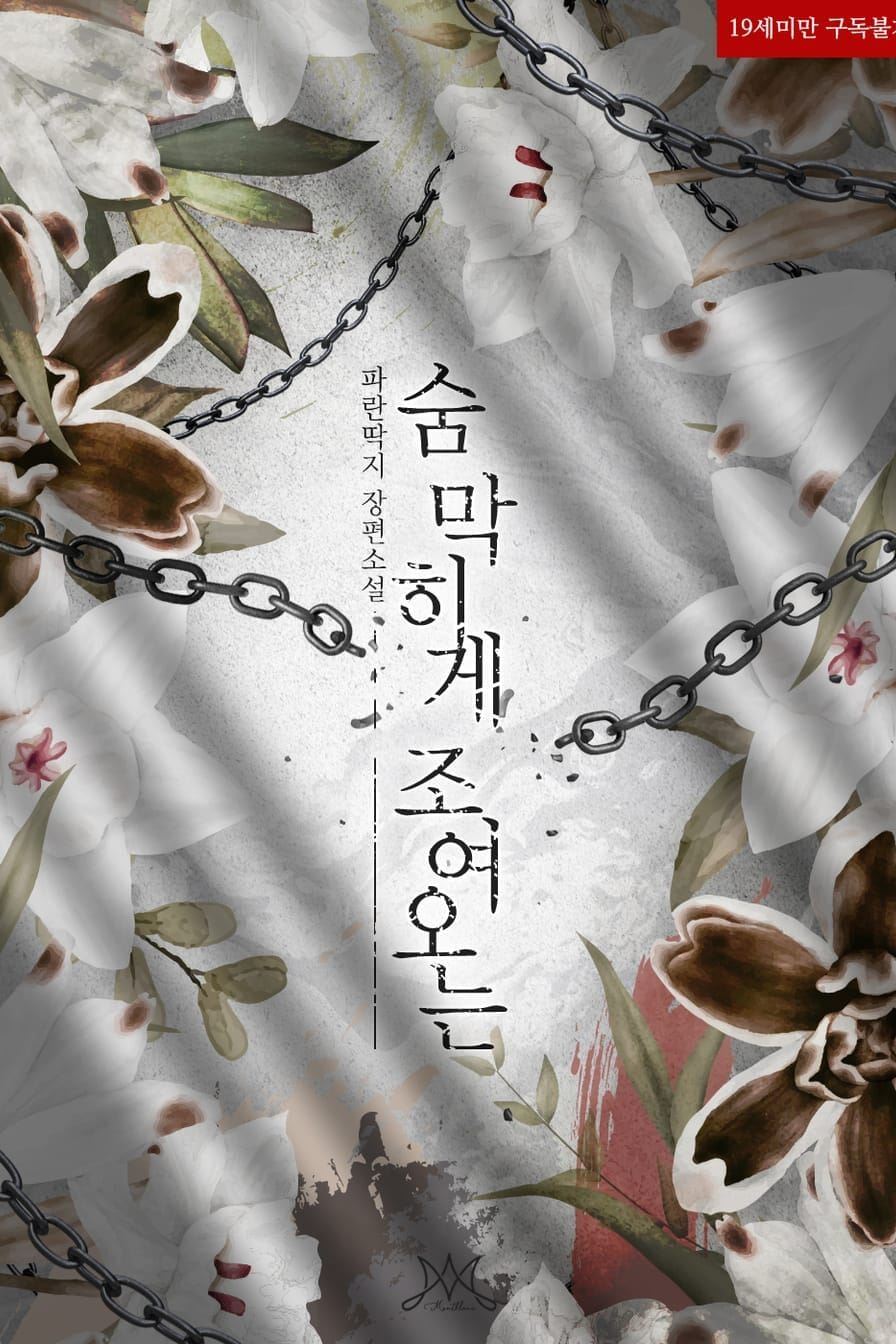
Instead of Escape, I Prepare Your Downfall
+Add to Custom List
Genres:
Novel Info
  • Author:
  • Status:Ongoing

Summary

... Read More

Empress Ailie endures a hollow existence in the Imperial Palace, trapped in a life that has deviated drastically from the romantic novel she once read. In the original story, Emperor Benate was depicted as a tender, devoted husband who cared only for her. However, the reality Ailie faces is one of cold indifference and public humiliation. Benate openly keeps a mistress, Donata Seidler, and when Ailie confronts the Empress Dowager with the truth of his infidelity, she is dismissed as hysterical and delusional. The entire court rallies behind the Emperor, labeling Ailie as the unstable party while Benate maintains a facade of perfect marital devotion. Isolated and Gaslit, Ailie’s mental state deteriorates until she attempts to flee the palace during the New Year’s banquet. Her escape ends in tragedy when she falls from a cliff, dying in regret and pain, still longing for the chance to see her betrayers punished.

Ailie awakens in her bedchamber, realizing she has traveled back in time to the morning before the previous year’s New Year’s Festival. She retains the memories of her tragic second life, including the betrayal by her maid Breni, who sided with the Emperor, and the crushing rejection by the Dowager Empress. Determined not to repeat her mistakes, Ailie sheds her previous passivity. Instead of fleeing or crying for help, she chooses to survive through cunning and calculated revenge. She resolves to expose Benate and Donata not through emotional outbursts, but by outmaneuvering them politically and socially within the strict confines of imperial protocol.

During the New Year’s Festival, Ailie publicly confronts Donata Seidler at a tavern. Rather than causing a scene that would ruin her own dignity, she slaps Donata and issues a stern warning, threatening the Seidler family’s status if she ever approaches the palace again. Emperor Benate witnesses this interaction and later feigns ignorance of Donata’s identity, attempting to paint Ailie as the aggressor. However, Ailie sees through his performance. She also encounters Sirion Fedroti, a young, newly appointed imperial physician who treats her with genuine kindness and respect, offering a stark contrast to Benate’s cold manipulation. Ailie recognizes Sirion as an ally who might prove useful in her new strategy.

Ailie then summons Donata and her father, Count Seidler, to the palace for a formal audience. She uses her position as Empress to systematically dismantle Donata’s ambitions. By highlighting the financial troubles of House Seidler and suggesting a marriage to a wealthy but disreputable commoner, Ailie forces Donata into a corner. The Count, desperate to save his family’s standing, agrees to the arrangement, effectively removing Donata from the Emperor’s orbit and stripping her of her power. Ailie maintains a facade of benevolence throughout, winning the admiration of the Dowager Empress, who believes Ailie is a devoted and perfect wife.

Despite her successes, Ailie remains deeply unsettled by Benate’s changing behavior. In her previous life, he ignored her completely; now, he frequently visits her chambers, expressing concern for her health and calling her by name. This shift confuses Ailie, who suspects it is part of a larger, more dangerous game. She realizes that Benate may be aware of her changed nature, or perhaps his motivations are even more complex than simple deceit. As she navigates this new timeline, Ailie must balance her desire for revenge against the growing mystery of the Emperor’s true intentions, all while relying on her few remaining allies, Breni and Sirion, to secure her place in a palace that wants her destroyed.

The political landscape shifts as Ailie consolidates her power. By gaining the Dowager Empress’s trust, she neutralizes one of her greatest enemies in the previous timeline. She also begins to cultivate a relationship with Sirion, whose loyalty seems genuine. Meanwhile, Donata is left fuming but powerless, unable to mount a counterattack without jeopardizing her own family’s future. Benate, meanwhile, continues his dual role: publicly portraying himself as the loving emperor and privately engaging in ambiguous interactions with Ailie that hint at deeper secrets.

Ailie’s primary goal remains survival and retribution. She plans to slowly dismantle Benate’s empire of lies, piece by piece, ensuring he suffers the same isolation and betrayal he inflicted upon her. However, the emergence of Sirion and the unpredictable behavior of Benate introduce variables she cannot fully control. As the New Year celebrations conclude, Ailie stands at the center of a web she is meticulously weaving, ready to strike when the moment is right. The story moves toward a confrontation where Ailie’s intelligence and resolve will be tested against the Emperor’s cunning, with the fate of the empire hanging in the balance.

Latest Release
DateGroupRelease
2026-10-03dusk blossoms c95
2026-10-03dusk blossoms c94
2026-10-03dusk blossoms c93
2026-10-03dusk blossoms c92
2026-10-03dusk blossoms c91
2026-10-03dusk blossoms c90
2026-10-03dusk blossoms c89
2026-10-03dusk blossoms c88
2026-10-03dusk blossoms c87
2026-10-03dusk blossoms c86
2026-10-03dusk blossoms c85
2026-10-03dusk blossoms c84

Community Reviews

Rating(0 / 5.0, 35votes)
5 stars
0(0%)
4 stars
0(0%)
3 stars
0(0%)
2 stars
0(0%)
1 stars
0(0%)

Popular reviews

... Read More
The dynamic between Ailie and Benate in these chapters is absolutely electric in the most uncomfortable way possible. I cannot stop thinking about that scene where he finally looks her in the eye. Throughout their entire marriage before her regression, Benate never showed her 'so much as a hint of affection.' He barely spoke to her. When he did look at her, it was often a glare. But here, after she's just publicly humiliated his mistress, he meets her gaze squarely. 'His pale blue eyes stayed fixed on her.' And Ailie — who has spent years only ever looking at his profile, never daring to meet his eyes — notices this completely. She had 'secretly memorized those pale blue eyes' in private moments, and now they're looking back at her directly. The cruelty of it is almost poetic. He sees her striking Donata, he witnesses her cold calculation, he hears her threats — and then he plays the loving husband? 'I prepared a cape with a warming enchantment for you, but I forgot to bring it.' The WORST part? Ailie's reaction. She stands there goosebumping and speechless, trying to process whether this is genuine or another layer of his performance. And he answers with what should be a tender sentiment but comes across as utterly chilling given everything she just witnessed. The romantic tension here isn't sweet or hopeful — it's poisonous and addictive. Ailie calls herself a victim and refuses to apologize, but Benate's warmth toward her while she's covered in the aftershocks of violence creates this nauseating push-pull. She wants him to crack. 'hoping, just for an instant, that Benate's cold expression might crack.' And when he doesn't — when he smiles instead — that's when you know this marriage is truly beyond saving.
... Read More
I have to mention how distinct the voices are here because the author really knows how to write dialogue that sounds like actual human beings under extreme pressure. Ricciardo's lines are stripped down to almost nothing—"I believe you." "I'll be here. Whenever you want." "I promise." Short, direct, no ornamentation. That's the voice of someone who has learned to say exactly what matters without padding. Every word carries weight because he's choosing it carefully. Benate's internal voice is a completely different creature. The narrator gives us his thoughts in italics, and they're razor-sharp and cold: "Why did you call me here? What is this 'gift'? Get to the point." Outside, he performs politeness—"I'm honored by the invitation"—but inside he's already dissecting every manipulation. The gap between his spoken words and his thoughts IS his character. Donata's dialogue is pure chaos. "You." "Get ready at once." "If you're stupid, just do as you're told!" Her sentences are weapons. Even her internal monologue has that sharp, venomous edge—"Why did the hallucination break?"—treating Ailie's autonomy as a malfunction rather than a human response. And Ailie—oh god, Ailie. Her dialogue in the confession scene is fragmentary, filled with ellipses and self-interruption. "Actually..." "I saw him take a mistress." "It's true. I saw it myself. So... please believe me." She sounds like someone who has rehearsed this a thousand times in her head and still can't get it out cleanly. The broken syntax IS the emotion. Every character sounds like themselves. No one sounds like the author trying to sound literary. That's rare and I appreciate it.
... Read More
Okay so I just finished this batch and my brain is buzzing. Let me just— Sirion tells Ailie she's physically healthy but emotionally wounded, and honestly that line hit me like a truck. "If a wound is covered up instead of being treated, it will eventually become infected and burst open." That's not a diagnosis, that's a verdict on her entire existence in the palace. But here's what's actually brilliant about the plot structure: we get this moment of emotional clarity, and then IMMEDIATELY she's on a carriage heading to Erdei, her childhood home, where Benate has essentially assigned Liton as her escort. Is it protection? Or is it surveillance? The plot keeps this delicious ambiguity alive. And the scene with Damon at the gate—"It seems His Majesty takes good care of you"—that casual line from an old servant carrying so much dramatic weight. Ailie almost cracks. The writing keeps layering subplots on top of the main emotional thread: there's the Donata threat lurking underneath, the Benate manipulation scheme, the family reunion, AND now Sirion promising to heal her heart. It's a lot. But it doesn't feel crowded because every thread connects back to her internal journey. The plot is essentially: can Ailie heal before the past catches up to her again?
... Read More
The pacing in these chapters is genuinely masterful and I need to dissect it before I lose my mind. Chapter 60 opens with Ailie's confession scene—tender, slow-burn, emotionally expansive. We sit with her fear. We feel the silence stretch. The author takes their time here, letting the moment breathe, making us invest in this fragile trust between Ricciardo and Ailie. It's almost peaceful. Then—immediately after—chapter 61 pivots to Benate and the portrait. The shift is jarring by design. We go from warmth to coldness, from intimacy to isolation, from a private conversation to a ceremonial room full of political performance. The King of Essini is cheerfully fussing over how to display this "gift" while Benate internally recoils, and the tension builds through this excruciating delay. The attendant is told not to damage it. Adjusted left, adjusted right. The ceremony of unveiling something that will destroy the viewer. And then chapter 62 drops us into Donata's room with a glass-shattering crash. Three chapters, three tonal earthquakes, zero respite. The cliffhanger structure is brutal. Each section ends on a note of irreversible change: Ailie has named her trauma, Benate has seen the impossibility of his desire, Donata has chosen her master again. No chapter closes with a character in the same emotional state they opened in. That's disciplined storytelling, and it's why I've been reading at 2 AM instead of sleeping.
... Read More
Let me just say—the atmosphere in this book is IMMACULATE. The opening scene alone has me seeing everything: the brilliant New Year banquet light behind Ailie as she slips away, the empty laughter fading into darkness, the steep outer wall she's descending. There's this gorgeous contrast between the celebration inside and her desperate flight outside. And then the fall—"a violent impact, a blow that no body nurtured within the palace could possibly withstand." Chills. Actual chills. The worldbuilding isn't heavy-handed exposition dumps; it's all woven into sensory details. The freezing winter that follows her death, the snow landing on Benate's silver hair but vanishing immediately, the eerily quiet streets where celebrations should be. Even the mirror scene when she wakes up—"Her rose-colored eyes blinked slowly as she stared up at the ceiling in a drowsy haze"—that domestic ordinary moment is so stark against everything we just witnessed. The palace itself feels like a character: beautiful, suffocating, trapping people in roles they can't escape. I keep imagining this as a film. The color palette alone would be stunning—golden gowns against dark night, white snow against black blood, the pale yellow dress Breni wears looking perfectly cheerful while Ailie's world is falling apart.
... Read More
Okay so let me just say — the plot in this section is doing something really smart that I didn't expect. Ailie spends her entire past life trapped in this cycle where Benate plays nice and then destroys her, right? And here we see it play out again but with a crucial difference: SHE RUNS. Like, she doesn't even try to figure out whether Benate's kindness is real or another setup. She just bolts. That's not a small character moment, that's a structural shift in the whole narrative. The terrace scene though — that is where the plot hits you in the chest. Benate holding out a white cape with a pearl brooch, matching her dress. How is that not a trap? And yet Ailie still hesitates. You can feel the second life of abuse making her doubt her own instincts. Then she sees the open door and just goes. The snow falling 'as though trying to hide the empress from view' — the author literally has NATURE side with her for one moment. That imagery stayed with me. And then the Donata subplot resurfaces like a bad smell. Donata couldn't accept losing the emperor's indifference so easily, and now she's already plotting with her father for tomorrow's audience. The cycle isn't broken — it's just entered a new phase. Ailie thinks she's stronger now, that 'things were unfolding more favorably,' but Donata's smile at the end? That unhurried little spin? Chilling. The plot is setting up a collision we know is coming, and the tension is all about whether Ailie is actually ready for it. My favorite structural choice though is the false relief after Sirion's examination. We just had this moment where Ailie feels like maybe this time is different, and then immediately Breni comes in with news that the enemy is regrouping. Classic author move — let the reader breathe for exactly three seconds before dropping another bomb.
See all reviews

Custom lists

See all custom Lists