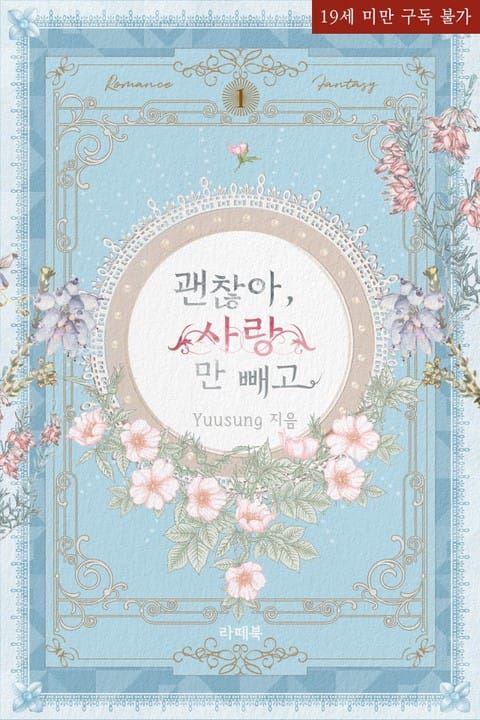
Innocent Betrayal
+Add to Custom List
Genres:
Novel Info
  • Author:
  • Status:Ongoing

Summary

... Read More

Lev is an illegitimate daughter of a humble baron who was abandoned at the Demaret Temple in her childhood. Raised as a temple servant, she leads a modest life cleaning the sacred grounds while secretly longing for a world beyond the mountains. Her existence changes when Solaith, the fourteen-year-old Second Prince of the Yusdainut Empire, arrives to serve as the continent's first Saint in fifty years. Chosen by divine revelation, Solaith is revered as a holy figure, yet he is a lonely boy far from his family, struggling with the weight of expectation. Their initial encounter occurs when Lev, hiding behind a chapel door to spy on the Saint, is discovered by him. Instead of punishing her, Solaith shows compassion, removing a caterpillar from her shoulder and sharing his own fears about the upcoming religious ceremonies.

A deep friendship blossoms between the two. Lev, who is two years older, becomes a protective figure, addressing him as "younger brother" while he calls her "sister." They share secrets, steal bread together, and confide in one another. Lev learns that Solaith possesses the miraculous ability to heal diseases, a power that confirms his sanctity but also exposes him to exploitation by the temple hierarchy. Solaith, in turn, finds solace in Lev’s presence, appreciating her sincerity in a place filled with rigid protocol and hypocrisy. However, their bond is tested when Lev reaches puberty. Priest Raoul, a corrupt cleric, begins to harass her, viewing her matured body as a temptation and a sin. Lev suffers in silence, feeling guilt over her natural desires and fear of spiritual damnation, while Solaith remains unaware of the extent of her torment.

As Solaith grows into a young man, the dynamic between them shifts. Lev feels a confusing mix of attraction and shame, interpreting her romantic feelings as sinful. She pulls away, causing Solaith distress. Before departing for the imperial capital to undergo ascetic training, Solaith asks for and receives a farewell kiss from Lev, which she initially misinterprets as a familial gesture before realizing its deeper emotional weight. He promises to return as a complete adult. Lev is subsequently punished by the temple manager for allegedly seducing the Saint, leading to a three-day confinement just as Solaith leaves. For three years, they are separated, with Lev continuing her duties at the temple and Solaith rising in status as a military hero in the imperial army.

Years later, Lev discovers Solaith’s hidden diary, revealing his inner turmoil, loneliness, and the secret burdens he carried as a saint. The diary contains a note promising to return to see her, which revives Lev’s hope and affection. Just as she reflects on their past and her enduring connection to him, news arrives that Solaith has returned to the Demaret Temple. The story concludes with Lev preparing for his return, standing in the chapel as the announcement echoes through the halls, signaling the beginning of their reunion after years of separation and personal growth.

Latest Release
DateGroupRelease
2026-10-03dusk blossoms c18
2026-10-03dusk blossoms c17
2026-10-03dusk blossoms c16
2026-10-03dusk blossoms c15
2026-10-03dusk blossoms c14
2026-10-03dusk blossoms c13
2026-10-03dusk blossoms c12
2026-10-03dusk blossoms c11
2026-10-03dusk blossoms c10
2026-10-03dusk blossoms c9
2026-10-03dusk blossoms c8
2026-10-03dusk blossoms c7

Community Reviews

Rating(0 / 5.0, 39votes)
5 stars
0(0%)
4 stars
0(0%)
3 stars
0(0%)
2 stars
0(0%)
1 stars
0(0%)

Popular reviews

... Read More
I lost it when Lev pulled out her wallet. After everything — the week of avoidance, the guilt, the private aching — she's still the one who steps between a desperate mother and cold guards. "The temple's dignity" is the excuse they use, but Lev hears what they're really saying: these poor people aren't welcome here unless they pay. And the guard captain, who seems genuinely uncomfortable with his own complicity, tells her it's policy. One hundred fifty silver coins from everyone, regardless of whether they walked up the mountain or arrived by carriage. She doesn't argue philosophy. She argues fairness. "Are one hundred fifty silver coins the same amount for people from the villages below and people who came by carriage from inland?" That single question unravels the entire system. It's not corruption — it's structural cruelty dressed up as tradition. The edict came from above, and now even the lowly guards are enforcing it because they're also bricks in the same building. And then she pulls out a GOLD coin. Her entire salary. Not bargaining, not performing — just acting. But here's where the stakes spike: she doesn't stop at the guards. She carries that burned child through the chapel, kneels before Solaith, and begs. Not for herself. For a stranger's kid whose face is so disfigured from burns that his features are unrecognizable. The text says he laid the child on the altar and touched his clean hands to the wound, but the recovery didn't come easily. His holy power isn't instant magic — it has limits. He's exhausted from using it all day, and even then, the burns go deep to the subcutaneous muscle. The tension isn't whether Solaith will try. It's whether he CAN. And if he can't, what happens to this child? What happens to Lev's faith in this entire institution?
... Read More
Let me just appreciate how each character sounds completely different when they speak. Lev's dialogue has this grounded, practical quality to it. Even her internal monologue feels like someone who's spent her life watching her words carefully before speaking them aloud. When she says 'Th-that's not what I meant...' after Solaith heals her wrist, the stutter tells you everything. She's flustered, caught off guard by his devotion, and her speech pattern breaks just enough to show it. Solaith's voice is so distinct. He speaks formally when needed – 'Sister, something amazing happened today. I discovered I have healing abilities.' – but there's this underlying current of genuine warmth that cuts through the propriety. And his line 'As I thought, you're the only one who thinks of me, sister' has this quiet intensity that's completely unlike anyone else in the story. When he's with Lev, the saintly posture drops and you get this vulnerable kid who just wants to be someone's person. The narration itself deserves praise too. It's close third person, mostly anchored to Lev's perspective, but it has this lyrical quality that elevates it above standard fantasy prose. 'Her thin wisps of hair caught the light and swayed like sunshine' – that's not something you see every day. The author trusts the reader to sit with imagery like this. And the humor! It's dry and almost accidental. Lev's internal thought 'Was this what it felt like to become someone's godmother?' coming right after she's been thinking of him as a younger brother she needs to protect – the tonal whiplash is funny and touching simultaneously. Even the absurdity of the nobles barging in with a golden seal and demanding the saint treat their leper marquis – the narrative doesn't comment on how ridiculous this is, it just presents it, and that straight face makes it funnier.
... Read More
Let me just appreciated the visual composition of this novel because WOW. The stained glass scenes. 'The reddish-purple sunset was soaking the horizon. Light passing through the stained glass scattered noble warmth throughout the confessional.' I can SEE this. The color palette alone – crimson lips, white teeth, red hair catching the light like sunshine, the vermillion glow of lanterns – this book is painting with fire and gold. And the temple itself. You've got marble floors that echo when people strike their foreheads against them. High domed ceilings. Sculptures depicting scenes from scripture. A confessional with a firmly closed golden door. This is a space that feels sacred and suffocating at the same time. The architecture is a character. Then there's Lev's world – the rusty window frames, the dormitory rooms, the food storage she raids at dawn. These are the back corridors of the temple, the places where the saints and priests don't walk. The contrast between the golden, light-filled main spaces and the shadowy service areas tells you everything about the hierarchy without a single exposition dump. The dream sequence is another visual masterpiece. 'Red hair stuck to her sweat-drenched forehead like water moss.' Everything is red. Demons at her shins. Skewers. Endless weight. It reads like a fever painting, something you'd see in a Bosch engraving but alive and breathing and hurting. And that transition from dream to reality – 'dawn hadn't even broken' with blue light through a rusty frame – the shift from red chaos to cold blue silence is masterful. Even the body horror of the leprosy scene is described with such vivid precision. 'Skin bumpy like fir tree bark.' 'Black skin holding hell's curse, and the white hand upon it.' These aren't just descriptions, they're juxtapositions that carry theological weight.
... Read More
That necklace. Three rows of brilliant pearls with a thumb-sized amethyst in the center and long silk ribbons hanging from both sides. Of course the gift is religiously coded—pearls, purity, the virgin mother imagery that the temple would worship. But the amethyst? Purple. Royalty. Earthly power dressed up as devotion. And those long ribbons? They literally dangle, inviting attention, wrapping around her neck like a noose or a vow. Lev has to remove her shawl to receive it. The shawl is her protection, her modesty, the thing that hides the body she's been told is sinful. When it falls to the floor with a soft rustle, it's almost a ritual unmasking. She thinks she needs to be pure to receive his touch, and in that moment of self-reproach before accepting it, she's internalized every judgment the temple has ever placed on her. But then—the kiss. He calls it missing her, but it reads as possession. And her body, which she's been treating as shameful, reacts anyway. The contradiction between her beliefs and her biology is the real tension here. Every time she touches him, every time he touches her, she's crossing a line she swore not to cross. And yet she stays seated on that velvet sofa when she could have left. Why? Because she's afraid of becoming the person who severs a friendship over a misunderstanding. Because she's not ruthless enough. Because part of her wants this too, and that terrifies her more than anything. The most damning line in the entire chapter might be the last one we see: "Could it be after seeing my b..." The text cuts off, but Lev's thought trail is clear. She's connecting his desire to her body, and that realization is the precipice everything is building toward.
... Read More
Let me just say — the pacing in this section is absolutely MASTERFUL. We start with what feels like a straightforward healing scene, right? Save the sick child, dramatic reveal, emotional thank-yous, mother and daughter descending the mountain. It's wholesome. It's warm. You're smiling. And then— Lev runs back to the chapel because she remembered something, finds Solaith cleaning of all things, and the ENTIRE ENERGY shifts. One moment they're colleagues doing cleanup, the next they're in a storage room with him pressing his chest against her back and touching her lower abdomen. The transition is so smooth you barely notice it happening until you're already caught. And then after the healing touch, instead of wrapping things up neatly, we get THIS confession scene that hits like a truck. The chapter basically goes: wholesome community moment → private vulnerability → physical intimacy → emotional裸露. Four tonal shifts in one section and each one lands perfectly. The author doesn't rush any of it though. Even during the most intense physical moments, there are these tiny pauses — Lev questioning whether to call him 'Your Holiness' or 'Solaith,' the way he almost apologizes for tightening his grip. These micro-moments give you breath even when the tension is suffocating.
... Read More
There's something almost suffocating about how the author builds the atmosphere in this section. The chapel scene reads like a painting — golden candlesticks, the low hum of organs, the weight of monarchs and archbishops packed into one space. But what really gets me is how the architecture mirrors Lev and Solaith's relationship. The keyhole! She used to watch him through a keyhole when they were kids. Now he's tall enough that his shadow completely covers her. The physical space between them has inverted — she's not the little girl peeking through anymore, but the distance hasn't actually closed. It's in the details like this that the worldbuilding breathes. And then there's her room. Old wooden support beams rotting at angles. She notices it specifically: "They didn't use to be like that." Of course they aren't. The rot is just the building aging, but it reflects her heart, and that line hits like a gut punch. The author doesn't over-explain it — just plants it and lets you feel the weight. The contrast between the soaring chapel and the decaying basement room is devastating in its simplicity.
See all reviews

Custom lists

See all custom Lists