Ingcheop
+Add to Custom List
Novel Info
  • Author:
  • Status:Ongoing

Summary

... Read More

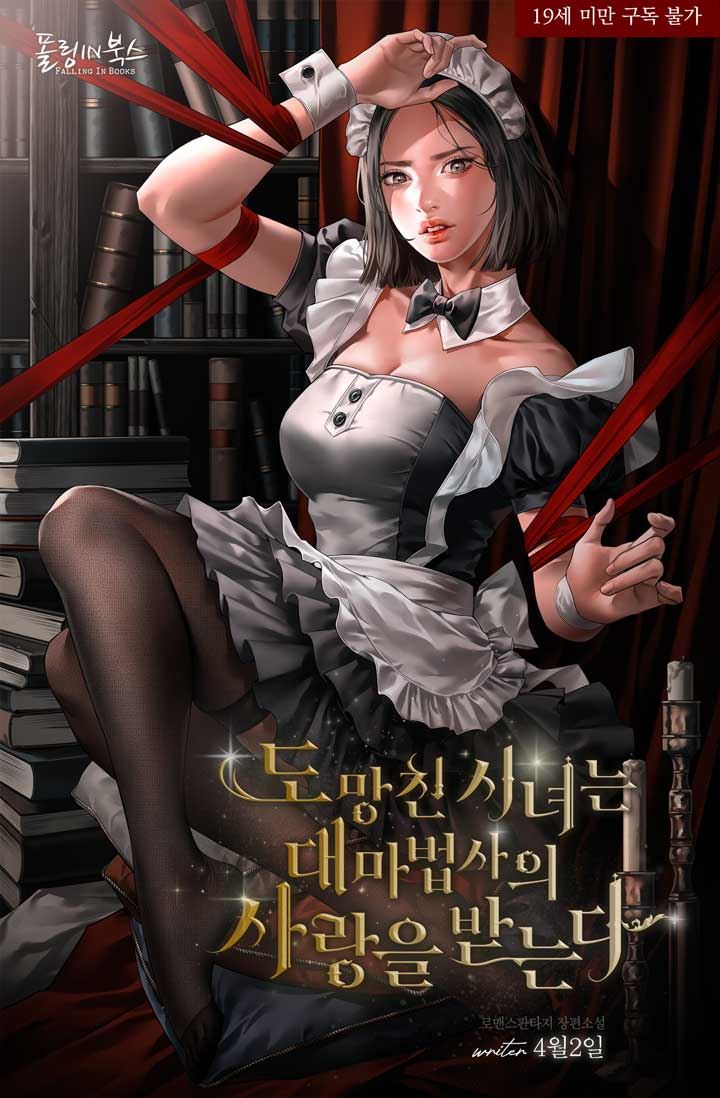
Yu Seol-yeon is a woman of humble origins who entered the Seoguk Palace as a servant under the household of the powerful Gyeong family. Her life diverged from the typical path of a palace maid when she was appointed to care for the young Prince Ryu, who had lost both parents and was raised by the Grand Empress Dowager. Yeon devoted her youth to raising Ryu, enduring his fragile health and emotional volatility. As Ryu grew into Emperor, their relationship underwent a profound and disturbing transformation. What began as a nanny-child bond shifted when Ryu, during his adolescence, began to view Yeon not as a caretaker but as a woman and his rightful partner. Despite Yeon’s attempts to maintain professional boundaries and her repeated reminders of her role, Ryu’s obsession solidified, leading to a forced consummation that established a coercive dynamic. She became his exclusive consort, though she refused formal titles and declined to bear his children, fearing the permanent entanglement such a union would entail within the treacherous palace politics.

The central conflict arises from Ryu’s refusal to accept the state marriage arranged with Gyeong Suin, the daughter of the Western Duke and Yeon’s former mistress. Suin is Ryu’s childhood betrothed, yet he openly dismisses her, citing her health and maintaining that he will not marry while his first love remains unclaimed. Yeon, recognizing the political necessity and Suin’s virtue, encourages the union, hoping it will finally allow her to retire and escape the emperor’s grasp. However, Ryu interprets Yeon’s kindness toward Suin as betrayal. His possessiveness deepens, and he becomes increasingly erratic, oscillating between childlike vulnerability and tyrannical rage. He punishes those who suggest Yeon marry others and isolates her from the outside world, creating a gilded cage where she is simultaneously the most favored woman and the most trapped servant.

A critical turning point occurs during a visit to the Seoguk residence for Suin’s birthday banquet. While alone in the courtyard at dawn, Yeon encounters Gyeong Yonghwan, the Duke’s second son, who harbors resentments against the imperial family. Yonghwan attempts to assault Yeon, leveraging her low status and his own authority within the household. He corners her, mocking her position and preparing to violate her. Just as his grip tightens, Ryu appears, having followed Yeon. In a display of lethal speed and fury, the Emperor stabs Yonghwan through the shoulder with his own sword, pinning him to the ground. Ryu’s cold, unyielding gaze upon Yeon afterward reveals not relief, but a dangerous questioning of her loyalty and actions, further destabilizing their already fractured relationship.

In the aftermath, Princess Sukon, the Emperor’s aunt, discovers that Yeon is pregnant. This news sends shockwaves through the palace. The Grand Empress Dowager is furious, not because of the pregnancy itself, but because the child belongs to a woman without formal rank and threatens the succession plans centered on Suin. Princess Sukon recalls Yeon’s true lineage: she is the illegitimate daughter of Gyeong Bohyeon, the very man whose household Yeon served. This revelation complicates the political landscape, as Yeon is technically Suin’s half-sister, a fact kept secret to avoid scandal. The pregnancy forces the court to confront the Emperor’s refusal to wed Suin properly. Yet, instead of using the heir to secure Yeon’s status, Ryu remains ambivalent, viewing the child as a tool or a burden rather than a joy. The narrative concludes with Yeon facing the uncertain future of her unborn child, trapped between an emperor who loves her with possessive desperation and a court that views her existence as a threat to the royal lineage.

Latest Release
DateGroupRelease
2026-10-03dusk blossoms c78
2026-10-03dusk blossoms c77
2026-10-03dusk blossoms c76
2026-10-03dusk blossoms c75
2026-10-03dusk blossoms c74
2026-10-03dusk blossoms c73
2026-10-03dusk blossoms c72
2026-10-03dusk blossoms c71
2026-10-03dusk blossoms c70
2026-10-03dusk blossoms c69
2026-10-03dusk blossoms c68
2026-10-03dusk blossoms c67

Community Reviews

Rating(0 / 5.0, 28votes)
5 stars
0(0%)
4 stars
0(0%)
3 stars
0(0%)
2 stars
0(0%)
1 stars
0(0%)

Popular reviews

... Read More
This book's dialogue is absolutely vicious in the best way. Like, on the surface these people are being polite—curtseys and honorifics and careful phrasing—but underneath every conversation is a knife fight. Take this exchange between Yeon and Mansuk: "You turned down the title of Gui-in. His Majesty wanted to officially appoint you as a concubine, but you refused. Did you think I wouldn't know?" Mansuk doesn't mince words at all. She's sharp, ambitious, and completely unfiltered with Yeon, which tells you everything about their relationship. But Yeon's responses are equally layered—she deflects, she redirects, she wraps her refusals in courtesy so thick you have to chew through it to find the real meaning. "How could I possibly keep all of this to myself, considering Lady Suin's dignity?" sounds selfless on the surface, but you know exactly what she's doing—asserting moral superiority while appearing humble. And Ryu! Oh my god, Ryu's dialogue is terrifying because it's so inconsistently warm. One moment he's burying his face in Yeon's shoulder like a tired child, complaining about ministers, and the next he's gripping her wrists "as though pinning her down like a specimen." The shift is so abrupt it makes your skin crawl. He demands, "Call me Ryu" and when she hesitates—"If someone were to hear, this one's—no, your concubine's tongue might be ripped out"—he doesn't laugh. He grips harder. The power dynamic in their spoken words is brutal. But the most fascinating voice work is in the narration itself. Yeon's internal monologue has this resigned, almost dry quality—"The loss meant nothing to her. Her damaged womb was no different." Deadpan delivery of devastating personal history. It's the voice of someone who has learned to survive by refusing to feel too deeply. And that restraint? That's what makes the rare moments when she DOES feel something land with enormous force.
... Read More
I've been sitting with the relationship between Yeon and Ryu for a while now, and it's exhausting in the best way. On the surface, he rescues her. He pins Yonghwan to the ground. He's clearly furious. But then he doesn't help her up. He stares at her like she's a problem he hasn't solved yet. And later, when the pregnancy news drops, his first instinct isn't to ask how she's feeling—it's to talk about heirs and concubines and whether she can produce a crown prince. It's cold. It's transactional. And yet—there's something else underneath it. "If you're so worried about my heir, why don't you give me one yourself?" He says that casually, like it's no big deal. But it's huge. He's offering her a title, a position, a path to legitimacy. Is that love? Is that manipulation? Probably both. And Yeon doesn't know how to respond to it, which tells you everything about their dynamic. She's always been obedient, always been playing by the rules the Grand Empress Dowager set. But Ryu keeps pulling her into spaces where the rules don't apply. Then there's Yonghwan, who is just pure disgust. The way he touches her, the way he calls her 'that wench'—only the Emperor would get away with that kind of contempt. And yet, he still holds power over her because of her birth status. A bastard daughter. Never acknowledged. The text makes it clear: if her father had any conscience, she wouldn't have grown up the way she did. That detail haunts me. It's not just about her being vulnerable now; it's about a lifetime of being treated as less than human. Princess Sukon is fascinating too. She scolds Yeon for being careless, but she also summons a trusted physician without hesitation. She cares, but her care comes with conditions—conditions tied to the imperial family's stability, to Suin's future. The grandmother's perspective at the end reveals her true anxiety: she fears Yeon's influence will overshadow Suin, the destined empress. So even 'kindness' here is layered with political calculation. Everyone is performing, everyone is weighing得失. And Yeon? She's just trying to survive it all.
... Read More
Okay so let me just process what I just read because honestly my jaw is still on the floor. We've been following this domestic household story about Yeon taking care of young Ryu, right? And I thought I understood the setup—maid raises orphaned toddler, wholesome stuff, the Duke of the Western State is a distant but not-entirely-mean patriarch. Then BAM. The entire foundation cracks open. The way this reveal is structured is honestly criminal—in the best way possible. The author doesn't just drop the bomb; they build it brick by brick. First there's the weird intimacy of the Master checking on Yeon's stomachache, then the unsolicited gift of gyehwa rice cakes (which are SUIN'S favorite, by the way—does that not scream anything yet?), then the Master showing up at dawn at Soso's quarters like he has every right to be there. And then the final nail in the coffin: "We already have lots of children together. Four." Four. HE HAS FOUR CHILDREN. Including presumably Ryu. And Yeon has been feeding and caring for her own half-sibling while believing some version of the household story. The structural genius here is that the author makes us, the readers, complicit—we've been reading along with Yeon's naive interpretation of events and only at the end do we realize how much she didn't know. The Princess Sukon visit looming ahead is now loaded with terrifying implications too. This isn't just a household drama anymore; it's a powder keg. And can we talk about the parallel narratives? Ryu crying until he passed out from starvation versus Suin throwing tantrums and vomiting because she didn't get her way—two children, both products of the same man's relationships, treated COMPLETELY differently. The irony is suffocating.
... Read More
Okay, so I need to talk about Yeon and her mom because THIS. relationship. is everything and I am so many feelings. Yeon's mother is this incredibly complicated person. On one hand, she loves her daughter desperately — she begs, she throws herself at the Western Lord (seriously, she nakedly flirts with him, she tries to hang herself), she does literally anything to keep Yeon from going to the palace. But on the other hand, she's been blaming Yeon for EVERYTHING her whole life. "It's because he never left them alone." Her own mother views herself as a victim of her daughter's presence. That's some deep generational trauma right there. And Yeon! Sweet, naive Yeon who still tries to understand her mother. She tells herself her mom is "simply more delicate than others because she was ill." She deflects every cruel thing her mother says by rationalizing it. When her mother accuses her of taking her father's side — "Why? Are you taking your father's side now?" — Yeon can barely stammer out a response. She's trapped between loving someone who treats her as a burden and needing that same person's love to survive. Then there's the Western Lord's relationship with both of them. He calls out "Soso" — which I think is Yeon's mother's name — in such an urgent, almost begging tone in the morning. But then he casually tells Yeon her mother will "bear another child" like it's nothing, like it doesn't shatter her. He carries her mother away from the door the same way he'll carry Yeon. The parallel is brutal and the author doesn't even shy away from it. And Yeon herself — she goes into the palace not because she wants to, but because she identifies with the baby emperor. "If I were to lose my mother too..." She sees her own grief projected onto this child who has lost everything. She holds him and fights back tears. This woman who has been treated like an inconvenience by her own mother is now pouring all her love into a baby who needs her. I'm genuinely emotional about this.
... Read More
Let me just lay out the stakes here because holy shit. On the surface, this is a household drama. A maid raising a toddler. A sick mother in bed. A young master who cries himself unconscious. But underneath all of that is a landmine that could destroy every single person in this house. Ryu's existence is the central conflict and it's nuclear. He is the living proof of the Master's affair with Soso. If the lady of the house finds out—actually finds out—what happens to Ryu? What happens to Soso? What happens to Yeon, who has been grooming herself as this child's caretaker, unaware of his true parentage? The text gives us glimpses: the previous incident three months ago where Soso begged for forgiveness and Yongwoo shielded her, and we're told the Master "remained calm and unmoved" while dismiss­ing everyone except her. The implication is clear and it's horrifying. Then there's the political dimension crashing in. Princess Sukon—the Emperor's aunt, the Grand Empress Dowager's daughter—is coming to visit. She's described as upright, dignified, formidable. Why does she want to see Yeon specifically? Is she investigating something? Is she curious about the maid who calms the precious future Empress? Or does she already know what Yeon doesn't know about herself? The internal conflict for Yeon is perhaps the most delicate. She genuinely likes the Master—she remembers the fur-lined shoes, the rice cakes, the way he asked about her mother. But her mother calls him vile. Her brother calls her foolish for defending him. And she's carrying a secret that could get everyone killed if it comes out. The question hanging over every single scene is: what happens when Yeon learns the full truth, and what will she DO with that knowledge?
... Read More
There's this one image that won't leave me: twelve-year-old Ryu, head tilted, smiling that pear-blossom smile, asking 'Do you like it?' about the clover bracelet. Clover - that's a symbol of luck, of finding something rare and precious. He was trying to GIVE her luck. To give her something beautiful made with his own hands. And now? Now he owns her body, her time, her entire existence. The clover bracelet from that scene feels like a artifact from a dead world - a world where Ryu was still a boy who could express love through small, gentle gestures. The milk imagery is another one that haunts me. 'I heard the milk you gave me came from Court Eunuch Bong's daughter-in-law.' Ryu knows. He KNOWS that Yeon never actually nursed him, that she lied or at least took credit for something she didn't do. And yet he clings to the idea that she was maternal, that she was HIS. The contradiction is crushing - she couldn't be his mother (biologically impossible) but she also wasn't just a stranger (she raised him). She exists in this impossible liminal space, and the power structure of the palace ensures she can never escape it. Then there's the apricot scent - 'like the small fruits nestling beneath their sharp green leaves. That faint, verdant scent.' Appropriate timing too, because this scene happens during what feels like spring or early summer. The apricot imagery is perfect: sweet on the outside, hard pit inside. Just like their relationship. Just like Yeon herself - soft and yielding on the surface but with something unyielding and painful at the core. The seven palaces gathering dust is such a rich symbol too. They're meant to be filled with women, with concubines, with the machinery of imperial reproduction - and they sit empty because Ryu won't let anyone else have her. The palace itself becomes a tomb for possibility, for normalcy, for any future that doesn't involve these two people destroying each other in increasingly elaborate ways.
See all reviews

Custom lists

See all custom Lists