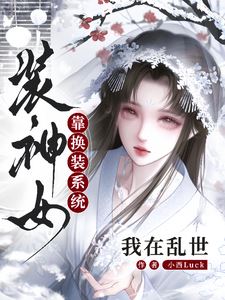
In the Chaotic Era, I Rely on a Costume Change System to Pose as a Goddess
Novel Info
  • Author:
  • Status:Ongoing

Summary

... Read More

Yun Shu transmigrates into a chaotic-era novel as a system-bound host, equipped with the useless-sounding White Snow Fragrance outfit that grants infinite plain congee. While the system insists she capture the male lead, Shen Jue, to gain favorability, Yun Shu disregards this directive, aiming instead to become a genuine goddess. Utilizing her background as a former anti-narcotics officer who died during an undercover mission, she treats her new existence as a performance, leveraging her acting skills to manipulate perceptions and harvest shock points from those who witness her miracles.

Her strategy begins by using the congee skill as bait in a local stream, spiking it with favorability pills to attract fish. When Shen Yu, the male lead’s younger brother and a brilliant strategist, passes by with his guards, Yun Shu stages a divine spectacle. Fish emerge from the water to worship her, offering jewels and pearls, while she maintains an aloof, indifferent demeanor. The scene terrifies a group of starving refugees who attempt to rob her, but the fish physically intervene to protect her, deepening the crowd’s awe. Yun Shu then uses a heavenly orchid item to heal the refugees’ ailments, cementing her status as a deity in their eyes before vanishing into the sky, leaving behind treasures to test their reverence.

Shen Yu, initially skeptical, observes the refugees building a temple for the goddess out of gratitude. He interacts with them, learning of their suffering under the corrupt Yong Dynasty, and begins to question the natural order of the world. When mountain bandits capture a child and threaten the villagers, Yun Shu descends from the moonlight to punish the attackers with heavenly lightning. She executes the bandits without mercy, declaring that killing is necessary to protect life, and accepts the refugees’ devotion only on the condition that they do not offer incense. This display solidifies Shen Yu’s belief that the goddess is the only hope for the suffering populace, prompting him to seek her guidance rather than pursue political office.

Yun Shu continues to accumulate shock points, trading them for high-level fashion components that grant her abilities like poison immunity, flight, and divine judgment. She recruits the system, now disguised as a nine-tailed spirit fox, to act as her messenger and intermediatory between herself and the mortal followers. As the temple is completed, she appears again to feed the hungry masses, demonstrating her benevolence. However, her ultimate goal remains divergent from the system’s original mission; she is not interested in romance or supporting the male lead, but rather in using her divine facade to alter the course of the chaotic era and save the common people from extinction.

The narrative establishes a tension between Yun Shu’s calculated performance and the genuine faith of those she saves. Shen Yu serves as the primary mortal anchor, his intelligence allowing him to interpret her actions as divine will, thereby expanding her influence. Meanwhile, the political backdrop of the Yong Dynasty’s decline looms, with warlocks controlling the throne and warlords rising. Yun Shu’s accumulation of power and followers positions her to intervene in these macro conflicts, not as a participant in human politics, but as an autonomous deity shaping the fate of the world according to her own moral compass, separate from the predetermined plot of the novel she inhabits.

Latest Release
DateGroupRelease
2026-09-26akknovel c114
2026-09-26akknovel c113
2026-09-26akknovel c112
2026-09-26akknovel c111
2026-09-26akknovel c110
2026-09-26akknovel c109
2026-09-26akknovel c108
2026-09-26akknovel c107
2026-09-26akknovel c106
2026-09-26akknovel c105
2026-09-26akknovel c104
2026-09-26akknovel c103

Community Reviews

Rating(0 / 5.0, 49votes)
5 stars
0(0%)
4 stars
0(0%)
3 stars
0(0%)
2 stars
0(0%)
1 stars
0(0%)

Popular reviews

... Read More
Okay okay okay. I had NOT expected the temple idea to be the hinge for the entire second act of this story. Like, I was reading the refugee scene expecting... what, a quick 'take the stuff, go home, everyone be safe' resolution? And instead Shen Yu just stands there by the water, hands clasped behind his back, and goes "It would be better to use these treasures to build a temple for the Goddess right there, erect a stele, and inscribe the events of today." And the whole crowd just... locks onto him. That's not a small plot beat, that's the entire scaffolding for everything that comes next. Because now Yun Shu has a physical location, a growing congregation, and a reason to keep showing up. She can't just vanish. The Goddess Temple becomes the anchor point that traps her (in a good way, I mean for the plot) into this world long-term. And here's what gets me. Shen Yu is supposed to be the male lead's chief strategist, the guy known for being terrifyingly clever, right? The system basically flagged him as the danger zone for previous hosts. But in this scene he's not scheming. He's not calculating three moves ahead. He's just... a kind, calm person looking at scared refugees and saying, hey, here's a practical solution that also honors what happened. The 'devilish intellect' label almost misleads you because in this moment his intelligence is warm rather than cutting. That's a deliberate authorial choice, I think. They're setting up the contrast. If he's THIS gentle and reasonable now, what does he look like when he's actually being ruthless? The foreshadowing is quiet but I noticed it. Also the 'Goddess Temple' naming thing is genius little writing. No dharma name, just 'Goddess.' It solves the refugees' anxiety about offending the deity AND it solves Yun Shu's problem of not actually knowing what to call herself. One stone, two birds, and the author slides it in so naturally I didn't even realize it was doing double duty until I re-read it. The crowd going "Good, good, good, this is good!" felt genuinely communal in the best way, like the whole group exhaled at once. But here's my question that's been sitting in my throat: when Shen Yu says 'The Goddess does not need your offerings, but your good intentions must have a place to rest' — was that a line he composed on the spot, or does it hint that he actually already knew what Yun Shu was up to? Because a man who spends his life as a strategist probably reads crowds the way you'd read a chess board, and 'good intentions need a place to rest' is a very specific framing. It's not just comforting them. It's giving them agency. He's not telling them what to do; he's giving them a job. And that distinction matters for whether he's being genuinely kind or just... managing the narrative. Can't shake that one.
... Read More
Okay so I just re-read that woman with the child whispering 'If only the Goddess were our god, how wonderful that would be!' and I genuinely had to close the book for like ten minutes. Because think about it. These people just got HEALED. Their bodies stopped hurting. They caught a glimpse of actual help, actual grace, and then she walks away and goes 'I am not your god. I do not need your worship.' And just like that the floor drops out. Not physically, no, but spiritually. And that's so much more brutal. The old man's line about not being greedy hit me hard too. 'The Goddess must already have enough believers, which is why she said she doesn't need our worship.' See, he's already rationalizing. He's already making himself small enough that her rejection becomes something he can survive by logic. 'She didn't hold our offenses against us, that's a massive grace.' But I could feel how that sentence was him stitching himself up. The woman wasn't stitching herself up. She was just sobbing into her child's hair. And the part that got me? The way the text says 'It was as if they had been fished out of the abyss, finally caught a glimpse of the daylight, only to quickly plunge back into the abyss.' That's not a metaphor I expected to feel this much. It made me think about every time you hope someone actually cares and then they just... don't. They give you the minimum, maybe even heal your wound, and then they leave. And you're supposed to be grateful. You're supposed to say 'oh, well, at least they fixed my leg.' And maybe you are. But the feeling of being looked at with those phoenix eyes, that cold otherworldly gaze, and told you're not worth sticking around for? That lingers. I keep thinking about whether that woman and child will ever be okay. Like, narratively, will this author actually come back to that sobbing mother? Or is she just texture for the crowd? Because I really need to know.
... Read More
Can we just talk about how DESIGNED the descent scene is? Because every sentence in that opening paragraph feels like it was painted, not written. "Her toes lightly touched the void, every step like stepping on invisible stairs, treading the moon as she came." TREADING THE MOON. Not floating, not flying — she's literally walking on moonlight like it's solid ground. And then "the night breeze suddenly stopped, and the insects within a ten-zhang radius all fell silent at the same time." That silence is more powerful than any explosion. It's the universe holding its breath. I also love how the author contrasts her pristine white robes against the mud and rubble — "touching the dirt yet remaining entirely unsoiled." She doesn't walk past filth; she makes filth irrelevant by her presence. And then after the lightning ends, the clouds part and the moon comes back out "large and round, illuminating the river valley in a silvery white." It's like the sky itself was staging a light show just for her entrance and exit. Every scene in this book feels like this — environment isn't just backdrop, it's actively participating in the drama.
... Read More
The stakes in this chapter operate on at least four different levels and the author never lets you forget any of them. At the most basic level: will this family survive the famine? Will the little girl's second brother live? The mother is already resigned — 'if your second brother can't make it, that's fate' — but the daughter won't accept that. That conflict between acceptance and defiance is the engine of the whole scene. Then there's the physical stakes — Yun Shu is maintaining a carefully constructed divine persona in front of hundreds of refugees. One slip, one crack in the performance, and the whole operation collapses. She can't show empathy openly. She has to be cold, distant, untouchable. But internally she's reliving her first mission where she held a gun and watched a child die because moving would have gotten everyone killed. That internal conflict is the real ticking time bomb. And then there's the meta-level stakes — Shen Yu's entire worldview is shattering in real time. He's a rationalist, a student of the sages, someone who's never believed in gods. And now he's watching a woman pull a glowing orchid out of thin air and heal a dead carp. The text says his 'worldview was utterly shattered.' That's huge for his character arc. The tension between all these layers — survival, performance, trauma, belief — makes every quiet moment feel loaded. Even the silence after the healing rains down, when everyone is kowtowing and weeping, you can feel Yun Shu calculating what to do next. The author never lets us relax. Every layer raises the question: what happens when this carefully balanced performance eventually cracks?
... Read More
Let me sit with this for a second. 'Could they be for us? Otherwise, why don't we just divide these treasures among ourselves?' And the crowd erupts. But nobody reaches in. And the author writes it as if the water itself is the boundary. The treasures are *there*. Visible. Glowing. Within arm's reach. And the invisible wall is doing more work than any physical barrier. Yun Shu calls it a test. 'If they can pass my test, they will become my first batch of the most loyal believers.' And the cruel irony is that the test is just... waiting. Not doing anything brave. Not fighting. Not even taking the pearls. Just not taking the pearls. Obedience as qualification. The 'correct' answer is to have nothing. To stand in the cold and the dark and the hungry-just-after-healing-body and say 'these are the Goddess's things, I will not touch them, I will not know what to do with them, I will simply not act.' And the reward for that passivity is loyalty. That's the theology this book is quietly constructing. Loyalty = doing nothing when you're terrified. The old man keeping everything safe by refusing to claim it is the most powerful character moment here. He's not noble. He's terrified. 'Aren't you afraid of retribution if you take them?' That's not reverence. That's a hostage situation reframed as piety. And the group can't even agree on a custodian because whoever holds the key becomes the threat. 'What if the person guarding them became greedy?' They've pre-emptively dehumanized their own community. In four lines of a fantasy novel, that tracked real for me. And the whole 'I am not your god' line as a recurring refrain. It's not rejection. It's redefinition. She's saying 'I will heal you. I will not stay. I will not be your protector. I am a stranger who was kind to you once.' That's not a goddess. That's a person who did a single act of mercy and walked away. And the refugees can't process that because their framework only has two options: god or irrelevant. A kind stranger is not in the vocabulary. I think that's the thematic meat underneath all the system mechanics and shock values. You cannot build a belief system on someone who refuses to be a god.
... Read More
Okay so let me just say - the moment Shen Yu faced that nine-tailed fox and didn't run away? That was a CHARACTER MOMENT. I literally sat up straight in bed. Here's this guy, probably not even that powerful himself, standing before something clearly supernatural and his教养 (wait, no, I need to write in English - his noble upbringing) kicks in automatically. He bows, he's respectful but NOT servile. That line where it says "the upbringing etched into the bones of a noble scion did not allow him to show cowardice in public" - CHILLS. Actual chills. And then the fox? Oh my god. The host told it to "hold its posture high" and the fox is just... trying so hard. It's a three-hundred-year-old spirit beast and it gets flattered by a two-second compliment from Shen Yu and immediately softens. I was cackling. The power dynamic here is SO interesting because Yun Shu is playing 4D chess while pretending to be a benevolent goddess, and Shen Yu is quietly playing along, reading the room, figuring out what's going on. But the real relationship I want to talk about is between Yun Shu and her system. Like, the system is clearly SICK OF THIS. It's watching her eat roasted fruits like they're gourmet and just... dead inside. And she's flying around, discovering her powers, treating the system almost like a reluctant sidekick rather than an all-powerful guide. There's a warmth there that isn't romantic but it's genuine. She cares about these refugees enough to actually manifest food for them, not just do some grand display of power and leave. The system probably thinks she's weird for caring but stays anyway.
See all reviews

Custom lists

See all custom Lists