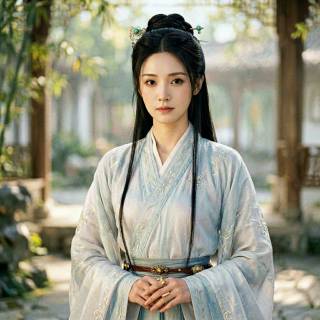
In the 80s the Stunning Top Student Was Pampered to the Sky by a Scientific Research Big Shot
+Add to Custom List
Genres:
Novel Info

Summary

... Read More

Xu Jingchu was reborn on June 7, 1980, returning to the moment before the Lin family arrived to take her and her cousin Qin Yajuan to Beijing. In her previous life, she had been manipulated by her selfish mother, Zhang Guifen, and the scheming Qin Yajuan into ruining her own reputation to secure a place in the capital. This betrayal led to a miserable existence where she was exploited by her family and husband, eventually dying alone and in debt. Determined to change her fate, Xu Jingchu refuses to follow the same path. When her mother forces her to plant incriminating powder in Qin Yajuan’s belongings to frame her, Xu Jingchu agrees outwardly but secretly swaps the powder for harmless back pain medicine. She anticipates Qin Yajuan’s next move and hires a village loafer, Laizi, to expose Qin Yajuan’s plot when she attempts to use Laizi to defame Xu Jingchu again. The plan succeeds, leaving Qin Yajuan disgraced in her home village while Xu Jingchu remains untarnished.

Upon arriving in Beijing, Xu Jingchu discovers that Qin Yajuan has also been reborn and retains memories of their past lives. Qin Yajuan’s primary goal is no longer Lin Tingjun, the handsome son of Commander Lin, but rather Wang Yuejin, who in the previous timeline became a wealthy entrepreneur and the husband of Xu Jingchu. Qin Yajuan attempts to sabotage Xu Jingchu by planting Lin Tingjun’s underwear in her bed to destroy her reputation within the military compound. Xu Jingchu remains calm, allowing the evidence to be found on Qin Yajuan instead, which further damages the rival’s standing with the Lin family. Meanwhile, Xu Jingchu distinguishes herself through competence and diligence. She cooks elaborate meals, cleans the house, and uses her own ration tickets to buy groceries, winning the favor of Commander Lin and his wife, Zhang Qiuyun.

While Qin Yajuan tries to cling to Lin Tingjun, hoping to replicate her past success, Xu Jingchu deliberately distances herself from him. She recognizes his cold, introverted nature and his dedication to academic pursuits. Instead of pursuing marriage, Xu Jingchu focuses on her education. Despite having only a primary school education, she resolves to study for the college entrance exam. She negotiates with the Lin family, offering to cook and manage household chores in exchange for the opportunity to study and receive tutoring from Lin Tingjun when necessary. Her strategic approach contrasts sharply with Qin Yajuan’s erratic and desperate behavior.

The core conflict centers on the diverging paths of the two women. Qin Yajuan, obsessed with securing Wang Yuejin, neglects her image and alienates those around her. She spends her days socializing with local youths and attempting to infiltrate the paper mill where Wang Yuejin works, rather than building genuine connections. Xu Jingchu, conversely, builds a supportive network. She befriends Lin Tingjun’s younger brother, Tingyu, who admires her kindness and intelligence. She also earns the respect of the Lin parents through her reliability and humility. When a job opportunity at the paper mill arises, Qin Yajuan claims she needs the money for her family, but Xu Jingchu politely declines, stating her intention to focus on her studies. This decision further isolates Qin Yajuan while positioning Xu Jingchu for long-term success.

As the story progresses, the power dynamic shifts entirely. The Lin family begins to view Xu Jingchu as a sensible and valuable guest, while Qin Yajuan is seen as troublesome and ungrateful. Xu Jingchu’s rebirth has given her the foresight to avoid the pitfalls of her past life. She understands that true security comes from education and self-reliance, not from marrying into a powerful family or relying on manipulative schemes. The narrative sets the stage for Xu Jingchu to build a new future through hard work and intelligence, while Qin Yajuan’s attempts to recreate her past glory are systematically undermined by her own poor choices and Xu Jingchu’s calculated countermeasures.

Novel Items

More
Materials
The harmful powder prepared by Qin Yajuan to frame Xu Jingchu. Qin Yajuan had two sets—one to frame Xu Jingchu and a backup in case the first failed. In this life, Xu Jingchu secretly swapped it for harmless back medicine before the transaction with Qin Yajuan.
Pills
Ground-up medicine for back pain that Xu Jingchu's family possessed. Xu Jingchu used it to replace the harmful powder, and the village doctor confirmed its authenticity by smelling and tasting it. Qin Yajuan claimed it made her feel unwell, but the doctor proved it was harmless.
Item
A newly bought enamel tea mug that Qin Yajuan had asked someone to bring back from the county town. Laizi grabbed it to gulp down water after choking on a boiled egg, and Qin Yajuan had to throw it away.
Document
Essential coupons used during the planned economy era to purchase goods. Grandma Han gives Cheng Ning a large amount of ration tickets and money before she leaves for the countryside.
Item
Books that Xu Jingchu packed to carry with her to the capital. In her past life, her lack of education had cost her dearly, and now she was determined to seize every opportunity to study.
Medicine
A medicine powder that Qin Yajuan eagerly asked Xu Jingchu for. In the past life, Qin Yajuan used it to ruin Xu Jingchu's reputation. Xu Jingchu suspects Qin Yajuan intended to use it to destroy her name quickly.
Latest Release
DateGroupRelease
2026-08-11shanghai fantasy c82
2026-08-11shanghai fantasy c81
2026-08-11shanghai fantasy c80
2026-08-11shanghai fantasy c79
2026-08-11shanghai fantasy c78
2026-08-11shanghai fantasy c77
2026-08-11shanghai fantasy c76
2026-08-11shanghai fantasy c75
2026-08-11shanghai fantasy c74
2026-08-11shanghai fantasy c73
2026-08-11shanghai fantasy c72
2026-08-11shanghai fantasy c71

Community Reviews

Rating(4.3 / 5.0, 34votes)
5 stars
17(50%)
4 stars
9(26%)
3 stars
8(24%)
2 stars
0(0%)
1 stars
0(0%)

Popular reviews

... Read More
The dialogue in these chapters is sharp enough to cut glass. Let me start with Xu Jingchu's voice, because it's distinct and consistent. She's calm under pressure, sarcastic when provoked, and never wastes words. Her line "What are you laughing at?" followed by "I'm laughing at how hard you've worked pretending these past two months" is devastating because it's delivered so casually. She's not angry. She's amused. That's worse. Qin Yajuan's dialogue, on the other hand, is all noise. She rants. She accuses. She begs. Her lines are long, emotional, and full of contradictions—"I didn't take your money or tickets!" right before standing there covered in evidence from the very drawer she claims to have brushed against accidentally. The author uses her dialogue to show her unraveling in real time. Lin Tingjun's voice is probably my favorite. He's awkward, formal, and constantly second-guessing himself. "I said the wrong thing" — he admits it immediately. He doesn't try to save face. And then he tries to make amends by tutoring her, which is his love language apparently. His dialogue is full of hesitations and self-corrections, which makes him feel like a real person rather than a plot device. The narrative voice is also worth discussing. It's third-person limited, mostly following Xu Jingchu's perspective, but it dips into other characters' thoughts when it serves the story. The author doesn't over-explain—she lets dialogue and action carry the weight. When Zhang Qiuyun realizes the rumors about Jingchu were a misunderstanding, we get it through her son's account, not through exposition. One thing I really appreciated: the dialogue feels period-appropriate without being stiff. References to "Chairman Mao said, 'To correct a mistake is a good comrade'" ground the story in its era, but the conversations between characters still feel natural and modern. That's a difficult balance to strike. The author also uses dialogue as weapon. Every exchange between Xu Jingchu and Qin Yajuan is a verbal spar, and Xu Jingchu always lands the final blow. Even when Qin Yajuan thinks she's winning—"You'll find out soon enough"—she's actually walking into a trap.
... Read More
Okay so let me just say this chapter is a masterclass in how to use rebirth as a plot device without making it feel cheap. Xu Jingchu's entire strategy here is so different from her past life—she's not just blindly enduring, she's actively calculating. The scene where she turns Qin Yajuan's plea into a joke by asking for 500 yuan? Chef's kiss. She's playing a completely different game now. But what really got me is the subplot with the thugs. In her previous life, this exact scheme would've worked because the Lin family cared about a daughter-in-law's reputation. But this time? She just sits there and calls their bluff. The fact that she recognized the tactic was recycled shows she's not just reborn—she's evolved. She's watching Qin Yajuan like it's entertainment at this point. The papermill job competition is the main plot thread, but honestly the real story is the ideological awakening happening in real time. Zhang Qiuyun's entire speech about equality and not blindly following tradition? That's not just dialogue—that's the plot's thematic backbone. And the fact that Xu Jingchu processes it faster than anyone expected? That's the author telling us this character is ready to become someone new. One thing I'm curious about though—Lin Tingjun's mother said they only intended to bring Xu Jingchu AND Qin Yajuan to the city, never thinking of the brother. But then why does Xu Jingchu feel this overwhelming guilt about taking her brother's place? Is that guilt going to be a plot obstacle she has to overcome, or is that already resolved? Because if it's the former, I want to see her break free from it.
... Read More
The sensory details in this opening are what make the world feel lived-in rather than researched. Let me start with the most striking image: Xu Jingchu on the mountain at cockcrow, picking tea leaves, sweat dripping, surrounded by villagers in plain practical clothes. And then Qin Yajuan appears in a white floral blouse, sashaying her waist, completely out of place. That visual contrast does more worldbuilding than a thousand pages of exposition. It tells us about class performance, about who is trying to signal something, about the social theater of a village where everyone watches everyone else. The military compound when they arrive in Beijing is rendered with specific, grounded detail: red-lacquered sofas, maroon furniture, gray cement floors, a black telephone draped with white lace. These aren't generic "rich house" descriptions. They're period-specific. The white lace on the telephone is the kind of detail that says the author understands this was a time when a telephone was a status object so rare that decorating it was part of the statement. The gray cement floors suggest that even military wealth had its austerity. But the scene that stays with me most is the confrontation at the Qin household. The kang, the village head with his pipe, the crowd of onlookers craning their necks. This is communal life in a way that feels almost lost. The village head isn't just an authority figure; he's a stage manager for public judgment. When he swings his sleeves and leaves after the doctor confirms the powder is harmless, that gesture—sleeves swinging, pipe smoke still rising—says everything about a man who is embarrassed to have been drawn into a farce. The riverbank meeting where money changes hands for the medicine is another standout. It's transactional, tense, and filmed in Xu Jingchu's point of view so we feel her calculating every word. The enamel tea mug that Qin Yajuan had specially brought from the county town—Laizi chokes on his egg and grabs it to gulp water, and Qin Yajuan watches her heart ache. That detail about the mug is perfect. It's a small object that carries the weight of class aspiration, of a family trying to signal that they belong somewhere bigger than Hongzao Village. The train journey itself is brief but effective: from tractor to military truck to train, the bumpy morning suggesting the physical transition that mirrors the social one. Xu Jingchu sewing her ration tickets and money into her pocket—that image of her protecting what little she has, her textbooks alongside her clothes—tells us everything about what she values now.
... Read More
Can we just take a moment for the noodle scene because I am NOT okay? Xu Jingchu makes Lin Tingjun eat her accidentally-over-salted noodles, and he just... eats them. He says they're delicious. He says they're DELICIOUS. And then he carefully suggests "maybe next time, a little less salt." This man is walking on eggshells and he knows it, and the fact that he's trying so hard to be polite while internally suffering is the funniest and most endearing thing I've read in months. But here's what really got me emotionally—the shift in their dynamic. They go from enemies to tutors to... whatever this is. Xu Jingchu calls him "Tingjun-ge" again after basically catching him in a lie earlier. She's playing a role, sure, but there's something genuine underneath it too. She's learning to trust him, or at least to use him strategically, and that's a process. The scene where she asks him to teach her math is actually really sweet when you think about it. She's a重生 character—she's lived this life before, she knows how it ends—but she's still choosing to learn, to grow, to invest in her future. That's not just plot convenience. That's hope. And then there's Qin Yajuan's loneliness. She's kicked out of the Lin household, she's living in a dorm, she's writing to her mother for money, and she's surrounded by people who only stick around because she feeds them peanuts. The scene where she secretly boils peanuts at the Lin household—afraid they'd notice if she hoarded them all—shows how trapped she is. She can't be openly generous because she's stealing from her hosts, so she has to be covertly generous to buy loyalty. That's not friendship. That's transaction. The emotional core of this section is really about who has genuine connections and who is performing them. Xu Jingchu may be calculating, but she's building real relationships—with Tingjun, with Tingyu, with the Lin family. Qin Yajuan is surrounded by people but completely alone. That contrast is heartbreaking. I also loved the small moment where Tingyu says he fought people because they called Jingchu bad. That's sibling loyalty, pure and simple. He didn't understand the rumors, but he understood that someone was attacking his sister, and he reacted. That's the kind of detail that makes family dynamics feel real.
... Read More
Okay so let me just say—the framing sequence in these chapters is absolutely masterful. The way the plot unfolds is like watching a trap snap shut in slow motion, and I loved every second of it. Here's what got me: Qin Yajuan comes back thinking she's won. She's stolen the money and ration tickets, she's got her alibi about "brushing against the drawer," and she's ready to play the victim. But Xu Jingchu? She doesn't even flinch. She just... waits. And then she drops the ash evidence like it's nothing. The logic chain is what really sold it for me. Xu Jingchu lays it out step by step: "I didn't do laundry yesterday—you knew that. There's no ash on my clothes. So if I wanted to frame you, I'd have had to do it before last night, right? But you came back yesterday morning, and at three-thirty in the afternoon I went shopping as usual and everything was still there. After that, the only time the room was left unattended was when you were alone in it." That's not just clever writing—that's airtight. Every single possibility is closed off. Qin Yajuan had exactly one window, and the ash on her clothes proves she was in that room during it. No key needed. No elaborate scheme. Just opportunity and a careless mistake. And the structure of the confrontation itself is perfect. Xu Jingchu doesn't spring the trap immediately. She lets Qin Yajuan keep digging her own hole, letting her accuse, let her threaten, let her say things like "I didn't take your money or tickets!" while standing there covered in evidence. The author really understands how to build tension—not through action, but through the agonizing delay between accusation and revelation. Then there's the aftermath, which is honestly the funniest part. Qin Yajuan dropped to her knees, banging her head, completely unraveling. And Xu Jingchu's first concern? "What about the money and ration tickets? Don't tell me you plan to pocket them." Priorities. I respect it. The subplot with Qin Yajuan and the bell-bottom gang is also doing heavy lifting here. Her need to maintain that fake friendship, the peanuts she secretly boiled at the Lin household to bribe them into loyalty—it all sets up her eventual downfall. She's building a house of cards, and we know it's going to collapse. The paper mill job, Wang Yuejin, the gang's investigation—they're all threads that will eventually pull the whole thing apart. One thing that bothered me slightly: the Tingjun tutoring scene felt a little disconnected from the main plot. But then again, it serves a purpose—it shows Xu Jingchu's adaptability. She can go from ruthless investigator to playful student in two seconds flat. That's character work disguised as filler. Overall? The plot mechanics here are solid. Every clue is planted, every revelation earned, and the pacing never drags. The author doesn't waste a single beat.
... Read More
The stakes in this opening are deceptively simple on the surface—will Xu Jingchu be framed or will she frame herself?—but they're actually layered with everything that makes human conflict so agonizing. Let me break down what's actually at risk here, because the author makes us feel every layer. First layer: reputation. In a village, reputation is survival. If Xu Jingchu's name is ruined, she can't go to Beijing. She can't access the opportunities that Commander Lin offers. She can't escape the family that has been bleeding her dry. But the reverse is also true: if Qin Yajuan's reputation is ruined, she loses her chance to marry into the Lin family. Reputation is the currency of this world, and both girls are betting everything on it. Second layer: family loyalty versus self-preservation. Xu Jingchu's mother beats her, curses her, threatens her with death. The stakes here aren't just physical—they're emotional. In her first life, Xu Jingchu endured because she wanted her mother's love. She bowed her head and took the villagers' scolding because she believed that if she suffered enough, her mother would finally see her as worthy. The conflict isn't just external (mother vs. daughter); it's internal (the girl who wants love vs. the woman who knows she's been used). When she agrees sweetly this time, it's not because she's been defeated. It's because she's finally stopped believing the lie. Third layer: the Laizi variable. He's the wildcard, the man who could destroy both girls with his word. But he's also a coward, and Xu Jingchu understands this. She doesn't try to make him brave; she makes it profitable for him to cooperate. The stakes here are about power—knowing your enemy's psychology better than they know themselves. Fourth layer: the unspoken question of whether Qin Yajuan is also reborn. If she is, then the entire conflict shifts from a simple revenge story to a battle between two people who remember the future. The stakes become existential: if Qin Yajuan knows what Xu Jingchu is planning, can Xu Jingchu stay three steps ahead? The author doesn't answer this, and that uncertainty is what makes the tension so sharp. What makes this conflict so compelling is that there are no innocent parties. Zhang Guifen is abusive. Qin Yajuan is manipulative. Laizi is a opportunist. Even Xu Jingchu is willing to use a village loafer as a pawn. The author refuses to give us a clean moral landscape, and that's what makes the stakes feel real. In the first life, Xu Jingchu lost everything because she believed in goodness. This time, she's learning that the world doesn't reward goodness—it rewards strategy.
See all reviews

Characters

See all characters

Custom lists

Oops…There is nothing here.