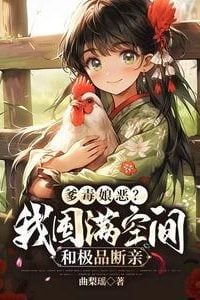
In a World of Evil Parents: Building My Space and Cutting Toxic Ties
Novel Info

Summary

... Read More

Xiang Xinyao, a twenty-six-year-old heir to a prestigious martial arts and medical lineage from the twenty-third century, finds herself transmigrated into the body of Hu Zhaodi, a fourteen-year-old girl in the fictional Kingdom of Lingxiao. The original Hu Zhaodi died under brutal circumstances, beaten to death by her grandmother for stealing pork cracklings while starving. Upon awakening in this new body, Xiang Xinyao immediately fights back, shocking her abusive family who are accustomed to her silent suffering. She discovers she has inherited a mysterious jade bracelet that contains a fully stocked supermarket and a private hospital from her previous life, providing her with unlimited resources and medical knowledge.

The Hu family treats Hu Zhaodi as little more than a slave, forcing her to perform all the hardest labor while denying her food and proper clothing. They view her as a purchased commodity, having bought her from traffickers for three taels of silver when she was a child. The family’s true motive for keeping her alive is revealed when they plot to sell her to the village chief’s crippled son for a thirty-tael bride price. Upon overhearing this plan, Xiang Xinyao decides to sever all ties with the Hu family rather than submit to their exploitation.

Her rebellion begins with small acts of defiance, such as feeding the family’s grain to the pigs and hiding meat from them. As she gains confidence and physical strength through practice, she openly confronts her abusers. In a dramatic public scene, she beats her grandmother and father with a bamboo stick in front of the entire village, shocking everyone who has witnessed her years of silent abuse. When the village head attempts to mediate, she publicly declares that the Hu family is no longer her family and throws the three taels of silver they originally paid for her back at them, symbolically closing the debt.

With nowhere else to go, she seeks refuge with Old Man Ji, a kind neighbor who has always pitied her. The Ji family, despite their own modest means, welcomes her with warmth and respect, offering her a proper meal and a safe place to sleep. This marks a significant turning point in her life, as she experiences genuine kindness for the first time. She begins to integrate into their household, helping with chores and sharing in their simple joys.

Utilizing her medical knowledge and the resources from her bracelet space, Xiang Xinyao starts hunting in the mountains. She successfully captures wild boars and gathers medicinal herbs, which she sells in the county town to earn silver. Her actions not only provide her with financial independence but also allow her to share meat and prosperity with the Ji family, strengthening their bond. She carefully maintains her secret, ensuring that no one discovers the source of her goods or her sudden change in demeanor.

As she settles into her new life, Xiang Xinyao continues to train her body and mind, preparing for whatever challenges lie ahead in this ancient world. She remains vigilant against the Hu family, who are left furious and powerless to stop her. The story follows her journey from a abused servant to an independent young woman who controls her own destiny, leveraging her unique advantages to build a better future while navigating the complexities of rural life in the Kingdom of Lingxiao.

Latest Release
DateGroupRelease
2026-08-11shanghai fantasy c200
2026-08-11shanghai fantasy c199
2026-08-11shanghai fantasy c198
2026-08-11shanghai fantasy c197
2026-08-11shanghai fantasy c196
2026-08-11shanghai fantasy c195
2026-08-11shanghai fantasy c194
2026-08-11shanghai fantasy c193
2026-08-11shanghai fantasy c192
2026-08-11shanghai fantasy c191
2026-08-11shanghai fantasy c190
2026-08-11shanghai fantasy c189

Community Reviews

Rating(3.9 / 5.0, 40votes)
5 stars
13(33%)
4 stars
14(35%)
3 stars
10(25%)
2 stars
3(8%)
1 stars
0(0%)

Popular reviews

... Read More
The imagery in this batch is honestly insane. Let me paint you the scene that stuck with me the most: Hu Zhaodi, a fourteen-year-old girl, standing in the deep mountains, blood splattered all over her from neck to clothes, stabbing wild boars one by one while she counts down like it's some kind of dark ritual — "Three, two, one, fall!" And then she's dragging a dead boar through the woods, hearing faint movements behind her, running for her life. That is a movie scene. That is not a children's book. The author doesn't shy away from the visceral reality of what's happening. Blood spurted out, splattering all over her. She ignored it. She kept going. This isn't romanticized — it's raw survival. And then the contrast: the Ji family courtyard, stones arranged in a circle, charcoal fire rekindled, bamboo sticks threaded with meat, the rich aroma of stewing ribs wafting through the air. Children gathering around the pot, nearly drooling. In an era where villagers rarely see meat, this scene of communal roasting is almost sacred. The smell alone attracts neighbors who can only envy from a distance. The world feels lived-in because of details like this — the scarcity of meat, the shared labor, the way the Ji family divides the leftovers. This isn't just a backdrop; the setting itself tells you what the characters value.
... Read More
Okay so this whole arc where Hu Zhaodi is secretly hoarding meat in her space while the Hu family starves her is just chef's kiss. The author has been building this tension for chapters now — we know she has a space, we know she's faking weakness, and every time Hu Dashan or Yang comes sniffing around the firewood room, my heart races thinking they're gonna find out. But they don't. Instead, Zhaodi just sits there eating roasted wild rabbit while they're out there losing their minds trying to track down a smell that keeps coming from nowhere. The plot twist that Old Man Ji drops about her origins is huge though. She was bought from a trafficker when she was three years old, but the clothes she was wearing were made of fabric only wealthy families could afford. That means she's not just some random orphan the Hu family picked up — she has actual noble blood or at least came from a rich family. And now she knows it. The line where she thinks "it's time to make the Hu family pay for the years they mistreated me" is exactly the kind of moment that makes you slam the book shut and immediately open it again. What I love is how the author layers the plot. On the surface it's a revenge story, but underneath there's the mystery of her real parents, the question of how she got the space, and the growing tension of whether the Hu family will figure out her secret before she's ready to strike. The meat seller scene is a nice subplot too — it shows Zhaodi isn't just scheming, she's genuinely capable and kind to strangers, which makes her all the more interesting.
... Read More
Before this batch, the conflict was pretty straightforward: abused girl vs. abusive family, with a secret space as her advantage. But now the stakes have multiplied in ways that make me genuinely anxious for her. First, there's the external conflict with the Hu family. They're getting suspicious. Hu Dashan noticed she's missing and went looking for her. Yang is holding that bamboo stick like a weapon. They don't know about the space yet, but they're closing in. The question is no longer just "will she escape" but "will she be caught before she's ready?" Then there's the mystery of her origins. Old Man Ji revealed she was bought from a trafficker, but the clothes she was wearing were expensive fabric. Who are her real parents? Why were they selling their child? And more importantly — could they be dangerous or powerful people? If her biological family is out there, that changes everything. It could be a source of help or a source of new conflict. The internal conflict is also really compelling. Zhaodi is transitioning from survival mode to revenge mode. She's no longer just enduring — she's planning. But there's a part of her that still seems capable of kindness (the meat seller, Old Man Ji). The tension between her desire for vengeance and her capacity for compassion is what makes her stakes feel real. What happens if she becomes so focused on revenge that she loses the part of herself she's trying to protect? And let's not forget the physical stakes. She's fourteen, malnourished, in a world where she doesn't belong. Every day she's not careful could be her last. The author makes you feel this constantly.
... Read More
There's a symbolism running through these chapters that I can't stop thinking about. It starts with the pork cracklings — that tiny bowl of rendered fat that costs a fourteen-year-old girl her life. The grandmother renders pork fat, the aroma fills the courtyard, and Hu Zhaodi almost dies because she's hungry enough to be tempted by it. Food here isn't sustenance, it's power. The cracklings represent everything the family has that they refuse to share with her, and her reaching for them is the ultimate transgression in their moral universe. Then there's the thirty taels. The grandmother explicitly calculates: bought for three, sold for thirty, eleven years of 'investment.' This is the literal commodification of a human being, and the number thirty becomes this grotesque symbol of what the family thinks Zhaodi is worth. But here's the thing — Xiang Xinyao's arrival completely revalues that number. She's not the same asset they bought. She's someone with a bracelet that contains a supermarket and a hospital, someone who can hunt wild rabbits in poisonous forests and outsmart an entire family. The thirty taels suddenly seem like a joke, because the real value was never going to be captured by their transaction. The bracelet itself is the central symbol. It was 'given' to her by her grandmother in her original world — an object of affection that traveled across realities. It represents the family she chose versus the family she was sold into. And the fact that it activates when she needs it most, appearing as both shelter and weapon, feels almost mythic. The open land behind the supermarket and hospital that she can't yet access — that's the future she's building, the life she'll carve out, still invisible but growing.
... Read More
I need to talk about Yang for a second because WOW. This woman is absolutely unhinged and the author wrote her so perfectly that I wanted to shake her and also applaud her commitment to being terrible at the same time. Let's look at this exchange: "From today onward, you'll work as a servant for the Hu family for a year. After you come of age, you'll obediently marry into the village head's family for the thirty taels of bride price; that's how you repay our life-saving grace." SHE SAID THIS OUT LOUD. IN FRONT OF EVERYONE. The audacity is actually impressive. This is a woman who has been beating a child for eleven years and when confronted, her first instinct is to negotiate MORE YEARS OF SLAVERY plus a forced marriage. The fact that she was already planning to sell her daughter-off to a crippled son is the kind of detail that makes you realize just how deep the rot goes in this family. But here's what really got me - Hu Dashan. The son. The one who was supposed to be the heir, the one with all the privilege. He grabs a broom to beat a fourteen-year-old girl and gets absolutely destroyed by her with a bamboo stick. The author wrote this scene where he's literally running away screaming and I couldn't stop laughing. All this time he's been part of the system that abused her, and now he can't even handle a girl with a stick. And then there's Uncle Ji. This man drops the bombshell about her being bought and then immediately offers her a place to stay. His wife's reaction was so natural - just pure kindness without any agenda. "We don't need your silver; just having you keep us company is more than enough." This is what a real family looks like compared to the Hu family's grotesque version.
... Read More
The scene where Hu Zhaodi drives back to Dawai Village with Uncle Ji is one of those quiet moments that makes the whole world feel real. You've got the bullock cart, the piled bundles of grain and fabric, the piece of pork beside her, and Uncle Ji boisterously showing off to everyone. Then the news reaches the Hu family and we cut to Yang twisting her face in anger while Hu Yaozu throws himself on the ground begging for roasted meat. These aren't just plot beats — they're snapshots of a living village. I can see the Ji family's small courtyard, the fence Hu Dashan tries to grab a stick from, the way Hu Zhaodi stands at the entrance like a guard dog. And that moment where she replaces the chopping knife with a bamboo stick — she could have killed Yang with that knife, but she chooses the stick instead. She chooses to make an example rather than a corpse. The world feels tangible because the author gives us sensory details without overloading us: the sound of the bamboo stick hitting flesh, the visual of Yang's face going from green to white, the image of a little girl in rags holding off four armed people.
See all reviews

Characters

See all characters

Custom lists

See all custom Lists