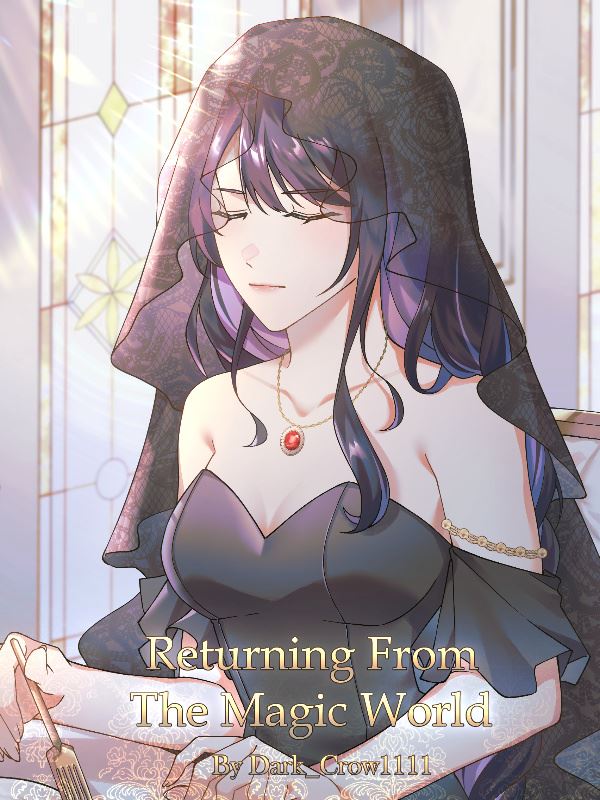
In a famine year we split the family I emptied the deep mountains making the shameless relatives drool with envy
+Add to Custom List
Genres:
Novel Info

Summary

... Read More

Liú Xiǎomǎn, a modern agricultural scientist, awakens in the body of a fifteen-year-old girl in ancient times, dying of a severe lung infection beside a mass grave. She has been cast out by her cruel grandmother, Elder Tián, and her greedy relatives, who claim she is a jinx. Her only companions are her timid mother, Lǐ Xiùxiù, and her simple-minded ten-year-old brother, Liú Cōngmíng. As she faces imminent death from lack of medicine and food, a system binds to her, granting her the ability to scan plants for value, recycle them for points, and exchange points for items like antibiotics and food. Using this advantage, she survives her fever and begins to secure resources for her family.

Liú Xiǎomǎn discovers that common weeds have value in the system, allowing her to generate points quickly. She exchanges points for antibiotics and rice porridge, saving her life and feeding her family. When her aunt, Wáng Jīnhuā, comes to steal their food, Liú Xiǎomǎn uses her sharp wit and knowledge of the law to repel her, citing the separation document that legally severed their ties to the main family. This confrontation marks the first time the weak family stands up for themselves, though it also deepens the enmity of the Liú family elders.

Realizing the hut by the grave is unsafe, Liú Xiǎomǎn ventures into the nearby mountains to find valuable herbs. She discovers a rare variant of Hemostatic Vine, a highly prized medicinal plant, and sells it to a local apothecary, Huíchūntáng, for a significant sum of silver. She uses the money to buy food, supplies, and a VIP membership that allows her to operate openly. The profit attracts the attention of her cousin, Liú Dàbǎo, who reports her success to Elder Tián, leading to a second confrontation where the family attempts to seize her earnings. Liú Xiǎomǎn outmaneuvers them publicly, using a system item to cause Elder Tián to fall into dog feces, humiliating her and securing the village chief's support for the family's independence.

With the immediate threat of her relatives neutralized for now, Liú Xiǎomǎn decides they must move deeper into the mountains to a hidden location. She explores the back mountains and discovers a massive cave concealed behind a waterfall. Inside, she finds a rare material called Super Clay, which is valuable for construction and can be recycled for points. She purchases a safehouse renovation blueprint from the system and begins a secret operation to transport building materials, such as nails, cloth, and salt, from the town to the cave under the cover of darkness.

Liú Xiǎomǎn gradually involves her mother and brother in the plan, teaching them survival skills and using system-enhanced tonics to improve their physical abilities. The family works together to move supplies to their new hidden home, establishing a secure base away from the dangers of the village and the greed of their relatives. As they prepare to build their new life in the cave, Liú Xiǎomǎn continues to explore the mountains, discovering more resources and opportunities to grow her wealth and power, setting the stage for a future where she can protect her family and thrive in this new world.

Novel Items

More
System
A supernatural system that binds to Liú Xiǎomǎn when her strong will to survive is detected. It features a semi-transparent virtual panel with functions including 【Scan】 to identify the value of objects, 【Recycle】 to convert items into points, and 【Exchange】 to obtain needed items. It offers antibiotics, food, and other supplies in exchange for points earned from recycling bio-energy-containing plants.
Medicine
A red-and-white capsule wrapped in transparent plastic, available for exchange at 1 point. It cures severe bacterial lung infection with high fever and hemoptysis. When consumed, it dispels burning pain in the lungs and chill in the limbs almost instantly.
Food
A steaming bowl of white rice porridge in a thick porcelain bowl, available for exchange at 0.2 points. It has a rich, sweet, glutinous aroma that Liú Xiǎomǎn's family had never smelled before. It provides nourishment and strength to the starving family.
Plant
A broad-leafed weed containing weak bio-energy. Recyclable through the system at a value of 0.02 points per plant. Liú Xiǎomǎn directs her brother to pull these weeds to earn points.
Materials
A medicinal herb found on the mountain that Su Xiaoyin gathers. It can be sold for money.
Food
A tiny sack of bran that Elder Tián mercifully tossed to Liú Xiǎomǎn's family when they were cast out. Lǐ Xiùxiù scraped the bottom of an empty pot and only got half a bowl of gray powder from it.
Latest Release
DateGroupRelease
2026-08-11shanghai fantasy c12
2026-08-11shanghai fantasy c11
2026-08-11shanghai fantasy c10
2026-08-11shanghai fantasy c9
2026-08-11shanghai fantasy c8
2026-08-11shanghai fantasy c7
2026-08-11shanghai fantasy c6
2026-08-11shanghai fantasy c5
2026-08-11shanghai fantasy c4
2026-08-11shanghai fantasy c3
2026-08-11shanghai fantasy c2
2026-08-11shanghai fantasy c1

Community Reviews

Rating(4.2 / 5.0, 30votes)
5 stars
14(47%)
4 stars
8(27%)
3 stars
8(27%)
2 stars
0(0%)
1 stars
0(0%)

Popular reviews

... Read More
"The sense of fulfillment in the cave was like a small, weak fire in winter—quickly extinguished by the cold reality." That line. That single line. I need a moment. Because that's literally the entire emotional arc of these chapters compressed into one sentence, isn't it? This family — these three people who have been beaten down and pushed around for what feels like their entire lives — they finally, FINALLY have something that looks like hope. A cave. Dry firewood. Flat stones. Rolls of linen. Salt. Nails. A home that's not afraid of wind or rain. And the author just... takes it away. Not by destroying it, but by showing us how fragile it is. How Liú Xiǎomǎn looks at her mother and brother's faces — "long-missing hope, streaked with tears" — and feels NO relaxation at all. She immediately urges them back before the villagers wake up. That motherly warmth, that sense of accomplishment? Gone. Replaced by the cold calculus of survival. I keep coming back to the cave scene though. Lǐ Xiùxiù covering her mouth to keep from crying out, tears streaming like beads from a broken string. And Liú Xiǎomǎn holding her hand, promising that their life will only get better. There's something so devastating about a daughter having to be the strong one. About a mother weeping because her child gave her something she never dreamed possible. And then the next morning, Wang Jinhua is scattering chicken feed and calling them "thankless creatures." Old Lady Tián is sipping egg custard and plotting. The contrast between the warmth they found in that cave and the cold reality waiting for them back in the village — it's like someone opened a window in the middle of winter. The system reward scene is interesting too. That warmth surging through Liú Xiǎomǎn's body, sweeping away days of exhaustion. For one brief moment, she gets to just FEEL good. And then the old hut's crisis approaches. The author doesn't let us rest. Doesn't let HER rest. And I think that's the point — for people like them, peace is never permanent. Hope is always a weak fire in winter.
... Read More
Okay so let's talk about dialogue because this book has some genuinely sharp writing when it comes to how people speak. First, the estate people. Wang Jinhua's voice is immediately recognizable: "Some thankless creatures can't be raised!" That's not just dialogue, that's character. She's scolding obliquely, using chicken feed as a metaphor for her disdain. And Old Lady Tián — "Dàbǎo," she says, hoarse and slow and deliberate — the way she dangles two boiled eggs as bait? That's a grandmother who has weaponized kindness. The dialogue here feels natural, almost colloquial, but every line reveals something about power dynamics. Then there's Liú Dàbǎo. His dialogue is minimal but telling. "Bah! A short-lived family, so unlucky!" Spitting disgustedly. This is a lazy, cruel man who operates on instinct and entitlement. His dialogue matches his actions — crude, dismissive, violent. But Liú Xiǎomǎn's voice is where it gets interesting. When she's performing for the estate, she's weak and hoarse: "Who is it… cough cough… My mother… my mother is sick, burning up, can't get out of bed…" Perfect. Convincing. And then the moment Dàbǎo leaves, her voice changes completely. "It's okay now," she tells her brother, patting his hand, her gaze turning cold as frost. The narrative voice itself is worth discussing too. It's close third person, mostly anchored to Liú Xiǎomǎn's perspective, but it has this sharp, almost clinical quality when describing her thoughts. "A cold curve slowly appeared at the corner of Liú Xiǎomǎn's lips, her eyes utterly devoid of warmth." That's not how a child thinks. That's how a strategist observes herself. The system dialogue is another layer — cold, precise, functional. 【Ding! Detected host has completed a phase of material stockpiling...】 It contrasts beautifully with the emotional, messy human dialogue around it. Two different languages operating in the same world.
... Read More
This is the most satisfying scene I have ever read and I am not being dramatic. Elder Tián comes storming in with her whole entourage — greedy, entitled, ready to strip her own family bare. She's screaming about how the second branch belongs to the main household, how the money should be redistributed. Classic abuser logic, really. And Liú Xiǎomǎn? She doesn't even raise her voice. She just lays out the separation documents like a lawyer and turns the whole thing into a public trial. The villagers start turning against Elder Tián, and then the grandmother decides to escalate by throwing a full tantrum — crawling toward Liú Xiǎomǎn, screaming about unfilial grandchildren, trying to play the victim one last time. And that's when the Misfortune Sticker goes on. The text describes it perfectly: Elder Tián's fingers reach out, Liú Xiǎomǎn feigns panic, and SLAP — the sticker dissolves. Then Elder Tián overextends, rolls on the ground, and steps directly into fresh dog feces. Face first. The sound was described as a heavy "thud" with a spray of dust. Then her accomplices try to help and one trips over a stone and the other snaps his back. It's a live-action farce. The village chief pulls out the documents, declares the split valid, and they all flee in humiliation. I laughed out loud. I actually laughed out loud at a novel at 11pm.
... Read More
I've been thinking a lot about what this story is really about beneath the surface, and I keep coming back to one idea: home as an act of rebellion. These characters — Liú Xiǎomǎn, Lǐ Xiùxiù, Liú Cōngming — they've been treated like garbage by their own extended family. The Liú estate views them as "thankless creatures," as unlucky, as short-lived. Old Lady Tián's words carry curses disguised as concern. Wang Jinhua's insults are wrapped in the casual cruelty of someone who's never known hardship. So what does Liú Xiǎomǎn do? She builds a home. Not just a shelter — a HOME. With stacked linen, salt, nails, firewood, flat stones. She's creating something the estate said they didn't deserve. Every night they sneak to the cave is an act of defiance. Every material they stockpile is a rejection of the life the Liú family planned for them. The cave behind the waterfall is symbolic on multiple levels. It's hidden — they exist outside the estate's gaze. It's natural — they're building something authentic, not inherited. It's shared — the whole family contributes, each person playing a role. And it's temporary, fragile, always under threat. That's the point, isn't it? For people without power, safety is always provisional. The Ghost Thorn Vine traps are another layer of symbolism. Liú Xiǎomǎn doesn't kill Dàbǎo — she makes him afraid. She's not trying to destroy the estate; she's trying to create boundaries. To say: this far, and no further. The vine's sap causes unbearable itching but doesn't kill. It's punishment without execution, warning without warfare. And that final system alert — "Significant change detected in world rules" — it suggests that their act of building a home has disrupted something fundamental. They're not just surviving anymore. They're changing the rules of the world itself. What does that mean for where this story is heading? I have no idea, but I'm terrified and thrilled.
... Read More
Let me just start by saying: Liú Xiǎomǎn's dialogue in this chapter is the single funniest, most satisfying thing I've read in ages. The way she dismantles her aunt is COMEDY GOLD wrapped in revenge fantasy. Wáng Jīnhuā kicks the door and immediately goes for the 'filial piety' card—'When there's food, you must show filial respect!'—and Liú Xiǎomǎn's response? She doesn't even raise her voice at first. She just... logically eviscerates her. 'Grandmother herself said the three of us were unlucky, plague-bringers, thrown out to fend for ourselves.' She weaponizes the family's own rejection against them. That's not just witty, that's TACTICAL. But then she goes FULL NUCLEAR with this line: 'Oh—This mass grave does have meat… meat nobody claims. Aunt, if you're really craving it, go dig it yourself!' I literally screamed reading that. The way she deliberately draws out the tone, the 'strange smile curling her lips'—the author really understood that this scene needed to be both terrifying and hilarious. Wáng Jīnhuā is 'superstitious to the core' and Liú Xiǎomǎn knows EXACTLY which button to press. The dialogue also does something really smart with voice differentiation. Wáng Jīnhuā's speech is all sharp edges and noise—'nails scraping across an iron pot,' 'shrill voice,' 'stamping her feet.' Liú Xiǎomǎn's speech is 'cold and clear,' 'softly but clearly,' 'slowly and deliberately.' The contrast in how they speak tells you everything about who they are without the author having to explain it.
... Read More
I need to just sit with this for a second because the porridge scene is one of those moments that hits you in the chest. You have this fifteen-year-old girl who just transmigrated into a dying body, next to a mass grave, with a mother who thinks she's a witch and a brother who drools at the sight of rice. And what does she do? She makes them share one bowl. "One bite each, and no one is abandoned!" She literally weaponizes their dead father's memory to force her mother to eat. That's not manipulation in a bad way—that's a sister who will burn the world before she lets her family starve. The way she hardens her face and speaks with this indisputable tone, shocking her mother out of her catatonic grief... I literally got chills. And then the details: Congming's drool forming a puddle. Xiuxiu feeding him first like it's some sacred ritual. The fact that white rice porridge is described as something they've "never smelled before"—that one detail destroys me. This isn't just food, it's the first time any of them has experienced sweetness in what seems like forever. "Porridge... sweet... sis..." He mumbles it like he doesn't even have the vocabulary for what's happening. His eyes, described as dull and lifeless, seem to shimmer with a new light. That's not just about food, that's about hope being restored to a child who had none. And Xiaoman herself—swallowing the antibiotic with trembling hands, her mind racing, calculating points and survival while her body is literally shutting down. She's fifteen years old in this body but she's thinking like a scientist, like someone who refuses to die. The fierce will to survive that triggers the system binding—that's not just plot mechanics, that's the core of who she is. I'm already emotionally invested in this found-family-that-is-actually-her-actual-family and I've only read seven chapters.
See all reviews

Characters

See all characters

Custom lists

Oops…There is nothing here.