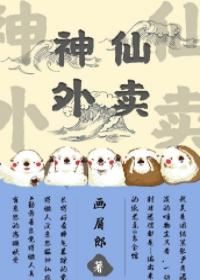
Immortal Takeout
Novel Info

Summary

... Read More

Luo Xitang, an elderly man who ran a traditional grocery store called Da Luo Grocery in the urban village of Liujia within Maochun City, passed away at the age of eighty-nine. He had lived alone for decades, having arrived in the village over forty years prior. Despite his solitary life, he was well-regarded by neighbors such as Old Liu Tou, a local committee member. Upon Luo's death, a young man named Luo Xiang appeared, claiming to be the deceased's great-nephew and the rightful heir to the shop. Luo Xiang was an enigmatic figure, tall, pale, and carrying a distinctive white umbrella that seemed to possess sentient qualities, moving on its own and exhibiting aggressive behavior when threatened. He handled the funeral arrangements with efficient coldness, leaving the community both confused and uneasy.

The narrative shifts to Ta Nuo, a sea otter who lives in the Hongjiu River area near the Baiye Forest. Unlike typical otters, Ta Nuo is a rare magical creature capable of transforming between his animal form and a human appearance. He is the owner and founder of Immortal Takeout, a delivery service established recently to serve the local population of demons and spirits in Maochun City. His goal is to expand his business by securing a strategic partnership with Da Luo Grocery, an agreement originally drafted with the late Mr. Luo. To achieve this, Ta Nuo first needs to establish a solid financial foundation, leading him to pursue his first official external order.

Ta Nuo receives a referral from his acquaintance, a golden squirrel named Rousong, for a delivery order placed by Manager Lin of the Maochun City Spirit Cat Consultation Office. Manager Lin is a Linqing Lion Cat known for his aloof demeanor and lack of social trust. The task involves locating a specific "special" human in the Wutai Mountain Park's pear blossom grove and purchasing a particular brand of cat food can for him. Ta Nuo travels to the park, where he encounters the harsh realities of the local demon society. He meets Guokui, a stray cat seeking employment, who is rejected by the consultation office because he is a "Child of Winter," a superstition that bars such cats from social work. Ta Nuo witnesses the prejudice and bureaucratic nature of the spirit world through these interactions.

After failing to identify the target human immediately, Ta Nuo gains crucial information from Mr. Mamahei, a black tabby spirit worker at the consultation office who harbors unrequited feelings for Manager Lin. Mamahei reveals that the special human is a thin male wearing gold-rimmed glasses. Ta Nuo waits in the park and eventually finds the man feeding stray cats. The human is kind and compassionate, caring for approximately forty-five stray cats after his beloved white cat went missing following a terminal illness. Ta Nuo realizes the human is the same person Manager Lin served in his mortal life.

The human offers Ta Nuo bread, and they share a conversation about death and spirit transformation. Ta Nuo explains that animals can become spirits through cultivation or bloodline, offering the human hope that his missing white cat has not perished but is instead progressing in its spiritual journey. Ta Nuo confirms that Manager Lin is, in fact, that white cat, now working as an intern manager. Filled with relief, the human agrees to sell the requested canned food to Ta Nuo, completing the delivery. This success marks Ta Nuo’s entry into the city's business network, while simultaneously deepening the mystery surrounding Luo Xiang, the white umbrella, and the hidden supernatural laws governing Maochun City.

Latest Release
DateGroupRelease
2026-10-01hiraeth translations c31
2026-10-01hiraeth translations c30
2026-10-01hiraeth translations c29
2026-10-01hiraeth translations c28
2026-10-01hiraeth translations c27
2026-10-01hiraeth translations c26
2026-10-01hiraeth translations c25
2026-10-01hiraeth translations c24
2026-10-01hiraeth translations c23
2026-10-01hiraeth translations c22
2026-10-01hiraeth translations c21
2026-10-01hiraeth translations c20

Community Reviews

Rating(0 / 5.0, 38votes)
5 stars
0(0%)
4 stars
0(0%)
3 stars
0(0%)
2 stars
0(0%)
1 stars
0(0%)

Popular reviews

... Read More
Can we just appreciate how distinct these characters sound? Manager Lin: "You're so clumsy, you can't even climb a tree. Are you a sea pig?" Ta Nuo: "Well actually there doesn't seem to be any animal called a sea pig in the world—" Manager Lin: *does not give him the opportunity to refute* This is a whole personality. This is a man who is simultaneously the most elegant spirit cat in the mountain and absolutely cannot let a factual correction stand. The arrogance is so specific and so funny. And then later: "Didn't you say it yourself? First order is free of delivery fees." The passive-aggressive repetition! He's holding onto Ta Nuo's own words like a weapon. But then five seconds later he's handing over a mysterious magical item with what might actually be sympathy. The tonal whiplash is immaculate. The narration also has a wonderful dry wit. Describing Manager Lin's smile as "a mask" when Ta Nuo realizes he's been copying Lin Zhou—that's the narrative voice winking at us. And the bit about Ta Nuo's confidence being "as fleeting as dewdrops on a summer morning"? Chef's kiss. The author knows exactly when to be poetic and when to just let the jokes land. My only complaint: I wish Ta Nuo had more lines. He's the protagonist and he spends half the chapter making muffled noises and nodding. But honestly? His silence is kind of the point. He's an observer. He listens. He's the vessel through which we understand Manager Lin.
... Read More
I want to praise the pacing here because honestly, a lot of writers would have rushed through this entire sequence. We go from morning fishing to afternoon journey to evening kitchen scene to nighttime family feast — that's a lot of ground to cover in what feels like relatively few pages — and yet nothing feels cramped. The author has this incredible sense of when to linger and when to move fast. The fishing scene drags intentionally. Ta Nuo catches nothing. He struggles. He gets frustrated. You feel every minute of it because the author makes you wait with him. And then — bam — Ta Xing comes up with a four-pound fish and devours it in seconds. The contrast between slow and fast, between effort and ease, between the two brothers' natural abilities — it all serves the rhythm. You're breathing differently by the time Ta Nuo decides he needs to make this trip to the store. Then the journey to Liujia Village is practically a sigh of relief after all that tension in the water. Rain, mist, the canoe swaying downstream — it's a transitional moment, a breath, and the author knows exactly that. Don't waste it on plot. Let the reader relax. The confrontation at the grocery store is where the pacing really shines though. The door opens. Slam. Opens again. Slam. Ta Nuo waiting, fish in hand, the white umbrella spinning around like a nervous chaperone. Each beat lands at the exact right moment. Luo Xiang's silence is almost funnier than any dialogue could be. And that final moment — the fish being rejected, tossed out, Ta Nuo sitting in the rain — it's a perfect cliffhanger for this section. You want to know what happens next. Not because of action, but because of emotional stakes. That's masterful control of momentum.
... Read More
Okay so I need to just sit with this for a second because Manager Lin is honestly one of the most layered characters I've come across in a while. Here's this cat who's achieved spirit form, who could theoretically cultivate toward immortality and live forever, but secretly he doesn't want any of that. He wants to become human again—not for power or longevity, but so he can go back to his person. And yet the way he acts? Total tsundere energy. Throwing canned food at Ta Nuo's head, calling him a sea pig, breaking his spoon out of frustration—but then quietly giving Ta Nuo a mysterious green ball because the kid looked pathetic. That contradiction is everything. And Lin Zhou! This guy who forgets his keys, who names his male cat Meimei (SISTER??), who talks to his dead cat like he's still there. The scene where he's reminiscing about Meimei opening the door for him—that's not just worldbuilding, that's a love letter. The author didn't even seem to realize how devastating that was until I reread it. Also the part where Ta Nuo figures out Manager Lin has been mimicking Lin Zhou's gold-rimmed glasses and forced smile? I literally gasped. The cat is so desperately trying to BE him because that's what would bring him closer again. It's heartbreaking and hilarious at the same time.
... Read More
I thought I knew what this story was about—cute spirit cat goes on food delivery adventures, fine, charming little premise—and then Manager Lin finds out there are like FORTY CATS at Lin Zhou's place and loses his entire mind. Let me just process this plot development. So the whole setup is that Manager Lin is apparently the ORIGINAL cat that Lin Zhou had, and he died and became a spirit. But when Ta Nuo casually drops that his human has around forty to fifty cats now, Manager Lin's spoon literally SHATTERS. That is such a perfect visual metaphor for his emotional state cracking. The author could have gone for drama here—jealousy, resentment, a big confrontation—but instead it's this quiet, devastating moment where the spoon breaks and then Manager Lin just... can't even finish his food. He goes from confident, arrogant spirit cat to someone who's suddenly very aware that his human moved on. Not just moved on, but multiplied. And then immediately after, the plot pivots to spiritual supplements and the young boss refusing to sell them. The stakes are escalating in a way I didn't expect. There's a whole underworld economy here—spirit-enhancing supplements, cultivation paths, delivery networks for supernatural beings. This isn't just a slice-of-life cat story. It's building into something much bigger and I am HERE for it.
... Read More
There are layers beneath this story that I think deserve more attention than they get, and I want to trace a few of them. The central tension of this batch is about identity and performance. Ta Nuo is constantly performing—for humans, for other animals, for himself. The pregnant disguise on the bus. Calling his otter brother a dog. Then calling him a cat. Each lie is a survival strategy, but they're also acts of love. He's protecting Ta Tami while also trying to build a future for both of them. The green ball itself is a symbol here—it's meant to be a gift, a bridge between species, a token of goodwill. And it gets eaten. The gesture of connection is literally consumed before it can be received. But let me go deeper. There's this recurring image of washing and cleaning throughout the chapter. Luo Xiang washing blood from his hands until they're "clean and white again." Ta Nuo cleaning the kitchen before leaving Big Brother's apartment. The rain washing the city clean. There's something about purification and transformation happening here—both characters are in states of becoming, trying to make themselves acceptable in worlds that weren't built for them. The green ball returns as a symbol too, but now corrupted—slobbery and wet on the floor. It represents Ta Nuo's hopes for cross-species cooperation, and its destruction is almost inevitable in a world where an otter and a human can't easily share a cup of tea without one of them getting thrown out a door. And then there's Guokui. Disheveled, wounded, but still graceful. "Those were not legends, he firmly believed" about great children of winter. This character is carrying a different kind of hope—one that's been battered but not broken. His appearance at the end of the chapter creates a thematic echo: Ta Nuo failed with Luo Xiang today, but Guokui hasn't stopped trying despite being physically ruined. The theme of persistent hope across different circumstances is something the author builds quietly but consistently.
... Read More
The line about Grandma Miao — 'he smelled the faint breath of life on her. It was so faint, like a candle in the wind' — I read that three times. Three times. That is not just description, that is the entire theme of this chapter compressed into one metaphor. Life persisting. Fragile. Determined. And still burning. The magnolia flower operates as this recurring symbol too. Ta Nuo collects two fallen blossoms from the old neighborhood, gives one to Granny Miao who pins it to her bun, and then offers his last one to Luo Xiang — a flower that can't fill anyone's stomach but is given anyway. It's beauty without utility. That's essentially what Ta Nuo is: useless in a conventional sense (can't climb trees, nearly throws up at height) but giving flowers to people who need them. The flower is a language he speaks better than words. And death — oh god, the death stuff. Ta Nuo asks Luo Xiang the stupidest possible question: 'Do people all die?' And Luo Xiang's answer is so brutally practical — 'Yes, people all die. It's just a matter of time' — but the subtext is that he's also saying: *yes, and that's why it matters*. The whole chapter is haunted by endings. Granny Miao leaving. The alley disappearing. Ta Nuo's siblings growing up. Even Guokui talking about his path being one 'few cats have ever walked.' Everyone is moving toward something — departure, death, distance — and Ta Nuo is just... trying to deliver fish cakes on the way.
See all reviews

Custom lists

See all custom Lists