Summary

... Read More
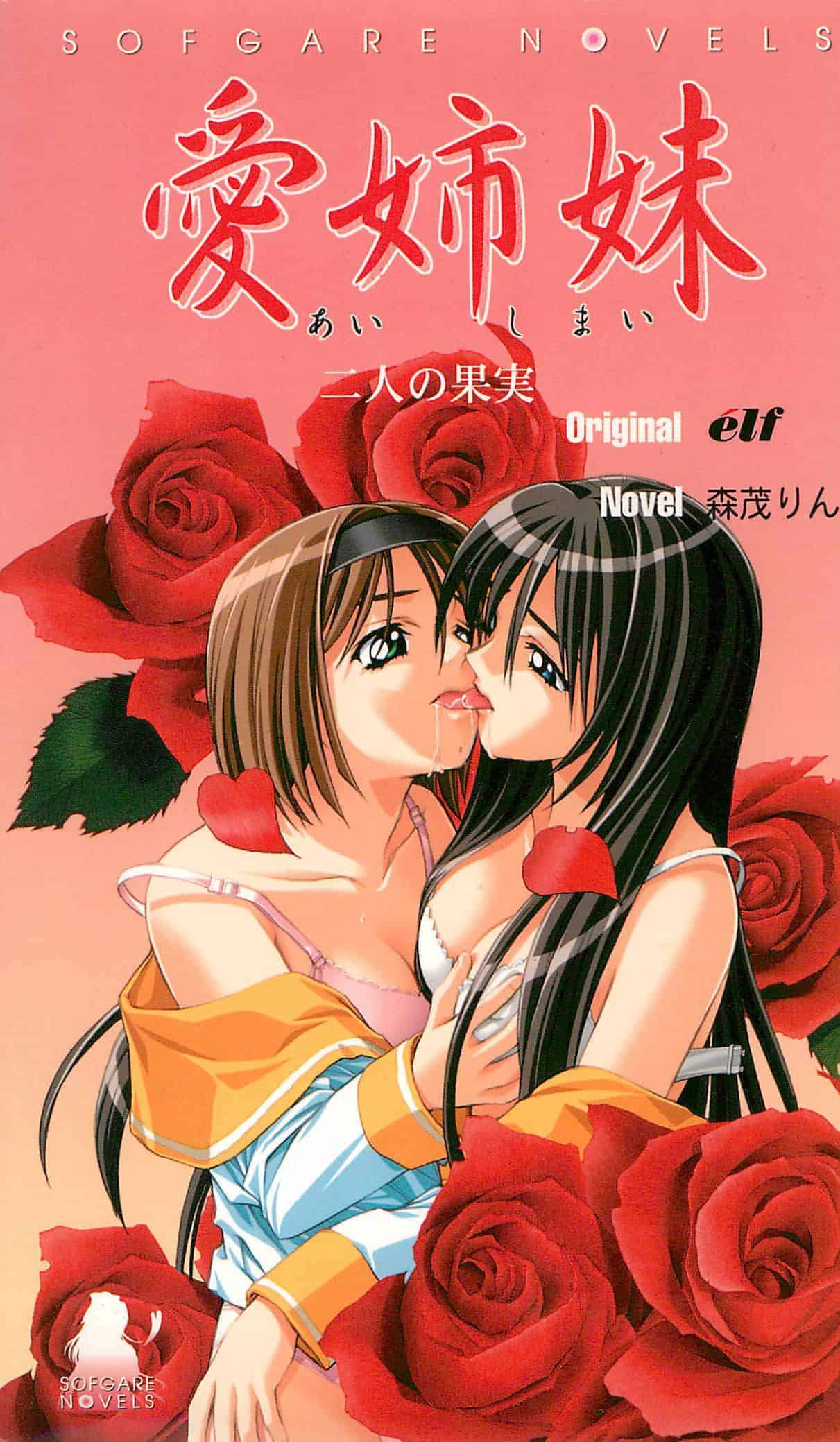
Kitazawa Tomoko and her older sister Rumi are high-achieving students from a well-off family. Their mother Yukie appears unusually worried in the mornings, though she hides her distress behind a cheerful facade.

Nogawa Taketo, a seemingly ordinary male student, confronts Rumi in the art club preparation room. He presents an IOU signed by Yukie claiming a large debt owed to Taketo's father, along with explicit photos of Yukie being raped. Taketo blackmails Rumi into sexual submission, threatening to distribute the photographs if she refuses.

Taketo forces Rumi into a series of humiliating sexual acts, including oral sex and vaginal rape, while she desperately tries to protect her mother and younger sister. Despite her resistance and growing disgust, Rumi's body eventually betrays her through involuntary arousal and orgasm, shattering her self-image as a pure honor student.

Afterward, Taketo encounters Tomoko at the school gate and reveals the same IOU and photographs to her, extending identical threats. He leads Tomoko to his apparently empty home and forces her to undress, beginning another cycle of sexual violation.

Throughout these encounters, Taketo psychologically dismantles each woman's dignity by exploiting their protective instincts toward one another. The Kitazawa women are trapped in an escalating web of blackmail where every act of compliance only deepens their submission, while their family's reputation and relationships face total destruction.

The story establishes a dark power dynamic where Taketo systematically breaks the sisters' moral resilience through blackmail, sexual violence, and psychological manipulation, with their mother's compromised position serving as both the catalyst and continuing justification for their ongoing exploitation.

Latest Release
DateGroupRelease
2026-10-01light novels translations c25
2026-10-01light novels translations c24
2026-10-01light novels translations c23
2026-10-01light novels translations c22
2026-10-01light novels translations c21
2026-10-01light novels translations c20
2026-10-01light novels translations c19
2026-10-01light novels translations c18
2026-10-01light novels translations c17
2026-10-01light novels translations c16
2026-10-01light novels translations c15
2026-10-01light novels translations c14

Community Reviews

Rating(4 / 5.0, 28votes)
5 stars
11(39%)
4 stars
6(21%)
3 stars
11(39%)
2 stars
0(0%)
1 stars
0(0%)

Popular reviews

... Read More
Okay, so this section just completely flipped the script on me. I came into these chapters thinking this was going to be some slow-burn romance or drama, and then WHAM - Taketo reveals he has photos of Tomoko's mother being violated and uses it as leverage. That's not a plot twist, that's a sledgehammer to the face. The structure here is brutal in the best way - it starts with Tomoko thinking she's walking toward the person she admires, and every step she takes away from her friend Noriko and toward Taketo's house feels like she's walking into a trap she never saw coming. The pacing from the school encounter to following him to his isolated house to the bedroom scene is relentless. There's no breather, no moment where Tomoko gets to actually process what's happening before the next thing is forced on her. And honestly? That's how blackmail works in real life - it's suffocating. You don't get to catch your breath. The author clearly understands this. What struck me most is the irony in Tomoko's internal conflict - she wanted to protect her mother, but by the end of this section, she's realizing she might lose something else entirely. The scene where she sees the blood on the bed after Taketo enters her - that's a powerful visual. It's not just about physical violation; it's about the death of innocence and the death of whatever fantasy she had about this boy.
... Read More
Okay so I need to talk about Taketo and Rumi's dynamic because honestly it's making me so uncomfortable but also I can't stop thinking about it. This whole scene is just... brutal in the most psychologically interesting way. Rumi is established as the 'Madonna of the school' — beautiful, smart, talented in sports, basically everyone's ideal. And Taketo just systematically tears that image apart in the back room of her club. What hits me hardest is how Rumi's own body betrays her. She's crying, she's begging him to stop, she's fighting the whole time... but then her body starts responding anyway. That moment where she realizes 'I'm being violated so much, and I don't want it! And yet... why am I getting so hot?!' — that contradiction is so raw and disturbing. It's not even about desire really, it's about her identity crumbling in real time. She's terrified that her juniors or the art teacher might walk in and see her like this. But here's the thing that unsettled me most: after he leaves and she's alone, her mind starts racing back to someone else. Someone who 'understood her better.' That comparison between Taketo and this other man — it shows how broken she already was before this even happened. Taketo didn't create her vulnerability, he just exploited it. And that ending line 'Don't you ever forget that' — he's not just talking about the sex, he's claiming ownership of her entire sense of self. Which is terrifying because then he shows up to Tomoko in the very next chapter, and I literally could not look away.
... Read More
This whole sequence is drenched in symbolism, and it's not subtle. Take the IOU—it's not just paper. It's a contract of shame, a tangible proof of her mother's hidden debts (both financial and moral). That signature ‘Kitazawa Yukie' carries weight; it's a name that represents family honor, now reduced to a legal instrument of control. Then there are the photos. They're described as ‘blackmail photos,' but they're more than that. They're fragments of trauma, frozen moments of violation turned into currency. The ‘cloudy, thick white liquid' isn't just bodily fluid—it's a symbol of contamination, of secrets that stain and spread. When Taketo uses them to coerce Rumi, he's not just threatening exposure; he's forcing her to become complicit in her own degradation. The art room itself is symbolic too. It's a space of creation, but here it becomes a site of destruction—not of art, but of innocence. Rumi's hands, usually meant for painting, are now forced to serve another's pleasure. And her mother? Her absence is a presence. Yukie's anxiety, her secrecy, her financial desperation—all these are threads in a web of female suffering that spans generations. The title ‘Immoral Sisters' takes on new meaning: are the sisters immoral, or is the world that traps them? Even Taketo's grin is symbolic—it's the face of predatory entitlement, smiling as he dismantles a girl's autonomy. Every element in this scene feels charged with double meaning. The envelope is a delivery of doom. The photos are mirrors reflecting shame. The IOU is a chain. And Rumi's compliance? That's the ultimate symbol of how power corrupts and survival sometimes demands surrender. It's heavy, uncomfortable stuff—and that's exactly what makes it resonate.
... Read More
Let's talk about dialogue because this text is full of lines that will stick with me for a long time. Taketo's voice is particularly notable - his sentences are short, commanding, and stripped of any warmth. 'Follow me if you don't want this photo to be spread around.' 'For the time being, just sit there and take off your clothes.' He rarely asks questions; he issues statements that function as orders. The few times he does ask something - 'How many people have you been screwed before, huh?' - it's clearly rhetorical cruelty disguised as curiosity. Tomoko's dialogue tells a different story entirely. Her speech is fragmented, filled with ellipses and interrupted thoughts: 'N-No way...', 'Mother would never do such a...', 'Please, stop it...' Her verbal responses show a mind racing between denial, fear, and reluctant compliance. But the real standout is the narrative voice, which does something brilliant - it consistently reports Tomoko's physical sensations as if they have a will of their own, separate from her emotional state. 'Her body complained about the dull pain.' 'Her skin became increasingly hotter.' This creates a powerful dissonance between what she feels and what her body does. The translator also made some sharp choices - phrases like 'horny bitch' and 'lewd woman' carry specific cultural weight in their English rendering that amplifies the humiliation. One line that really stands out: 'Before long, you will feel better even if you don't like it at first.' That's the most terrifying sentence in the entire section because it's not just physical - it's psychological manipulation disguised as comfort.
... Read More
I need to be honest with you all because this pacing is something else entirely. The author starts IN MEDIA RES essentially—Taketo already knows she's a virgin, the penetration is already happening or about to happen, and you're dropped right into the psychological negotiation between these two characters. There's no buildup, no romance, no preamble. Just raw confrontation from the first line. But here's what's genius about it: the emotional pacing is slower than the physical pacing. The sex itself moves FAST. Taketo is ruthless, efficient, almost mechanical in how he moves through her body. But every time he speeds up, the author immediately cuts to Tomoko's INTERNAL experience. Her thoughts. Her confusion. Her body betraying her mind. The rhythm is this push-pull between action and reaction that keeps you breathless. "The impact caused Tomoko's mouth to scream unspeakably, and her body jumped up like that of a young sweetfish." I don't know why the author chose a sweetfish as a comparison but it worked. It's sudden, it's fragile, it's a creature that barely exists outside of water and now it's thrashing on land. The imagery shifts from violent to poetic in a single line. Then the climax hits and immediately—IMMEDIATELY—the pace drops to almost glacial. Taketo pulls out. Tomoko cries. Silence. The sound of dressing. The sound of footsteps on stairs. The sound of a front door closing. Each beat lingers just long enough to make you uncomfortable. And the chapter ends with Tomoko wondering about dinner. NOT a cliffhanger. NOT a dramatic revelation. Just a domestic thought that somehow carries more weight than any explosion could. The author trusts you to sit with that discomfort. And I'm so glad they do.
... Read More
I know this looks like a straightforward erotic story on the surface but I've been turning over some symbols in my head and I think there's actually something deeper going on here. The light imagery is the first thing that struck me. In the prologue, there's barely any light—just a thin streak filtering through half-closed curtains, creating a murky, dreamlike space where normal rules don't apply. It's a sealed-off world, literally and figuratively. Then Chapter 1 opens with bright blue sky and puffy clouds, maximum visibility, maximum normalcy. But even that daylight feels fake somehow, like a stage set. The author keeps playing with light and shadow, and I think it's representing two different states of being for these characters—one where they're stripped bare (literally) and one where they perform normalcy. The humidity and sweat in the prologue aren't just atmosphere—they represent excess, lack of control, the physical manifestation of desire and submission. Everything is wet and clinging, nothing stays clean or separate. Compare that to Chapter 1 where everything is crisp and neat—uniforms without creases, shoes properly tied, hair perfectly kept. The contrast between these two worlds tells you everything about what these characters are running from and what they're trapped in. And that shoe cabinet moment in Chapter 1? Tomoko hiding behind it like a voyeur? It's such a small detail but it symbolizes her entire position in this story—watching from the shadows, wanting to be seen but terrified of being seen, existing in someone else's narrative without any agency of her own. I'm not sure where this is heading but the thematic bones are already there and they're interesting.
See all reviews

Custom lists

See all custom Lists