Summary

... Read More

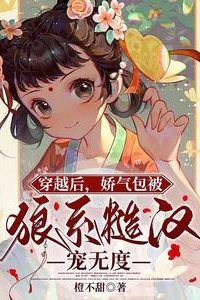
Yu Zhou is a transmigrator who has entered the body of a spoiled, willful eighteen-year-old in a small town called Jinling. The original owner was a neglected but pampered younger brother raised by a soft-hearted single mother, Yu Ma, and an older brother, Yu Cheng, who had worked away from home for over a decade to pay off debts left by their absent father. In the original storyline, Yu Zhou’s foolishness and vanity led him to be exploited by fake friends, dragged into online gambling, and ultimately to his death, which also ruined his mother’s health and his brother’s future. Yu Zhou’s primary objective is to alter this tragic fate by behaving rationally and protecting his family.

Upon arrival, Yu Zhou immediately confronts his bad habits. When he demands expensive shoes, his mother refuses due to financial constraints, prompting him to sulk but not escalate the conflict violently. He recognizes that his so-called friends are parasites who borrow money and steal from him. In a decisive turn, he confronts them at a milk tea shop, demanding repayment of all outstanding debts. He produces WeChat records as evidence, shocking the group. When they threaten him, he remains calm and unyielding, exposing that one of them stole his former girlfriend. The confrontation ends with the thugs fleeing, and Yu Zhou successfully reclaims his money from Wang Ziyang, who pays back nearly a thousand yuan out of fear.

Yu Cheng returns home after a long absence, bringing cash savings and a sense of stability to the family. Yu Zhou interacts with his brother, maintaining the facade of a bratty younger sibling while internally appreciating the familial bond. The family faces external conflicts, including land disputes with relatives in their village. Yu Zhou actively supports his mother and brother in reclaiming their encroached land, showing a newfound assertiveness that contrasts with the original character’s indifference. He also encounters He Yao, a man who helped Yu Cheng prevent a theft at the bus station. Yu Zhou builds a friendly rapport with He Yao, inviting him to their home and sharing meals, which endears him to his mother.

The narrative follows Yu Zhou as he navigates daily life with a strategic mindset. He avoids the pitfalls that destroyed the original character, such as gambling and toxic friendships. Instead, he focuses on collecting debts, helping his family manage their small shop, and strengthening his relationship with He Yao. He demonstrates cunning and boldness, such as visiting the homes of debtors to collect money publicly, leveraging social pressure to ensure repayment. His actions earn him respect and fear from his former peers, disrupting the power dynamics that previously allowed them to exploit him.

As the story progresses, Yu Zhou continues to integrate into his new life while safeguarding his family’s well-being. He balances his role as a seemingly lazy teenager with his underlying mission to prevent the original tragedy. His interactions with He Yao deepen, suggesting a potential romantic or close personal development. Meanwhile, he addresses family issues, such as his mother’s vulnerability to verbal abuse from relatives, by encouraging her to stand up for herself. The story highlights Yu Zhou’s transformation from a victim of his circumstances to an active agent of change, ensuring that his family avoids the downward spiral that befell them in the original timeline.

Latest Release
DateGroupRelease
2026-08-11shanghai fantasy c42
2026-08-11shanghai fantasy c41
2026-08-11shanghai fantasy c40
2026-08-11shanghai fantasy c39
2026-08-11shanghai fantasy c38
2026-08-11shanghai fantasy c37
2026-08-11shanghai fantasy c36
2026-08-11shanghai fantasy c35
2026-08-11shanghai fantasy c34
2026-08-11shanghai fantasy c33
2026-08-11shanghai fantasy c32
2026-08-11shanghai fantasy c31

Community Reviews

Rating(4 / 5.0, 6votes)
5 stars
1(17%)
4 stars
4(67%)
3 stars
1(17%)
2 stars
0(0%)
1 stars
0(0%)

Popular reviews

... Read More
Can we just take a moment to appreciate how distinct Yu Zhou's voice is here? The guy is a absolute character, and it's all in the dialogue. 'Hahahahahahaha' rolling around on the bed with 'pig-like squeals'—that's not just narration, that's personality. And the way he texts? 'Really, Brother He? Then you like me too, right? If I come to see you, you can't dislike me, or I'll be so sad I won't be able to sleep at night.' This kid is performing for an audience of one, and he knows it. But what's really impressive is that He Yao's voice is just as distinct, even though he says way less. His responses are short, practical, but underneath there's this warmth that comes through in the subtext. 'Mm, okay.' 'Sure, I'll treat you.' 'Be a good boy, okay?' These aren't just replies, they're affectionate gestures disguised as conversation. And then there's the aunties at the wedding table—their dialogue is practically a chorus, each one more impatient than the last, especially Fourth Aunt who 'was almost about to slam the table.' The author gives every character a recognizable voice, and I never once got confused about who was speaking. Even the two little cousins who 'hit' Yu Zhou have a presence, even if it's just through Yu Zhou's exaggerated reporting of the incident.
... Read More
Okay so let me just say this: the blind date subplot is honestly one of the smartest things the author did here. On the surface it seems like filler—Yu Cheng going on a blind date, right? But it does SO much heavy lifting. First, it gives Yu Zhou a reason to reach out to He Yao, which naturally pulls the two of them together for that barbecue scene. Second, it reveals Yu Cheng's soft side—this rough guy BLUSHING when his brother teases him about being in love? That's not just comic relief, that's character depth. And third, it sets up the family's financial desperation without any exposition dumps. Yu Zhou cursing out Yu Fugui while simultaneously blaming himself? That's the plot compressing three different conflicts into one emotional beat. The structure here is really tight—every subplot feeds into the main emotional arc. I just wish we got more resolution on the Yu Fugui situation though. It's hovering there like a storm cloud but never quite breaks. What do you think about that?
... Read More
What I love about this section is how the stakes are never loud but they're always there. On the surface, nothing catastrophic is happening—kids playing at a wedding, a brother going on a blind date, two guys eating barbecue. But underneath all of that is this constant pressure of poverty and obligation. Yu Fugui is mentioned like a ghost haunting the entire family, and you can feel the weight of that absence even when he's not in the scene. The conflict between Yu Zhou's desire to be carefree and his guilt about his family's situation is really the central tension here. He wants to just have fun with He Yao, but he can't turn off the part of his brain that's calculating how much he costs, how much trouble he is. And He Yao's conflict is equally compelling—he's this rough, practical guy who doesn't usually care about much, but Yu Zhou has somehow become someone he actively worries about. When Yu Zhou sends those crying Minion emojis and He Yao feels his 'heart was soaked in sourness,' that's not just romantic tension, that's the stakes of emotional vulnerability. He Yao is letting someone past his defenses, and that's terrifying for a guy who's used to handling everything alone. The author never screams 'THIS IS DRAMATIC' but every quiet moment carries real weight. I was genuinely worried for these characters throughout this whole section, even during the comedy bits.
... Read More
The scene at Grandma's house during the wedding banquet is such a vivid slice-of-life moment. I love how the author just drops you into this world without any explanation—you somehow immediately understand that the younger kids watch the bride, the older folks cook, and everyone has their role. The detail about men and women sitting separately because 'the men mostly drink and play games, while the women gossip' is such a small thing but it makes the whole setting feel lived-in and real. And then there's He Yao in the mango orchard, clothes soaked through under the blazing sun, constantly checking his phone. The contrast between that hot, dusty outdoor labor and Yu Zhou lying in air-conditioned comfort while sending dramatic WeChat messages—both scenes are so visually distinct but they're woven together through the phone notifications. One of my favorite images is Yu Zhou leaning against He Yao after the barbecue, too full to move, while He Yao casually adjusts his position to make him more comfortable. It's such a quiet, domestic moment that feels incredibly cinematic. The author really knows how to paint a picture with just a few details.
... Read More
I need to talk about how well-paced this whole section is because honestly it's impressive. The author starts with a relatively quiet moment—Yu Zhou texting He Yao, being dramatic on the bed—and then gradually ramps up the energy. The wedding banquet scene is like a breather, a chance to absorb the worldbuilding, and then BOOM, the blind date news drops and everything picks up again. What I love most is how the transitions work. There's no jarring chapter break energy; it all flows naturally from one scene to the next. Yu Zhou goes from being bored at Grandma's to being excited about his brother's blind date to hanging out with He Yao, and each beat feels earned. The barbecue scene is where the pacing really shines though—that's the climax of this whole chunk, and it lands perfectly. It's long enough to feel like a proper date but short enough that you don't want it to end. And then it cuts off right as they're heading home and Yu Zhou starts getting serious about the family's financial situation. That cliffhanger energy is chef's kiss. The author knows exactly when to speed up and when to slow down, and I rarely found myself wanting to skip anything. Well, except maybe the dishwashing details at the wedding, but that's just me being impatient.
... Read More
There's this recurring theme here that really got me thinking—the idea of being a burden, of being 'extra' in someone's life. Yu Zhou keeps saying things like 'I waste money and don't understand things, always causing trouble' and 'I just hold everyone back.' The original owner of this body apparently did these things, and now Yu Zhou is carrying that guilt even though he didn't earn it. It's a really interesting exploration of inherited shame. And then there's Yu Cheng, who 'didn't even finish school and had to work, no one wants him' according to Yu Zhou's angry outburst. Both brothers are defined by what they lack—education, money, opportunity—and yet the story keeps showing them as capable, caring people. The wedding banquet setting is kind of symbolic too. Weddings are about new beginnings, about building something together, but the Yu family is struggling to even maintain what they have. I keep thinking about that image of Yu Zhou's 'fair arm with only a faint red mark' that he exaggerates into a tragedy. He craves attention and care, and he'll manipulate the situation to get it, but underneath that manipulation is a genuine fear of not being wanted. That's the real story here, isn't it? Not the drama, but the fear behind the drama.
See all reviews

Characters

See all characters

Custom lists

See all custom Lists