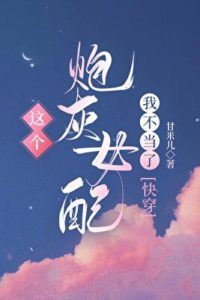
I'm Not Going to Be This Cannon Fodder Female Supporting Character
Novel Info

Summary

... Read More

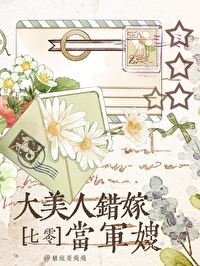
Su Qin, a graduate student in art from the modern era, transmigrates into the body of a vicious female supporting character in a 1980s novel. In the original story, this Su Qin is engaged to Zhou Zhiyuan, her childhood sweetheart, but is abandoned for Su Yue, a kind-hearted girl who arrives from the countryside. The original Su Qin becomes jealous, frames Su Yue, and ultimately dies miserably, abandoned by everyone. Upon waking in the dilapidated room of her new life, Su Qin learns that her father, Su’s father, has sided with the stepmother, Liu Mei, and the half-sister, Su Yue, declaring the engagement void after Su Qin allegedly pushed Su Yue during a confrontation. Instead of throwing a tantrum as the original character would, Su Qin coolly agrees to the breakup, wishes the couple well, and demands that Zhou Zhiyuan stay away from her forever. This sudden change confuses her family and Zhou Zhiyuan, who expected her to fight for him.

Free from the burden of a toxic engagement, Su Qin focuses on her survival and future. She works as a temporary worker at a canning factory, a job she despises, and resolves to retake the college entrance exam to change her fate. With no money for textbooks, she visits recycling stations to find used study materials, showing determination and resourcefulness. Her path crosses with Cheng Wenfeng, a retired soldier and future business tycoon who serves as a male supporting character in the novel. Initially, Su Qin had insulted Cheng Wenfeng during a blind date arranged by his aunt, Cheng Lan. Realizing his potential importance, Su Qin apologizes sincerely, offering him ice pops to mend the relationship. Cheng Wenfeng, who is often misunderstood due to his stern appearance, is intrigued by Su Qin’s straightforwardness and lack of fear.

At the factory, Su Qin faces hostility from Zhou Xiufang, Zhou Zhiyuan’s aunt, who leads a clique against her. During a heavy labor shift, Zhou Xiufang attempts to sabotage Su Qin, but Su Qin outsmarts her, causing Zhou Xiufang to injure herself by running into a pillar. Team Leader Cheng Lan, despite her initial anger over the blind date incident, defends Su Qin, recognizing her hard work and honesty. Su Qin also discovers her talent for illustration when Chen Guoliang, the chief editor of a magazine where Zhou Zhiyuan works, commissions her to draw for a new children’s magazine. This opportunity provides Su Qin with extra income and a professional outlet for her art skills.

Zhou Zhiyuan attempts to reconcile, hoping Su Qin will beg for his return, but she rejects him coldly, stating that seeing him makes her sick. She makes it clear that Su Yue stole her fiancé and must handle the consequences. Meanwhile, Cheng Wenfeng finds himself increasingly drawn to Su Qin. He watches her study diligently in the bookstore and feels a protective instinct toward her. Their interactions grow more frequent, with Su Qin treating him to meals and ice pops, and Cheng Wenfeng helping her with physical tasks at work. The dynamic shifts as Su Qin gains independence and respect from her colleagues, while Zhou Zhiyuan and Su Yue’s relationship faces underlying tensions due to Su Qin’s indifference. Su Qin’s transformation from a jealous, dependent girl to a focused, self-reliant woman begins to alter the trajectory of the story, catching the attention of those around her, particularly Cheng Wenfeng, who starts to see her in a new light.

As Su Qin continues her studies and work, she navigates the complex social dynamics of the factory and her family. Liu Mei and her father attempt to control her finances and force her into another blind date, but Su Qin stands her ground, citing the money her biological mother left her. She refuses to be a pawn in their schemes. Cheng Wenfeng’s feelings for Su Qin deepen as he observes her resilience and kindness. He begins to question his initial impressions of her and finds himself wanting to be closer to her. The story sets the stage for a potential romance between Su Qin and Cheng Wenfeng, contrasting with the original plot where she ends up alone. Su Qin’s rejection of the tragic fate assigned to her character marks a significant turning point, as she carves out her own path toward education, career, and personal happiness, leaving the original male and female leads to deal with the fallout of their actions.

Latest Release
DateGroupRelease
2026-08-11shanghai fantasy c32
2026-08-11shanghai fantasy c31
2026-08-11shanghai fantasy c30
2026-08-11shanghai fantasy c29
2026-08-11shanghai fantasy c28
2026-08-11shanghai fantasy c27
2026-08-11shanghai fantasy c26
2026-08-11shanghai fantasy c25
2026-08-11shanghai fantasy c24
2026-08-11shanghai fantasy c23
2026-08-11shanghai fantasy c22
2026-08-11shanghai fantasy c21

Community Reviews

Rating(4.2 / 5.0, 11votes)
5 stars
4(36%)
4 stars
5(45%)
3 stars
2(18%)
2 stars
0(0%)
1 stars
0(0%)

Popular reviews

... Read More
This novel is SO much deeper than it appears on the surface. The central theme is about agency versus fate — or rather, about fighting fate while trying to minimize collateral damage. Su Qin knows she's a "cannon fodder female supporting character" in someone else's story, but she's not just passively accepting her role. She's actively trying to redirect the plot, to save Cheng Wenfeng from becoming the tragic devoted male supporting character who remains unmarried for life. The paintings she creates and gets published in magazines — these are symbols of her own identity and ambition, separate from the plot she's trapped in. She's not just a supporting character; she's an artist with her own voice. The fried dough cakes and red bean soup with double shredded chicken — these small acts of kindness and generosity show Su Qin's true nature. She's not bitter about her situation; she's generous with what she has. The system notifications about plot deviation are like a constant reminder that she's operating on borrowed time, that every action has consequences beyond her control. And the family dynamics — Liu Mei's desperation for her son Zhao Yong to marry into a good family, Father Su's authority, Su Yue's privileged position — these all reflect the social pressures of 1980s China where a woman's worth was often measured by her marriage prospects. Su Qin is navigating all of this while trying to survive as a temporary worker, all while carrying the weight of a plot she didn't write.
... Read More
Liu Xiaoyan's dialogue is SO distinctive. She's chatty, emotional, and completely unfiltered. "I hate men like that the most" while talking about He Peng, then immediately backtracking when Su Qin gives her a look — "But he's like a butterfly, doesn't seem very smart, really annoying!" The way she switches from bitter complaining to eager agreement is hilarious and feels completely natural. Her voice is warm, slightly naive, and endearing. Cheng Lan's voice is different — she's confident, authoritative, but also genuinely caring. Her pitch to the blind date woman about Cheng Wenfeng being "warm-hearted, cares for family, filial, and hardworking" sounds exactly like a team leader who's invested in matchmaking. And her internal monologue about calculating Cheng Wenfeng's age is peak comedic timing. Su Qin's voice is more measured and observant. She doesn't say much but when she does, it's usually insightful — like suggesting Cheng Wenfeng might prefer a delicate, gentle girl. The dialogue between Su Qin and Cheng Wenfeng at the end is where it gets juicy. His nervous sweating, his rushed excuse about fixing the roof, her calm response — you can feel the tension in every line. And then that system voice at the end: "The male supporting character's favorability dropped below zero, the plot has deviated by thirty percent, please host correct it immediately." It's jarring in the best way — a cold, mechanical intrusion into an emotional moment. The contrast between the human dialogue and the system notification is brilliant.
... Read More
The stakes in this novel are layered and escalating, and I cannot stop thinking about them. On the surface, Su Qin's conflict is simple — she needs to get into university and escape her life as a temporary worker at the canning factory. But underneath that, there's the meta-conflict: she's a transmigrator trying to fix a deviating plot, and every interaction with Cheng Wenfeng is a high-wire act. If she pushes too hard, he gets angry (and we saw what happened when she bluntly told him she didn't like Su Yue). If she does nothing, the plot deviates further and who knows what happens. The blind date scene is a perfect example of rising stakes — Cheng Lan is desperate to find Cheng Wenfeng a wife, the match is failing, and Su Qin is caught in the middle trying to manage everyone's expectations. Meanwhile, her own family situation is a ticking time bomb. Liu Mei bringing home Zhao Yong, the tension with Father Su, the threat of discovery — these domestic conflicts add another layer of danger. Su Qin can't afford any more complications. And that final system notification — favorability below zero, thirty percent deviation — that's the author telling us the stakes just got REAL. Cheng Wenfeng's feelings are hurt, the plot is spiraling, and Su Qin has to figure out how to fix it without making things worse. The internal conflict is what makes this so compelling though. Su Qin genuinely cares about Cheng Wenfeng. She doesn't want him to become the tragic male supporting character. She's trying to save him, even if it means playing matchmaker with herself as the unknowing third wheel. That's tragic and beautiful and I need to know what happens next.
... Read More
"Next time." Two words. That's all it took. He could've just paid and walked away, but no—he changed his sentence mid-thought to create a reason to see her again. Cheng Wenfeng is NOT a talkative guy, so this tiny moment of vulnerability is HUGE. I literally had to put the book down. Then the dream. Oh god the dream. "Her waist was so slender, so soft, just as he imagined." He's trying so hard to be good and proper and then his subconscious just—nope. He's a man. The cat interrupting is both funny and kind of devastating because that moment of intimacy he was building in his head got shattered by reality. He woke up sweating and flustered. This guy who never shows emotion is losing his composure over a girl he's known for, what, two dates now? And Su Qin—she's been through so much. Engaged to someone who cheated, looked down on by coworkers, constantly compared to Su Yue. But watch how she handles Zhou Xiufang at the end. She doesn't explode. She doesn't cry. She just lays out the truth about Zhou Zhiyuan and Su Yue with this calm, devastating precision. The emotional growth here is incredible. She's not the same girl who used to throw tantrums. She's become someone who can protect herself with words instead of fists.
... Read More
The pacing in these chapters is really well-calibrated. You've got this quiet, almost domestic opening—the wonton shop, the walk back, the casual conversation about ketchup. It feels like a breath of fresh air after whatever tension built up before. Then BAM, Cheng Wenfeng's dream hits and it's all romantic tension and repressed desire. The shift from mundane to intimate is seamless. Then the chapter pivots hard to the factory floor, and the energy changes completely. Zhou Xiufang's gossip scene is basically a pressure cooker—everyone's watching Su Qin, waiting for her to react, and she just... doesn't. That's where the tension lives. The author doesn't need drama to create it; the silence does the work. The supervisor's visit is the structural pivot point. Everything before it makes you think Su Qin is in trouble. Everything after it recontextualizes the whole scene. Cheng Lan walking out of the supervisor's office with a smile, then immediately going to Cheng Wenfeng to talk about Su Qin being an artist—this is where the pacing really shines. The information drip-feed is perfect. We learn about the magazine, about Chen Guoliang's involvement, about Su Qin's hidden talent, all through casual conversation rather than exposition dumps. And that final confrontation with Zhou Xiufang? The chapter ends on a high note. Su Qin's speech about Zhou Zhiyuan and Su Yue is the kind of moment that makes you want to immediately turn the page.
... Read More
The pomegranate tree in Cheng Wenfeng's yard is such a loaded symbol. It's full of fruit, already starting to blush red. Ripening. Waiting. He glances at it multiple times while thinking about Su Qin. The imagery of something growing slowly, quietly, turning red and ready—that's literally their relationship. He can't rush it, but it's happening anyway. Then there's the drawings. Su Qin's talent for illustration represents something deeper than just a plot device. In a world that constantly tells her she's less than—no college degree, temporary worker status, failed engagement—her drawings are proof that she has intrinsic value that no one can take away. Chief Editor Chen seeing something in her work that others overlook is thematically rich. The person everyone dismisses is actually the one with real gift. The magazine's children's issue is also significant. Children's stories require imagination, warmth, the ability to see the world differently. Su Qin's art for children mirrors her own need to be seen as innocent and capable, not just as the girl who got jilted. Cheng Lan calling her an artist is almost an apology—a recognition that Su Qin deserves to be taken seriously. And Zhou Xiufang's relentless comparison of Su Qin to Su Yue? That's the theme of social hierarchy and perceived worth. The whole factory treats Su Yue like gold because she's educated, while Su Qin is invisible. But the narrative keeps undermining this hierarchy. The educated one is morally questionable. The temporary worker has real talent. The engaged man is a cad. The story is quietly but persistently dismantling the assumptions everyone holds.
See all reviews

Characters

See all characters

Custom lists

See all custom Lists