Summary

... Read More
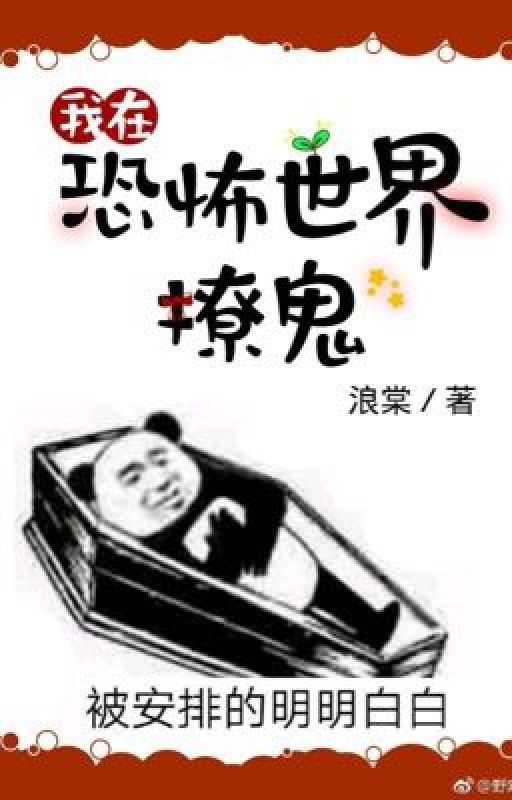
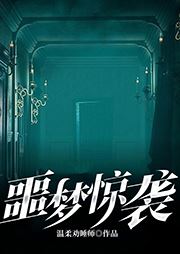
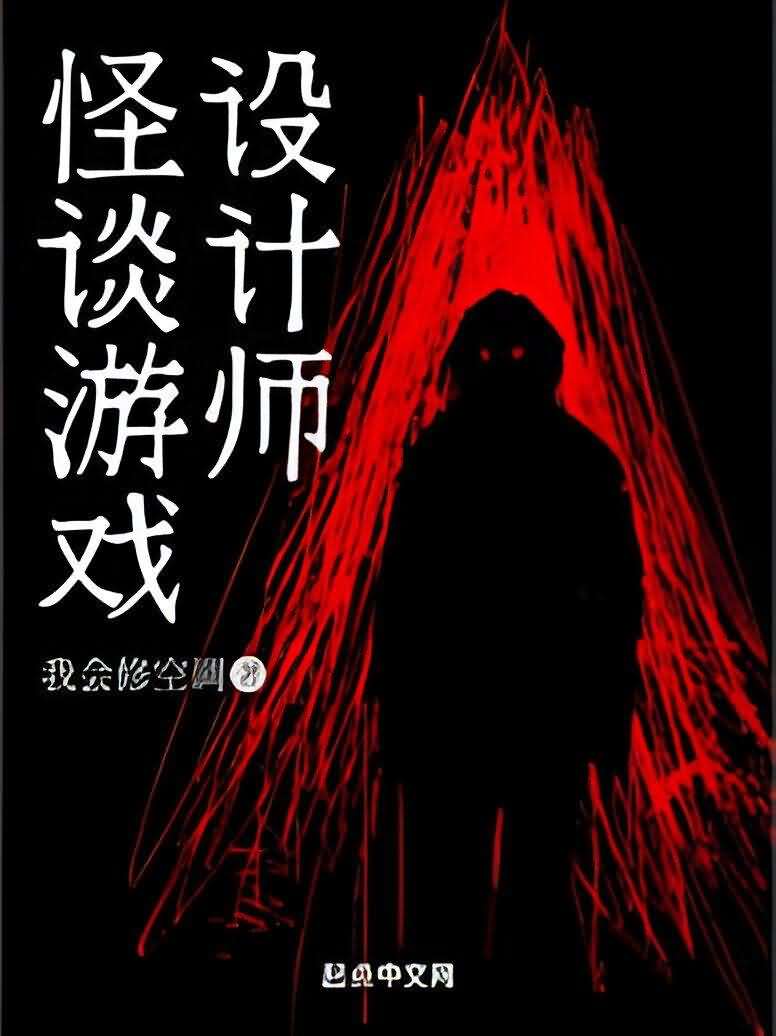
Chu Huai is a wealthy president of a game company who has lived with a parasitic ghost for years, causing his internal organs to deteriorate and his body to accumulate lethal yin energy. A nine-tailed fox totem on his tailbone, known as the heaven mark, signals that he is a sinner destined for a horrific death. When the totem begins to burn, Chu Huai receives a message in his mind stating that if he does not drop his blood on the mark within three days, he will be hunted by evil spirits. Rather than waiting to be killed, he decides to voluntarily enter the horror world to find a way to expel or kill the ghost inside him. On the final night, as a female ghost hunter attempts to seduce and kill him, Chu Huai resists her mental attacks and activates the totem, transporting himself into the supernatural realm.

Upon arriving, Chu Huai discovers that his soul has been forced into the body of a beautiful woman named Chu Jiao. He finds himself on a mysterious bus with five other passengers, including an experienced participant named Luo Ziyang and a calm, handsome man named Jin Tianyi. Chu Huai quickly realizes that Jin Tianyi’s presence suppresses the painful yin energy in his body, leading him to attach himself to the older man for protection. The group is assigned to their first instance, a ghost marriage at the Cao Family Manor, where they must survive for three days while uncovering the truth behind the death of the young master, Cao Rong, and his intended ghost bride, Yin Xiaofeng.

At the Cao Manor, the participants learn that Madam Cao is desperately seeking a spirit wife for her dead son. Chu Huai and Jin Tianyi investigate the scene and discover that Yin Xiaofeng was murdered, not drowned, and that her body was prepared without a shroud. Meanwhile, another participant, Wang Xue, reveals that she saw a faceless male ghost haunting Madam Cao. As the group analyzes the clues, they deduce that Madam Cao secretly orchestrated the deaths of both Yin Xiaofeng and her lover, Ma Zhicheng, to create a suitable bride for her son. The male ghost is identified as Ma Zhicheng, who returned to seek revenge but has not yet acted due to the rules governing ghost behavior in the instance.

The group travels to the Yin Family home to gather more information, where they encounter Yin Xiaofeng’s abusive and greedy parents. That night, Father Yin attempts to steal from the participants and murder them in their sleep, but Jin Tianyi thwarts the attack and spares the man’s life after Chu Huai pleads for mercy. The fragile peace is shattered when Zhao Xin, a hostile participant, is found dead the next morning with her tongue cut out. Shortly after, Luo Ziyang reports that Father and Mother Yin have also been murdered. The instance escalates rapidly as the ghosts begin to claim victims, forcing the survivors to rely on Jin Tianyi’s experience and Chu Huai’s sharp intellect to decipher the remaining rules and survive the deadly game.

Latest Release
DateGroupRelease
2026-09-26knoxt c4
2026-09-26knoxt c3
2026-09-26knoxt c2
2026-09-26knoxt c1

Community Reviews

Rating(4 / 5.0, 172votes)
5 stars
57(33%)
4 stars
55(32%)
3 stars
60(35%)
2 stars
0(0%)
1 stars
0(0%)

Popular reviews

... Read More
'Xiao Ya, that sacrifice…' His mouth was overflowing with bitterness, yet his eyes were extremely firm. I'm not okay. I am genuinely not okay right now. This married couple met on a blind date, fell in love at first sight, got married directly — they basically were Cupid's actual arrow victim, except there was no magical couple bond, just two people who chose each other in a world designed to make you choose against each other. When Dong Anya confesses she's a ghost, I thought Zhou Xiuwen would hesitate. He doesn't. He hugs her tighter. And then he offers to send her away — to sacrifice himself because in this game, that's apparently the only way to keep her safe. But she refuses. 'If you're dead, what's the point of me going back alive?!' That line. That's the kind of line that stays with you. And the most heartbreaking part? They knew each other for barely any time before everything fell apart. But their love isn't naive or shallow — it's forged in the understanding that they might not survive this. 'Let's die together.' Not 'let's survive together.' They don't even believe survival is an option for them. Meanwhile Chu Huai and Jin Tianyi have this almost telepathic synchronicity — they ask the same question at the same time and just smile. There's trust there, but also competition. They're allies who know they might end up on opposite sides when the blood moon rises. And Lou Ming, meanwhile, is over here casually dissecting corpses while making snarky comments. Some people cope by working. Some by joking. Some by holding their spouse and deciding to die together.
... Read More
Can we just appreciate how distinct every character's voice is in this chapter? Jin Tianyi's dialogue is always so measured and clinical—"Ancient coffins are not the same as modern ones. The wooden cover was hooked by the iron nail so we can only open it with force." No emotion, just facts. He's basically narrating his own life like a documentary. And that's what makes him so compelling because he's always this calm center in the chaos. Chu Huai on the other hand? Pure panic in dialogue form. "Brother Jin...what are you doing?" whispering. "..." just speechless gulping. His lines are short, fragmented, full of hesitation. He's the audience surrogate and it works perfectly. But Li Bin's internal monologue is where the dialogue really shines: "No, don't...don't come over!" (from Wang Xue) vs "I just want to live!" (Li Bin's excuse) These two lines stacked against each other is absolutely devastating. One is a desperate plea for rescue, the other is a selfish justification for abandonment. The author doesn't need to tell us Li Bin is a bad person—we hear it in his words. And Zhao Xin's sarcasm cuts through everything like a knife. "Did you keep this kind of boyfriend for celebrating the New Year?" Who says that?! In what universe do you respond to someone's trauma with a New Year joke?? But it's so Zhao Xin and it's so perfect. Every character sounds exactly like themselves, and that consistency makes the dialogue feel alive rather than scripted. Jin Tianyi occasionally has this dry humor too—"Seeing you sleep so soundly, I didn't want to call you"—which reveals his care without him having to say it outright. Subtle. Effective. I'm taking notes.
... Read More
The character dynamics here are a web of alliances, betrayals, and unspoken tensions. Jin Tianyi is the obvious center—he's protective of Chu Huai but keeps critical information to himself, choosing to act alone when confronting Madam Cao. His relationship with Chu Huai feels intensely coded: the sleeve-grab, the whispered warnings, the 'I will protect Jiaojiao for you' line that gets a withering look. It's clear there's history and dependency, but also inequality. Chu Huai, meanwhile, is oscillating between trust and suspicion. He follows Jin Tianyi's advice but can't resist trailing him, revealing his anxious attachment. Luo Ziyang is the straightforward counterpart—sarcastic, loyal, and blissfully unaware of the deeper stakes. His dynamic with Wang Xue is interestingly fragile; she approaches him with a mumbled request, and he agrees out of obligation or maybe pity. Wang Xue herself seems trapped between gratitude and fear, her flushed face and clasped hands suggesting hidden motives. Madam Cao is the tragic figure here—her love for her dead son has curdled into madness. She sings lullabies to a coffin, then tortures a corpse's memory into confession. It's a portrait of grief weaponized. And lurking in the background is Father Yin, whose manipulation echoes through every death. The relationships aren't just about plot; they're about power, protection, and who gets left behind.
... Read More
This whole passage is drenched in questions about guilt, punishment, and whether redemption is actually possible. The woman abducted a child — that's her sin. But now she's suffering far more than any punishment should require. She's aging rapidly, losing hair, haunted by dreams of the family she destroyed. The story keeps asking: is this her penance, or is this just cruelty dressed up as justice? Then there's Chu Huai's "Sacrifice" ability, which flips everything. In the Clue Competition, sacrificing yourself meant your sins were washed clean. But here, the ability description says "those who are sinful, but want to get God's forgiveness, can only offer themselves as a sacrifice." Who decided what counts as sinful? Who decides what forgiveness looks like? The whole God camp framework feels like a system that exploits guilt — it gives you a path out but makes you believe you deserve to suffer first. And the boy — totally innocent, caught in everyone's web of choices. His name being "An An" (peace/peace) is not lost on me. He's the symbol of everything this world keeps threatening to destroy. Every time someone sacrifices something, it's always the innocent one who pays the price. That pattern is going to bite this story in the end, I can feel it.
... Read More
"He tilted his head to glance at Chu Huai before he revealed a smile, then Jin Tianyi began to seriously write small dots and dashes symbols." I need everyone to understand what I just read. This man — Jin Tianyi — wrote "I like you" in MORSE CODE to someone he shares a bed with and has apparently shared a bed with frequently based on the narrative context, and Chu Huai's internal response is basically just... absorption. He reads it. He processes it. And then his lips accidentally brush against Jin Tianyi's mouth while turning back. No words. Just physical proximity and unspoken feelings hanging in the air like smoke. This is the kind of romantic tension that makes you want to shake both of them. Meanwhile Jin Tianyi is over there thinking "he knew that Chu Huai wouldn't respond" — bro, you don't know that, you insufferable man. And then later, the body language shift: Chu Huai sliding his hand into Jin Tianyi's robe because he's cold, discovering Jin Tianyi's reaction, and then choosing NOT to call him out on it. That's not ignorance, that's deliberate choice. He could have said something, anyt hing, but instead he just sighs internally and files it away. The most honest moment in all of this comes from Jin Tianyi when the situation turns horrifying — grabbing Chu Huai's hand and yelling "Wait for me!" before getting pulled into the instance. No romance, no confessions, just pure "I am not leaving you behind." And Chu Huai's reaction throughout — stunned silence, processing, then action. That's their love language apparently. Through violence and survival. The contrast between the domestic intimacy earlier (sleeping together, casual touching, shared watches) and the sudden horror of the instance makes every emotional beat hit harder because you know what they have to fight for. I'm not okay with this writing.
... Read More
This chapter is a masterclass in pacing. Let me break down why it works so well. The author opens with high tension — the competition is LIVE, Lou Ming has already produced his offering, and everyone is watching Chu Jiao/Chu Huai freeze. Then there's this agonizingly slow build: Chu Huai squats down, holds the knife in the air, doesn't move. Song Chen gets impatient. And then — CLANG. The knife hits the floor. Time's up. That single sound effect — 'Clang—' — is doing SO much work. It's the emotional nadir of the scene. Everyone thought they were about to witness something, and instead they witnessed... nothing. The silence after that clang is deafening. But then the author pivots HARD into Chu Huai's internal monologue, and suddenly the whole scene flips. What looked like failure was actually strategy. The pacing here is brilliant because it forces you to experience the disappointment alongside the characters before revealing the truth. You're not just watching a clever plan — you're feeling the gut-punch of thinking it failed first. And the chapter structure itself mirrors the competition: false defeat, then recovery, then a new revelation (the ghost arriving, the blood-red message about weights). Each beat lands because the author gives you just enough breathing room before the next hit. No dragging, no rushing. Every sentence earns its place.
See all reviews

Custom lists

See all custom Lists