Summary

... Read More

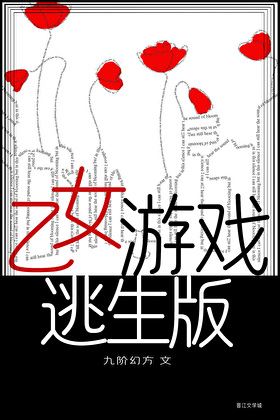
Legend states that the entrance to the underworld manifests in various forms, ranging from ordinary roads and hospitals to abandoned classrooms. Zhang Biao, a street thug from Dragon Lake Street, awakens in a dilapidated classroom amidst torrential rain and flickering lights. He had just been involved in a street fight when he was suddenly transported to this eerie location. Inside the room, he encounters three others: Bai Gu, a survival enthusiast wearing tattered camouflage and carrying dried blood; Li Juan, a beautiful but fearful young woman; and Su Qingxing, a delicate teenager in a British-style school uniform who appears detached and obsessed with his phone. Bai Gu reveals that they have entered the World of Endless Terror, a horror dimension where participants must survive supernatural trials to escape.

Immediate danger emerges when a half-mutilated female ghost appears in the classroom. While Zhang Biao and Li Juan panic, Su Qingxing remains calm and approaches the spirit, revealing an unexpected familiarity with the entity. The ghost refers to him as Lord Guide, causing confusion among the humans. Bai Gu, acting as the self-proclaimed leader, drags the others out of the classroom into a dark, endless corridor. He reveals his ruthless philosophy: the weak are scapegoats meant to die so the strong can survive. This is evidenced by his past experience in a mountain village horror world, where he sacrificed his companions to escape. Bai Gu admits he plans to use Zhang Biao and Su Qingxing as sacrifices if necessary.

During their escape, the group encounters a mirror in the corridor that reflects not their human forms, but a crowd of vengeful ghosts standing behind them. In the reflection, Bai Gu realizes he is holding the hand of a headless ghost, not Su Qingxing. Fleeing in terror, they run through looping staircases that return them to the same classroom, trapping them in a spatial loop. Realizing escape through the door is impossible, Bai Gu directs Zhang Biao to break the classroom window. They fashion a rope from curtains and descend to the school grounds, where swarms of ghosts pursue them. At the school gate, Bai Gu attempts to stab Su Qingxing to save himself, but Zhang Biao intervenes, taking the blade meant for the teenager. Zhang Biao’s sacrifice allows Su Qingxing to step out of the gate, breaking the ghosts' pursuit.

Once outside, Su Qingxing discards his facade of a fearful student. He reveals his true identity as a Guide of the Underworld, tasked with judging souls. He recites the death records of those present: Zhang Biao died in a street fight and passed his underworld trial, while Bai Gu died in a mudslide caused by his own malice and failed his trial. Bai Gu attacks Su Qingxing with his bloodied saber, but the Guide easily repels him using ghostly blue flames. Bai Gu is dragged into an abyss of lava, sentenced to eternal punishment in the eighteenth level of hell for his sins. Su Qingxing then escorts Zhang Biao to the Ghost Town, the realm for departed souls, where Zhang Biao is assigned a female guide and told to await reincarnation after atonement.

Following this mission, Su Qingxing receives a call from a colleague named Zhu Sha, informing him of an upcoming inspection by a high-ranking underworld figure. Reluctant to face this individual, Su Qingxing quickly transitions to his next assignment. He finds himself on a tour bus traveling along a desolate mountain road, posing as a mute passenger named Su Qingxing. The bus carries other trialists, including Liu Hai, a hostile senior survivor, and Chen Fangfang. Among the passengers is Old Man Chen, who claims to be a harmless elderly man. When the bus stops at a remote station, Liu Hai and others disembark, leaving the mute boy and the old man behind. As the bus departs, Su Qingxing reveals he can speak and identifies Old Man Chen as a dead soul with killing karma from a past war. The paper-doll passengers on the bus bow in obedience to the Guide, signaling the start of a new trial where Su Qingxing must navigate the Ghost Bus arc while maintaining his cover.

Latest Release
DateGroupRelease
2026-09-26knoxt c1

Community Reviews

Rating(4 / 5.0, 165votes)
5 stars
60(36%)
4 stars
55(33%)
3 stars
48(29%)
2 stars
2(1%)
1 stars
0(0%)

Popular reviews

... Read More
"no one knew where the bus had come from, no one knew where it was going. no one knew if the passengers on the bus were even alive or dead." the author states this outright in the opening and then proceeds to build an entire chapter that proves it. this bus is purgatory. it's a transitional space between life and death, and the horror worlds are literally tests of survival that determine your fate. the fact that only the last four rows are safe and stepping forward means death by ghost is symbolic of a very specific theme: ignorance is protection, but knowledge requires risk. you can stay in the back rows pretending nothing is wrong, or you can move forward and face what's waiting. that's the existential choice at the heart of every horror story. the empty seats among fifty passengers is another symbol that hits hard. where did everyone go? did they die? were they never real to begin with? the five survivors are isolated not just physically but ontologically. they're the ones who matter in this particular trial, which means the others were either eliminated or this bus cycle doesn't include them. the鬼 child asking "did you see my head?" is particularly layered — it's a ghost obsessed with being recognized, with having its existence acknowledged. and in a world where people are constantly disappearing and reappearing and questioning whether they're alive, that question becomes existential. am i seen? do i exist? is any of this real? Xu Yun's vanity as a pop star contrasts with her complete powerlessness here. she offers money to the driver, tries to negotiate her way out, and literally cannot. fame means nothing on a ghost bus. old man chen presents himself as frail while secretly being a seasoned veteran. chen fangfang appears sweet but lives in fear. everyone is performing identity while the bus strips them down to survival instincts. the recurring imagery of covering and uncovering — xu yun's accidental exposure, Su Qingxing covering her with the jacket — speaks to themes of vulnerability and protection that run through the whole narrative. what are we hiding? who sees us? and what happens when the lights go out?
... Read More
Okay so I need to talk about this whole Bai Hua arc because wow. At first I thought he was just the creepy funny comic relief type, you know, that class clown who says unhinged stuff and people laugh it off? But no. The author completely flipped the script and made him this deeply psychotic character whose entire worldview is built on a tragic, twisted foundation. He tricked his friend into sacrificing themselves to the God of Death, then killed himself to 'prove' his devotion. That is some next-level obsession stuff right there. And the best part? Su Qingxing already knows the truth before anyone else does. Bai Hua thinks he was resurrected by the God of Death, that he's special, chosen, immortal even. But the narrator drops this chilling line — "There was no resurrection ah... Su Qingxing knew very well that he had been dead since the moment Bai Hua committed suicide." Dead. Not alive. Just... stuck in this underworld trial because he never moved on. And the idea that the moment Bai Hua thinks he's proven himself and walks out of that glass room? That would literally be the end of everything. He's not escaping — he's walking into annihilation because he can't see past his own delusion. I love how the plot sets up a false assumption that Bai Hua is invincible, that he's the bride of death and therefore cannot fail. Then it peels that back layer by layer until we realize he's actually the most fragile person in the room. The irony is brutal. Also, Mu Rong casually dropping that she has a boyfriend named Mr. Liu as some kind of bluff or emotional anchor in the middle of this life-or-death situation? That's the kind of random human detail that makes the world feel lived-in even when things are falling apart.
... Read More
Liu Hai is lying down. L Y I N G . D O W N . On a bench in the middle of a horror world where they've all tried to walk forward and ended up exactly where they started, where paper dolls with painted smiles wave at them from a bus that seems to exist outside of time, and this guy is YAWNING, holding a utility knife, telling everyone to rest. "Even though I am the strongest here, only when I am fully refreshed can I lead you guys to escape." The audacity. The absolute, unshakeable confidence. And yet—I couldn't stop reading. Because something about him being so casually in charge while the world around them unravels made my skin crawl in the best way. Is he actually the strongest? Or is he just the loudest? The knife glinting in his hand even as he dozes—that's the detail that haunts me. He doesn't trust this calm. Nobody should. The stakes aren't just "will they escape" anymore. The stakes are: who are these people when the rules of the world break down? Liu Hai thinks strength equals leadership. Chen Fangfang thinks vigilance equals survival. Su Qingxing thinks protection equals care. And Old Man Chen—god, what does HE think? They abandoned him and now he's back, trembling on a bench, and nobody knows whether to believe him or not. The text barely gives us a paragraph of peace before it cuts to Su Qingxing spotting something white in the grass. Something shaking. The relief of rest is immediately undercut by the return of dread. That's the rhythm here—breathe, then panic, breathe, then panic. The author knows exactly how to keep your heart rate climbing while making you feel like you're allowed to relax, and then YANKS it away. What are they really赌上 (gambling with)? Their lives, obviously. But also their trust in each other. And right now, that trust is thinner than the shirt Su Qingxing is wearing in the cold night air.
... Read More
Can we just talk about Bai Hua for a second because I am genuinely devastated for him. Look at this line from the text: "Bai Hua watched as the figure he had burned into his heart moved to gently hug Su Qingxing, while he himself was being held tightly within the embrace of a bloody and unlucky man whose arms were already covered with various bloody handprints." This is DEVASTATING. Bai Hua's been protecting Su Qingxing, possibly sacrificing himself, and in this final moment, he watches the person he cares about get chosen by the Death God. And then he realizes the ENTIRE TIME—it was Su Qingxing all along. The line "You lied to me! You were the bride of Death to begin with, weren't you!" — this isn't just anger, this is betrayal. Bai Hua thought he was fighting alongside Su Qingxing, but apparently Su Qingxing knew something he didn't. And Su Qingxing's response? "Sorry, you've got the wrong person, the qualified trialists are over there." Dude was LYING to his face, pretending Bai Hua and Zhu Ting were the ones, while secretly... what? Was he protecting them? Was he resigned to his fate? We don't know yet, and honestly that uncertainty is driving me CRAZY. The relationship between these two is now a complete mess. There's trust broken, there's love (or whatever it is) on one side, and there's some grander destiny on Su Qingxing's side that he apparently couldn't share. And now Bai Hua is falling into hell's lava. I'm not ready for the next chapter.
... Read More
I need to talk about Qin Guan because this character has the best dialogue in the book and I refuse to apologize for it. Here's a person who is apparently a qualified detective, who is holding a broken ax like it's a normal thing to do in this situation, and whose immediate response to witnessing Mu Rong's boyfriend being devoured alive behind glass is to ask for her contact information. "When you're single again, how about leaving me a contact?" The timing. The delivery. The absolute casualness of it. This is not a person who panics. This is a person who observes human nature under extreme stress and decides, mid-apocalypse, that Mu Rong would make a great partner. Because apparently that's what detective brain looks like. And the dialogue throughout these chapters is just—chef's kiss. The author gives each character a voice so distinct that I could identify who's speaking without any tags. Bai Hua's sneering defensiveness, Du Wei's perpetually smiling menace, Mu Rong's sharp practicality, Su Qingxing's gentle awkwardness. Even Si Si gets a voice and it's just screaming in Japanese-onomatopoeia and it somehow works. "What nonsense!" Mu Rong's response to Qin Guan's proposal is delivered with what the narration calls a "direct and nonchalant blank stare" and that's the kind of precise, compressed description that makes dialogue land instead of just floating in the air. The humor in this book is also doing a lot of heavy lifting. Lines like "Men are like clothes, they are not as important as life" and Mu Rong's internet-free consideration of marrying the God of Death because "Same Queen, same" show an author who understands that comedy and terror can coexist. The tone doesn't waver into pure slapstick or pure drama—it breathes. Characters make jokes because that's what humans do when they're afraid. Qin Guan offers relationship advice during a zombie siege. This isn't tonal inconsistency, it's tonal realism. The narration itself has a voice too—someone who winks at the reader occasionally ("I want to beat him up", "u go Queen!!!") without breaking the fourth wall completely. It's a distinctive, contemporary sensibility that keeps the reading experience feeling like you're being told a story by someone who's also genuinely invested in whether everyone survives. The whispering between Bai Hua and Du Wei at the end—no dialogue at all, just the implication that something is being plotted—is the author trusting silence as effectively as they trust words. Sometimes the best dialogue is the kind you never hear.
... Read More
This scene transforms an ordinary corporate office into one of the most claustrophobic and terrifying spaces I've read in years, and the atmosphere construction is meticulous. The author starts by establishing the office as a place of normalcy and safety. There's a beverage cabinet. There are desks. There's a landline phone. These are the mundane objects of corporate life, and they make the subsequent horror feel all the more invasive. When the glass wall starts shaking, it's not just a window being hit—it's the destruction of the modern, clean, controlled environment that these characters thought they were secure in. The sensory details are what make this work. We hear the phone ringing with that mechanical 'Ding Ding Ding.' We hear the glass being struck with 'Boom.' We hear swallowing sounds from the phone speaker, which is viscerally disturbing. We hear the collective chanting of 'We're so hungry!' from outside—a soundtrack of insatiable appetite. Sound is the primary atmospheric tool here, and it's used brilliantly. Visually, the glass wall is key. It creates a barrier between inside and outside, between safety and threat, but it's transparent. The characters can see what's coming for them. They can't hide from it. The blinds become a symbol of attempted control—Mu Rong holding the remote, able to close them off from the horror—but the horror doesn't care about blinds. The temperature of the scene matters too. Si Si is described as a 'snow wolf,' and there's a coldness to the atmosphere that permeates everything. The office, which should be warm and climate-controlled, feels increasingly like a freezer trap—beautiful on the outside, death on the inside. And the lighting shifts. We start in what seems like normal office lighting and move toward something darker, more shadowy, as the scene progresses. The author doesn't spell this out explicitly, but the changing light mirrors the changing emotional state of every character in the room.
See all reviews

Custom lists

See all custom Lists