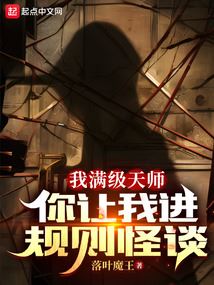
I’m a Max-Level Taoist Master, and You’re Throwing Me Into a Rules-Based Horror Game?!
+Add to Custom List
Novel Info

Summary

... Read More

Zhang Yangqing had transmigrated to a modern world two years prior, where he joined Longhu Mountain as a junior Taoist priest and awakened an unparalleled gift for enlightenment. He rose through the ranks, inherited the title of Heavenly Master from his predecessor, and ascended to the heavens shortly after. That same night, a crimson moon appeared and the Rule-Based Mystery Game descended upon the world. Nations select Chosen Ones to enter supernatural scenarios; success brings rewards while failure allows horrors to invade reality. After nine consecutive failures, the Dragon Nation stands on the brink of annihilation, and Zhang Yangqing is selected as the tenth Chosen One.

He awakens in the security room of The Midnight Wax Museum, a two-star difficulty scenario. Dressed as a security guard, he discovers the Survival Rules: the museum closes at midnight, he must patrol every two hours without looking into wax figures' eyes, report mismatched figures, and never damage them. While other Chosen Ones worldwide tremble and hide, Zhang Yangqing remains eerily calm, treating the scenario as mere entertainment. He leaves the security room ten minutes early, shocking the Dragon Nation's audience, and begins his first patrol.

During the patrol, Zhang Yangqing confronts the core contradiction of the rules: verifying wax figures requires seeing their faces, but Rule 3 forbids looking into their eyes. When a wax figure disguised as a horror locks eyes with him, instead of panicking, Zhang Yangqing crushes it with a baton. This act of violence against the supernatural shocks the world, but because the entity was not a genuine wax figure, he incurs no penalty. The security room reappears, confirming his survival.

After receiving new rules instructing him to rest until 8:00 AM, Zhang Yangqing explores the exhibition hall. He encounters a kowtowing wax figure, a mischievous supernatural child, and a muscular Fierce Ghost. While other Chosen Ones try to appease these entities or solve puzzles through careful effort, Zhang Yangqing uses brute force and intimidation. He defeats the Fierce Ghost with a single punch, kills the child alongside its mother to eliminate future threats, and forces a trapped wax figure to retrieve its own eyeball.

The story establishes Zhang Yangqing as an overwhelmingly powerful protagonist who weaponizes the rules through sheer capability rather than fear. His unconventional methods—violence, intimidation, and immediate execution of threats—contrast sharply with the cautious strategies of other nations' Chosen Ones. As the Dragon Nation watches in disbelief, their despair turns to hope, with expert analyst Hu Liuqi recognizing Zhang Yangqing as the perfect conqueror for this lethal game.

Latest Release
DateGroupRelease
2026-10-01melreads c326
2026-10-01melreads c325
2026-10-01melreads c324
2026-10-01melreads c323
2026-10-01melreads c322
2026-10-01melreads c321
2026-10-01melreads c320
2026-10-01melreads c319
2026-10-01melreads c318
2026-10-01melreads c317
2026-10-01melreads c316
2026-10-01melreads c315

Community Reviews

Rating(4.1 / 5.0, 40votes)
5 stars
15(38%)
4 stars
12(30%)
3 stars
13(33%)
2 stars
0(0%)
1 stars
0(0%)

Popular reviews

... Read More
I need to talk about something that genuinely disturbed me about this section—not the ghosts or the wax figures, but the complete absence of emotional warmth between characters. And I mean that in the most fascinating way possible. Zhang Yangqing invites the delivery men to 'eat with me.' The line is almost polite, almost warm—and then he watches them turn into evidence. There's no malice in his execution, no glee. Just cold calculation. And somehow, that's infinitely more chilling than if he'd cackled maniacally. The text describes his face as 'eerily calm—like a Yama King indifferent to mortal lives.' I keep thinking about that image. An immortal judge of the dead, watching humans scramble and transform with nothing but detached observation. Then there's John, whose final moments are defined by regret. Not fear—regret. He regrets not killing the wax figure when he had the chance. The moment he realizes his mercy was fatal, you can almost see the light go out behind his eyes. It's devastating in its simplicity. And Rahman, quietly packing away the poisoned steak like it's gold dust—'This might be useful later.' The man is already thinking ten steps ahead, hoarding danger like a dragon hoards treasure. Not because he's evil, but because he understands something the others haven't: in this world, nothing is waste, and nothing is safe. The delivery men, though—they're the emotional heartbeat of this scene, aren't they? Two hungry guys who trusted a stranger's offer of food. They represent everything this story is stripping away: innocence, trust, the assumption that the world is fundamentally fair. When Delivery Man B collapses, it's not dramatic. It's grotesque, slow, and horrifyingly ordinary. I caught myself wishing, weirdly, that Zhang would show some remorse. Some crack in the armor. But he doesn't. And honestly? That makes him more compelling than any heroic protagonist ever could be.
... Read More
"All fear stems from insufficient firepower. When you have enough firepower at your disposal, it's the supernatural that should fear you." — Zhang Yangqing, probably. This line isn't just a cool quote for merchandise. It's the philosophical core of the entire story and it ties into something much deeper about the nature of power and fear. Think about it — the whole premise of the Rule-Based Mystery World is built on fear. Ordinary people are thrust into life-or-death situations where one wrong move means death or worse, horrors manifest in their cities. The entire system is designed to exploit human fear. And Zhang Yangqing's response is essentially: what if you're so powerful that fear becomes irrelevant? There's this beautiful symbolism in the wax figures themselves. They represent frozen moments, lifeless replicas of human forms. The rules forbid looking into their eyes — eyes being the window to the soul, to connection, to fear itself. By refusing to engage with what they represent, the participants maintain their humanity. But Zhang Yangqing stares directly into those eyes with his flashlight, completely unafraid. He refuses to play by the fear-based rules because he operates on an entirely different paradigm. The broader theme of the Dragon Nation's nine failures versus other nations' relative success is also worth noting. There's this commentary on national pride, despair, and the weight of expectation. "Is There Any Hope Left for the Dragon Nation?" becomes more than a trending topic — it's a question about collective resilience. The traitors fleeing, the loyalists standing firm, the bitter debates about who deserves to be chosen... it mirrors real-world anxieties about national destiny and individual worth. And then there's Hu Liuqi, the tomb raider's son among the polished experts. His unconventional background gives him instincts that formal training can't teach. It's a subtle but powerful commentary on who really earns survival — not the credentials, but the adaptability.
... Read More
Okay so let me just say this — the 4:30 PM countdown sequence had me absolutely glued. The author drops this information like a bomb: a freezing wax figure comes down every day at 4:30, turns regular wax figures into special ones, and kills anything alive it sees. Then gives you a thirty-minute window to hide, survive, and sabotage Room 3-2. That's not just a plot device, that's a full-on execution. Every second counts. And what I loved most was how the rules kept layering on top of each other. First you think the storage room has the antidote. Then you realize there IS no antidote — survival is pure strategy. Then the wax disguise gear appears and suddenly it's not about being fast, it's about being smart. Rahman pieces together that wax figures only target the living because he actually TESTED his theory instead of just guessing. "Wax figures only targeted the living. They wanted something from humans—maybe meat." Simple logic but it changes everything. The secondary threads were equally sharp though. That note from the locked-up employee ghost? "Someone framed me—I ate something I shouldn't have and turned into… this." Suddenly the whole museum has history, backstory, layers. And Room 3-7 with the crimson dagger — marked DANGER but also the only possible permanent kill option. The author is playing 4D chess with plot threads and I'm just sitting here trying to keep up.
... Read More
I need to talk about this staircase scene because WOW. The author describes over a hundred cursed wax figures surrounding Zhang Yangqing and the goblin, and the visual imagery is absolutely cinematic. These aren't generic monsters—they're specific horror icons. The masked slasher from horror films. The hooded Reaper with a scythe. Jason, the drowned killer, water dripping from rotting clothes. The grinning clown with blood-stained teeth. A stench-ridden zombie in tattered robes. A two-headed ghoul with limbs twisted at unnatural angles. They stand in a wall of darkness, forms wreathed in black mist. And then Zhang Yangqing raises one hand and violet lightning ERUPTS. The thunderous roar drowns out everything. In less than a second, the entire army is reduced to ash. The contrast between the dark, gothic horror aesthetic of the wax figures and the clean, divine violence of the lightning strike is Chef's kiss. It's like watching a horror movie get interrupted by a theologian. But the worldbuilding details scattered throughout this section are what really sell it. The wax museum's temperature control system shutting down at exactly 6:30 AM—that's the kind of specific, mechanical detail that makes a fictional setting feel real. The wax armor mechanics (freezing powers for the frost wraith, near-indestructible toughness for the goblin). The access card system for the staff lounge cabinet. The cryo-pods in Room 3-2 that contain frozen specters acting as deterrents. The living statue wraith that patrols and has seen the shattered statues—proof of Zhang Yangqing's power already circulating through the dungeon's ecosystem before he even arrives. The rule that the wax figures won't attack the half-wax goblin but target only Zhang Yangqing. These are the kinds of consistent, internal logic details that make a supernatural setting feel like it actually operates by rules. And the global reaction shots—viewers from other countries sweating over their own challengers while Dragon Country audiences snack on melon seeds—that's worldbuilding on a macro scale. This isn't just one dungeon; it's a competitive global phenomenon with national stakes, expert panels, live commentary, and international forums going absolutely feral. "Lightning from his hands. What can't he do?" —said every Dragon Country viewer simultaneously.
... Read More
Okay so Zhang Yangqing kills the Fierce Ghost AND the ghost kid without missing a beat. The audience was all like 'wait, is this moral?' and he just goes 'I'll send them to reunite in the afterlife, problem solved.' Bro really just gaslit himself into being a saint. But honestly? That's the whole point of Rule-Based Mysteries. There's no room for mercy when the alternative is dying. He figures out the reward system almost immediately—sees that Zone C has covered figures and Zone D has junk, so he bypasses the busywork entirely. Meanwhile everyone else is sweating over glass cabinets like it's the hardest puzzle ever. Two hundred Chosen Ones down to twenty-three? Insane casualty rate but it really drives home how brutal these scenarios are. The delivery arrival at the end sets up the next phase perfectly though—new locations unlocked, tension escalating. I love how the plot keeps stacking rules on top of each other instead of just throwing bigger monsters at you.
... Read More
Can we just take a moment to appreciate the pacing architecture in these chapters? Because the way tension builds and releases is genuinely masterful. Let's start with the opening of the exhibition room sequence. We get the rules established quickly—Rule 2 about being the only one there, Rule 4 about wax figures not moving. Then IMMEDIATELY after, we see figures moving anyway. Boom. Hook. You're already invested. From there, the chapter structure operates on this brilliant principle of escalation through parallel contrast. We cut between different chosen ones handling the same situation in wildly different ways. Some kowtow aggressively, some detour, and then BAM—we switch to Dragon Country's stream and Zhang Yangqing crushes a figure underfoot. The pacing here is like a drumroll building to a crescendo, and when we finally see his version, it hits like a thunderclap. The transition into Area D with the little boy appearing is another pacing masterpiece. After the intense action of the first room, we get this deceptive calm—the boy seems almost harmless, asking to play. But the author plants this ominous foreshadowing with the line about three special creatures: the kind-faced elderly, the playful innocent children, and the elusive black cats. 'Encountering any of these three required extreme caution.' You read that and your pulse goes up even though nothing scary has happened yet. Then the timing of when the boy vanishes, when five screens turn black, when the woman in high heels arrives—it's all calibrated perfectly. The reader thinks they know where we're heading, and then the author subverts it again. The cabinet-shuffling sequence drags intentionally, making you feel the exhaustion and tension, until THAT SOUND. Click. Click. Click. High heels. And suddenly every viewer stopped breathing. The pacing doesn't just build tension—it uses silence and stillness as weapons too. When Zhang Yangqing yawns while dodging the Fierce Ghost's attacks, that moment of casual boredom after all that buildup? Perfect comedic relief that actually heightens the awe rather than deflating it.
See all reviews

Custom lists

See all custom Lists