I’m a Human Loved by Non-Humans - Reviews

I’m a Human Loved by Non-Humans
+Add to Custom List
Sort
Add review
... Read More
I need to sit with this for a second because I think the author is doing something really clever with the Carine herb and the mating season concept. On the surface it's just a plot device—a magical mix-up that forces two characters together. But dig deeper and it's about consent, trust, and the danger of Good Intentions. Haniel's potion was made to heal. To help. She gives it to the wounded wolf without any agenda beyond compassion. And yet it completely upends her life. That's... honestly a really mature thematic choice. The story isn't saying kindness is bad—it's saying that kindness in an unfamiliar world carries consequences you can't predict. She thought she was saving a creature. Instead she awakened something she couldn't control. Then there's the mate-for-life symbolism. Regan's species only mates once. This isn't casual biology—it's cosmic-level commitment encoded into their nature. When he says 'we become one in body as we are in soul,' the author is building this entire philosophy around connection. And yet here they are, meeting under the worst possible circumstances. A bond that was always meant to be sacred is happening through confusion, heat, and suspicion. I also can't ignore the wolf imagery. The transformation from beast to man—Black's blue eyes following her as she leaves, his throat growling—noticing her absence. The animal form was honest about its feelings even when the human form can't be. There's something deeply poetic about a wolf showing more emotional transparency than a man can in his rational state. The whole thing made me think about how often real life mirrors this: smallest acts of kindness leading to the most life-changing complications.
... Read More
There's a moment in this text where Regan looks at Haniel and says 'I'm sorry' and I literally had to put the book down. Not because it was sad. Not because it was dramatic. But because it was SO MUCH. So compressed, so loaded, so devastatingly tender. He just learned that she's the last human in this entire world. That everyone she ever knew is gone. That she's been alone for two years, talking to plants and status windows and animals because there's literally no one else. And instead of making it a big emotional scene with tears and hugs, he just... looks at her. And says four words. 'I'm sorry.' Not 'that's terrible.' Not 'I can't believe that happened.' Just a quiet acknowledgment of her pain that comes from somewhere deep. And the narrative tells us that HER pain made HIS heart ache. She smiled at him -- that hollow, practiced smile that people wear when they're trying not to burden others with their sadness -- and it broke something in him. This is the kind of emotional writing that stays with you. The author doesn't tell us 'Regan felt sad for Haniel.' They show us through physical detail: his eyes rippling with blue light, his voice going husky, the way he reads the 'shadow of loss and loneliness deeply permeated behind that innocent smile.' He SEES her. Not the cute girl who healed him, not the potential fairy, not the specimen -- HIM. The actual human being underneath. And then Haniel's own moment, which is even quieter: when she realizes he understands Korean. When she thinks 'I'm not alone anymore!' and her heart swells with hope. Two years of isolation and this single revelation -- that someone, SOMEONE, can actually communicate with her -- is almost too much. She has to clear her throat and change the subject because the emotion is too big to sit with. The romantic tension is there, absolutely. The mating season subplot creates this undercurrent of physical desire that's constantly humming. But what makes this emotionally resonant isn't the sexuality -- it's the Loneliness. These two creatures who have been alone their entire lives have collided, and the collision is messy and awkward and sometimes violent, but underneath all of it is this desperate, aching recognition: You are not alone anymore. I am here. And that is worth more than any romance trope could ever be.
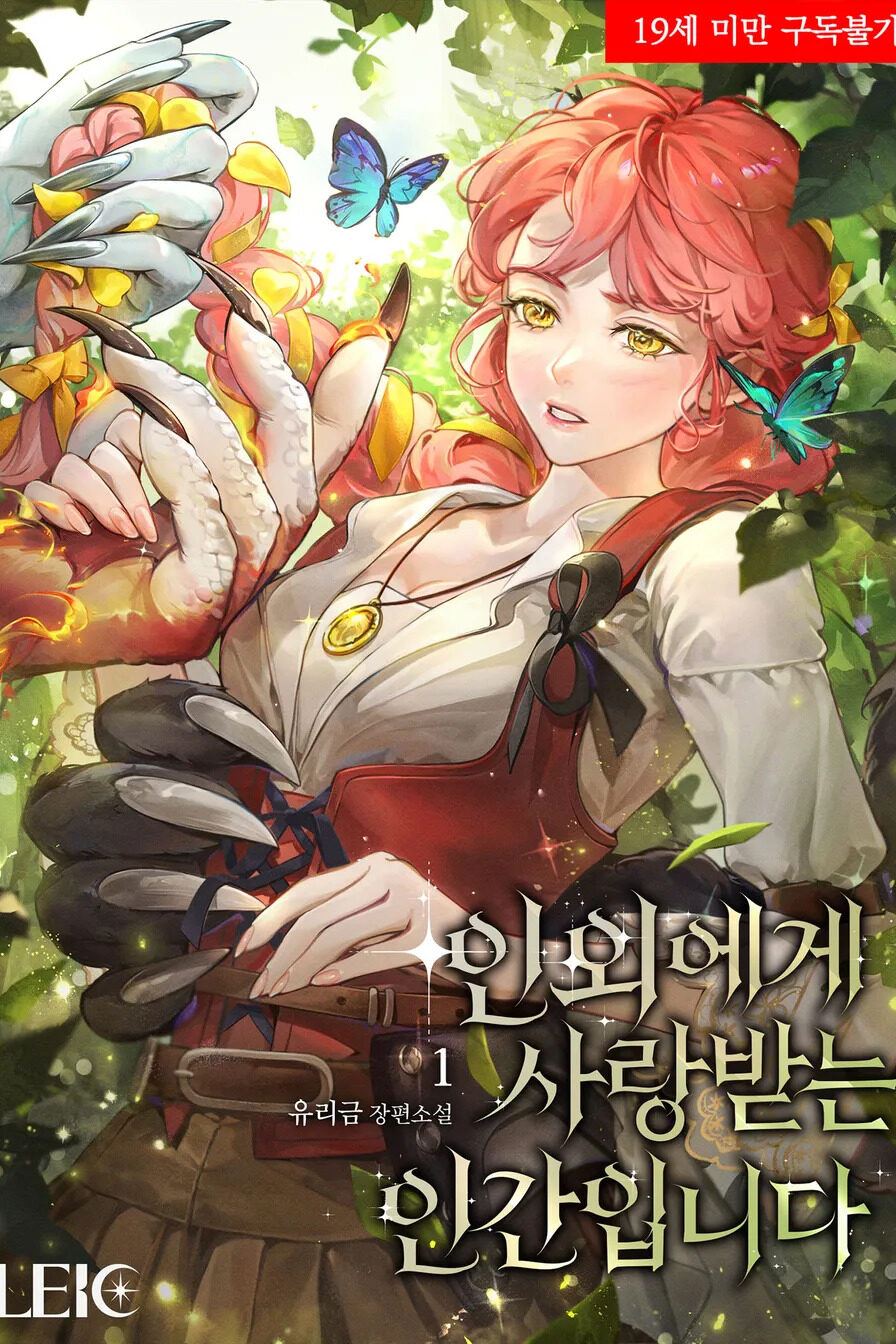
... Read More
Can we appreciate how Haniel talks to the status window? It's like she's arguing with a toddler. 'Yes, I see you there, so please stop flashing.' The system responds by flashing MORE. And then she's straight-up yelling at it: 'What do you think I am? You're just a love-deprived hikikomori anyway, so go ahead and have all the s*x you want.' This is peak comedy. Her voice is so distinct— she's cynical, frustrated, self-aware, and completely unbothered about looking crazy. The system even seems flustered by her at one point. The back-and-forth between them feels like a roommate situation where one roommate is a literal game interface and the other is done with everybody's nonsense. Also the line 'Good status window. Nice status window.' at the end while she's watering crops?chef's kiss.
... Read More
Let's talk about the narrative voice here because it's genuinely distinctive. The status window isn't just a UI device—it's a character. 'Ding! Ding! Ding! Ding! Ding!' It pops out with sounds like it's excited, almost giddy, and the text formatting itself conveys mood. That '...' that seems 'dejected'? That's the interface having personality. The author has created something genuinely original here. Haniel's internal voice is equally sharp and funny. Her exchanges with the system feel natural because they're written like actual thoughts—not polished monologues but frantic, interrupted, contradictory mental speech. 'No, wait. I didn't mean to select it, I just wanted to look around!' followed by the system interpreting her curiosity as commitment. The comedic timing is impeccable. And her dialogue with the world—talking to plants, to fish, to nothing—reveals a mind that hasn't gone entirely feral despite two years of solitude. She says 'I'm sorry... I just wanted some smoked salmon' to a fish. She's still doing the polite thing. That's not worldbuilding; that's character revelation through the smallest details. The humor is dark but never mean-spirited. Even the wooden dildo mention is written with such casual honesty that it becomes funny rather than sad. The author trusts the reader to understand the emotional weight without spelling it out.

Leave a comment

You must be logged in to leave comments. or
