I'll Stop Now, Duke
+Add to Custom List
Genres:
Novel Info
  • Author:
  • Status:Ongoing

Summary

... Read More
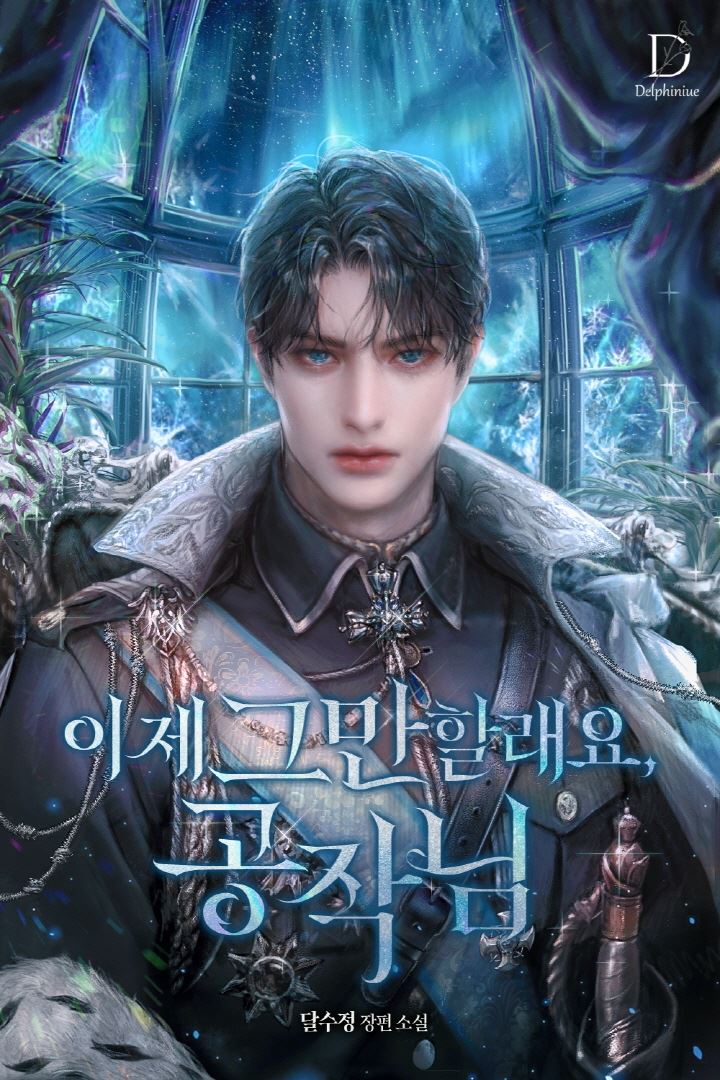
Elaine Edenber, a baron's daughter from the southern Bestia Empire, has been engaged to Duke Blake Reynard for three and a half years, though the union is purely nominal. Blake, a cold and distant man with jet-black hair and sapphire blue eyes, views the engagement as a means to repel persistent noble suitors rather than a genuine commitment. Elaine, who fell in love with him at first sight during a childhood funeral, endures years of emotional neglect, hoping her status as his fiancée will eventually earn her a place in his heart. Her family’s financial decline under her stepmother’s extravagance has made the duke’s support essential for survival, yet Blake treats her affairs with dismissive hostility.On a sweltering summer day, Elaine collapses from what appears to be heatstroke, only to be diagnosed with Libitina Disease—a terminal illness where the body gradually stiffens until the heart stops. The disease manifests four years after exposure to Libitina viper venom, which causes a three-day coma upon initial ingestion. The only known antidote is a secret technique guarded by the House of Sigmund, Blake’s hereditary enemies in the far north. As the Libitina mark on her arm fades, Elaine realizes she has less than a year to live. Desperate, she seeks Blake’s help, believing that as her betrothed, he cannot abandon her to die.Blake, however, interprets her medical report as another fabrication or manipulative act, refusing to believe her condition. His aide, Velocien, escorts Elaine out of the office, dismissing her pleas. Elaine later discovers that her loyal maid, Becky, has been conspiring with Blake, sharing intimate conversations and adopting Elaine’s clothing and jewelry—items of deep sentimental value. The revelation that Becky once took scalding tea meant for Elaine conflicts with her recent betrayal, leaving Elaine uncertain whom to trust. Seeking confirmation, Elaine visits a demoted physician who verifies the poisoning, reinforcing that her prognosis is irreversible. She meets with her childhood friend, Theodore Merven, who offers emotional support but no medical solution. During this meeting, Elaine witnesses Blake and Becky walking together affectionately, further deepening her sense of isolation. That evening, her stepmother arrives demanding mining rights for En First, which Blake reluctantly grants, highlighting the financial exploitation Elaine’s family has endured. When Elaine confronts the situation, Blake rebukes her for interfering, causing her to flee in humiliation.The narrative shifts between Elaine’s perspective and Blake’s internal monologue, revealing his own complexities. Blake initially proposed the engagement to avoid unwanted attention, believing Elaine’s confession was a desperate act rather than genuine affection. He harbors his own fears—terrified of abandonment and convinced Elaine does not love him—yet remains bound to her by duty and a fragile hope that marriage might foster real connection. His resentment toward Theodore’s closeness with Elaine and his reliance on Becky as an informant underscore his emotional entanglement.As Elaine prepares for a banquet, she resolves to find a way to survive despite her impending death. She plans to use the final months of her life to reclaim her dignity and assist Becky in securing a better future before sending her away. Meanwhile, Blake continues to navigate political alliances, including a meeting with Marquis Arienka, whose loyalty is crucial to his ducal authority. Elaine’s struggle against her fate and Blake’s struggle against his emotional barriers form the core tension, leaving their eventual reconciliation uncertain amid betrayal, illness, and the rigid structures of noble society.

Latest Release
DateGroupRelease
2026-10-03dusk blossoms c37
2026-10-03dusk blossoms c36
2026-10-03dusk blossoms c35
2026-10-03dusk blossoms c34
2026-10-03dusk blossoms c33
2026-10-03dusk blossoms c32
2026-10-03dusk blossoms c31
2026-10-03dusk blossoms c30
2026-10-03dusk blossoms c29
2026-10-03dusk blossoms c28
2026-10-03dusk blossoms c27
2026-10-03dusk blossoms c26

Community Reviews

Rating(0 / 5.0, 28votes)
5 stars
0(0%)
4 stars
0(0%)
3 stars
0(0%)
2 stars
0(0%)
1 stars
0(0%)

Popular reviews

... Read More
This book has an incredible eye for atmosphere and I need to talk about the marquis's garden scene because it is CINEMATIC. The wind making all the tulips sway in unison—bowing in one direction before slowly rising back. That image stays with you. It's almost choreographed, like the flowers themselves are holding their breath, waiting for something to happen. And right there, under a cherry tree heavy with summer green, Becky is sobbing alone. The visual contrast is devastating: the garden is beautiful, the moonlight is gentle, and yet someone is breaking down at the edges of it all. Then you have the tea party setup, which is this masterclass in showing wealth through absurdity. The gardener memorizing the exact flower preferences of the old duchess's notoriously difficult followers. Florists working overtime because one wrong arrangement could cost them. They can make TWO MONTHS' WAGES in a single day and still never get reprimanded directly because someone else takes the blame. This is a world where appearances aren't just important—they're a weapon. Every petal placed correctly is a political statement. The ducal estate itself feels alive with tension. The marble floors, the candlelight, the hairpin ritual where Lady Reynard watches Elaine comply with every petty demand. Elaine pressing her hand to her throbbing head while getting dressed—that's not just physical pain, that's the weight of performing propriety while your world is crumbling. The line about the world fading to gray, the ticking merging with her heartbeat into chaos—this is sensory writing at its finest. You don't just read the scene, you FEEL the headache, the pressure, the suffocation of a space that should be welcoming but is instead a battleground.
... Read More
Okay so let me just say this upfront because I'm still vibrating: the way Theodore shields Elaine from the sunlight in that plaza scene is one of the most quietly devastating moments I've read in ages. He literally stands between her and the world, hand raised like a canopy, and what's wild is that she doesn't even realize it's protection until after the fact. That's their entire dynamic in a nutshell—his care is always there, always visible in hindsight, but never announced. And then Blake shows up with Becky and that headband—wait, let me not get ahead of myself. But the contrast is glacial. Blake caught Becky when she stumbled, and Elaine watched it happen like someone pouring ice water down her spine. Her nails dug into her palm until it hurt. She didn't even register she was doing it. That's not jealousy—that's grief. She's mourning a relationship that still technically exists. Theo asking "what would you do if I died?" and then immediately covering it with a joke... that man is walking a tightrope and he knows it. Every word out of his mouth is calibrated. And Elaine, bless her, is so wrapped up in her own survival crisis (poisoned by a Libitina snake, allegedly) that she can't fully process the emotional landmine she's sitting on. The Becky headband reveal at the end? Chef's kiss. That wasn't accidental. A servant wearing her engagement headband? That's not theft, that's a statement. Someone is rewriting Elaine's narrative from the inside.
... Read More
Let me just say it straight: the stakes in this novel are NOT subtle and I am absolutely obsessed with how the author layers them. On the surface, it's a romance about an engagement. But peel back one layer and it's a poison story—Elaine is slowly dying from Libitina venom and nobody she trusts is helping her. Peel back another layer and it's a political survival story where the aristocracy treats her like dirt. And beneath ALL of that is the most painful layer: she's falling for someone who may or may not be betraying her, while people who genuinely care about her are circling around her in ways she's too blinded to see. Lady Reynard's tea party scene is peak antagonist energy. "That smile of yours is vulgar. Like a beggar's." This woman isn't just disliking Elaine—she's actively trying to BREAK her psychologically. She wants Elaine to self-destruct, to beg Blake to end the engagement, so the old duchess never has to dirty her own hands. That is calculated, patient cruelty. And Elaine KNOWS this. "She wanted me to be the one to ask Blake to break off the engagement." She sees the trap clearly. But she also knows that if she shows weakness—if she cries, if she withdraws—it will only confirm everything Lady Reynard believes about her. So she smiles. She says "I apologize." She plays the game even while the world fades to gray around her. The physical stakes are equally real. The physician who was supposed to examine her never comes. Becky is missing. Andrea is gone. Elaine is alone in a mansion full of enemies, slowly poisoning from the inside, pretending everything is fine while her head pounds like a countdown clock. Tick. Tick. Tick. How much longer can she hold this together before something breaks?
... Read More
Okay so I need to sit down because this entire arc is just... what even happened here? Let me trace the threads. She overhears Becky and Blake in that compromising position, and immediately her whole world tilts. She *planned* to marry Becky off and send her away, right? Because she sensed the romantic tension and wanted to protect herself. But then Blake agrees so readily to dance with Becky, which makes her think—wait, if I kick Becky out carelessly, won't Blake drive ME out instead? That is such a painfully astute observation from someone who supposedly thought she was secure in this engagement. Then the plot pivots hard. The servants start ghosting her. Not ignoring, not being cold—actively fleeing. She's isolated in her own estate. And Becky, the person she trusted most during the worst poverty, the one who stayed when everyone else abandoned her, becomes a stranger. The door-slamming incident? brutal. Becky slams it on her wrist and she's left trembling on the floor. But the bombshell comes when Becky finally cracks: Blake intends to cast her out. After four years of engagement, he gets full ducal authority. And here's where it gets dark—Becky suggests the Libitina poison three and a half years ago wasn't an accident but Blake's doing. A calculated move to keep her dependent, to force the four-year clock to run. If she dies, the blame shifts to House Sigmund and Blake gains everything. It's a rational solution, Becky argues. But the protagonist refuses to believe it. Or refuses to want to. Either way, she rides out to confront him at the private residence, riding Blake's own horse, into the unknown. The trust vs. evidence dilemma is killing her, and I am HERE for it.
... Read More
You know what hit me in the feels right here? The freesia moment. Elaine tucks the flower into Theo's jacket pocket and he asks "Does it suit me?" and she says "Yeah. You look like a fairy." Just... casually dropping compliments like that. And then she notices that her own scent preference has changed—she used to HATE freesia, and now she doesn't dislike it anymore. NOT ANYMORE. That's such a small detail but it's doing SO MUCH WORK. Something about her has shifted, even if she hasn't fully admitted it to herself yet. And then we CUT to Becky crying under a cherry tree. Just curled up, knees to her chest, THAT pearl ribbon Elaine tied for her still in her hair, black gloves still on. Elaine finds her and Becky runs. Of course she runs. Because some things are too painful to witness and too shameful to share. The jealousy thread with Blake and Becky is simmering under everything. Elaine keeps telling herself she shouldn't doubt them but the suspicion won't leave. "Was it because of the tenderness Blake had shown her?" She FEELS it in her gut. Not paranoia—observation. And then the crushing realization that she feels pathetic for feeling that way at all. Like her emotions are a burden even to herself. I keep coming back to that exchange where Theo says he'll kill whoever is targeting Elaine. Those golden eyes going dark under moonlight. He means it. But the tragedy is that Elaine is facing most of this ALONE. Blake doesn't know about the poison. Theo doesn't know about Blake's growing distance. Andrea is gone. Becky is missing. Elaine is standing in the middle of all of this, smiling for Lady Reynard, hiding her pain, protecting everyone except herself.
... Read More
Underneath all the social maneuvering and romantic tension, this passage is fundamentally about the commodification of women and the illusion of choice. The protagonist's entire existence is framed as transaction. She's a baron's daughter with mortgaged land. Her stepmother siphoned money from Blake. She became engaged three and a half years ago and is still waiting. The old duchess explicitly reduces her to: she's not noble enough, she's from a declining house, she's somehow tainted. Every social interaction reinforces that her value is calculated, measured, and found wanting. And then Arienka drops the bomb about the will—the four-year engagement requirement. This is the ultimate expression of the theme: her presence in Blake's life isn't based on love or compatibility or even mutual respect. It's a legal clause. She exists as a contractual obligation. The same system that mocks her for being poor is the system that requires her to stay. She's trapped not by personal malice but by institutional design. The aurora painting on the wall operates as a symbol for everything she can't reach—freedom, beauty, a world beyond these gilded constraints. She's seen it only in books. The northern duchy remains theoretical. Even her desire for invisibility (the dark dress) is itself a form of survival strategy imposed by a world that punishes her for existing. And Blake? He's trapped too. His resistance—banning the tea party guests, defying his grandmother—shows he sees the cage. But he's still holding her wrist too tightly. He's part of the structure even as he fights it. The question the text leaves us with isn't whether she'll escape, but whether anyone in this world can truly be free when love itself has been legislated.
See all reviews

Custom lists

See all custom Lists