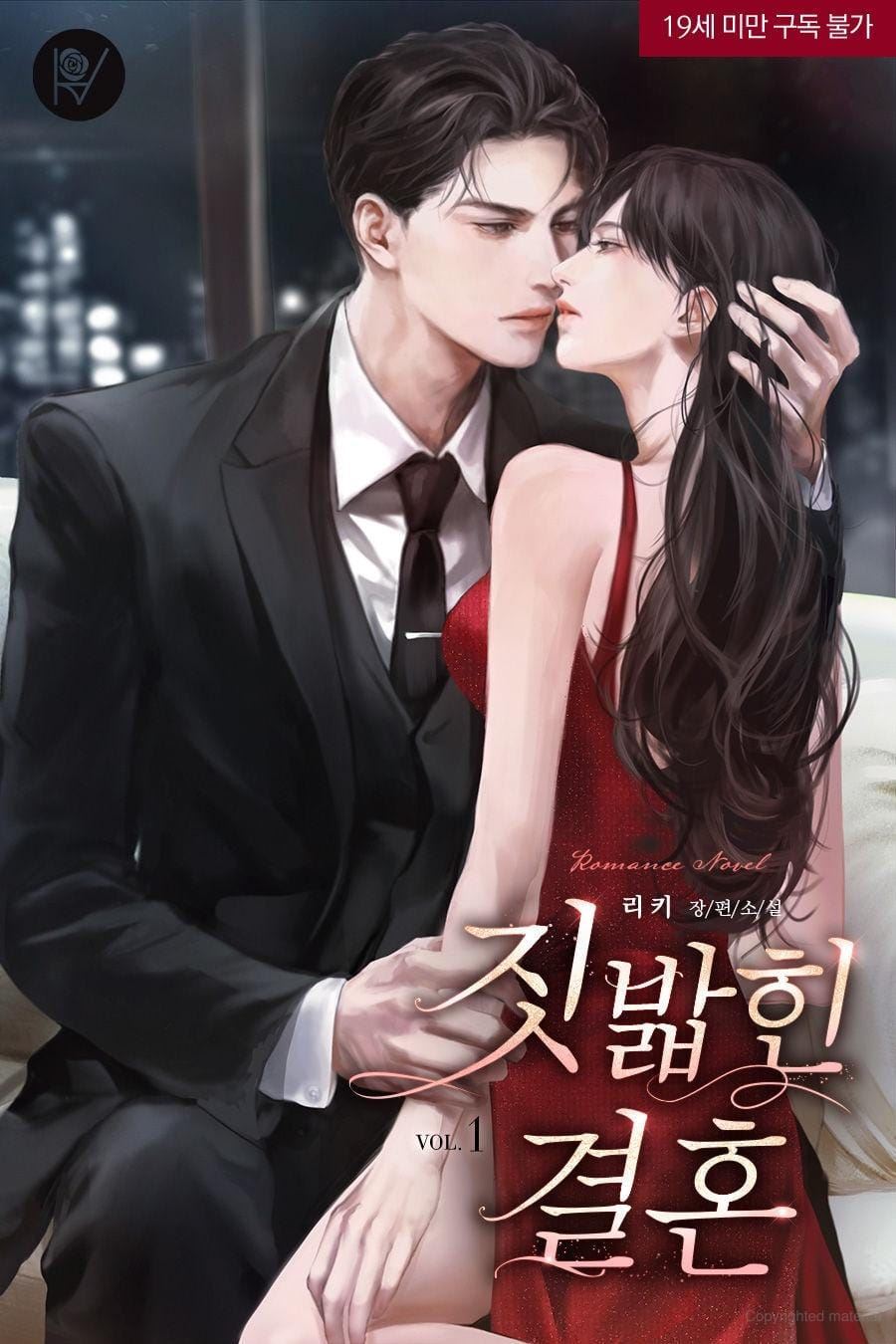
I'll Repay This Humiliation In My Dreams, Duke!
Novel Info
  • Author:
  • Status:Ongoing

Summary

... Read More

Neria Warwick is the youngest daughter of Earl Warwick, a minor noble family that acquired its title through questionable means and is desperate to maintain its social standing. Having watched her siblings marry into more powerful houses, Neria remains an unwanted burden in her father’s eyes. The family announces that she has been selected for a marriage interview with Duke Aaron Denicar, the King’s youngest brother and the feared Protector of the North. Neria harbors immediate resentment toward the Duke, who had previously humiliated her at a royal event by coldly dismissing her family’s ambition. Seeking revenge for his public insolence, Neria prepares for the meeting with a mix of dread and malicious intent.

The meeting takes place at the Neidof Hotel. Unbeknownst to Neria, she overhears Duke Aaron speaking to his aide, Dagon, in the adjacent powder room. Aaron dismisses noble women as vain and predictable, expressing his intention to ruin this interview just as he has ruined all others to avoid marriage. When Neria confronts him about his comments, Aaron responds with further barbs, calling her emotional and weak. Enraged by his arrogance, Neria insults him back, leading to a heated exchange that ends with the Duke leaving her in disgrace. Humiliated and furious, Neria storms out of the hotel, vowing to make Aaron regret his behavior.

That night, Neria experiences a vivid and perverse dream in which she finds the Duke bound and blindfolded on a massage table. Embodying the role of a vengeful sorceress, she torments him sexually, treating him as an object of her pleasure. The dream is incredibly realistic, leaving Neria satisfied upon waking. Simultaneously, Aaron suffers from the same nightmare, though from his perspective, he is being assaulted by a mysterious, faceless witch who mocks his inability to move or speak. He wakes in a cold sweat, deeply disturbed by the intensity of the dream and his own physical response to it.

In the days that follow, Aaron is haunted by recurring dreams of the witch. During one such dream, which manifests during his graduation speech at the military academy, the witch exposes him to the cadets and forces him into sexual submission. Aaron realizes this is no ordinary dream but the work of a legendary witch who vanished two hundred years ago. Terrified that his emotional and sexual purity is being stripped away, he resorts to self-flagellation in a temple prayer room to purge the corruption, but the physical pain only drives away the lust momentarily. He discovers that the witch is feeding on his repressed desires, and the more he fights the dreams, the more intense they become.

The conflict escalates as both characters begin to recognize the signs of their shared nocturnal torment. Aaron, unable to confess his plight to anyone without losing his dignity, becomes increasingly paranoid and obsessed with identifying the witch. Meanwhile, Neria finds herself unable to stop thinking about the Duke, her hatred mingling with a strange, confusing attraction sparked by the dreams. The story moves toward a confrontation where the magical bond between them forces them to acknowledge their connection. Aaron must now navigate the dangerous game of catching the witch before she completely breaks his will, while Neria must decide whether her revenge is worth the growing intimacy that transcends their waking hostility.

As the dreams continue, the power dynamic between them shifts. Aaron begins to anticipate the witch’s moves, attempting to reclaim agency within the dream world. Neria, conversely, finds her vengeance turning into a twisted form of courtship. The narrative explores the psychological impact of their secret encounters, with Aaron struggling against his own body's betrayal and Neria grappling with the realization that her target is not the cold monster she imagined. The tension builds as they prepare for another meeting in the waking world, where the pretense of hatred must coexist with the undeniable truth of their shared desires. The story sets the stage for a complex relationship where enemies are bound by magic and mutual obsession, forcing both to confront their deepest insecurities and hidden cravings.

The climax approaches as the witch’s identity becomes clearer to Aaron, who deduces that the brown-haired woman is likely Neria. He decides to test this theory by altering his behavior during their next encounter. Neria, noticing a change in the Duke’s demeanor during their real-life meetings, becomes suspicious of his intentions. The line between dream and reality blurs as they engage in a cat-and-mouse game, each trying to outmaneuver the other while secretly craving the connection they deny in the daylight. The narrative concludes with both characters acknowledging that their rivalry has evolved into something far more dangerous and intimate, setting the path for a romance built on conflict, magic, and reluctant acceptance of their fate.

Latest Release
DateGroupRelease
2026-10-03dusk blossoms c26
2026-10-03dusk blossoms c25
2026-10-03dusk blossoms c24
2026-10-03dusk blossoms c23
2026-10-03dusk blossoms c22
2026-10-03dusk blossoms c21
2026-10-03dusk blossoms c20
2026-10-03dusk blossoms c19
2026-10-03dusk blossoms c18
2026-10-03dusk blossoms c17
2026-10-03dusk blossoms c16
2026-10-03dusk blossoms c15

Community Reviews

Rating(0 / 5.0, 34votes)
5 stars
0(0%)
4 stars
0(0%)
3 stars
0(0%)
2 stars
0(0%)
1 stars
0(0%)

Popular reviews

... Read More
I have to talk about the imagery in this text because it's genuinely stunning. Let me paint you a picture: black-haired man, blindfolded, lying on a massage table, a single towel covering him, scars across his broad chest, marble-like skin, pink nipples. That's not just description — that's composition. The author is thinking like a painter here. Light and shadow, texture, the contrast between violence (scars) and softness (smooth torso). And the room itself — empty, private, hers. A space where the rules don't apply. That's important worldbuilding. This isn't the royal court or a ballroom where Neria has to navigate social hierarchy. This is a dreamscape, and dreams don't care about dukes and commoners. The massage oil jar on the bedside table is such a small, domestic detail that grounds the whole fantasy in physical reality. But the real worldbuilding win is how seamlessly the text treats the supernatural as normal. She has erotic dreams about the Guardian of the North appearing bound on a massage table and her first thought is "Wow, is my subconscious insane?" not "How is this possible?" The dream logic is accepted instantly. This tells me the world operates with magical or fantastical rules that we'll learn more about — maybe dream-sharing is a thing, maybe the subconscious can manifest physical sensations, maybe there's something deeper happening between Neria and Aaron that transcends waking reality. The pomegranate myth tangent is another layer. Neria references underworld mythology casually, as if she's well-read in forbidden or obscure texts. This suggests a world where ancient myths have real weight, where boundaries between realms might be porous. I'm invested.
... Read More
I need to sit with Neria's temple scene for a bit because it hit me harder than I expected. On the surface it's just — she goes to pray, gets distracted, falls asleep, meets the duke — but underneath it's one of the most vulnerable moments Neria has had in this entire story and the author wraps it in religious imagery like it's nothing. First she jokes about her lust being a sin that pools in her by accident, like it's not even hers, and I love that deflection because it's SO her. She can admit she's weird but she won't admit she's hurting. Until she does. She looks at the statue and just says it: my father treats marriage like business, I fall short, I feel empty. And then the line that absolutely wrecked me — "there isn't a single person who can see me as myself." That's not a romantic line, that's a human line. It's so much bigger than "I want a boyfriend" and yet the author immediately pivots it toward romance anyway because Neria connects it to the word soulmate. What does it feel like, she asks. Someone who supports you so you can be yourself. I'm jealous. She says it with a wry smile, like she's making fun of herself for wanting something this basic, but she's not wrong to want it. And then — here's the genius — Aaron hears ALL of this from behind a pillar and it hits him the same way. He's been through the exact same thing: family as political instrument, his own brother turning against him, nobody seeing him as himself. Their prayers are parallel and neither of them knows the other one is there. That's dramatic irony doing heavy emotional lifting and I appreciate it so much. When Neria wakes up and accidentally lands on Aaron, the physical collision is almost secondary to the emotional one. They both just … registered. He felt something. She felt something. Her hand on his chest, his arm around her waist — it's charged but it's also genuine. The kind of genuine that comes from two people who have been lonely in very similar ways finally colliding. And then she scrambles away like a squirrel. Hilarious. Terrifying. Perfect.
... Read More
Okay let's talk about the emotional core of this chapter, because Neria is genuinely one of my favorite protagonists right now. She starts this whole day with hope. Like, actual, genuine hope that this marriage meeting might go well. She checks her face in the mirror. She's nervous in that fluttery, excited way. And then the author takes that hope and CRUSHES it immediately with Aaron's overheard comments. The shift from excitement to cold anger is so visceral — 'Her heart, which had been fluttering with excitement, cooled instantly.' You can FEEL that temperature drop. But what makes Neria so compelling isn't just that she gets hurt. It's that she refuses to stay hurt. She walks into that conservatory with violet eyes full of fire. Her internal monologue during the meeting is basically a war council: 'If you hit me once, I'll hit you once, too!' That's not a damsel. That's a warrior who hasn't realized she's armed yet. The street confrontation — oh boy. She RUNS after him. She CHASES down the man who humiliated her to demand an apology in public. That takes a level of courage that's almost reckless. And when he corners her with that class warning? The text says she stood 'dazed.' I think that's the moment she realizes the game is rigged, and that realization hits different. Then her father blames HER for the scandal. Of course he does. And her response? Fake crying. Strategic weeping as self-preservation. 'Ahh! Yes, I'm a fool!' — she's method acting her way out of emotional abuse. It's darkly funny and also kind of heartbreaking. The romance hasn't even STARTED yet and I'm already emotionally invested. Because Neria isn't just pretty — she's resilient. And the slow burn between her and Aaron? The fact that he's already intrigued despite himself ('he decided he'd have to reconsider his assessment that she was ordinary') means this is going to be delicious. Also side note: the butler showing more human concern than her own father. That detail wrecked me in the best way.
... Read More
I need to talk about the pacing in this opening because honestly, the author is playing a very deliberate long game and I am here for it. The prologue is basically a standalone comedic set piece — Neria in her dream, Aaron bound and helpless, the whole pomegranate myth riff about nipples tasting like the King of the Underworld's... yeah. It's wild, it's funny, it establishes Neria's personality in one fell swoop. She's unhinged in the best possible way. Then Chapter 1 drops you into the Warwick household and the pace slows down significantly. We get the dinner scene, the father-daughter negotiation, the backstory exposition about how the Warwick family bought their genealogy and scraped their way into nobility. This is where some readers might check out because it's pure worldbuilding and family dynamics. But from a structural standpoint, this slow section is doing essential work. We learn that Earl Warwick is calculating to the core — he's already hiding bread and jam in Neria's skirt pocket because he's rationing her food before the meeting. The family is performing respectability while secretly being deeply petty and insecure. Every detail matters. The transition to Chapter 2 at the Neidof Hotel is where I think the pacing really picks up. Neria arrives thirty minutes early, nervous, checking her appearance in the mirror. The author gives us her internal monologue running through wedding scenarios — naming her first daughter after herself, bringing a thick quilt to the cold North. This is such a human, relatable moment of a young woman trying to compose herself before a life-changing meeting. Then the restroom detour happens and we cut to Aaron's perspective in his carriage. This parallel structure — showing both characters separately, each with their own agenda, heading toward the same destination — is classic romantic comedy setup and it works every single time. What's interesting is that we don't actually get the meeting in this batch. We get the buildup, the preparation, the separate journeys, and then... cut. The chapter ends with Neria entering the powder room and Aaron presumably arriving. The pacing is designed to make you desperate for the encounter, and that cliffhanger energy is exactly what keeps you turning pages. The author understands that anticipation is sometimes more powerful than the payoff itself.
... Read More
There is so much layered symbolism here it almost hurts. Let me start with the most obvious one and then go deeper. The pomegranate. Neria literally says it — she reinterprets the myth of Persephone and Hades, claiming the pomegranate seeds were actually the King of the Underworld's nipples. This isn't random. Persephone eats pomegranate seeds and becomes trapped in the underworld — she can never fully return to the surface world. She's bound to Hades just as surely as if she'd been chained. Neria is doing the exact same thing in this dream. Every touch, every moan, every moment of pleasure is a seed she's consuming. She thinks she's the one in control — the one visiting the underworld to torment its king — but she's the one becoming bound. By the end, she's collapsed onto Aaron's chest, warm and drowsy, accepting the consequences of her own desire. She ate the seed. She's staying. Then there's the blindfold. Aaron is blind in the dream, which is perfect symbolic inversion. In waking life, he sees everything — he notices Neria's worth, her value, her position. In the dream, he's rendered helpless, unable to see who's touching him. But his body knows. His skin knows. His reactions are honest in a way his waking words never are. The blindfold strips away his social armor and leaves only truth. And the massage oil — colorless, odorless, transparent. It makes everything slippery, everything harder to grasp. Just like desire. Just like the space between what Neria feels and what she admits to herself. Finally, the title of her secret book: . She's watching Aaron but she doesn't realize SHE is the deviant — the one crossing boundaries, the one consuming what she shouldn't, the one who will be bound by her own hunger.
... Read More
There's a symbol in this text that I can't stop thinking about: the uniform. Aaron spends considerable time adjusting it—‘straightened his uniform again,” “fiddling with the silver buttons on his sleeve,” making sure “every detail” is perfect. The uniform is armor. It's the symbol of the authority, the discipline, the public self he's constructed since the betrayal that made him execute his closest friend. And the witch's entire campaign is about dismantling that armor, button by button, until there's nothing left but the exposed man underneath. ‘There are so many decorations, it's hard to touch you. Looks good, though.” The witch says this while picking at his uniform, and it's one of the most thematically dense lines in the entire passage. She's not just undressing him physically—she's stripping away the layers of control he's built his identity on. And then there's the recurring motif of forgetting. Aaron can't recall the witch's face clearly. “As if some strange magic was protecting her true identity.” But he clings to one detail: brown hair. The author keeps returning to the idea that identity itself is unreliable—not just the witch's, but Aaron's. Who is he when no one is watching? Who was he before the betrayal? The dream forces him to confront versions of himself he's been running from since childhood. The grudge theme ties all of this together. ‘A grudge. Plenty.” But the story keeps asking: who holds the grudge, and why does it take this particular form? The answer, I think, is still unwritten.
See all reviews

Custom lists

See all custom Lists