I Write a Letter to You Who Hate Me
Novel Info
  • Author:
  • Status:Ongoing

Summary

... Read More
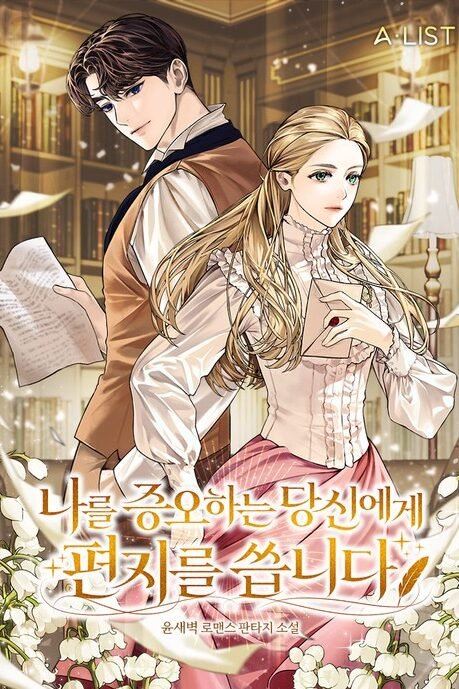
Grace Broytton, a reclusive twenty-three-year-old debutante from the declining Broytton Earldom, discovers her engagement to Aiden Turner, the wealthy heir of the "Railway King" family, via a newspaper announcement. The marriage is a calculated arrangement: the impoverished nobility requires financial salvation, while the upstart Turner family seeks social legitimacy. Disturbed by the lack of agency granted to her, Grace confronts her detached father, Edward, who dismisses her desire for love as childish and emphasizes the economic value of the union.Despite her reservations, Grace begins corresponding with Aiden through handwritten letters. His initial arrogance gives way to sincerity, revealing a man who values connection over calculation. Their correspondence deepens Grace's internal conflict; she finds herself attracted to his genuine nature, yet feels morally compromised, believing she cannot offer him the wholehearted devotion he deserves in a loveless marriage. Seeking clarity, Grace attends a masquerade hosted by Madame Marianne Rowland, where she meets Aiden incognito. The dance and their subsequent conversation on the terrace confirm his kindness and respect, leading Grace to a painful conclusion: she must end the engagement to prevent hurting him further.Grace resolves to escape. She secretly books a one-way ticket to Erehill, a coastal resort city, planning to reinvent herself as a novelist under the pen name Licht Dalton—a career she has concealed from her family due to societal stigma against noble women working. On the eve of the wedding, she spends her final hours at the Echo of Peace Cafe, bidding silent farewell to her old life. Unbeknownst to her, the enigmatic man with lapis lazuli eyes she encountered multiple times earlier is revealed to be a significant figure in her world, adding an layer of unforeseen consequence to her departure.The narrative explores themes of societal expectation versus personal autonomy, the commodification of marriage in aristocratic circles, and the courage required to defy familial duty. Grace's journey from a passive participant in her own fate to an active agent choosing uncertainty over convention drives the central tension. Her decision to flee represents both an act of self-preservation and a rejection of the hollow values upheld by her family and society.As Grace prepares to leave, she must navigate the guilt of abandoning Aiden, whose letters reveal increasing warmth and anticipation for their future together. The contrast between Aiden's hopeful expectations and Grace's resolve to disappear creates dramatic irony and emotional weight. Her identity as a successful romance novelist, publishing tales of love and choice while living a life devoid of both, underscores the hypocrisy she seeks to escape.The story culminates with Grace standing on the threshold of a new life in Erehill, uncertain but resolute. Her encounter with the mysterious man serves as a reminder that her actions will have ripple effects beyond her immediate control. The narrative leaves open whether her escape will lead to fulfillment or regret, positioning her choice as a pivotal moment in her transformation from a sheltered noblewoman to an independent woman claiming her own destiny.
Latest Release
DateGroupRelease
2026-10-03dusk blossoms c68
2026-10-03dusk blossoms c67
2026-10-03dusk blossoms c66
2026-10-03dusk blossoms c65
2026-10-03dusk blossoms c64
2026-10-03dusk blossoms c63
2026-10-03dusk blossoms c62
2026-10-03dusk blossoms c61
2026-10-03dusk blossoms c60
2026-10-03dusk blossoms c59
2026-10-03dusk blossoms c58
2026-10-03dusk blossoms c57

Community Reviews

Rating(0 / 5.0, 32votes)
5 stars
0(0%)
4 stars
0(0%)
3 stars
0(0%)
2 stars
0(0%)
1 stars
0(0%)

Popular reviews

... Read More
I want to discuss how the pacing in these chapters works, because honestly it's one of the things that kept me turning pages. The structure here is basically alternating between two kinds of scenes: intimate interior moments (Grace alone in her study at night, wrestling with letters and blank pages) and sharp external confrontations (the brutal breakfast with her mother, the unexpected café meeting). This creates a rhythm that feels almost psychological — we get to breathe in Grace's private world, then WHAM, reality hits. The late-night study scenes are where the tension simmers. Grace writing and rewriting letters, the ink drying, the sealing wax — these small domestic details slow things down intentionally. We're meant to feel her restless energy. And that restless energy pays off because the very next scene is her mother grabbing her like a vice. The contrast works so well. Chapter 3 → Chapter 4 transition is particularly effective. We go from Grace unable to sleep, thoughts drifting "in one direction," straight into a morning where everything is forced and cold. No soft landing. Just wake up and face the music. The café scene in chapter 4 is a masterclass in pacing too. It starts slow — just coffee and newspaper — then this stranger appears and the energy shifts completely. The dialogue accelerates, Grace opens up more than she intended, and by the time he asks about the café seat availability, the scene has transformed from mundane to electric. That line "it's like a novel" he uses to describe her life? The author winking at us? I loved it. The only thing that made me want to re-read a section was the transition between the mother's speech and Grace walking to the café. It felt slightly rushed. But overall, the pacing is controlled and intentional.
... Read More
Okay so let me just say this plot twist came out of nowhere and I love it. Grace is just sitting there at the café discussing her own novel with Jones, right? And the word 'escape' just drops and her entire life pivots. Like, one moment she's planning to marry this decent guy Aiden for convenience, and the next she's booking a one-way train ticket. That scene where she literally jumps up and says 'I'll escape before Rose does!' had me absolutely roaring. It's such a perfect meta moment — her fictional character's journey literally sparks her real one. But here's what really got me: the structure of her preparation. She doesn't just run. She writes a fake engagement cancellation with a future date, buys the ticket for a week out, borrows a book for an alibi, and even has that little exchange with the flower girl. Every detail feels calculated. The coin spinning on the map choosing Erehill — that tiny moment gave me chills. It's like the universe is conspiring with her, or maybe fate just really wants her gone. And that letter from Aiden? The one where he writes about keeping his promises and looking forward to their married life? Placed right before she writes her goodbye letter? That structural choice by the author is brutal in the best way. Two letters about commitment sitting side by side — his hopeful, hers deceptive — and you feel the whole house of cards about to collapse. The tension isn't in some big dramatic confrontation. It's in the quiet act of sealing an envelope and locking it in a drawer.
... Read More
I'm not okay. I'm genuinely not okay after reading the wedding scene. Let me just say this: the moment Aiden squeezes Grace's hand during the ceremony when the bishop asks if there are any impediments — THAT moment. Grace is about to possibly confess everything, about to ruin the whole thing, and Aiden squeezes her hand. A gentle squeeze. Not a warning. Not a threat. Just... contact. Human contact. And she looks at him and sees someone completely different from the masked man she's been running from. Then he ANSWERS her vows. "The bride isn't feeling well, so I'll answer for her." My heart literally stopped. He's protecting her. From what? From her own honesty? From her family's wrath? From having to choose between truth and survival? And then he tells her to close her eyes before the kiss — he's giving her an out, a way to opt out of the performance. He's being gentle in a situation that could have been so much worse. The contrast with her mother is brutal. Selena shaking Grace by the shoulders, screaming about rumors and reputation, saying "your wishes don't matter" — and then Aiden catching Grace when she nearly faints. The emotional whiplash is real. Grace goes from being roughly handled by her own mother to being held tenderly by her husband, and you feel every bit of that shift. Also the Lisa moments hit different. The hug before the escape, the pastries she brings afterward, the worry on her face at the carriage — this servant who clearly loves Grace is the only person treating her with actual kindness throughout this entire nightmare. I need Lisa to have a bigger role. She's the emotional anchor of this whole story.
... Read More
I have to address the dialogue in these chapters because it's doing SO MUCH work and I'm obsessed. Let me start with the letters. Aiden's first letter: "Did you feel like you were in the eye of a storm? Then my worries weren't misplaced. It's my fault. My mistake." This is such a specific kind of voice — formal but tender, accountable without being performative. He owns his part in her discomfort immediately. And then: "If you ask, Grace, I'm always ready to answer anything, no matter how trivial." The repetition of her name three times in one paragraph. The man writes like he's trying to build a bridge word by word. Grace's voice is completely different — sharper, more guarded, laced with irony. Her letter to him is full of self-protection: "I don't hate people. Every morning after breakfast, I walk from Broytton Mansion to Echo of Peace Café..." But her spoken dialogue? That's where it gets interesting. At the café, she slips into honesty almost against her will. When the stranger asks if she likes her fiancé's letters, she answers BEFORE she can stop herself: "The handwriting is decent, and the reply was fast. There's a certain attentiveness..." Then immediately: "But why am I answering these questions?" That self-awareness in real time — noticing herself being honest — is gorgeous writing. And Selena's lines are razor cuts. "This marriage is the greatest fortune of your life. You must seize it." Short. Final. No room for argument. Her voice is unlike anyone else's in this book. The café stranger's voice is probably the most distinctive — casual, slightly teasing, with this strange warmth underneath. "A marriage of convenience with someone you've never met — it's like a novel." He frames her pain as entertainment, which could read as cruel, but somehow it doesn't. Maybe because he's genuinely curious.

... Read More
Edward Broytton. What a character. I've read so many domineering fathers in novels, but this guy does something genuinely impressive—he doesn't even raise his voice. The man just... leaves an envelope on the floor and walks out like he's discarding trash. "If you're so curious about your husband, check for yourself." That line hit me like a slap. He's not just dismissing her feelings; he's punishing her for having them. But what makes it tragic is how much Grace clearly wanted something different from him. She grew up in that house, surrounded by staff who congratulate her on a marriage she never asked for, and her father—the one person who could have been on her side—treats her like a commodity. "The only reason you can even marry is that you're the daughter of an Earl." Say it louder for the people in the back, sir. And then there's Aiden. His letter is so... earnest? Arrogant, sure—"I will see this marriage through perfectly"—but there's an odd tenderness underneath it all. He anticipated she'd be worried. He actually wrote to her. That's not nothing. It's the kind of detail that makes me wonder if he's as much a prisoner of this arrangement as she is. The stranger at the café? I'm dying to know who he is. He noticed her distress immediately. People who care notice things.
... Read More
Okay so I just finished these chapters and I need to process because the setup here is SO good. Let me start with the big one — the arranged marriage premise. We open with Grace writing a letter to a fiancé she's NEVER MET. Like, that's already a whole novel right there. The fact that she says "a wedding unknown even to the bride and a groom whose face I've never seen" hits different. It's almost comedic in its absurdity, but then it gets grounded so quickly with the stakes. The letter exchange is where the real plot juice starts happening. Grace's first letter is all sarcasm and self-protection — "the eye of a storm" — and then Aiden's reply completely flips the script. He's not the villain she expected. He's... sweet? Attentive? Asking about her day? This subversion is Chef's kiss because it immediately complicates everything. Now Grace doesn't know what to feel, and honestly neither do we. Then BAM, her mother tears that all apart at breakfast. The conversation about money, about the Broytton Earldom, about how "marriage and love are separate" — this raises the stakes from romantic confusion to full-on survival mode. Grace literally has no choice. And then we get to the café scene with this mysterious stranger who seems to know her, which introduces a whole new thread. By chapter 4's end, we're left with Grace calling herself "a ship caught in a storm" — and I am HERE for it. The plot is doing what the best romances do: it's layering internal conflict (does she trust Aiden?) with external pressure (family, money, society) and then throwing in a wildcard (that café guy). The narrative arc feels tight — every scene pushes Grace's situation further from easy resolution.
See all reviews

Custom lists

See all custom Lists