I Woke Up and Got Married - Reviews

I Woke Up and Got Married
+Add to Custom List
Sort
Add review
... Read More
Here's what's eating at me: Chi Suinian went to the HOSPITAL that night for a blood test. He's spooked. He's hiding something physiological — something that would explain why he doesn't remember much of his past interactions with Lu Zhiyue being anything other than anger and frustration. Meanwhile Lu Zhiyue knows EVERYTHING about him. Every habit. Every preference. The milk tea flavor. The coffee. The way he takes his drinks. How long has Lu Zhiyue been studying him? The plot structure here is doing double duty — on the surface it's a romance date chapter, but underneath it's building this mystery about Chi Suinian's health and memory. The blood test is the canary in the coal mine. Something is wrong with him, or something is WRONG about him, and Lu Zhiyue is oblivious. That dramatic irony is RICH. Then there's the meta-layer: the friends. Lu Heng and Tang Jin are here as both comic relief AND foreshadowing. They're the audience surrogates — we know something's going on between these two, and they're starting to notice too. Lu Heng's question about the swollen mouth isn't funny because it's clever, it's funny because it's the moment the private becomes public. The secret date is about to become everyone's business. What I find most compelling is how the author uses the movie as a parallel narrative. The zombie with infinite lives can't die — it just keeps coming back. Is that... theming? Is Chi Suinian the zombie? Something that can't die but keeps getting hurt? I'm not saying that's intentional but my brain went there and I can't unthink it. The chapter ends on a perfect comedic-strategic note. The friends invite them to hotpot. Chi Suinian is physically compromised (swollen mouth, emotional devastation, unknown health crisis) and needs to face his friends. There's no escape. Whatever he's been hiding is about to come out. And we get to watch it happen.
... Read More
I need to address the emotional earthquake that happened in that car ride home because I think people are underselling how much weight that single exchange carries. After the dinner, after the wedding talk, after everyone smiled and nodded and made plans—Lu Zhiyue says: 'Yeah… I really am quite disappointed.' Just like that. No buildup, no dramatic pause, just this quiet, resigned admission that catches Chi Suinian completely off guard. What makes this moment so devastating is the contrast. Up until this point, the chapter has been relentlessly upbeat—matching outfits, wedding plans, teasing, family approval. Everything is moving FORWARD. And then Lu Zhiyue, who has been charming everyone, playing the perfect partner, handling every social situation with grace—drops this bomb about his OWN disappointment. Not about the wedding. Not about the family. About something deeper. Something Chi Suinian hasn't earned the right to understand yet. And Chi Suinian's reaction? 'Inexplicably irritable.' He doesn't know HOW to respond to vulnerability because their whole dynamic is built on deflection and humor. So he gets annoyed instead of concerned. That's not cruelty—that's someone who genuinely doesn't know how to hold space for another person's pain because nobody ever taught him. Then back home, the whole drunk tussle—the pillow throw, the 'say it if you don't want your hand anymore,' the soft paw swipe kick—all of this is two men who want to be close but keep bumping into each other's edges. The stakes here aren't about life or death. They're about whether these two can learn to stop performing and start seeing each other. And honestly? I'm not sure they're ready yet. Which is why I'm already reading the next chapter.
... Read More
This story isn't just about a complicated romance—it's obsessed with what we choose to remember and what we hide. The green bellflowers are the perfect symbol for Lu Zhiyue's love: unnatural, persistent, quietly defiant. Nobody orders green flowers. They're rare, almost artificial, a statement that says “I see you, even when you don't see me.” While everyone else sends roses or lilies, he sends something strange, something that matches the odd, aching devotion he can't voice. And the flower shop? It's a liminal space—a threshold between who Lu Zhiyue was and who he became, between his silent pining and his eventual marriage. He never gave them to Chi Suinian's face. He left them with a stranger, hoping maybe, just maybe, they'd reach him. Then there's the amnesia. Selective forgetting as a metaphor for emotional survival. Chi Suinian wiped out a year of marriage—the most vulnerable, exposed time in his life—because his mind couldn't handle the pain. But what if the forgetting isn't just loss? What if it's protection? The text keeps circling around ghosts: bloodied figures at a doorway, a boy who limps away without explanation, memories that feel like watching “a mentally unstable grasshopper hopping around.” Love in this novel isn't sweet. It's bruised, bloody, whispered through actions instead of words. The game console in the living room mirrors Chi Suinian's internal state—a world he can control, where failure is just a reset away. But real life doesn't have restart buttons. The contrast between the digital boss battles and the visceral memory of his own injuries on the pavement highlights the theme: we can't game our way out of emotional truth. Even the debt—financial, emotional, romantic—is never truly paid. It's just transferred, disguised, forgotten until it resurfaces as green flowers in a shop window. This story asks: what do we sacrifice to survive love? And what parts of ourselves do we leave behind, waiting to be found?
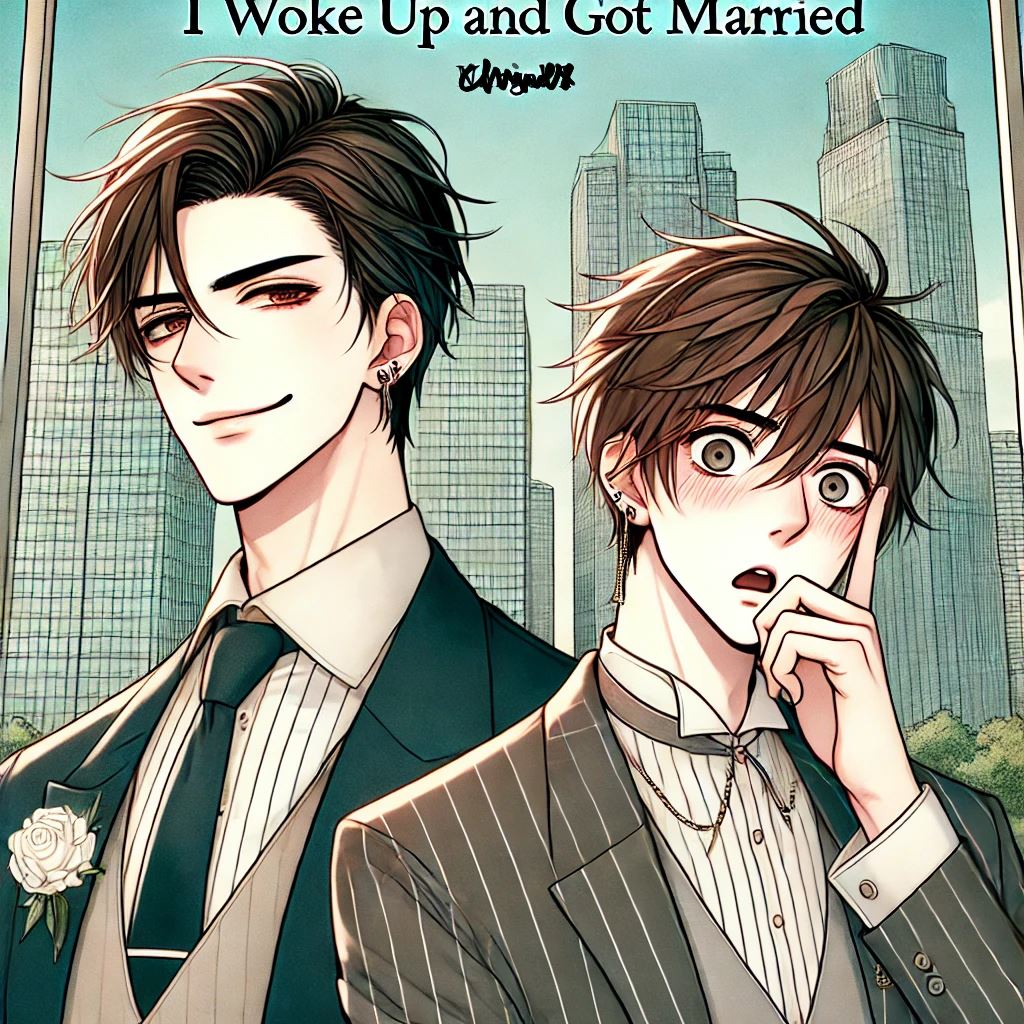
... Read More
The pacing in these chapters is honestly masterful. You start with Chi Suinian pulling his suitcase to the wardrobe and there's this heavy, charged silence — the AC hasn't kicked in yet, the room is warm, and he's just standing there watching this man arrange his life into his space. Then immediately it pivots to Lu Zhiyue being insufferable about his price, and Chi Suinian retorting 'Are you that expensive?' and you're just breathless because it's so perfectly balanced. Then BOOM — the underwear scene hits and the tension snaps into something almost comedic before immediately curling back into something tender with Chi Suinian hiding those black boxers in the corner. Then it cuts to Tang Jin on a haystack with a megaphone like nothing happened. That shift isn't jarring, it's deliberate. The author knows exactly when to let you exhale and when to grab you by the throat again.
... Read More
I have been staring at this one passage for twenty minutes and I cannot stop thinking about it: 'From his angle, Chi Suinian looked like he was encircled within the man's embrace.' Lu Zhiyue puts his arm on the back of Chi Suinian's chair and the narrative frames it as a territorial gesture. Lin Weixing notices it immediately — as a fellow man, he reads the body language correctly — and something shifts inside him. This is the moment where the emotional architecture of the entire novel becomes visible to me. Lu Zhiyue doesn't say anything. He doesn't have to. The gesture is the confession. And then Chi Suinian, who is apparently completely unaware of what just happened, says 'Move your hand' with actual irritation, and Lu Zhiyue withdraws it instantly. Not argumentative. Not passive-aggressive. Just... withdraws. Like he was caught doing something he shouldn't and he chooses compliance over confrontation. That is such a vulnerable choice for a character who otherwise seems so composed. Then later, in the bedroom scene, it reverses beautifully. Chi Suinian is the one drawing the line — literally piling his clothes on the bed as a boundary marker — and Lu Zhiyue watches it with this almost reverent tenderness. 'Chi Suinian was almost twenty-five, yet he was still this adorable.' The word adorable in that context hits like a physical blow. This relationship has been walking this razor's edge for God knows how many chapters, and the author never lets us forget that both of these people are simultaneously terrified of and drawn to each other. The sleeping arrangement, the boundary line, the half-finished sentence at the end — it's all the same emotional truth expressed in different registers.
... Read More
I need to talk about Lu Zhiyue because this man is something else. On the surface, he's the calm one—the one apologizing with zero actual remorse in his voice. 'I'm sorry, you were so cute last night, I couldn't help it.' Cute. CUTE. Who does that? But then Chi Suinian calls him out as the breacher, the one who violated their agreement, and Lu Zhiyue doesn't even flinch. He just sits there and says 'which agreement did I break?' like he's genuinely confused. This is the man who anticipated this moment, who adjusted the contract terms, who waited. And yet here he is, playing victim. Meanwhile Chi Suinian is literally shaking with rage—his knees giving out when he tries to stand, his face flushed red, throwing pillows and demanding Lu Zhiyue leave. But the power dynamic? It's completely reversed. Chi Suinian thinks he's the one being wronged, but Lu Zhiyue has already won. He's the one in control, the one making suggestions, the one calmly pointing out that Chi Suinian initiated contact first. The teeth marks on Lu Zhiyue's collarbone? He shows them deliberately. 'Nian Nian, you kissed me first.' It's manipulation wrapped in faux innocence. And Chi Suinian—oh, poor Chi Suinian—is stuck in this web because he's physically compromised (sore, weak, can barely walk) and emotionally overwhelmed. Their relationship shifted overnight from fake spouses to something messy and real, and neither of them wanted this version of intimacy. Lu Zhiyue wanted it but on his terms. Chi Suinian never wanted it but found himself wanting anyway. Now they're both pretending this was accidental, but the marks tell different stories.
... Read More
The stakes in this chapter are deceptively simple. On the surface: two guys in a bathroom, one drunk, one angry, sleeping in the same bed. But under that, everything hinges on a single question—what happens when Chi Suinian finds out the truth? Lu Zhiyue's internal monologue is the key. 'He was always afraid the truth would come out before he got what he wanted.' What did he want? Why did he need to lie? The fact that he's provoking Chi Suinian—actively GOADING him into anger—suggests he's both seeking punishment and testing whether Chi Suinian's anger is still genuine. If Chi Suinian didn't care at all, he wouldn't bother being mad. The violence is proof of feeling. Tang Jin's midnight call raises the stakes to a narrative level. This isn't just personal drama anymore—he's involving friends, creating side plots, and the whispering in the background suggests a whole network of people who know something and are terrified. The hypothetical question 'would you forgive them?' is the closest anyone has come to saying it out loud, and Chi Suinian's instant suspicion ('What have you been hiding from me?') shows he already suspects. And the dream? That's the past catching up. Whatever happened to Chi Suinian in school—the spider, the humiliation, the isolation—it's not in the past. It's the foundation. When Lu Zhiyue's lies collapse, Chi Suinian will have to decide whether the man holding him now is the enemy he remembered or someone else entirely. That's a devastating crossroads to build toward.
... Read More
On the surface, this chapter is about a bathrobe and a breakfast argument. Underneath? It's about debt, identity, and whether two people can admit they care without breaking something in the process. Chi Suinian's conflict is layered. There's the external: his cousin's family troubles, the legal mess, the hot spring trip he didn't want to attend. But the REAL conflict is internal—why does he care about balloon flowers? Why does remembering someone sent him flowers for years make him want to "figure out who to beat up"? Because recognition implies vulnerability, and Chi Suinian has built his entire existence on refusing to be vulnerable. Lu Zhiyue's stakes are equally complex. At breakfast, he's the ice king enforcing boundaries: "Finish your meal before you go." But we know he called Tang Jin immediately after. We know the Lu Corporation money doubled whatever Chi Suinian needed. The conflict here is between who Lu Zhiyue wants to be (composed, detached, in control) and what he actually does (quietly rearranges financial worlds to help the man he's married to). The stakes escalate beautifully. Chi Suinian thinks Lu Zhiyue just wants a birthday celebration. He scoffs about dying alone. But then—flowers. The timeline matches. The transfer date aligns. And suddenly the question isn't "does he care?" but "when did he start caring, and why did I never notice?" The author raises stakes by making everything about what's UNSAID. The slammed door. The lingering gaze at the collarbone. The red mole in the mist. The double payment with no explanation. Every conflict is a door half-open, and neither character has the courage—or the vocabulary—to push it wide.
... Read More
The opening scene in Lu Zhiyue's bedroom is haunting. 'Bathed in the dim moonlight, Lu Zhiyue's gaze swept over the impeccably made bed, the spotless bathroom, and the eerily empty house, as if it stretched on forever.' That word 'forever' — it makes the house feel like a prison, like an endless corridor of silence where Chi Suinian will eventually get lost. Then when Chi Suinian finally appears in the doorway and Lu Zhiyue is changing clothes — the reflection off the balcony glass, the muscles described with clinical precision, the jawline catching light like a statue. It's almost too still, too composed, like a painting that somehow came alive and refused to acknowledge the viewer. And then later, the car dealership scene — 'thirteen cars in total,' Boss Lin circling him like a vulture, the courtyard full of luxury vehicles that represent everything Chi Suinian built for himself before this crisis. The contrast between those shining machines and the coldness of his personal life is brutal. Every location tells you something about where these men are emotionally.
... Read More
This section completely flipped my understanding of all three central characters in one go. Chi Suiyan going to find Cheng Song is such a bold move - these two have history, sure, but they're not close. The fact that he'd walk into a den of 'brothers' with colorful hair and tattoos more intricate than a map just to press someone for information shows a desperation I didn't expect. And then the drinking scene - oh man. Chi Suiyan after a COMA, downing ten glasses of hard liquor while his body is literally screaming at him. This isn't bravado; this is someone who would rather destroy himself than ask for help directly. That's such a specific kind of pride, and it's both admirable and heartbreaking. But what really got me was Lu Zhiyue's response. Here's this guy who's been painted as an 'ice-cold iron tree atop a glacier,' who never shows warmth even toward his spouse - and the moment his friend says Chi Suiyan is in danger, he's STRIDING out the door. No questions. Just action. And then he calmly says 'You didn't say I couldn't' when Chi Suiyan tries to fight him in the car. That's not romance-novel swoon energy; that's something deeper and more complicated. The doctor's line hit hard too: 'With a body this weak, how could you let him drink so much hard liquor?' It's said to Lu Zhiyue, but it paints him as someone who enables - even though he clearly cares. That ambiguity is what makes their relationship feel real rather than scripted.
... Read More
I literally threw my phone across the room when Lu Zhiyue said 'I don't want it.' The man had Chi Suinian rushing back from the suburbs, sprinting to a mall, picking out an expensive watch—all while clearly annoyed and flustered—and then Lu Zhiyue just... returned it? Like a rejected package? 'Lost items should be handed in. What if the owner is anxious right now?' Oh, this dude is a menace. A absolute menace. But then he puts it on right in front of Chi Suinian and says he likes it, and I was right there losing my mind. The tension between these two—Chi Suinian's all hot and bothered one second, regretting everything the next. And then cutting to the business subplot with Chi Mingyao colluding to sell Tongcheng? Classic misdirection, using the emotional chaos to pivot into stakes that actually matter. The author really knows how to keep you off-balance.
... Read More
The stakes in this chapter are deceptively simple on the surface — a kid almost gets trampled, a guy gets hurt, end of story — but the emotional stakes are absolutely sky-high and the author knows it. Let's talk about the central conflict first: Chi Suinian vs. his own self-worth. Every time he tries to be heroic, his body fails him. He saves the kid, sure, but then he sprains his ankle and needs to be carried. He's caught in this terrible loop where his instinct to help others keeps proving his own fragility. And Lu Zhiyue? He's fighting a completely different battle — the one between his genuine fear for Chi Suinian and his inability to express it in anything other than criticism. 'You took over someone else's job, got yourself injured, and still think you were heroic?' This isn't an attack. This is a scared man lashing out because he can't say 'when that horse came at you I thought you were going to die and my heart stopped.' The external conflict is there too — the wild horse, the potential for real catastrophe. But what kept me on edge wasn't whether the horse would cause more damage (we know it doesn't) — it was whether Chi Suinian would walk away from this chapter unchanged. And he doesn't. He walks away with a sprained ankle, an embarrassment he can't escape, a wallpaper photo that's now public knowledge, and three girls asking if they're dating. The stakes keep escalating even as the physical danger subsides. And then there's the question hanging over everything: what happens if he falls again? Lu Zhiyue asks this exact question. 'And fall again?' It's so casual, so flat, but it carries the weight of every fear either of them has about this situation. Because the real danger here isn't horses. It's whatever is building between them, and neither of them knows how to land it safely.

Leave a comment

You must be logged in to leave comments. or
