Summary

... Read More

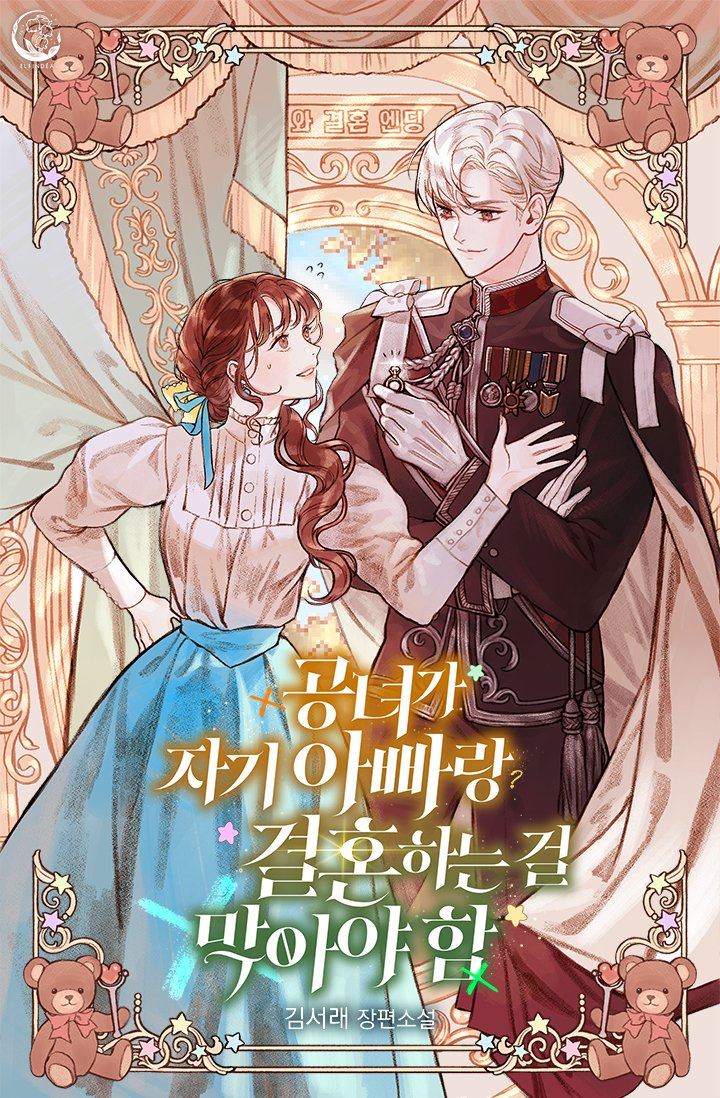
Elia Reiffers, a noblewoman from one of the most powerful ducal families in the Empire, spent ten years in unrequited love for Crown Prince Cyrone Edelward. Their history began when Elia was eight years old; while peeking through a sealed window during a storm, she locked eyes with a mysterious child who knew her name. Years later, at the Emperor’s banquet, Cyrone made his formal debut as the Golden Prince, and Elia’s infatuation turned into an obsessive devotion that defined her existence. Despite Cyrone’s engagement to Camille Ayeron, a woman of similar red hair, Elia remained by his side, enduring his psychological manipulation and public humiliation. During the coronation ceremony, a rebellion launched by the fallen Kingdom of Orha resulted in an assassination attempt. Elia instinctively threw herself in front of a poison-tipped arrow meant for Cyrone. As she died, she realized that Cyrone’s desperate embrace was not for her, but for Camille, leaving her to die with the regret that her love had never truly been reciprocated.

Elia awoke to find herself back in her bedchamber on the morning of the coronation, having been reborn to the very day of her death. Retaining her memories of the past ten years of suffering, she resolved to break free from her obsession. She immediately wrote to Cyrone’s aide, Nielsen, using her family’s gold seal to demand increased security for the prince, hoping to prevent the rebellion. That evening, instead of pining after Cyrone, Elia interacted with Rias Damon, a young count from the northern territories who had recently entered the capital’s social scene. Unlike Cyrone, who viewed Elia as a possession, Rias treated her with genuine warmth and respect. Elia recognized that her previous life had been a mistake and decided to accept Rias’s quiet affection, telling her mother that she intended to marry him.

On the day of the coronation, the rebellion unfolded exactly as Elia remembered, but this time, she did not rush to save Cyrone. When the poisoned arrow flew toward the Crown Prince, Elia remained seated, watching冷ly as Commander Farus deflected the blow. Cyrone, expecting her to sacrifice herself for him again, was shattered when he saw her standing safely beside Rias Damon. He demanded to know why she had turned her back on him, his voice trembling with a mix of rage and panic. Elia refused to give him the satisfaction of a reaction, declaring that the girl who loved him, Elli, no longer existed. She allowed Rias to lead her away from the blood-soaked hall, leaving Cyrone alone amidst the corpses.

In the aftermath, the Empire suppressed the rebellion, and the traitors were executed. Elia sought the imperial seal required for her marriage to Rias, which fell under Cyrone’s authority. She visited the Crown Prince’s private quarters, where Cyrone initially displayed indifference, pretending her request was irrelevant. However, his composure cracked when Elia explicitly stated that she did not love him anymore and intended to build a peaceful life with Rias. Cyrone mocked her assertion, unable to comprehend that she could love anyone other than him. The confrontation revealed that Cyrone’s obsession with Elia had deep roots, tied to the political tensions between their families and his own twisted sense of ownership. By rejecting him, Elia had destabilized the dynamic that had controlled her life for a decade, setting the stage for a future where she pursued happiness independent of the man who had once held her heart.

Latest Release
DateGroupRelease
2026-09-27citrus aurora c101
2026-09-27citrus aurora c100
2026-09-27citrus aurora c99
2026-09-27citrus aurora c98
2026-09-27citrus aurora c97
2026-09-27citrus aurora c96
2026-09-27citrus aurora c95
2026-09-27citrus aurora c94
2026-09-27citrus aurora c93
2026-09-27citrus aurora c92
2026-09-27citrus aurora c91
2026-09-27citrus aurora c90

Community Reviews

Rating(0 / 5.0, 37votes)
5 stars
0(0%)
4 stars
0(0%)
3 stars
0(0%)
2 stars
0(0%)
1 stars
0(0%)

Popular reviews

... Read More
I've been thinking about the color symbolism in this chapter and it's hitting me on another level. The sky-blue dress. Same one she wore when she died, stained with blood, now cleaned and pristine. This isn't just a wardrobe detail—this dress is literally the garment of her death, and now it's clean because time has been rewound. The blood is gone but the memory isn't. That dress represents the entire tragedy compressed into fabric: everything she lost, everyone she couldn't save, all wrapped up in something that looks perfect on the surface. Then there's the red. So much red. Blood on white petals. Elia's crimson hair absorbing Cyrone's blood. The Empress's garden full of green and white and suddenly this violent splash of red everywhere. Red isn't just blood here—it's obsession, it's the price of loving the wrong person, it's the cost of Elia's devotion. She tears her silk dress to bind his wound and her red hair becomes part of the bloody tableau. She IS the sacrifice. And white—white tablecloths, white petals, pale skin, pale moonlight vibes. White as erasure. As the lie that everything is fine. The Empire pretends Belial was sealed away. The dress pretends nothing happened. Cyrone pretends he's hurt when really he orchestrated the whole moment. White is the canvas they all paint their deceptions on. The half-soul of Belial concept Rias drops at the end—this tiny revelation about the Great War, the Saint disappearing, the official story being a lie—is the thematic key to the whole novel. What else have they been lying about? What else is sealed but not dead? The theology classroom book title feels like foreshadowing for something much darker.
... Read More
I need a moment. I need several moments. The scene where Cyrone lays Elia down on his DESK — his WORK desk, where he does politics and paperwork — and tears her dress while she's actively trying to say no? The text says her legs went limp. Her body betrayed her. And then the aftermath where she drags herself home and realizes her body has been "conditioned by Cyrone" for TEN YEARS. TEN YEARS. "Her body was already conditioned by Cyrone and blatantly sought him out." That sentence sat in my chest like a brick. This isn't romance. This is trauma bonding dressed up in silk sheets and I know I'm supposed to be swooning and I AM but I'm also deeply concerned for Elia's mental health. But then — and this is what got me — Rias squeezes her hand and she feels "a rare hope rising within her." Not love. She explicitly says it wouldn't be love. Just mutual respect and light affection. And somehow that almost-something-almost-safe feeling is MORE dangerous than Cyrone's violence because now she has something to lose. Now she has an alternative. Now the tragedy is that she might actually get what she wants and it could still fall apart. The CP chemistry between Elia and Cyrone is absolutely electric though. Like, physically painful electric. "Their gazes tangled, each filled with different emotions but persistently entwined." The word entwined keeps coming back. They're trapped together and they both know it.
... Read More
I cannot stop thinking about that opening moment where Cyrone just GRINDS the poison blade into dirt with his foot while whispering Elia's full name like a curse. Let's talk about what just happened here because WOW. This man is holding TEN YEARS of repressed emotion in his chest and it is LEAKING out in the most dramatic way possible. The tragedy of Cyrone is that he literally CANNOT imagine Elia loving someone else. When she stands in front of him and says "I don't love you anymore," his first instinct isn't sadness — it's disbelief mixed with contempt. He laughs. He calls her a LIAR. Do you see what that tells you about how he views their entire relationship? To him, her feelings were never really hers — they belonged to HIM by right of ownership. Ten years of her presence, her devotion, her willing participation in his darkness — and he frames it as something he simply possessed, not something she freely gave. And Elia... God, Elia. She's saying all the right things now. "I'll build a quiet life with someone I love, and live peacefully." But the narration literally tells us she's struggling to lie in front of Cyrone of all people. Did she tell her mother she loved Rias? Or did she just decide Rias was the SAFE choice because he wouldn't destroy her the way Cyrone does? There's a difference between being grateful to someone and genuinely loving them, and I think Elia is confusing the two because the alternative — admitting she maybe never truly loved Rias — is even more devastating. Estine asking "does it still have to be him?" hit me like a truck. That mother knows. She's watched her daughter waste a decade on a man who will never be able to give her peace, and there's nothing she can do about it. The fact that she then immediately pivots to suggesting Rias instead of confronting the real issue... yeah, that's a mom protecting herself as much as her daughter. What kills me is that both of them are trapped in roles they've played for so long they can't step out of them. Cyrone can't imagine a world where Elia doesn't orbit him. Elia can't imagine a world where she fights for Cyrone. So she makes the pragmatic choice and hopes it works. Spoiler: it probably won't.
... Read More
There are so many layers beneath the surface of these chapters that I can't stop thinking about them. The most haunting symbol has to be the memory of Cyrone watching his mother being dragged away "bound in chains" on the last day of a waning moon. That image repeats itself like a ghost throughout the text. The waning moon—that's cyclical decay, the end of something. His mother taken, the old order crumbling, the rightful heir dead. And Cyrone, small and silent, absorbing all of it. That moment shaped everything. It's why he's cold. It's why he plays chess like a weapon. It's why he can't let Elia go. Then there's the chess game itself—obviously a symbol of the political struggle, but also of Cyrone's relationship with everyone around him. He doesn't just want to win; he wants to demonstrate that the game was never fair to begin with. Every piece Reiffers thought he controlled? Already accounted for. And the motif of resemblance—or the lack thereof—keeps appearing. "He doesn't take after either of my parents." "You resemble your mother quite a lot." Cyrone is defined by what he ISN'T like, by how he defied the family legacy. But Elia? He wants her child to resemble HIM. His possessiveness goes beyond romance—it's about lineage, about leaving his mark on a future that wasn't supposed to exist after his mother's destruction. The imperial flag shimmering in the dawn air—that's the ultimate symbol. The empire itself is both prize and prison, beautiful and corrupt, and every character is trapped within it. Reiffers thinks he's using it. Cyrone knows he'll remake it. And Elia? She's caught between them, dressed in pale green, caught in the crossfire of everyone's ambitions.
... Read More
Can we talk about how Cyrone speaks versus how everyone else speaks? It's like the author gave every character a completely different musical instrument and Cyrone's is a cello played with a knife. Cyrone's dialogue is almost always short. Dismissive. He says things like "Why do you keep doing useless things?" and "You've become quite the liar, Elia" with this casual cruelty that makes my skin crawl. The man doesn't raise his voice — he never does — which makes every word hit harder because you know he's chosen exactly how much pain to inflict. A single chuckle. A tilted head. Closing his eyes for a moment like her confession is mildly amusing rather than devastating. Compare that to Elia's speech patterns. She stammers. She trails off. "I..." and then she can't finish. Her sentences physically break when she's confronting Cyrone. Even when she's trying to be strong and declare she loves Rias, her voice TREMBLES. The narration tells us directly: it was hard to lie in front of Cyrone, of all people. And yet she says it anyway because she's trying so desperately to convince herself as much as him. The author's narrative voice in this section is also doing something interesting — it keeps returning to sensory details during dialogue scenes. When Cyrone speaks, we notice the veins rising in his hand gripping the armrest. When Elia speaks, we notice sunlight retreating and shadows growing. The environment itself seems to be holding its breath during their conversations. And that one line — "Love?" — Cyrone repeating the word back to her like it's something foreign and ridiculous that she's invented on the spot. That single syllable carries more contempt than pages of monologue ever could.
... Read More
Let me just say—I picked this up thinking it was going to be a standard revenge rekindled romance, and the author absolutely refused to follow any predictable pattern. The pacing in these chapters is relentless. We go from the engagement ceremony (sigh-worthy, slow-burn tension) to a private confrontation by the lake (intimate, charged) to a full-blown assassination attempt (action chaos) to Elia's deathbed confession (devastating) to TRANSMIGRATION/REINCARNATION (what just happened). In roughly 7 chapters, the genre shifts three times. That's not bad pacing—that's the author refusing to let you get comfortable. The banquet scene especially moves at breakneck speed: one moment people are celebrating, the next arrows are flying, bodies are falling, and Elia is crawling over corpses to reach Cyrone. There's no breathing room, which honestly mirrors exactly what Elia must have felt in that moment—total sensory overload. But here's what I'm curious about: if she's been reborn, does the author plan to slow down the pacing now? Or is this just the calm before another storm? The fact that she saw a vision of herself stabbing Cyrone with a holy sword suggests the reincarnation isn't just a reset button—it's setting up something completely different. I need to know where the story goes from here.
See all reviews

Custom lists

See all custom Lists