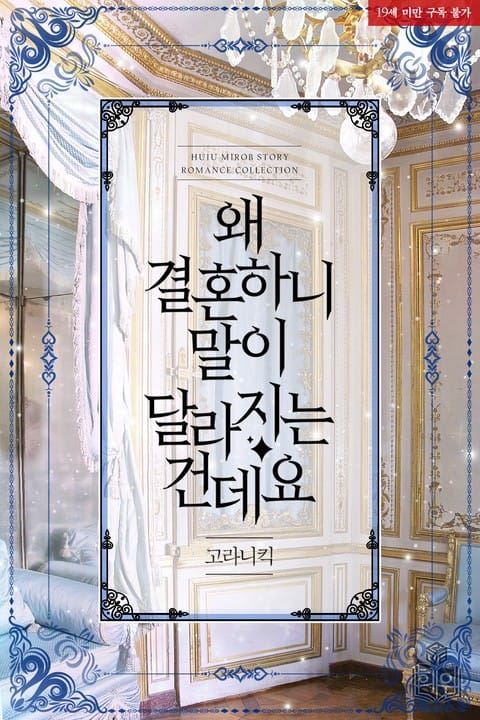
I Was Reborn, and Now I’m Marrying My Ex-Husband Again
+Add to Custom List
Genres:
Novel Info
  • Author:
  • Status:Ongoing

Summary

... Read More

Adelheid Riley Hilleian works as an appraiser at the imperial museum, a position she inherited from her family, the Hilleian count. Although she appears to be a ordinary human noblewoman, she carries memories of a past life in which she was one of the divine, the most powerful among them. In that previous existence, she married a man named Carnesis, believing their union to be founded on mutual love. However, shortly after their wedding vow, Carnesis betrayed her by driving a blade into her heart. In her dying moments, Adelheid severed the soul-binding vow between them and attempted to seal his divine authority, but she lacked the strength to complete the ritual before she died.The narrative begins with Adelheid waking from a nightmare of her murder, realizing that her past-life memories have surfaced again. She resolves to live her current life peacefully and avoid any attention to her former divinity. Her quiet existence is interrupted when the emperor commands her to marry Carlisle Euclant Obellian, the Duke of Obellian. The marriage serves a political purpose: the emperor suspects the Duke of harboring subversive ambitions due to the popular reverence for his lineage, which claims descent from the divine. The emperor tasks Adelheid with acting as a spy to monitor him. Despite her father’s reluctance to lose his only daughter to a man rumored to die young, Adelheid accepts the command to protect her family from imperial wrath.

Upon arriving at Obellian Castle, Adelheid encounters Carlisle and is horrified to recognize him as Carnesis, her past-life husband and killer. He, too, possesses the aura of the divine, confirming that he is the same entity who has lived for centuries by changing his appearance and pretending to be the head of the Obellian house. Realizing the lethal danger she is in, Adelheid decides she must break off the engagement to save her life. Since she cannot defy the emperor directly without endangering her family, she devises a plan to force Carlisle to initiate the breakup. She believes that if the Duke rejects her, the emperor will not punish her family for failing to comply.

Adelheid launches a campaign of deliberate misconduct, hoping to make herself unbearable to Carlisle. She arrives at breakfast disheveled and rude, treats his servants with contempt, and acts extravagantly foolish. When these tactics fail to provoke any negative reaction, she escalates her actions. She destroys a rare ceramic artifact in the castle and ravages the greenhouse, specifically targeting lisianthus, a flower that held sentimental value in her past life with Carnesis. Despite her increasingly provocative behavior, Carlisle remains calm and indifferent, showing neither anger nor interest in terminating the marriage. Instead, he views her actions with a detached curiosity, which only heightens Adelheid’s anxiety.

Desperate and with the wedding day imminent, Adelheid sneaks into the north tower of the west wing, suspecting that Carlisle hides something significant there. She is caught by Carlisle, who confronts her with cold hostility. He reveals that he knows she is attempting to break off the engagement and explicitly refuses to let her do so. Carlisle states that he needs her expertise as an antique specialist to assist him with his collections. He also hints that the emperor is wary of him, suggesting that their political dynamic is more complex than Adelheid understood. Forced into the marriage, Adelheid wed Carlisle, entering a union with the man who murdered her in her previous life while vowing to uncover the secrets he keeps hidden in the castle.

Latest Release
DateGroupRelease
2026-10-03dusk blossoms c30
2026-10-03dusk blossoms c29
2026-10-03dusk blossoms c28
2026-10-03dusk blossoms c27
2026-10-03dusk blossoms c26
2026-10-03dusk blossoms c25
2026-10-03dusk blossoms c24
2026-10-03dusk blossoms c23
2026-10-03dusk blossoms c22
2026-10-03dusk blossoms c21
2026-10-03dusk blossoms c20
2026-10-03dusk blossoms c19

Community Reviews

Rating(0 / 5.0, 48votes)
5 stars
0(0%)
4 stars
0(0%)
3 stars
0(0%)
2 stars
0(0%)
1 stars
0(0%)

Popular reviews

... Read More
The tension in this section is absolutely suffocating and I mean that in the best way possible. Every single interaction at the reception feels like walking across a tightrope over a pit of vipers. You've got the crown prince literally watching everything, Father trying to navigate social minefields, and Carlisle deliberately escalating the performance at every turn. The emperor's congratulatory letter is such an underwhelmingly perfect plot device. Adel immediately knows something's off — the gold and jewels already covered the celebration, so why send ANOTHER message? What was in that letter? My brain won't stop circling back to this. The author drops this breadcrumb and then completely pivots to the wedding drama, which I think is intentional misdirection. We're supposed to be so distracted by Carlisle's public performance that we forget the real political threat is still sitting unread in Dorothy's pocket. The champagne incident is peak conflict escalation. A servant literally trips and nearly humiliates the bride at her own wedding — in front of the crown prince! — and Carlisle absorbs the entire splash. But here's what gets me: the servant didn't just make an accident, he stumbled. On purpose? The narrative never confirms it but my brain absolutely did. Because if someone wanted to embarrass Adel, there is literally no better way than dousing her in champagne at the reception. And Carlisle stepping in front of her — was that protection or damage control for his own image? The stakes keep rising too. We now know the dowager duchess (Carlisle's ex-wife) wasn't invited or couldn't come, and Father is NOTICING. That absence is going to come back to bite someone. An ex-wife who doesn't show up to her son's wedding? That's either a secret or a weapon waiting to be used. And through all of this, Adel's personal stake is the annulment. She wants out. Carlisle is making it increasingly difficult. The conflict isn't just external political pressure — it's intimate, daily, unavoidable.
... Read More
This chapter has some of the tightest pacing I've read in a while. It starts slow—well, relatively slow—with the portrait discussion, which reads almost like a normal noble couple getting to know each other. Carlisle is charming, if a bit odd. He offers to have dinner together. He mentions Greyson will show her around. Everything feels... normal. Almost too normal. But the author drops these tiny cracks throughout: the third-person self-reference about the first duke, the joyless smile, the cold look at the empty portrait space. Each one is a small dissonance that makes you slightly uneasy without quite telling you why. Then comes the transition to night, and the pace absolutely pivots. She waits until past midnight when everyone is asleep. The prose becomes tighter, more alert—checking surroundings, reaching out for divine aura, counting stops to listen. The tension ramps up floor by floor as she climbs the tower. And then the door opens and Carlisle is THERE. Not slowly approaching, not giving her time to hide—just appearing, having moved faster than she expected. The lantern shatters, fire leaps, and suddenly you're in full survival mode. The chapter doesn't linger on the aftermath either. It cuts straight to the next morning with her nodding off in a chair, exhausted but putting on a brave face. That structural choice—skipping the recovery, going straight to the masked normalcy—is what makes the tension so effective. The reader is left breathless while the character has to compose herself. And that final line about deciding to make HIM bring up the broken engagement? That's the chapter's closing beat, and it's a perfect tonal shift from victim to strategist.
... Read More
The dialogue in this chapter is absolutely loaded. Let me just pick apart a few moments because the subtext game here is insane. First, the opening exchange about the portrait. Carlisle says: "You are the first person outside the Obellian family to see this portrait. Though of course you will soon be one of the Obellians yourself." On the surface, this is just engagement talk. But the way he says it—calm, matter-of-fact—while the narrator internally thinks "If you knew I was Erflus, what would your reaction be?" That's not a question she's asking him. That's a question she's asking herself in the silence after he speaks. The dialogue does all the heavy lifting without either character saying what they actually mean. Then Dorothy's monologue about her being in love: "The duke is so handsome, it's perfectly possible to fall for him at first sight." The author writes this with such warmth and conviction that it almost hurts, because we know the truth. And the narrator's reply—"The fact that you waste time on such needless worries tells me you all have far too much free time. I should tell the butler to give you more work"—that's classic deflection humor. Sharp, dismissive, completely missing the point that Dorothy was trying to connect. And Carlisle's final warning in the tower, said almost casually: "This place... it would be best if you did not come here again." No raised voice, no dramatic threat. Just cold, flat instruction. The dialogue is at its most terrifying when it's understated. That's the author's signature move here.
... Read More
This book is obsessed with the gap between appearance and truth, and it's not subtle about it—in the best way possible. The central symbol is the painting. Adelheid is asked to APPRAISE it, to determine whether it's real or fake. And what does she find? A forgery. But the forgery depicts the divine calling down lightning—and she KNOWS, having BEEN one of the divine, that they can't actually do that. So the painting is a double lie: it's not authentic art, and it depicts something that never happened. The entire founding myth of the empire is built on fictions. And the Obellian family's claim to divine authority? 'Utter nonsense,' she thinks. But the empire BELIEVES it. Faith and propaganda have become indistinguishable. The people worship a lineage that doesn't exist, just like they worship a painting that isn't real. Then there's the vow. The soul-binding marriage vow between Adelheid and Carnesis—that was supposed to be ETERNAL. 'A promise to remain together even in death.' But when he betrays her, she SEVERS it. The vow becomes a curse. The institution that was supposed to represent eternal love becomes something she actively destroys. That's a powerful image: a woman killing a promise because the person who made it with her proved it was worthless. And her current situation—sent as a spy, wearing a mask of compliance, trying to live quietly while the emperor uses her—another kind of performance. Another kind of falseness. She appraises art for a living, and now she's appraising a man she's supposed to marry, trying to determine if he's real or another kind of forgery. The question the book keeps asking is: what is authentic in a world built on lies? And is the answer 'nothing' or is the answer 'you have to look harder'?
... Read More
Let me just say this: the narrator's internal monologue during the wedding ceremony is one of the most relatable things I've ever read. She's standing there in a veil, about to marry a man she explicitly stated she doesn't want, and her brain is going in circles like 'running is the only option... no wait my father... wait do I actually love my father that much... I'll die in a hundred years anyway and get reborn with a new father... NO THAT'S WRONG.' This is not the thoughts of a poised noblewoman. This is the thoughts of a human being whose survival instincts are at war with their loyalty, and who is using absurd humor to cope with genuine terror. I laughed out loud and also felt genuinely bad for her. But the emotional beat that actually broke me was Carlisle's line: 'I need you.' Said in a context where it could SO easily be romantic, but instead lands as something far more complicated. Is it genuine? Is it calculation? Is it both? The narrator's reaction—deflated, annoyed, cornered—tells us she WISHES it could mean something else. That little gap between what he said and what she wanted it to mean? That's where the whole emotional architecture of this story lives. And then at the reception, her father's red eyes. He knows. He knows she's being used as the emperor's spy, he knows this marriage isn't what it seems, and he can't stop it. 'You look beautiful today.' That's not a father celebrating his daughter's wedding. That's a father saying goodbye. I'm not okay.
... Read More
Let's talk about the structure of this chapter because it's doing something really clever. The emperor's letter opens the entire section — it's the first thing mentioned, the first thing Adel suspects is meaningful. And then the narrative spends the next twenty-plus pages distracting us from it with wedding drama, public performances, family dynamics, and a champagne incident. This is narrative sleight of hand at its finest. The author is building a classic romance structure but subverting the expectations at every turn. Normally the wedding night scene would be a turning point toward intimacy. Here, it's a turning point toward... resistance. Adel actively choosing to reject closeness. That's unusual and it creates immediate tension because we know romantic protagonists don't stay resistant forever. But the real plot engine here isn't the romance — it's the political undercurrents. Three separate threads are being planted: 1. The emperor's letter (what does it say? why now?) 2. The dowager duchess's absence (why wasn't she there? what's her relationship with Carlisle really?) 3. The Obellian line's importance to the empire (the crown prince literally said "The Obellian ducal line dying out would be a serious matter for the empire") Thread number three is the one I keep coming back to. If the Obellian line is so important to imperial stability, then Adel's annulment isn't just a personal choice — it's a political threat. The empire might literally depend on this marriage producing an heir. And she wants out. The chapter ends on a note of escalating dread — not romantic dread, but structural dread. Something is coming. The emperor's letter, the missing mother, the fragile political equilibrium — all of it is coiling tighter. And the wedding night is about to happen. I can feel the chapter boundaries pulling inward like a spring.
See all reviews

Custom lists

See all custom Lists