Summary

... Read More

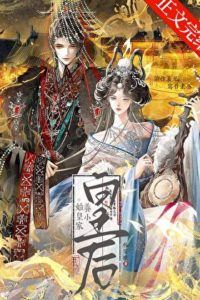
Gu Juefei, the former youngest top scholar of the Great Xia Dynasty, has lived in seclusion at Dazhao Temple for six years. Once a celebrated prodigy who ranked first in both provincial and metropolitan examinations, he abandoned his brilliant career and estranged himself from his family, notably his father Gu Chengqian, the powerful Grand Preceptor, after falling out of love with Wei Yi, who entered the palace as an imperial consort. His father has recently visited the temple, urging him to return home to mend family relations and guide his younger brother, but Gu Juefei remains resolute in his withdrawal from worldly affairs.

Meanwhile, Lu Jinxi, the young widow of the late General Xue Kuang, has miraculously recovered from a life-threatening illness. Unknown to her household, she is a modern entrepreneur who transmigrated into this body. The original Lu Jinxi was known for her extreme gentleness and timidity, often allowing her sisters-in-law, particularly the ambitious Third Madam Wei Xian, to bully her and misappropriate household funds without resistance. Since her recovery, however, Lu Jinxi has undergone a profound transformation. She is no longer the passive victim but a sharp, calculating woman who refuses to be taken advantage of. She immediately asserts her authority by reprimanding arrogant servants and cleverly turning the tables on Third Madam Wei Xian, who had attempted to steal expensive silk under the guise of family necessity.

The central conflict escalates when Lu Jinxi’s six-year-old son, Xue Chi, gets into a violent altercation with Second Young Master Luo of the neighboring Duke of Ying’s Mansion, injuring the boy’s arm. While the household is in chaos and staff fear Lu Jinxi’s traditional reaction of appeasement, she displays unusual calm. She dispatches her servant to summon the renowned but eccentric physician Zhang the Ghost Hand to treat the victim and insists on personally visiting the Duke’s mansion to resolve the dispute. Her composure unsettles her maids, who are unaccustomed to her newfound decisiveness, and intrigues the observers, including Gu Juefei, who watches her arrival at the temple from a distance.

Gu Juefei observes Lu Jinxi with growing curiosity. He had previously held contempt for Xue Kuang for bringing a concubine and bastard child back from the frontier, viewing Lu Jinxi as merely the long-suffering wife who accepted this humiliation. However, the woman who steps out of the sedan chair is not the timid figure he remembered. She displays an inscrutable depth and strategic mind that Gu Juefei finds compelling. He recognizes that the Lu Jinxi he knew has been replaced by someone entirely different, prompting him to delay his descent from the mountain.

Back at the mansion, Lu Jinxi confronts Wei Xian, who uses the death of Xue Kuang to provoke the child. Lu Jinxi fiercely defends Xue Chi, silencing Wei Xian with sharp wit and cold logic. She then engages in a delicate negotiation with her son, understanding that his refusal to apologize stems from a desire to protect her dignity rather than simple malice. By validating his feelings while teaching him about adult compromises, she builds a bridge of trust with the boy. The narrative weaves together Lu Jinxi’s struggle to manage a treacherous household with Gu Juefei’s hidden interest in her mysterious transformation, setting the stage for a complex relationship between two wounded individuals navigating the political and social intricacies of the capital.

As Lu Jinxi prepares to visit the Duke of Ying’s mansion to address the injury directly, she encounters Zhang the Ghost Hand, whose unconventional methods and past connections to her illness add another layer to her rising influence. The story establishes a tense atmosphere where Lu Jinxi’s modern sensibilities clash with ancient feudal norms, while Gu Juefei’s presence looms as a potential ally or obstacle in her new life. The inciting incidents of family power struggles and romantic misunderstandings from six years ago begin to intertwine, suggesting that neither character can remain detached from the other’s fate for long.

Latest Release
DateGroupRelease
2026-09-26akknovel c12
2026-09-26akknovel c11
2026-09-26akknovel c10
2026-09-26akknovel c9
2026-09-26akknovel c8
2026-09-26akknovel c7
2026-09-26akknovel c6
2026-09-26akknovel c5
2026-09-26akknovel c4
2026-09-26akknovel c3
2026-09-26akknovel c2
2026-09-26akknovel c1

Community Reviews

Rating(3.8 / 5.0, 67votes)
5 stars
21(31%)
4 stars
16(24%)
3 stars
24(36%)
2 stars
6(9%)
1 stars
0(0%)

Popular reviews

... Read More
I keep coming back to the sandalwood thing. Like, that detail seems so small. She's just gotten back from Dazhao Temple, there's this 'faint scent of sandalwood from the temple, which gradually filled the air.' And the boy who's been fuming, fists clenched, face flushed like he's about to detonate, just... slows down. His eyelashes flutter. His hands in her palms curl 'unconsciously.' That's it. No grand gesture. No 'I forgive you' speech. Just woodsmoke and the smell of a place that's not their house, not the world of dukes and young masters, somewhere with incense and stillness. And somehow that's what breaks the knot. I think if that scene was set in the living room instead of carrying this temple residue, it would've been ten percent less effective. The world outside is all political maneuvering and 'go apologize to the Duke of Ying,' but she walked in smelling like a temple and for one beat they're both just... two people in a quiet room. Also the body descriptions are doing quiet work. Her fingers are 'pale, delicate, fragile they seemed like they might break at the slightest touch.' His knuckles are 'red and slightly bruised.' She's post-illness and he just threw himself against another kid. Two damaged sets of hands meeting. I didn't expect that image to get me. And the whole gray-drizzle-day versus spring-blue-sky comparison for how her voice used to sound versus how it sounds now? That's not worldbuilding per se but it's building the emotional geography of their relationship. The weather IS the house. Used to be overcast and soft and sad. Now it's bright and she's talking about the fight and he's being a little lion and it's still... clear skies. Which feels wrong for the subject matter and that's the point. The setting of their domestic life has shifted under his feet and he's trying to map it with old coordinates. I just, the sandalwood. I keep thinking about the sandalwood. There's something about a mother walking in from a temple after nearly dying and still carrying the smell of burned wood on her clothes and her kid just... breathing it in and unclenching. No explanation needed. The room does the talking.
... Read More
I started to say "meh, just a scuffle between sisters-in-law" and then I reread the whole thing twice and couldn't get the "clay figurine" line out of my head. "Even a clay figurine has its limits, and I advise you to learn some restraint." And I think that single sentence is the thesis of the entire book, maybe. Clay figurines can be molded. They can be chipped, painted, put on a shelf, knocked over, dusted off, rearranged. But they're still *there*. They have a shape. And for twelve years Lu Jinxi's shape was the one Wei Xian wanted — soft, pliant, easy to nudge. The clay figurine metaphor works because it's domestic, small, quiet. This isn't a war. This is two women in a living room over a broken jar and a ruined skirt. But the deeper layer that wrecked me is the *motherhood* thread. Lu Jinxi's whole transformation is triggered not by some grand political shift or a sword fight. It's a six-year-old boy flinging salve at the person who mocked his dead father. The author keeps circling back to the word "mother." "It's no wonder that someone who has never been a mother could be so heartless." And Wei Xian *hasn't* had a child. Four years. It's not said outright in this scene, it's just... the shape of the silence. "After four years in the household, with no sign of a child, wasn't that her own unspoken pain?" One line, buried in the narration, and suddenly the whole power dynamic flips. Lu Jinxi didn't just defend her kid. She poked the one spot on Wei Xian she can't punch back, because it's *also* the wound she won't show anyone. And the jade jar itself — it's a medicine jar. Healing stuff. And it gets *broken*, gets hurled in anger, splatters ointment on a butterfly-embroidered skirt. The butterfly. I keep thinking about that embroidery. A butterfly on silk, now stained with green herbal paste, in a room where a child is crying and a woman is drawing lines in the air with her voice. Everything fragile and ornamental getting crushed by the blunt, ugly reality of grief and rage. And then there's the "vast mountains under the moon" image for Xue Chi's face. Mountains don't move. They don't apologize. They just *are*, and they're older than the person looking at them. A six-year-old with his dead general's permanent features staring down the woman who's been bullying his mother. The symbolism is doing so much work and I'm not even sure the author plans it that tightly, but the layering is real. The question that won't leave me is whether "mother" becomes Lu Jinxi's armor or her cage. Because the author frames her new strength as *because of the children*. "For the sake of her children, she had finally grown a backbone." That's empowering and it's also... a little confining? What happens when the children grow up and the shield stops being necessary? Does she still have the clay figurine's shape, or does she dissolve? I need to know. I genuinely need to know and I'm going to have to wait and that's terrible.
... Read More
"Crash! A sharp, terrifying sound echoed through the room." I was mid-sip of my actual tea when I hit that line and my heart went *thud*. And that's the thing about this chapter sequence — it's structured like a slow fuse that gets lit in little increments. First you get the banter. Wei Xian being petty, Xue Chi sulking, Qingque stiffening. Low stakes. Domestic bickering. You're half-skimming, thinking "here we go, another household drama scene." Then the escalation is *physical*. Xue Chi lunges. The jar is in the air. The crash. The ointment. The skirt. Now the stakes have a sensory weight to them and you're leaning in. And right when the tension peaks — Wei Xian is about to physically escalate, Qingque is bracing, the maids are in full chaos mode — the author *cuts*. A new voice. "Third Sister-in-law, what's all this commotion about?" And everything stops. The pacing slams on the brakes. Lu Jinxi's entrance isn't shouted; it's quiet, cool, almost boring in its delivery, and that's what makes it hit. You've been vibrating at a high frequency for twenty lines and suddenly there's this... stillness. And it's more disorienting than if she'd burst through the door yelling. The author knows that the scariest thing in a shouting match is the person who stops shouting. Then the verbal exchange with Wei Xian is written in short, sharp beats. Question. Snap. Retort. Snap. No long paragraphs of internal processing. It reads like a fencing match. And I kept up with it because the sentences stay tight. Where the pacing *almost* slows too much is Wei Xian's internal monologue about Lu Jinxi's old self vs. new self. The author is explaining the transformation to us, which is necessary, but it breaks the momentum for like three paragraphs. I found myself skipping ahead to see when the next line of dialogue was. Also the "clay figurine" speech at the very end feels slightly rushed. It's a big thematic mic-drop but it arrives as a closing bullet point in a list of threats, and I wanted it to have more room to breathe. Maybe one more line of Lu Jinxi's internal thought before she dismisses Wei Xian. Not a lot. Just enough to make the final "Qingque, see her out" land with more weight. The cliffhanger here isn't a plot mystery, it's *emotional* — we don't know if Lu Jinxi holds this ground or cracks. And that's enough. I closed the book segment and immediately opened the next one. The jar is still broken on the floor, metaphorically speaking, and nobody's swept it up yet.
... Read More
The sensory details in this passage are doing so much heavy lifting. We start with the physical world – the freezing weather, the rabbit fur muff, the mountain path, the temple gate. It's cold enough that keeping hands tucked isn't just practical, it's character. But then we move inside the Zen monastery and the atmosphere shifts: white snow already showing traces of melting, damp patches, thin air carrying the faint scent of sandalwood incense. It's quiet, contemplative, almost sacred. And then there's this goddamn Diospyros lotus tree with one dried leaf still clinging to it. Gu Juefei picks it up, traces the veins – those wrinkles on the leaf's surface, deep and aged, yet pressing into warmth. That single leaf is basically the entire thematic core of the book right now. Something that should have fallen long ago is still holding on. The setting isn't just backdrop; it's mirroring the characters. The temple is where ghosts go to be laid to rest, but also where they linger. The snow is melting but still cold. Everything is in transition. And the visual framing of her entering the temple while being watched from the path – it's cinematic, it's layered, it makes the world feel alive in a way that goes beyond mere description.
... Read More
Okay, so this body-swap reveal is genuinely brilliant and I need to process it. Bai Lu stands outside the prayer hall clutching that rabbit fur muff, watching Lu Jinxi go in and out like nothing happened, and we get this entire flashback of the past three years—Lu Jinxi as she used to be. A woman who took every abuse in silence, cried alone, let Third Madam Lady Wei steal silk meant for the old madam, never pushed back once. The maids tried everything: pleaded, warned, even suggested she stand up for herself. Nothing worked. Then the illness hits. She brushes with death. Comes back—different. The scene where she hands back the medicine bowl and says, "If they could take things without a token, what good are you?" Chills. Absolute chills. The accountant literally runs away because for the first time, the 'good-natured' Second Madam just flipped the entire power dynamic on its head. She didn't pay. She didn't negotiate. She let the blame land on Lady Wei or the accountant and walked away clean. But here's what really gets me: at the end, Lu Jinxi (or whoever is inside her body now) looks at that memorial tablet of Xue Kuang and thinks about Lady Wei. She imagines Lady Wei in her position—raising four children, caring for elderly parents—and wonders if the real Lu Jinxi might now be living inside Lady Wei's body instead. The implication is staggering. Two women, swapped bodies, neither one knowing for certain what the other is doing. And this new Lu Jinxi says she won't let anyone trample her anymore. What does that mean when the person who was most easily trampled is no longer driving? When someone ruthless might actually be behind those eyes now? That dynamic between the two women has completely, irrevocably shifted.
... Read More
Let me just start by saying the stakes in this opening are enormous, even though nothing visually dramatic is happening. A man is walking slowly down a mountain. That's it. And yet—everything is at stake. Gu Juefei's father, Gu Chengqian, is the Grand Preceptor of the Great Xia Dynasty—the highest-ranking civil official. He was injured protecting the third prince during a palace coup thirteen years ago, an injury that still kills him with pain in cold weather. Despite this, he braved a snowstorm at night to visit the temple. Why? Because his son—his eldest son, the one who abandoned everything—hasn't returned in six years, and his fiftieth birthday is in ten days. The stakes aren't just personal. They're political. The father is nearing retirement. The second son passed the provincial exam and is preparing for the imperial exam. The family needs an heir who will carry the name forward. And Gu Juefei—the brilliant, disgraced, disappeared prodigy—is the only one qualified to guide him. But what about Gu Juefei's own stakes? He gave up everything—fame, position, family—for a reason we don't yet fully understand. Returning means reopening old wounds, confronting whatever truth drove him to Dazhao Temple in the first place. Wei Yi is in the palace. Lu Jinxi is arriving sick. The concubine died mysteriously. The disabled boy is being raised as if nothing happened. The conflict isn't just father versus son. It's past versus present. Truth versus survival. And every character is standing on a precipice, waiting to see who will step forward first.
See all reviews

Custom lists

See all custom Lists