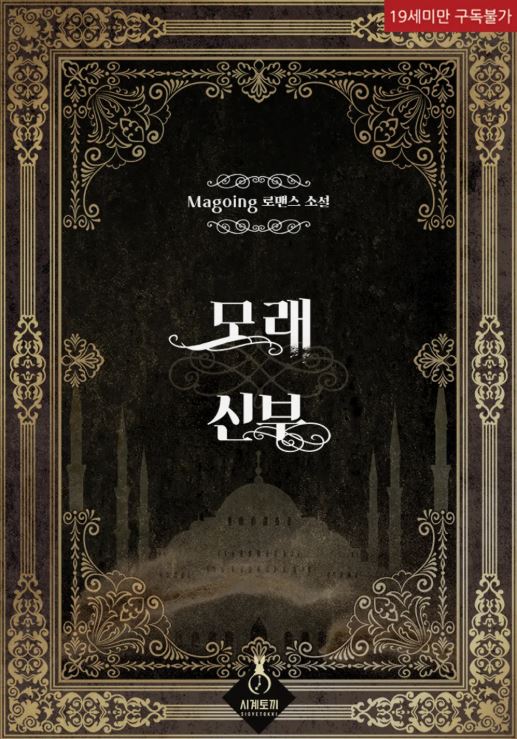
I Was Forced into Marriage by the Grand Duke
+Add to Custom List
Novel Info
  • Author:
  • Status:Ongoing

Summary

... Read More

Astrid Bowell, the beloved daughter of a prestigious Hestian noble family, finds her life shattered when her father dies and she is forced into a marriage with an elderly, diseased Count to save her family from ruin. At fifteen, she is widowed almost immediately, stripped of her title and status under the Holy Kingdom’s cruel laws that brand widows as sinners. She is subjected to a brutal penance ritual where her hair is chopped off and thorny vines are placed on her back. Her cousin, Fabiola, who has taken over Astrid’s former position as the family jewel, exacerbates the humiliation by publicly mocking her. The event is observed from a distance by Caleb Lionel, a Croatan knight and heir to the Grand Duchy of Cliff. Caleb had once been engaged to Astrid before her father’s death altered their fate, but he has long since accepted the new arrangement with Fabiola. Despite his initial reluctance to interfere, Caleb cannot shake the image of the shivering, rain-soaked girl.

Three days after the ceremony, Astrid lies dying in a dilapidated attic, abandoned and untreated. Caleb, unable to ignore her plight, secretly enters the room and revives her with a potent healing potion. He offers her water and harsh but necessary advice about survival, urging her to fight for her life. The encounter ends abruptly when Caleb departs, leaving Astrid with his mother’s engagement ring as a token of their dissolved bond. He vows never to return to Hestian soil, viewing the country and its customs with disdain. Meanwhile, Astrid is sent to live in the Bowell estate’s annex under the watchful and hostile eye of Fabiola and the new duke. She endures servitude and humiliation, living in fear until Caleb unexpectedly returns to the estate. He confronts an abusive servant who had assaulted Astrid, beating him severely. Mistaking Astrid for a servant, Caleb commands her to attend to his needs, and she complies, seeking protection from her tormentors.

As Caleb stays in the annex, a complex dynamic develops between the two. Astrid hides her true identity, presenting herself as a lowly servant to avoid Fabiola’s wrath. Caleb, intrigued by her resilience and quiet dignity, treats her with a mix of roughness and unexpected kindness. He teaches her to hold her head high and never show weakness. Their time together is interrupted when Fabiola arrives, leading to a tense confrontation. Astrid is eventually forced out of the estate and sent to St. Francesca’s Convent, a place where widows spend their lives in prayer and penance. Caleb, having secured his political alliances, leaves Hestian for Croatan, unaware that Astrid remains in his thoughts.

Three years pass. Astrid, now eighteen, has matured into a resourceful woman within the convent. She uses her knowledge of ancient languages to transcribe texts, gaining access to the library and a forbidden zone containing banned books. Her life changes when she encounters Caleb again, who has returned to Hestian searching for secret potion-making formulas essential to Croatan’s war efforts. Caleb does not immediately recognize Astrid, who now poses as a novice priest to move freely in the library. Recognizing the mutual danger they face if caught trespassing, Astrid negotiates a deal: she will help him find what he seeks in exchange for her silence and safety.

Astrid reveals that she possesses the knowledge of the potion recipes, having memorized them during her transcription work. Caleb, realizing the value of her intellect and the irony of finding his missing treasure in the person he once dismissed, claims her as his own. He demands her release from the convent, defying the religious authorities. This leads to a direct confrontation with the Abbot, Julio, whom Caleb threatens with violence if he refuses to hand over Astrid. The Abbot, intimidated by Caleb’s raw power and political status, is forced to comply. The story concludes with Astrid leaving her life of penance behind, reborn not as a sinner but as the partner of the powerful Croatan heir, ready to face a new future beyond the constraints of Hestian society.

Latest Release
DateGroupRelease
2026-10-03dusk blossoms c166
2026-10-03dusk blossoms c165
2026-10-03dusk blossoms c164
2026-10-03dusk blossoms c163
2026-10-03dusk blossoms c162
2026-10-03dusk blossoms c161
2026-10-03dusk blossoms c160
2026-10-03dusk blossoms c159
2026-10-03dusk blossoms c158
2026-10-03dusk blossoms c157
2026-10-03dusk blossoms c156
2026-10-03dusk blossoms c155

Community Reviews

Rating(0 / 5.0, 23votes)
5 stars
0(0%)
4 stars
0(0%)
3 stars
0(0%)
2 stars
0(0%)
1 stars
0(0%)

Popular reviews

... Read More
Okay so the pacing in this batch is actually something I want to dissect because it's not lazy — it's calculated. The story opens in media res with the library confrontation, right? High tension from the first paragraph. Caleb catches Astrid, there's physical contact, whispered threats, a deal is struck. Then instead of resolving it, the author pulls the rug out and drops us a full month earlier with that engagement annulment letter. This is where I usually get annoyed — flashbacks can feel like cheating — but this one earned its place. We learn about Fabiola's illness, the broken engagement, Cradoc's rage, Elkan's rumors about Caleb being some kind of monster, and then — bam — the name Astrid surfaces like a ghost from the past. The structure does double duty here: it explains WHY Caleb is searching for potion-making texts (the dead grand duchess's legacy, the magic stone trade) AND it reconnects him to Astrid, the girl he barely remembers but whose name changes everything. The transition back to the present — “Since I've found a treasure, it's only natural I claim it” — hits so much harder because we now understand the full weight of what he's deciding. The author trusts the reader to hold both timelines in their head simultaneously, and that respect for the audience is rare.
... Read More
Okay so the whole setup here is *chef's kiss*. We get dropped right into the moment Astrid arrives at Cliff Castle after what sounds like an agonizing journey, and honestly the plot economy is wild—everything gets established in one fell swoop. She's a widow, she was married to an old count, she spent three years at a monastery, she's from the noble Bowell family but has been through hell, and now she's being thrust into this cold castle with a man she barely knows. The stakes are immediately clear without a single exposition dump. But what really sold me was the dinner hall scene at the end—that pivot from gossip to Caleb manhandling Helman by the collar? Instant tension spike. One minute these knights are casually speculating, the next you feel actual dread in your chest. And Caleb's weird leniency afterward, cleaning Helman's clothes and all, that's not kindness, that's something more complicated. It keeps you wondering what's actually going on under his skin. The subplot threads here are starting to weave together nicely—the castle's hostility to an outsider, the rumors about Astrid's past, Caleb's strange protectiveness. I'm hooked.
... Read More
Let's talk about Caleb's dialogue because oh my god. Most male leads in this genre talk like they're reading from a romance novel playbook — stiff, formal, occasionally poetic in a way that feels copy-pasted. Caleb sounds like a person who has never once filtered anything in his life and views social decorum as a personal insult. "But with such poor hospitality, I don't see why I should bother" — said while pretending not to have a document. The audacity. The sheer unbothered energy. He then follows it up with the most spectacular power move in the entire text: "Do you think someone who kills monsters with his bare hands, devours raw flesh, and drinks their blood is a joke? Or has my reputation not reached this backwater?" Like, bro is out here treating his reputation like a weapon. And Julio? His voice is completely different — clipped, formal, rooted in institutional authority. "This monastery is a sacred, untouchable space. Not even the King of Croatan could violate its sanctity without cause." You can hear the old man rattling with religious conviction. And Caleb just *laughs*. "Hah!" He barks. He doesn't even dignify it with a proper retort. But the line that absolutely got me was Astrid's: "In that case, please, be my Grand Duke." She doesn't just accept — she flips the script. She makes it sound like *she's* granting *him* the honor. And then she kisses the back of his hand. Caleb, who kills monsters with his bare hands and drinks their blood, gets *stiffened in surprise*. The dialogue here isn't just functional; it reveals power dynamics shifting in real time.
... Read More
The structure of this section is masterful in how it modulates tone. You start with this almost idyllic introduction—Matilda's warmth, the bath with rose petals, the attentive servants, Astrid's gradual softening into the comfort of being cared for. It's gentle, it's safe, it feels like the opening act of a romance. And then—the dining hall. The transition is so abrupt it's almost jarring, and I mean that in the best possible way. One moment Astrid is smiling at compliments, the next the narrative voice shifts into something harder, sharper, and suddenly we're watching a man lift another man by the throat. The pacing here does exactly what it should: it denies the reader comfort. Just when you settle into the tenderness of Astrid's makeover scene, the floor drops out. The chapter ends on that uneasy note—Caleb's strange mercy, the ominous warning about gossip, the barrel of foul-tasting potion being force-fed. It leaves you feeling unsettled, which is precisely the right emotion to carry into the next section. The author understands that control over pacing is control over reader psychology, and that's a skill.
... Read More
Okay so this chapter? Absolutely unhinged in the best possible way. It opens with what is basically a full flashback sequence — the Grand Duchess's death, the poison, the mission — and I was bracing for a slow burn. Then it pivots HARD into Astrid's sleepless night, the abbot summons, the proposal, the Julio confrontation, the kidnapping, and a Fabiola cliffhanger. Like, what is the author doing to my nervous system. The flashback at the start is crucial because it recontextualizes everything we're about to see. Caleb isn't some random noble hoovering up wives — his mother literally died defending a border against monsters that multiply inside mothers. When he says "I must have you for myself," you initially read it as possessive, but now you understand it's also desperate. That's good structural work. Then the pacing inside the monastery office is razor-sharp. Knock. Knock. Knock. Creeeak. The onomatopoeia almost made me laugh out loud because it's so cinematic. And then Caleb just kneels and drops the proposal like it's Tuesday. No preamble, no ceremony. Just business. The most impressive beat though is the transition from rescue to the Fabiola scene. One moment Astrid is being swept away in a priest's robe, the next we're in Duke Linton's office and Fabiola is losing her absolute mind. That pivot at the end — "his patience had run out. Reali" — cut off mid-word. I literally gasped. This author does not respect the reader's ability to put the book down.
... Read More
The sensory worldbuilding in this passage is quietly extraordinary. Let me start with Cliff Castle itself—it's described as 'a harsh and lonely place,' overrun by 'grim, burly men,' and there's this palpable sense of masculine roughness everywhere. It's a world that hasn't seen much softness, and Astrid's arrival literally feels like a spring breeze entering a frozen room. That contrast is everything. But the detail that absolutely destroyed me was Cliff's Tears. The description of this legendary elixir—vile-tasting, bitter, fishy, something every knight is forced to drink daily, so repulsive that new converts 'vomit or burst into tears'—this is such a perfect piece of worldbuilding. It tells you so much about this place without any exposition. These people endure discomfort as a matter of course. They're hardened. And Astrid, with her rose-petal baths and delicate sensibilities, is being plunged into this world. The visual of the great dining hall, knights still sweaty from training, whole roasted pigs, wine flowing, and then Caleb appearing out of nowhere like some kind of predatory force—I could see this as a film scene. The lighting, the sound design, the physicality. Every detail serves atmosphere.
See all reviews

Custom lists

See all custom Lists