I took the wrong script of Qing Leng Xianjun - Reviews

I took the wrong script of Qing Leng Xianjun
+Add to Custom List
Sort
Add review
... Read More
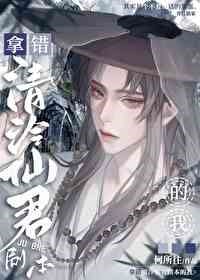
The dialogue in these chapters is doing so much heavy lifting and I need to talk about how each character has a completely distinct voice. Xiao Wei is a firecracker. Every line he speaks is pure unfiltered emotion — "You beast!" "I'll kill you, you beast, you bastard!" He doesn't think before he speaks, he speaks before he thinks, and that's what makes him so alive on the page. He's the emotional barometer of the scene, the one who says what we're all thinking. When he chokes up and becomes incoherent, that's not bad writing — that's someone whose anger and loyalty are so tangled they can't separate them. Ji Lianzhou is the opposite. He barely speaks. His dialogue is sparse, controlled, each word weighted. "Where is Ah Xu. What have you done to him?" That's it. Two sentences that carry the weight of someone who has already lost patience. And then later: "Ah Xu has long forgotten who he is." This line — delivered wearily, almost to himself — is one of the most devastating pieces of dialogue in the entire text. Three words, said quietly, and it reframes the entire power dynamic. Yu Xiao thinks he's the one holding power, but Ji Lianzhou just pointed out that the person Yu Xiao is obsessed with doesn't even remember him. That's not a threat. That's a eulogy. Yu Xiao's dialogue is the most interesting because it shifts so dramatically. He starts playful and mocking — "occasionally, I have him sleep with me" — this is performative cruelty, him playing the villain because that's the role he's been given. But then when he says "He personally promised me that once I came of age, he would marry me" — there's something almost vulnerable underneath the smirk. He's testing them. He knows they won't believe him. But he needs to say it out loud anyway. And Chu Xuyun's dialogue — or lack thereof — is its own statement. He barely speaks in these chapters. When he does, it's functional: "Dismissed." "I did not kill him." His silence is louder than anyone else's words. It's the dialogue of someone who has checked out of a situation so completely that even resistance feels like too much effort. The narrative voice itself is worth discussing too. It's third-person limited, mostly hovering around Yu Xiao and Chu Xuyun, but it dips into Li Yanhe's perspective for that devastating reveal section. The prose is restrained — the author trusts the reader to feel the emotion without being told how to feel. When Yu Xiao thinks about reaching out to touch Chu Xuyun's hair and realizing he doesn't even have that right, the author doesn't add any commentary. Just the thought, presented plainly, and it lands because it's unadorned. "Heaven could attest, he initially only wanted to get a little closer, just a little would suffice." This line — the narrative voice stepping in to confirm the depth of Yu Xiao's devotion — is the kind of moment where the author's voice becomes almost unbearable in its clarity. No melodrama. Just truth, stated plainly, and it cuts deeper than any heightened language could.
... Read More
Okay so this whole arc is built on one of those delicious dramatic irony setups where everyone is misreading each other and I am SCREAMING internally. Let me break down why this plot structure is so satisfying. Chu Xuyun stays in the Demon Palace because... well, the text never outright says why. And that ambiguity is GENIUS. Li Yanhe comes in thinking his master is a captive, plans a rescue mission, and then Chu Xuyun writes "I voluntarily stay" — which Li Yanhe immediately interprets as "my master is sacrificing himself for the world because only he can restrain Yu Xiao." Meanwhile, the reader is sitting there going "BRO YOU'RE THE ONE WHO WANTS TO STAY" and Li Yanhe is over here writing a whole heroic narrative. The flashback structure is also doing heavy lifting here. We get this fragmented reveal about four years ago — the Sect Master's portrait, the threat to tell his parents, the forced separation — and it recontextualizes EVERYTHING. Chu Xuyun didn't drive Yu Xiao away out of indifference; he was manipulated by social pressure and family dynamics. That painting detail? The Sect Master saying Yu Xiao "holds your portrait day and night, sleeping with it" — this is a whole emotional backstory compressed into a few lines. And then the cliffhanger ending with Yu Xiao's ultimatum: kill the disciple or form a bond. The plot just DROPS a bomb and cuts to black. I need to know what happens next. The narrative also weaves in a subplot about Li Yanhe's alchemy skills and his "Devil's Mask of Heavenly Shape" invention, which adds texture without derailing the main tension. It shows he's clever and resourceful, making his misreading of the situation even more tragic — he's smart but doesn't know his master at all. Overall, the plot coherence is strong. Every reveal connects back to the central relationship between Chu Xuyun and Yu Xiao, and the stakes keep escalating naturally from personal to global.
... Read More
There's something deeply unsettling about the theme of memory in this chapter, and I think it goes way deeper than just a love triangle plot device. Chu Xuyun's amnesia isn't just a convenient narrative tool—it's a commentary on how identity is constructed through relationship. When he can't remember Yu Xiao but remembers Yin Xuzhao from a chance encounter, it raises this uncomfortable question: does being present matter more than being important? Yu Xiao has been by Chu Xuyun's side through everything, yet he's the one who's forgotten. Yin Xuzhao is basically a stranger who happened to grab his wrist once, and that's enough to trigger recognition. The tanuki form itself is fascinating as a symbol. Chu Xuyun, the proud sword cultivator who was once described as "aloof" and "proud," is now literally a small cat-like creature who can't even speak. This physical transformation mirrors his loss of agency and identity. He's been reduced to something small and helpless, and the people around him are all projecting their own desires onto him rather than seeing who he actually is. Yin Xuzhao's obsession with Chu Xuyun is another layer of this theme. He doesn't actually know Chu Xuyun—he knows an idea of Chu Xuyun, a fantasy he's built up over seven years. The three-thousand-character letter is the perfect symbol for this: it's not a genuine connection, it's performance. He's writing to an idealized version of someone who doesn't even remember him. The underwater setting is also significant. Water is a classic symbol of the subconscious, of emotions that run deep and unseen. The entire confrontation happens beneath the surface, literally and figuratively. Yu Xiao's water-avoiding membrane shattering, the need to hold breath—it all suggests that these characters are operating in an environment where they can't easily escape their feelings. The dragon tendon that Yu Xiao extracts is another potent symbol. Dragons are traditionally powerful, majestic creatures, and removing a tendon is a act of both violence and intimacy. Yu Xiao plans to turn this symbol of Yin Xuzhao's power into soup for Chu Xuyun—transforming the threat into nourishment. It's a deeply possessive act that reveals how far he's willing to go. And then there's the recurring motif of hands and touching. Yin Xuzhao grabbing Chu Xuyun's wrist, Chu Xuyun grabbing Yin Xuzhao's wrist to stop him from killing Yu Xiao, Yu Xiao pulling Chu Xuyun into his arms—these physical connections are the only way these characters can truly communicate when words fail. Chu Xuyun can't speak, so touch becomes his primary language. The ending line about Yu Xiao planning to make dragon tendon soup is both darkly humorous and thematically rich. It suggests that love in this story is inseparable from violence, that protection and possession are two sides of the same coin. The author isn't shy about exploring the darker aspects of devotion. This story is really about what we owe to the people who remember us, and what happens when that memory is taken away. It's about the violence of being forgotten and the desperation of trying to be remembered. And honestly, that's way more interesting than a simple romance plot.
... Read More
Let me just say — the Demon Palace is somehow both terrifying and domestic in the most unexpected way. Chu Xuyun is a captive, sure, but he's also got a mandarin duck-patterned red quilt, he's playing chess against himself, and he's hiding leftover grilled fish under his bedding like a little hoarder raccoon. "He had to keep some emergency rations." — I am not joking, this detail made me laugh out loud in the middle of what is otherwise a deeply unsettling captivity narrative. The tonal whiplash is real. One moment you're reading about a powerful immortal being bound by a magical red rope and taken to a demon lord's palace, and the next moment he's packing leftovers because he heard the lord is in a bad mood and might not share dinner. The contrast between the settings is also doing a lot of heavy lifting. The Taiqing Sect on Zhuzhi Mountain — ancient halls, porcelain cups shattering, the crisp sound of Li Yanhe's world collapsing in real time. Versus the Demon Palace in the abyssal hell, where Chu Xuyun pretends to be absorbed in chess the moment he hears footsteps, smoothing his wrinkles like he's preparing for an inspection rather than a kidnapping. And the rain scene — the misty autumn rain, the ninety-nine steps, Chu Xuyun with his umbrella looking down. This is pure cinematic imagery. The author doesn't need to describe much; the picture paints itself. A white-robed immortal above, a demon cultivator kneeling below, rain falling between them like a curtain neither can cross. The inn at the foot of the mountain is another great touch — cramped, tense, Ji Lianzhou's sword aura so fierce it's almost palpable, Xiao Wei choking on his curses. It's a classic confrontation setting but the author makes it work because every character's physicality is so specific: the white knuckles on the sword hilt, the bloodshot eyes, the jade bone ring being toyed with lazily by someone who just kidnapped an Immortal Monarch like it was nothing. The world feels lived-in. You can tell the Demon Realm has its own politics (the little redhead informant, the demon guards exchanging gossip about the lord's mood), the Taiqing Sect has its own hierarchy and secrets (Li Yanhe knowing things no one else does), and both realms have texture beyond "good side" and "bad side." Even the chessboard scene — Chu Xuyun filling the entire board unconsciously, never having lost a game — tells us everything about his character without a single exposition dump. I also want to mention how the sunset light falling on Chu Xuyun's face during that intimate scene creates this almost painterly quality. Rosy glow, reddened earlobes, the contrast between warmth and the coldness of what's happening. The author knows how to frame a shot.
... Read More
Okay can we just talk about the absolute DISASTER that is Yu Xiao's emotional state in this chapter? I am not okay. I am genuinely not okay. The man is so transparently in love it hurts, and Chu Xuyun is so obliviously sweet about it that I wanted to shake both of them and also simultaneously ship them so hard my screen cracked. Let me start with the wedding attire scene because THIS is where everything fell apart for me. Chu Xuyun is sitting there, completely unfazed, drawing what he thinks is a dragon on the chessboard. He's been working on this design for HALF A DAY. Half a day! And Yu Xiao walks in and immediately assumes—ASSUMES—that the dragon is for some Demon Clan beast. Not for him. Not for their wedding. For ANOTHER creature. And then Chu Xuyun's reaction? He just... wipes it off and writes CRANE. Because apparently that's what Li Yanhe's associated with now. Yu Xiao's face. The way he says "Even if I resent Li Yanhe, I won't kill him before our wedding" like he's trying to convince himself. The man is falling apart and he doesn't even realize it. But here's what got me—the kiss. Yu Xiao grabs Chu Xuyun's face and kisses him like he's trying to prove something, and Chu Xuyun's entire internal monologue is just "Unfair, Heavens above" while his heart is doing Olympic-level gymnastics. He WANTED to kiss Yu Xiao. He was literally about to touch Yu Xiao's face and then some demon envoy showed up at the worst possible moment. The universe has a cruel sense of humor. And Yu Xiao leaving with that small bottle in his hand? What bottle? WHAT IS IN THE BOTTLE? I need to know. I need this resolved. The tension between these two is so thick you could cut it with a sword, and yet they're both so emotionally stunted it's painful.
... Read More
I need to talk about the dual cultivation scene because WOW. Chu Xuyun's internal monologue during this entire sequence is the funniest and most heartbreaking thing I've ever read. He's sitting there thinking about how Yu Xiao's technique is "practiced to perfection" and mentally cheering him on like he's at a sports event. "A bit faster, Yu Xiao, just a bit faster." BRO. You are being held captive by the demon who hates you and your only concern is whether he's doing a good job at... whatever this is. But here's what actually got me: the moment Yu Xiao bites his neck and Chu Xuyun tries to suppress his sounds because "making sounds would give it away!" Give WHAT away? That he's enjoying it? That he has feelings? That he's not actually terrified? The man is so deeply repressed that even physical pleasure can't break through his discipline. And Yu Xiao notices. Of course he notices. He's reading every micro-expression like a man starving. The most devastating line in the entire passage is when Chu Xuyun thinks: "Why did it seem like Yu Xiao was angry? Was it because he hadn't properly learned the dual cultivation technique?" He thinks Yu Xiao is angry about his TEACHING. Not about the betrayal. Not about the humiliation. About the technique. This man has built such an impenetrable wall around his own emotions that he can't even recognize the emotional landscape around him. And yet — and this is the thing that got me — when Yu Xiao says "Immortal Lord, get used to it," there's this weird tenderness underneath. He's not actually hurting Chu Xuyun. He's holding him. The cold fingers sliding under thin clothes, the deliberate slowness of it all. Yu Xiao could be brutal. He has every reason to be. But he's not. He's being gentle, and that gentleness is what makes this so painful to read. "Do you know what you should do now?" Yu Xiao asks, and Chu Xuyun's mind goes completely blank. Not because he's afraid. Because he genuinely forgot. He drifted off during what should have been the most intimate moment of his captivity and his first instinct is guilt. Not fear. Guilt. Like he's disappointed his host. I'm not okay.
... Read More
Okay so let me just say this upfront: I laughed out loud at Chu Xuyun. Like, actually laughed. The entire premise is built on this gorgeous dramatic irony where Yu Xiao is over there seething with七年 of hatred and trauma and revenge plans, and Chu Xuyun is just... happily making himself at home. Three days in and he hasn't even realized he's supposed to be suffering. The guards outside are genuinely terrified of him while he's over there thinking about how nice the silk sheets are. That contrast is comedic gold. But the plot underneath is actually pretty tight. Seven years ago, Chu Xuyun saved an orphan from the Demon Realm — that orphan being Yu Xiao. Then Yu Xiao got expelled from Taiqing Sect after speaking out against the sect leader during a ritual, and Chu Xuyun forced him to kneel and apologize. That humiliation is the wound that festered. Now Yu Xiao has power and Chu Xuyun doesn't, and the tables have turned. Classic revenge setup, but the author is subverting it beautifully by making Chu Xuyun completely oblivious to the power dynamic. The subplot with Xiao Ming and Xiao Wei at the inn is doing heavy lifting too. They're hearing rumors that Yu Xiao is humiliating the Immortal Monarch, and Xiao Ming's reaction — knuckles whitening on his teacup — tells us everything we need to know about his feelings. The rescue mission is clearly coming. And then there's the question of what happens when Chu Xuyun finally figures out that his 'dual cultivation' situation is not what he thinks it is. That moment is going to be explosive. The narrative structure is also interesting — we get alternating POV glimpses between the Demon Palace and the inn, which keeps the tension building from both sides. Yu Xiao's internal monologue reveals his pain and confusion, while Chu Xuyun's perspective is this delightful bubble of ignorance. The author is setting up a collision course between these two realities, and I am here for it.
... Read More
The dialogue in this chapter is absolutely phenomenal, and I need to break down why because the author has given each character such a distinct voice it's almost unfair. Let's start with Yu Xiao, because his dialogue is a masterclass in passive-aggressive devastation. "Immortal Monarch, if you have time to play chess, why not think early about the style of our wedding attire?" This line is EVERYTHING. He doesn't want to say it—he literally "didn't want to say this, but the words always came out with a sting"—but he says it anyway because apparently direct communication is too much to ask. The man is suffering and he's making everyone else suffer with him. Classic Yu Xiao. And Chu Xuyun's responses? Deadpan perfection. "Dragon?" "Crane." Just one word. No explanation, no defense, just these tiny syllables that somehow carry the weight of an entire misunderstanding. The author writes Chu Xuyun's internal thoughts in this almost childlike way—"Embroidering a crane would be fine too. It looked good."—which contrasts hilariously with how terrifying he is to everyone else. Li Yanhe's dialogue is equally great. The man goes from "Master, you can't form a bond with him for my sake" to stripping his clothes off and saying "Come at me. I won't resist, but you must let our master go" in the same conversation. And Yu Xiao's response? "If you strip again, I'll really kill you." Twenty years and he's never felt so disgusted by a man. The comedic timing is impeccable. The sect master calling his own brother a "fool" while simultaneously mobilizing an army to rescue him? "I wasn't referring to him"—the dialogue here is so sharp it cuts. Every character sounds exactly like themselves.
... Read More
The demon palace scene is one of those moments that just hits different. You walk in and immediately—strong scent of blood, corpses everywhere, single sword strikes. One person did this. And you know exactly who before they even appear. That's good writing. The author doesn't need to say "it was Ji Lianzhou" explicitly; the atmosphere tells you. Then there's the inn scene, which is so mundane on the surface—two guys eating, looking at books, Yu Xiao getting weirdly possessive about a biography—but the tension underneath is absolutely crackling. The image of Yu Xiao igniting demonic flames at his fingertips and burning that book to ashes while Chu Xuyun just watches, mildly confused, is something I will not stop thinking about. It's violent and intimate at the same time. And the childhood flashback—Penglai Xiandao, early spring, a six-year-old tossing a stone into a window—that scene is so tender it almost hurts. The oil paper wrapping the roasted duck leg. The injured hands holding the bun. The way Chu Xuyun's eyes light up when Ji Lianzhou calls his name. These small sensory details make the world feel lived-in and real, and they make the later devastation hit even harder because we know what was lost.
... Read More
it is very interesting and also good reading

Leave a comment

You must be logged in to leave comments. or
