Summary

... Read More

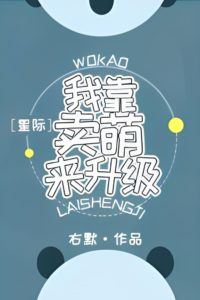
Ji Wuxiu was an ordinary man whose life ended in a humiliating manner after he choked on water while climbing a mountain. Upon death, his soul was enveloped by a mysterious beam of light, activating a system known as the "I Level Up by Acting Cute." The system forcibly bound itself to him and created a new body, disregarding his lack of consent. When Ji Wuxiu awoke, he found himself in an unfamiliar forest under a clear blue sky. His panic intensified when he realized he was no longer human. Instead of hands, he had small, furry paws. After a clumsy journey to a nearby river, he saw his reflection and was horrified to discover he had been reborn as a baby giant panda, only a few months old. The system explained that his previous human form did not meet its requirements, and this new body was designed specifically for its unique leveling mechanism.

The core conflict of Ji Wuxiu's new existence revolves around survival and the acquisition of "Cuteness Points." The system informed him that he could only regain his human form by reaching the maximum level, which required accumulating points by making other living beings feel affection through acts of cuteness. However, Ji Wuxiu faced immediate challenges in this alien world. He was not on Earth, as evidenced by the blood-red moon and unfamiliar flora and fauna. Furthermore, his panda body lacked the natural instincts and skills of a wild animal, making basic tasks like climbing trees and finding food difficult. His first encounter with a black panther, whom he named Lightning Panther, ended in failure. Instead of charming the predator, his attempts at cuteness caused the panther physical discomfort, resulting in a debuff that weakened the beast. This incident left Ji Wuxiu confused and depressed, as his primary tool for survival seemed ineffective in this new environment.

As Ji Wuxiu navigated his new life, he struggled with hunger and the lack of bamboo, his natural food source. He resorted to stealing fruits from a hedgehog and eating wild grass, highlighting his vulnerability as a novice in this dangerous forest. Despite his failures with the panther, he gradually adapted to his body, learning to sleep more and embrace the lazy demeanor that the system claimed was essential for cuteness. He also discovered that his panda form possessed a natural charm that affected humans, albeit in unexpected ways. When he encountered a group of poachers torturing the black panther to force a mutation, Ji Wuxiu intervened. He used his cuteness to distract the poachers, gaining Cuteness Points in the process. This event marked a turning point, as he realized that his ability to charm could be used not just for personal gain but also to influence the world around him.

The story follows Ji Wuxiu's journey as he accepts his fate and strives to master the art of acting cute. He continues to interact with the black panther, who remains wary and hostile, yet their relationship evolves through repeated encounters. Ji Wuxiu learns to navigate the forest, finding safe hiding spots and sources of food. The system provides guidance and a store where cuteness points can be exchanged for skills and abilities, offering a path to strength. Despite the comedic and often frustrating nature of his tasks, Ji Wuxiu remains determined to reach the maximum level and return to his human life. The narrative explores themes of adaptation, survival, and the unexpected power of innocence in a harsh world.

Throughout his adventures, Ji Wuxiu faces various creatures and challenges, each testing his resolve and his ability to use cuteness as a weapon. The black panther serves as a recurring antagonist and occasional ally, representing the dangers and complexities of the forest ecosystem. Ji Wuxiu's interactions with other animals, such as the hedgehog and the sika deer, further illustrate his struggle to fit into this new world. As he gains more experience and points, he begins to unlock the potential of his panda form, discovering that cuteness is not just a passive trait but an active force that can alter the course of events. The story sets the stage for a larger adventure, with Ji Wuxiu poised to become a powerful figure in this alien realm through the unique means of his system.

Latest Release
DateGroupRelease
2026-08-11shanghai fantasy c191
2026-08-11shanghai fantasy c190
2026-08-11shanghai fantasy c189
2026-08-11shanghai fantasy c188
2026-08-11shanghai fantasy c187
2026-08-11shanghai fantasy c186
2026-08-11shanghai fantasy c185
2026-08-11shanghai fantasy c184
2026-08-11shanghai fantasy c183
2026-08-11shanghai fantasy c182
2026-08-11shanghai fantasy c181
2026-08-11shanghai fantasy c180

Community Reviews

Rating(3.5 / 5.0, 31votes)
5 stars
7(23%)
4 stars
7(23%)
3 stars
12(39%)
2 stars
5(16%)
1 stars
0(0%)

Popular reviews

... Read More
I need to talk about what this story is really saying, because beneath the humor and the absurdity, there's something surprisingly deep here. The central theme is obvious: cuteness is power. But let's dig into what that means. In a world where Ji Wuxiu's only weapon is his ability to be adorable, what is the story saying about value? About worth? About what makes someone... valuable? The system reduces cuteness to points, to currency, to a measurable quantity. But the story seems to be questioning that reduction. Is cuteness really just a transaction? Or is it something more? When Ji Wuxiu acts cute and earns points, is he manipulating emotions, or is he genuinely connecting? The story isn't clear yet, but it's asking the question, and that's important. There's also the theme of transformation. Ji Wuxiu dies and is reborn as a panda. That's a literal transformation, but it's also metaphorical. He's been stripped of his human form, his human abilities, his human pride. He's been reduced to something 'small' and 'weak'—a baby animal. But in that reduction, he's also been given something new: a different kind of power. The story is asking us to consider: what do we lose when we lose our status? What do we gain? Is cuteness really lesser than strength? Or is it just different? The panther is a powerful symbol here. It represents traditional strength—claws, teeth, speed, lethality. It's the apex predator, the ultimate survival machine. But it's also confused. It can't understand Ji Wuxiu. It can't categorize him. And that confusion is its weakness. The story is suggesting that not everything can be understood through the lens of power. Some things require a different framework. Cuteness is that different framework. It's a language that the panther doesn't speak yet, but might learn. There's also the theme of identity. Ji Wuxiu is a grown man in a panda's body. He remembers who he was, but he has to live as who he is. That's a really human dilemma, isn't it? How much of our identity is tied to our bodies? To our appearances? To our abilities? When Ji Wuxiu looks in the river and sees his 'innocent and adorably dumbfounded face,' he's confronting a new version of himself. He doesn't like it. He finds it embarrassing. But he also can't deny it. The story is asking: who are we when everything we thought defined us is gone? Can we find value in something we didn't choose? Can we embrace a new identity even when it feels wrong? The system itself is a symbol of modern life. It's transactional, quantifying, reducing everything to points and levels. 'Accumulate cuteness points. Redeem in the system store. Level up.' That's the language of gamification, of optimization, of making everything measurable. But the story seems to be pushing back against that. Cuteness can't really be measured, can it? It's subjective, emotional, fleeting. The system tries to capture it, but the story is showing us that there's more to cuteness than points. There's connection. There's vulnerability. There's the moment when a panther hesitates instead of bites. There's also the theme of survival. Ji Wuxiu's goal is to survive, to potentially regain his human form. But the story is asking: what does it mean to survive? Is it just staying alive? Or is it finding meaning, connection, purpose? The system offers a clear path: act cute, earn points, level up. But Ji Wuxiu's journey seems to be about more than that. He's learning to adapt, to embrace his new body, to find value in something he initially despised. That's not just survival; that's growth. The humor is doing thematic work too. By making the premise absurd, the story invites us to laugh at the idea of a man surviving through cuteness. But the laughter is also a defense mechanism. Underneath the comedy is a really serious question: what if your only value is something you consider weak? What if you have to be vulnerable to survive? What if the things we think make us powerless are actually our greatest strengths? That's a question that resonates beyond the panda world. I'm also struck by the symbolism of the forest. It's a wild, untamed place where the rules are different. Ji Wuxiu doesn't belong here. He's out of his element, literally and metaphorically. The forest is a blank slate, a place where he can reinvent himself. But it's also dangerous. It's a place where the weak can die. The forest is both opportunity and threat, which is exactly what Ji Wuxiu's new life is. Overall, this story is a fable about value, identity, and vulnerability. It's using humor and absurdity to ask serious questions about what makes us worthy, what makes us strong, and what we're willing to embrace to survive. The panda is a symbol of softness in a hard world, and the story is asking us to consider whether softness is really weakness. That's a theme worth exploring, and I'm excited to see where it goes.
... Read More
I need to talk about the emotional journey here, because this story is doing something really interesting with feelings. Ji Wuxiu is terrified. That's the first thing we know about him. He's just died, he's been reborn as a baby panda, and he's being chased by a black panther. His fear is visceral—we can feel it in the way he's described: 'trembling uncontrollably,' 'fur fluffing up,' 'shrieking in terror.' The author doesn't shy away from making us feel his panic. And that's important, because without that fear, the cuteness wouldn't matter. The vulnerability wouldn't hit as hard. But then there's this strange tenderness that sneaks in. When Ji Wuxiu looks at his reflection in the river and sees his 'incredibly innocent and adorably dumbfounded face,' there's a moment of... acceptance? Not full acceptance, obviously—he's still horrified—but there's a flicker of recognition. He sees himself, and he sees that he's cute. And that's a weird thing to feel when you're a grown man trapped in a panda's body. It's embarrassing, it's confusing, it's almost violating. But it's also... kind of sweet? In a bizarre, existential-crisis kind of way. The scene with the panther is where the emotional complexity really shines. Ji Wuxiu is pinned down, claws sinking into his fur, and he's crying. He's wailing. He's genuinely terrified that he's going to die. But then he has to consciously choose to stop fighting and start being cute. That's a huge emotional shift. He has to suppress his panic, his pride, his desire to survive through strength, and instead embrace vulnerability. He has to be soft when everything in him wants to be hard. That's not just a plot device—that's a metaphor for how we often have to be vulnerable to survive, even when we don't want to be. And the panther's reaction! When it hesitates, when it's confused, when it decides not to bite—that's an emotional beat too. The predator is experiencing something unexpected. It's not just hunger; it's curiosity, confusion, maybe even... affection? The story is planting seeds here that I think will grow into something really beautiful. There's a tenderness in that hesitation, a recognition of something worth sparing. I also love the system's role in this emotional landscape. It's cold and mechanical, but it's also... encouraging? It says things like 'Work hard to accumulate your cuteness points! There are many great things waiting for you to redeem in the system store.' That's almost... supportive? In a very robotic, transactional way, but still. The system believes in Ji Wuxiu's potential, even if he doesn't believe in himself. That's a relationship worth exploring. The humor is also doing emotional work here. The absurdity of the situation—the guy who died choking on water now has to survive by acting cute—is funny, but it's also kind of sad. He's a grown man, trapped in a baby panda's body, forced to do something he finds humiliating just to live. The comedy is a shield, but underneath it is this really human fear: what if I'm not good at anything? What if my only value is... being cute? That's a surprisingly deep question for a story about a panda. I'm also struck by the contrast between Ji Wuxiu's internal monologue and his external appearance. Inside, he's panicking, cursing, regretting his life choices. Outside, he's just... a cute panda. The disconnect between who he is and what he looks like is both funny and poignant. It makes me wonder: how much of ourselves do we present to the world? How much of our true feelings are hidden behind a cute exterior? Ji Wuxiu is literally living this metaphor, and it's kind of beautiful. The emotional arc so far is: fear → confusion → desperation → determination → hope. He's not happy about his situation, but he's not giving up. He's trying. And that's where the tenderness comes from—not in the cuteness itself, but in the effort to survive, to adapt, to find a way forward even when the path seems ridiculous. That's a really human emotion, and it's what makes me care about this panda.
... Read More
Okay so let me just say—this chapter is a masterclass in comedic tension that never actually goes anywhere, and I am HERE for it. The plot doesn't have that heavy, epic-wuxia weight to it, but what it does have is this incredibly satisfying rhythm of conflict and resolution that keeps you turning pages. Ji Wuxiu gets turned into a panda, sure, but the real plot twist is how he weaponizes cuteness like it's an actual combat skill. The scene where he does the panda roll and the panther literally vomits from discomfort? That's not just funny, that's a genuine plot mechanism. The system even confirms it: "Lightning panther's combat power -1, increased three-second vomiting buff +1." This is a world where being adorable is a legitimate fighting style, and the narrative fully commits to that logic. The subplot with the hedgehog is also quietly brilliant. Every time Ji Wuxiu tells himself he won't rob the hedgehog again, he does it anyway. "As a panda who only needed to act cute to have no worries about food or drink, Ji Wuxiu was undoubtedly a failure, tarnishing the reputation of the panda family." That line hit me so hard. The plot is basically: this guy is supposed to be the ultimate laid-back panda but he's still struggling to survive like a normal person. It creates this constant low-grade tension that's more relatable than any life-or-death battle. And then there's the fire problem at the end. He sees a fish jump out of the river, gets excited, and then remembers he has no way to cook it. The system offers fire abilities for cute value points, and Ji Wuxiu is just... broke. That's a cliffhanger that doesn't feel forced at all—it's the natural consequence of a character who's been coasting on cuteness and now needs to actually level up. The plot is building, just in a very unhinged, panda-shaped way.
... Read More
The core premise of this book is wild when you actually think about it. A system that rewards cuteness. A panda whose survival depends on being adorable. There's something deeply symbolic about choosing a panda — the most famously cute animal on Earth — as the vessel for this story. Ji Wuxiu's panda form is described repeatedly as "lifeless," "weary," almost deadpan. His natural expression is one of exhaustion and mild suffering. And yet THIS is what makes him cute. The system explicitly tells him: "The lazier a panda is, the cuter it looks." So the very traits that make him miserable — his laziness, his tiredness, his inability to do basic things like climb trees — are also his greatest assets. There's also the theme of adaptation. Ji Wuxiu keeps telling himself he won't give up, that he'll fight when he can and retreat when he can't. His motto is "Fight when you can. If you can't win, surrender immediately." This is survival philosophy, but it's also kind of a commentary on how we navigate impossible situations. You don't always have to be brave. Sometimes you just have to survive. The red moon is another symbol that stands out. It's beautiful but wrong — familiar yet alien. It represents Ji Wuxiu's entire situation: he's in a world that should feel like home but doesn't. The moon is a constant reminder that he's somewhere else, and the system's question "you're not sad anymore?" shows that this realization hasn't fully sunk in for him yet. And the hedgehog incident — Ji Wuxiu takes half the fruit and leaves half. He tells himself it's kindness, but the hedgehog thinks he's stupid. Is he actually kind? Or is he just a human trying to maintain his morality in a jungle where morality doesn't matter? The text leaves this ambiguous on purpose.
... Read More
Okay, let's talk about the dialogue here, because this story has a really interesting approach to how characters communicate. First, there's Ji Wuxiu's internal voice. It's modern, casual, slightly sarcastic. When he thinks 'What the hell is going on?' or 'You make a good point. I have nothing to say,' it feels like a real person's thoughts. He's not using flowery language or dramatic monologues. He's just... reacting. And that's what makes him relatable. His internal voice is the voice of someone who's confused, scared, and trying to process an impossible situation. The author doesn't over-dramatize it. Ji Wuxiu just thinks things like 'This isn't funny. Not at all.' and 'What kind of messed-up life was this?' That's honest. That's human. Then there's the system. Its dialogue is rigid, mechanical, almost bureaucratic. 'Ding! The system is now activating...' 'Ding! System activation successful. Greetings, Host.' It's funny because it's so formal for such a ridiculous situation. But there's also personality creeping in. When the system says 'Host, I told you to act cute, not to hit it' or 'This is your very first client in your panda life—you have to make it count and do your absolute best,' there's this almost exasperated tone. Like a teacher dealing with a slow student. The system isn't just a quest-giver; it has attitude. And that attitude is part of what makes the dialogue work. The external dialogue—the sounds Ji Wuxiu actually makes—is also interesting. 'Mee-wu... meee meo meow-wu!' 'Awooo!' 'Roar—Awooo!' These are panda sounds, but they're also emotional expressions. When Ji Wuxiu calls for the system, it comes out as meows. When he's terrified, it comes out as wails. The author is using sound to convey emotion, which is a really smart choice. We don't need full sentences to understand what Ji Wuxiu is feeling; the sounds tell us everything. And then there's the panther's dialogue—or lack thereof. It roars, it huffs, it makes sounds of confusion and aggression. But we don't get internal monologue from the panther. We only get its perspective through actions and sounds. That's a deliberate choice, and it works. The panther is a mystery, and we're only seeing it through Ji Wuxiu's terrified eyes. When the panther thinks 'So ugly' or 'Too ugly,' that's italicized internal thought, but it's brief and animalistic. We don't get full sentences; we get impressions. That's smart storytelling—it keeps the panther mysterious while still giving us insight into its reactions. The narrative voice is also worth discussing. It's third-person limited, staying close to Ji Wuxiu's perspective. We get his thoughts, his feelings, his observations. But the author also slips in moments of omniscience, like when we get the panther's perspective briefly. That shift is jarring in a good way—it reminds us that there's more to the world than Ji Wuxiu's experience. The narrative voice is flexible, moving between intimacy and distance as needed. One thing I love is how the dialogue reveals character. Ji Wuxiu's internal monologue shows us he's intelligent but overwhelmed. The system's dialogue shows us it's rigid but caring (in its own way). The panther's sounds show us it's confused but not entirely hostile. Each character has a distinct 'voice,' even when that voice is just a series of sounds. The humor in the dialogue is also doing a lot of work. When Ji Wuxiu thinks 'Drinking and gambling...?' as his best skill, and the system responds with exasperation, that's comedy gold. It's funny because it's true—Ji Wuxiu is a regular guy with regular flaws, and now he's a panda. The dialogue doesn't take itself seriously, which makes it more engaging. We're laughing with Ji Wuxiu, not at him. I'm also struck by the simplicity of the dialogue. There's no exposition dumps, no lengthy monologues. The author trusts the reader to fill in the gaps. When Ji Wuxiu says 'Leave me alone,' we understand he's frustrated, not just with the system but with his situation. When the system says 'Work hard to adapt to this body,' we understand it's encouraging, not just commanding. The dialogue is sparse but meaningful. Overall, the dialogue here is doing exactly what it should: revealing character, advancing the plot, and creating emotional resonance. It's funny, it's heartfelt, and it's uniquely suited to a story about a panda. The sounds, the thoughts, the system's mechanical voice—it all comes together to create a distinct narrative voice that feels fresh and engaging.
... Read More
I need to talk about this black panther because honestly? This character is the unsung hero of the entire novel. Look at what this panther has been through. It wakes up one day, probably feeling mighty and fierce in the forest, and the very next thing that happens is some ugly black-and-white creature stares it down, does a rolling move that makes the panther vomit, and then PETS IT. Like, the panther is lying there defeated, unable to even wag its tail, and Ji Wuxiu just goes over and starts rubbing its head like it's a stray cat at a bus stop. The panther's internal monologue is absolutely tragic and I love it. "The black panther felt an inexplicable sense of guilt, lowering its head and no longer struggling." GUILT. This apex predator feels GUILT about being petted by the creature it was trying to eat. And then later, when Ji Wuxiu keeps coming back to bother it, the panther just... accepts it. It moves away with its food, tries to ignore the "Wow—" sounds, and eventually stops fighting it entirely. This is a character arc of surrender, and it's the most beautiful thing I've ever read. Meanwhile, Ji Wuxiu's relationship with the system is this weird parent-child dynamic where the system is constantly disappointed but also weirdly proud. "Host, get a grip. You are a giant panda with a cuteness that no one in the world can resist." The system is basically his mom, and Ji Wuxiu is the kid who keeps doing embarrassing things in public. And then there's the hedgehog, which I'm convinced is the most patient creature in this entire forest. Robbed twice in one day and still thinks the panda is stupid? That's not fear, that's pure disdain. The whole ecosystem of characters around Ji Wuxiu is just... deeply committed to surviving him.
See all reviews

Characters

See all characters

Custom lists

See all custom Lists