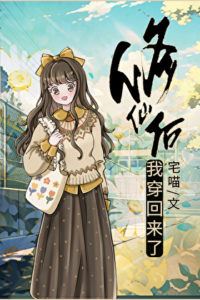
I Returned After Cultivating Immortality
+Add to Custom List
Novel Info
  • Author:
  • 宅喵
  • Status:Ongoing

Summary

... Read More

Qin Su was a revered senior disciple of the Langfeng Sect in a cultivation world, known for her exceptional talent and beauty. While undergoing her heavenly tribulation to ascend to immortality, she faced an unprecedented second wave of lightning that nearly destroyed her. In a desperate move, she detonated her natal spirit artifact, a powerful orange tabby cat named Qianjin, to survive. However, upon regaining consciousness, she discovered she had not ascended but had instead returned to the modern world where she had originally transmigrated from a thousand years prior. She found her soul separated from her body, which was now occupied by a transmigrator who had stolen her life using a "Life Winner System." This intruder had built a glamorous existence as a beauty influencer and bestselling author, surrounded by admirers including a domineering CEO, a top actor, and a campus heartthrob, while generating immense karmic debt.

Qin Su immediately reclaimed control of her body by crushing the transmigrator's soul, though a remnant escaped. She then discovered that Qianjin had survived by swallowing the system, which had transformed into a miniature, weakened form of the cat. With her cultivation reduced to nearly nothing due to the thin spiritual energy of the modern world, Qin Su faced the challenge of rebuilding her power from scratch. She realized she needed to settle the karmic ties left by the transmigrator and secure resources for cultivation. Her first action was to accept a payment from a jealous university student, Xin Ying, who wanted Qin Su to stay away from her crush, Ji Yuanye. Qin Su charged two million yuan for this service, viewing it as interest on the troubles left behind.

To facilitate her cultivation, Qin Su sought a residence with sufficient space and low cost, leading her to rent a notoriously haunted apartment. The ghost haunting the property was Zhang Yunqi, a young woman who had died due to the machinations of her greedy uncle, Zhang Ming. Qin Su freed Zhang Yunqi from her spiritual constraints and recruited her as a disciple, teaching her ghost cultivation techniques in exchange for household assistance and revenge against their common enemy. This arrangement allowed Qin Su to save on living expenses while gaining a loyal subordinate. She also began setting up a Spirit Gathering Array using gemstones and magical artifacts purchased from a Feng Shui street, where she demonstrated her discernment by warning an elderly businessman about a cursed coin.

As Qin Su adjusted to her new life, she encountered the various romantic entanglements left by the transmigrator. Xu Xiao, the CEO and former boyfriend, attempted to reconcile, but Qin Su firmly rejected him, prioritizing her studies and cultivation. Her academic performance, bolstered by her perfect recall from a thousand years of memory, exceeded expectations, earning top scores in her university courses. Meanwhile, she navigated interactions with Ji Yuanye, the campus heartthrob, by deliberately presenting herself as materialistic to deter his advances, although Qianjin's commentary suggested his interest was growing regardless. Qin Su also faced professional setbacks when Xu Xiao interfered with the film adaptation of her novels, cutting off a significant source of income. Undeterred, she turned her attention to creating and selling magical artifacts, such as fortune-enhancing bracelets, to generate revenue for her cultivation needs. The story follows her methodical efforts to rebuild her strength, manage her new disciples, and clear the karmic debts of her stolen life while maintaining her focus on becoming an immortal again.

Novel Items

More
Arcane Treasures
A system that helped the transmigrator build a successful life in Qin Su's body. It offered a Beginner's Gift Pack and lottery draw to new users. It was smashed by Qianjin (the natal spirit artifact) and swallowed whole, becoming an exceptionally nourishing tonic that made Qianjin's body more solid before entering Qin Su's chest.
Materials
A fruit used by Qin Su to form her physical body after transmigrating into the cultivation world. It allowed her to officially step onto the path of cultivation.
Formations
A formation set up by Jiang Xuxu in her room at great expense to gather Spiritual Energy for drawing talismans. The gathered energy was completely absorbed by Chu Beihe without his knowledge, which is why Jiang Xuxu went to confront him.
Treasure
A jade bracelet left by Grandmother specifically for Guan Xuxu. It is the only keepsake Grandmother gave her and holds deep sentimental value. Guan Ruirui is wearing it and refuses to return it, claiming it belongs to all daughters of the Guan family. Guan Xuxu prophesied that she would make Guan Ruirui return it with her own hands.
Pills
A pill formula from the cultivation world that Qin Su remembers and considers making herself. Most spiritual herbs do not exist in this world but suitable substitutes should be available. She also remembered that her roommate Zhao Shiyu had lingering insecurities from acne scars.
Materials
Stones Qin Su mentioned she would use to bribe her natal spirit artifact Qianjin after surviving the heavenly tribulation, planning to use a thousand of them.
Latest Release
DateGroupRelease
2026-08-11shanghai fantasy c14
2026-08-11shanghai fantasy c13
2026-08-11shanghai fantasy c12
2026-08-11shanghai fantasy c11
2026-08-11shanghai fantasy c10
2026-08-11shanghai fantasy c9
2026-08-11shanghai fantasy c8
2026-08-11shanghai fantasy c7
2026-08-11shanghai fantasy c6
2026-08-11shanghai fantasy c5
2026-08-11shanghai fantasy c4
2026-08-11shanghai fantasy c3

Community Reviews

Rating(4.3 / 5.0, 20votes)
5 stars
9(45%)
4 stars
8(40%)
3 stars
3(15%)
2 stars
0(0%)
1 stars
0(0%)

Popular reviews

... Read More
Okay so this whole hospital sequence is basically a masterclass in how to take a setup that could have been a two-page scene and stretch it into actual drama without losing momentum. Let me walk through it. The author starts us with the car ride—gossip, exposition about President Niu's stinginess, the five-million-yuan reward. This is all setup, but it's quick. We're moving. Then Tu Qing's soul is in the car, Xin Ying can't see her, and suddenly we have this weird spatial comedy happening. The pacing here is light, almost breezy, which makes the shift when they arrive at the hospital feel earned. Inside the hospital room, the author drops us into immediate conflict. Niu Guangxiong is already furious about the true love's kiss idea. Xu Xiao is already suspicious. The Daoist is already scheming. No slow buildup—we're thrown right into the mess. And then the physical comedy of Tu Qing tripping Niu, Qin Su stepping in, the kiss happening, Tu Qing's soul returning—all of it plays out in a few paragraphs with zero drag. What I love is the structural pivot at the end. Tu Qing wakes up, asks if Qin Su is her girlfriend, and suddenly the entire scene flips from comedy into something with actual emotional weight. Xu Xiao's reaction, Niu's heartbreak, Tu Qing clinging to Qin Su—it all lands because the pacing gave us room to breathe between beats. The chapter ends with the money transfer and Tu Qing moving in, which is a neat button on the plot thread, but the real structural genius is how the author uses the amnesia reveal to reset the entire relationship dynamic mid-scene. We go from "rivals" to "roommates" in the span of three paragraphs, and it works because the pacing never lets us get too comfortable with either state.
... Read More
I need to talk about how each character's dialogue is basically a fingerprint here. Qin Su's voice is the most distinct—dry, practical, occasionally savage. When she says "Who could have predicted that this Daoist would suddenly interfere?" or internally calls Xu Xiao a "useless man," it's not just witty, it's character. She's a cultivator in a modern world who's seen too much to be impressed, and that comes through in every line. Tu Qing's dialogue shifts dramatically between her soul form and her awakened self, and the author handles this brilliantly. As a wandering soul, she's casual, almost playful: "I just feel that being a ghost and staying at your place is actually pretty nice." But once she wakes up with amnesia, her speech becomes softer, more tentative—"True love's kiss? So... are you my girlfriend?" The ellipses matter. The hesitation matters. This isn't the same character voice, and that's intentional. Xu Xiao is pure ice and assumption. "In your dreams." "I don't believe a single kiss can wake someone up either." His dialogue is short, sharp, and loaded with hostility he doesn't bother hiding. Even when the narrative tells us he's feeling tenderness toward Qin Su, his actual spoken words stay cold. That gap between what he feels and what he says is where his voice lives. Niu Guangxiong is the most entertaining voice—greasy, desperate, comically over-the-top. "The person who loves her most in this world must be me." "Qingqing, whatever villa you want, I'll buy it for you." He sounds like every middle-aged romance novel villain, which is exactly the point. And Xin Ying? She's the comic relief with bite. "Middle-aged men in love were simply too greasy. It was unbearable to watch." Her observations are sharp and funny, and she never sounds like anyone else in the cast. The narrative voice itself is also worth noting—it's omniscient but leans heavily into Qin Su's perspective, with occasional humorous asides that feel like the author winking at the reader.
... Read More
There's so much going on beneath the surface of this chapter that I want to unpack. The ghost marriage ritual itself is rich with symbolic meaning. That red envelope containing strands of hair isn't just a plot device—it represents the intersection of tradition and exploitation. The female ghost used deception to trap an innocent person, turning a sacred ritual into a weapon. And the fact that she targeted Gao Wu specifically because he was handsome? That's a commentary on how desire and superficial attraction can make people vulnerable. The hair in the envelope is particularly symbolic. Hair represents identity, essence, connection to the self. By including it in the envelope, the ghost was essentially claiming ownership of Gao Wu's spiritual identity. It's intimate and violating all at once. But the deeper theme I kept coming back to is the commodification of everything—even the supernatural. Qin Su doesn't help Gao Wu out of the goodness of her heart. She does it for money. And when he tries to pay her in paintings instead of cash, her disappointment is palpable. The author isn't shy about this—Qin Su literally thinks 'What would she do with paintings? She wanted money!' It's almost satirical, but also refreshingly honest in a genre that often romanticizes protagonists who help others selflessly. Even the ghost's motivation is strangely commercial. She didn't want true love or revenge—she wanted companionship, and when she couldn't get it honestly, she tried to purchase it through a marriage contract. The college entrance examination angle adds another layer of social commentary. This ghost is trapped not just by death, but by the same academic pressures that trap living students. The system doesn't end at death. And Qin Su's solution—offering her reincarnation—means the ghost has to start from scratch again, potentially facing the same system. It's a bittersweet resolution. The spiritual energy themes also tie into the broader question of power and responsibility. Qin Su has grown stronger—her body tempering is progressing, her spiritual herbs are flourishing—but she's still hungry, still concerned with money, still a cat parent worrying about fish budgets. The supernatural and the mundane coexist seamlessly, which is really the point. Nothing is so transcendent that it removes us from human concerns.
... Read More
Let me just say this right now: the female ghost in this chapter is my new favorite character and I barely know her. The dialogue writing in this section is absolutely phenomenal. Every time Qin Su opens her mouth, it's sharp and precise and slightly menacing. But the ghost? Oh my god. 'The handsome ones never lack girlfriends. And I don't like the ugly ones.' I literally laughed out loud. This is a terrifying supernatural entity and she's being more picky than I am at dating apps. And then the college entrance examination reveal? 'I repeated my final year of high school four times before finally getting into university. I don't want to experience the college entrance examination ever again.' The resentment in her voice was described as enough to move anyone to tears, but honestly it just made me adore her. She's this powerful ghost who could theoretically haunt people forever, and her entire motivation comes down to academic trauma. The contrast is comedy gold. Qin Su's dialogue is also fantastic—she has this perfect deadpan delivery that contrasts beautifully with the ghost's dramatic flair. When she says 'What gave you the impression that I'm easy to talk to?' after the ghost claims she only wanted to date Gao Wu for one month, you can feel the menace radiating off the page. And the exchange between Qin Su and Gao Wu about payment? Pure comedy. His desperate attempts to offer paintings and her internal screaming about wanting actual money. 'I heard Master likes paintings. I have quite a few. Just pick whichever one you like.' vs. What would she do with paintings? She wanted money! The author's voice throughout is so distinct and entertaining. There's this perfect balance of supernatural tension and modern humor that never tips too far into parody. Even the narrative descriptions have personality—like when Qin Su's expression turned indifferent and the smile disappeared. You don't need dialogue tags when the writing itself carries that much attitude. And Xin Ying's dialogue, though limited, felt authentic. Her excitement about learning about ghosts, her embarrassment about wanting the bracelet again—it all rang true. The author clearly understands how different characters would speak and don't fall into the trap of making everyone sound the same.
... Read More
The pacing in these chapters is a masterclass in controlled escalation. It starts almost lazily. Qin Su logging into a Weibo account, thinking about followers, deciding not to continue the transmigrator's path. This is a quiet moment — character-building, world-establishing. The reader settles in. Then she spots the jade auction on TV and suddenly the pace quickens. "Let's go together" — booking flights, calculating savings, applying for visas. The plot engine is now running. But then the author SLAMS the brakes. We cut to Zhang Yunqi, the disciple, and suddenly everything is tense. "My cultivation has stagnated." "I can't enter meditation." The reader's heart rate goes up. This is the kind of pivot that keeps you turning pages — you think you're reading a cultivation slice-of-life, and then BAM, someone's casting curses on children. The curse discovery scene is perfectly paced. Qin Su examines Zhang Yunqi, sees the curse mark, wipes it away, and delivers the line: "The person who cast it has already suffered the backlash." One sentence. That's it. No exposition dump, no lengthy explanation. The power of that moment lands because the pacing gave it room to breathe. Then we shift to Zhang Ming's POV, and the pacing changes again. Now it's almost comedic. He's scheming, he's calculating, he's buying a villa, his family is excited. The tension drops — or does it? Because we KNOW what's coming. The author is letting us sit in dramatic irony, watching Zhang Ming celebrate while the reader is literally counting down to his downfall. The final scene — waking up on gravel, villa gone, graves visible — is the perfect structural payoff. All the setup (the curse, the greedy uncle, the bargain villa) converges in one image. No explanation needed. The pacing from lazy morning to graveyard horror is seamless.
... Read More
This passage is layered with symbolic meaning about property, family, and moral consequence. The house is the central symbol. Zhang Ming wants Zhang Yunqi's house. He wants President Su's villa. His sons want rooms in the villa. Everyone is defined by what they want to own. The house represents security, status, family legacy — but in the hands of greedy people, it becomes a weapon. Zhang Ming would literally curse his own niece for a building. That's not just plot; that's a statement about how greed corrupts blood relations. The curse mark on Zhang Yunqi's head is physical manifestation of familial betrayal. It's placed on her — literally on her person, using her own hair or something personal. The curse works because it exploits intimacy. Only someone who had access to her most personal things could harm her this way. That's the symbolism: betrayal from within the family is the most dangerous kind. Then there's the villa that disappears. What does it mean that the house vanishes? It's not just revenge — it's the idea that property acquired through deceit cannot be held. The villa was bought with stolen money (from President Su) at a fraudulent bargain. It had no legitimate foundation. And so it had no permanence. It existed only as long as Zhang Ming's delusion lasted. The graveyard where they wake up is the final symbol. Graves are where people who died greedy end up — or rather, where the living are reminded of mortality. Zhang Ming wanted a house for his family's future. Instead, he finds himself among the dead. The locust trees are still there (nature endures), but the villa (human greed) is gone. Qin Su's line about pursuing the Great Dao while making money is also thematically significant. She's not motivated by wealth — she's using wealth as a tool. This contrasts sharply with Zhang Ming, for whom wealth IS the motivation. The story is asking: what do you build your life on?
See all reviews

Characters

See all characters

Custom lists

Oops…There is nothing here.