Summary

... Read More

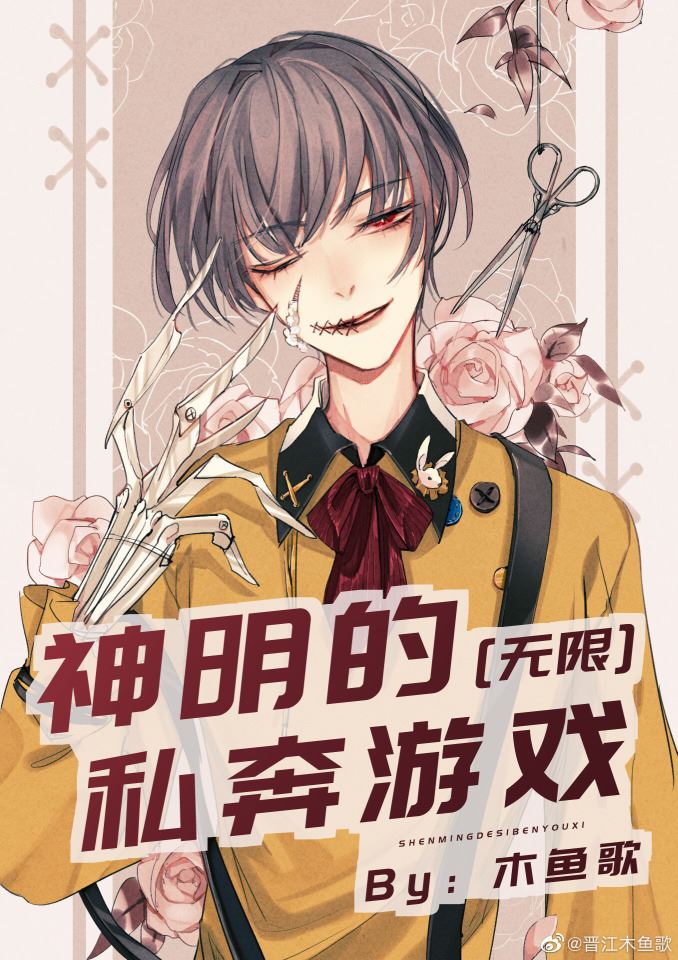
Xiang TanWei is a popular idol singer signed to QinHan Media, a prominent entertainment company in China. Known for his cultured temperament and fantastical healing-style songs, Xiang TanWei has nearly ten million fans, though his fanbase is notorious for their obsessive and unhinged behavior. He is somewhat careless about public image, often indulging in internal monologues and daydreams that contrast sharply with his elegant exterior. His agent, Wu ZiQi, manages his schedule and often rebukes his lack of professionalism, while his assistant, Xiao Jin, remains supportive of his artistic endeavors. The company is currently navigating internal dynamics, with the Wang siblings serving as president and vice president, while a new chairman, Qin MingLi, has recently assumed control.

Qin MingLi is a low-key figure with little public information, making him an enigma within the company. When he unexpectedly visits the office pantry, he encounters Xiang TanWei, who is lost in a bizarre fantasy about the chairman being a flamboyant eagle obsessed with stealing baby chicks. Qin MingLi is visibly startled by this mental exhibition, though he conceals his reaction. Despite the awkward introduction, Qin MingLi takes note of Xiang TanWei, perhaps intrigued by the singer's eccentric personality. Meanwhile, rumors circulate that Mi XingHe, the company's top star and actor, may not renew his contract and could defect to a rival company, Shaokang Film and Television. This potential loss prompts the company to consider promoting a singer to fill the void left by Mi XingHe.

The narrative progresses as Wu ZiQi receives confirmation that Mi XingHe will indeed leave to set up his own studio under Shaokang. In response, QinHan Media identifies Xiang TanWei and the sibling duo 2to2 as candidates to replace Mi XingHe's status. Xiang TanWei, confident in his singing ability and looks, believes he is the obvious choice. However, his agent warns him that competition is fierce, especially from 2to2, who have a reputation for gaining fans easily. To prepare for the possibility of promotion, Wu ZiQi arranges a lavish makeover and schedules a dinner meeting between Xiang TanWei and Chairman Qin MingLi. This dinner is intended as an interview to gauge Xiang TanWei's suitability for a new reality show project titled "Superman Training Camp."

At the dinner, Xiang TanWei's internal fantasies continue, depicting Qin MingLi as an evil dragon captivated by a mermaid, while outwardly he maintains a polite and humble demeanor. Qin MingLi reveals that he recommended Xiang TanWei for the reality show, citing the singer's unique personality as the reason. The show involves six participants in total, including three from QinHan Media and three from Daylight Satellite TV. Qin MingLi explains that the opening theme song will be performed by all six contestants, marking a significant opportunity for Xiang TanWei to expand his reach. The interaction highlights the growing dynamic between the chairman and the idol, suggesting that Qin MingLi sees potential in Xiang TanWei beyond his musical talent.

As the story unfolds, Xiang TanWei faces the challenge of balancing his eccentric inner world with the demands of his career. The potential conflict with Mi XingHe's departure looms over the company, creating a backdrop of uncertainty and change. Xiang TanWei's journey is marked by his struggle to assert himself in a competitive industry, where his charisma and talent must contend with both internal office politics and external rivalries. The narrative sets the stage for further developments as Xiang TanWei prepares for the reality show, with Qin MingLi's interest in him adding a layer of intrigue to his professional ascent.

Latest Release
DateGroupRelease
2026-09-26knoxt c4
2026-09-26knoxt c3
2026-09-26knoxt c2
2026-09-26knoxt c1

Community Reviews

Rating(3.8 / 5.0, 21votes)
5 stars
6(29%)
4 stars
5(24%)
3 stars
10(48%)
2 stars
0(0%)
1 stars
0(0%)

Popular reviews

... Read More
The pacing in these chapters is absolutely filthy and I am here for it. Let's break it down because the author is playing 4D chess with narrative tempo. Chapter 7 starts at FULL THROTTLE—Wu Ziqi is already in working mode, booking appointments, barking orders, and Xiang TanWei is just along for the ride being all dramatic about it. This is chaos energy. Fast dialogue, quick cuts, TanWei scrolling through his tablet going "skip skip skip" through financial news and entertainment gossip. It's overwhelming on purpose—you feel his panic about having nothing in common with the chairman. Then the car scene. Slightly slower. The reveal that TanWei never looked up Qin MingLi's information is a PERFECT comedic beat after all that preparation anxiety. The author lets us breathe for a second with humor before ramping it back up. Arriving at the restaurant—THE PACING SHIFTS. Everything slows down. The waiter pours lemonade. The basin is presented. Doors close. Silence. The fairy tale brackets multiply because TanWei's mind is racing while nothing external is happening. This is the author's signature move: when the external action drops, the internal action explodes. And that ending? The reality show announcement comes like a hammer. After all that slow-burn tension, the author just drops the narrative bomb and we're left wanting MORE. That's not just good pacing—that's structural mastery.
... Read More
Okay, first of all, Xiang TanWei sounds exactly like someone I would meet at a dinner party and immediately suspect is secretly writing a memoir about himself. His internal monologue is so loud, so relentless, so confident, that you cannot help but love him even when he is being insufferable. The author gives him this incredible narrative voice where he constantly compares himself to other people, especially when Qin MingLi walks in. There is this line where TanWei thinks "Holy hell! This face! His handsomeness is beyond human!" and then immediately after, "Is he a new artist? He is more handsome than me... Oh no, I am still more handsome!" That is pure TanWei, that instant deflection, that refusal to lose even in his own head. And then Qin MingLi's voice, or lack of it, is such a perfect contrast. He says almost nothing. When he does speak, it is clipped, flat, indifferent. "I will go in a minute." That is it. No elaboration, no warmth, just functional words. It makes TanWei's noise feel even louder by comparison. Wu ZiQi is another voice entirely, bouncing between professional and unhinged in two seconds flat. His dialogue is all action verbs, all energy. "We are going to be rich! Hahahahahaha-" followed immediately by business about magazine covers. The secretary Zhao moments are also funny because she delivers information like a news anchor who has seen things and is tired of them. Her voice is dry, efficient, and slightly amused. The narrative voice itself switches gears throughout, sometimes slipping into third person limited, sometimes doing full fantasy sequences, sometimes dropping into pure observational mode. That kind of vocal agility is rare and it keeps the reading experience from ever becoming monotonous. I especially appreciate how the author lets TanWei have his ridiculous monologues without mocking him too hard. There is affection underneath the comedy, which is what makes this work instead of just being a parody of an idol character.
... Read More
I need to talk about the restaurant scene because the author really understood the assignment here. Let me paint it for you: a restaurant OWNED BY A FORMER ACTOR, located somewhere remote, surrounded by quiet, managed impeccably, frequented by celebrities who know to keep the paparazzi at bay. Two private pictures max. That's not worldbuilding—that's a whole ecosystem sketched in three sentences. And then the private room itself. Two seats. Facing each other. A lemonade pour, a porcelain wash basin for hand washing, a waiter who comes in, does the ritual, and leaves them ALONE. The spatial arrangement of this scene is doing SO much work. Two people. One table. No buffers. The author is forcing intimacy through architecture. There's nowhere for TanWei to hide, no side conversations with other people to diffuse the tension. Just him and the chairman, sitting across from each other like it's a第一次约会 disguised as a business dinner. The fairy tale bracketed passages also function as worldbuilding in a weird way—they reveal the internal landscape of this story's emotional geography. TanWei doesn't see himself as an ordinary pop idol meeting a businessman. He sees himself as a MERMAID in a deep sea, being courted by an EVIL DRAGON. That's not delusion—that's the author giving us a second layer of worldbuilding where the emotional stakes are mythological. The restaurant is real. The fairy tale is also real. Both are happening simultaneously, and that duality is what makes the scene so deliciously tense.
... Read More
I've been thinking about this a lot and I genuinely believe the fairy tale framing in this passage is the key to understanding the entire novel's thematic core. Let me explain. Every time the narrative gets close to something raw or vulnerable, it wraps it in myth. The bracketed passages aren't just comic relief—they're TanWei's psychological armor. When Qin MingLi says "I've heard you singing. It's very passionate" and looks at him directly, the normal response would be awkward silence or a flustered reply. But instead we get [The evil dragon stated: Your voice touches me. So, whenever I passed by the sea, I would always come to listen to your singing.] Why a dragon? Why a mermaid? These aren't random choices. The dragon represents power—wealth, status, control. Qin MingLi literally has all of that. The mermaid represents artistry and voice—TanWei's talent, his beauty, his vulnerability. And the classic fairy tale structure has the dragon TAKING the mermaid, which maps perfectly onto the industry reality: the powerful executive acquires the young artist. But here's where it gets interesting—the story keeps SUBVERTING this. Qin MingLi never actually behaves like a predatory dragon. He lets TanWei order. He asks about his schedule. He's polite, measured, almost respectful. The fantasy is more dramatic than the reality, which means the theme might not be about exploitation at all. It might be about how we PROJECT our fears onto situations of unequal power, and how reality often defies the stories we tell ourselves. "The mermaid was so terrified by the handsome evil dragon that he cried. His tears turned into pearls and fell into the sea." And then: "When the evil, greedy, and handsome dragon saw the pearls, he immediately planned to steal them!" This is TanWei writing his own tragedy before it even happens. The question the novel seems to be asking is: will the story follow the fairy tale, or will it break the template? And honestly, that's what keeps me reading.
... Read More
Let me just say this scene is doing something really interesting with proximity and possession. You have TanWei sitting in his little domain, enjoying his grapefruit tea like it is a throne, and then Qin MingLi walks in and without saying anything, the entire emotional geometry shifts. It is wild how much power a single person in a well-ironed suit can take up just by existing. The author does not give us romance here, not yet anyway, but there is this thick undercurrent of something. Maybe it is rivalry, maybe it is curiosity, maybe it is just two people who are used to being looked at having to share air. What got me is the moment when Qin MingLi is drinking water and suddenly chokes. That is when he looks at TanWei for real. Not polite acknowledgment, not ignoring him. He stops. He watches. And then he turns his back. That rejection is so much louder than if he had been rude out loud. It says everything about how these two might relate later. I keep thinking about that image of Qin MingLi with his back turned. It feels like the beginning of something, though I have no idea what shape it will take. And then we get all this news about contracts and stars and replacements, and suddenly the personal stakes feel higher because someone is being pushed into a spot where they have to prove themselves against other people. That is not romantic, I know, but it is deeply personal. The emotional line here is not about love. It is about space, attention, and who gets to sit where. I want to see how this plays out.
... Read More
The dialogue here is surprisingly sharp for what seems like a pretty straightforward scene. Qin Mingli's patience is almost comical—he just keeps answering every single question one by one like a good teacher. 'Yeah, there are only three of you.' 'It's Superman Training Camp.' 'The opening theme song is Superman is Omnipotent.' It's almost too clean, almost too neat. And then the narration just absolutely loses it with that mermaid image. Which honestly feels like the real voice of this story peaking through. The contrast between the formal dialogue and the chaotic imagery is hilarious. And can we talk about the mermaid's actual lines? 'Steal my pearls, I dare you. I'll kill you.' This creature just casually threatens murder after transforming into a Super Saiyan. Who wrote this?? Also, the show name 'Superman Training Camp' and the song 'Superman is Omnipotent'—these are so bold, so unironic in a way that makes me wonder if the author is being sincere or making fun of the entertainment industry. Either way, the voice is unmistakable.
See all reviews

Custom lists

See all custom Lists