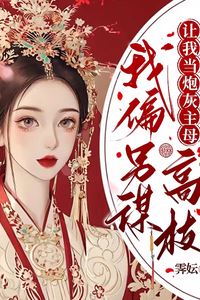
I Refuse to Be the Cannon Fodder Main Wife, I’d Rather Aim Higher
+Add to Custom List
Novel Info
  • Author:
  • 霁妘
  • Status:Ongoing

Summary

... Read More

Xu Qingyi, a thirty-five-year-old hotel manager, awakens on the floor of a bridal chamber wearing a crimson wedding gown. She realizes she has transmigrated into the body of the cannon fodder main wife in the novel she read the previous night, "The Charming Concubine's Rise." On the bed before her, her new husband, Xie Huaian, is engaged in an intimate act with her pregnant maidservant, Du Jinyun. Xu Qingyi recognizes the fatal trajectory of the original plot: as the neglected wife, she would eventually be defiled, forced to bear a bastard child, and die tragically during exile. Determined to escape this doom, she devises a plan to swap her marriage.

While Xie Huaian is distracted, Xu Qingyi escapes the chamber and confronts the family matriarch, the Old Madam. She publicly exposes her husband's infidelity and Du Jinyun's pregnancy, causing a scandal that shocks the Pingyang Marquis Estate. Xie Huaian, desperate to protect his concubine and the unborn heir, refuses to abandon her. Xu Qingyi seizes the moment and proposes a marriage swap: she will marry Xie Huaian's elder brother, Xie Yunzhi, the current heir apparent who has been in a vegetative coma for six months. Despite the absurdity and scandal, the Marquis agrees, seeing an opportunity to secure an heir for his beloved eldest son, and Xie Huaian is forced to accept the arrangement.

Xu Qingyi moves into Danhuai Courtyard, the residence of the comatose Xie Yunzhi. She is greeted by his four loyal attendants and learns that he has three adopted sons: the scholarly twelve-year-old Lin, the chubby eight-year-old Zhen, and the timid four-year-old Heng. Understanding that these children are key to her future security, she immediately takes charge of their upbringing, moving them into her courtyard and shielding them from the neglect they suffered under the care of Madam Qin, Xie Huaian's mother. She establishes a warm, nurturing environment, prioritizing the children's health and emotional well-being over rigid etiquette.

On their wedding night, Xu Qingyi consummates the marriage to ensure the birth of a legitimate heir, a act that solidifies her status within the family. The next day, she performs the tea ceremony with grace, earning the respect of the elders and the silent, simmering resentment of Xie Huaian. As she settles into her new role, she formulates a strategic plan to alter the novel's tragic ending. Her primary objectives are to keep Xie Yunzhi alive, prevent the Marquis family from siding with the losing political faction, and ensure the survival of the three adopted sons, who are destined to become powerful figures in the new dynasty.

Her efforts yield immediate results. While visiting the comatose Xie Yunzhi with young Heng, the boy's voice and touch seem to stir something within him. Xie Yunzhi, regaining fragments of consciousness, hears his son call him "Father" and struggles to wake from his six-month slumber. Xu Qingyi begins to manage the household with firmness and compassion, correcting the neglectful practices of the past. She confronts the servants who remain loyal to Madam Qin, asserting her authority and creating a loyal support system for herself and her new family. The story follows her transition from a desperate survivor to a matriarch determined to rewrite her fate, leveraging her modern knowledge and strategic mind to protect those she cares for while navigating the treacherous politics of the Marquis estate.

Latest Release
DateGroupRelease
2026-08-11shanghai fantasy c54
2026-08-11shanghai fantasy c53
2026-08-11shanghai fantasy c52
2026-08-11shanghai fantasy c51
2026-08-11shanghai fantasy c50
2026-08-11shanghai fantasy c49
2026-08-11shanghai fantasy c48
2026-08-11shanghai fantasy c47
2026-08-11shanghai fantasy c46
2026-08-11shanghai fantasy c45
2026-08-11shanghai fantasy c44
2026-08-11shanghai fantasy c43

Community Reviews

Rating(3.9 / 5.0, 34votes)
5 stars
11(32%)
4 stars
13(38%)
3 stars
6(18%)
2 stars
4(12%)
1 stars
0(0%)

Popular reviews

... Read More
There's something deeply symbolic about the toys in this text. A four-year-old who has never touched a toy. That's not just neglect—that's erasure. The children in this marquisate aren't being raised, they're being hidden away. Madam Qin's failure to provide toys is a metaphor for her failure to provide love, recognition, humanity. And Xu Qingyi's response—ordering custom-made toys, sending a nursemaid specifically to check the children's rooms and find nothing—this is about making the invisible visible. She's forcing the marquisate to LOOK at what's been happening. The bath scene with Heng is equally loaded. His desperate need to be clean, to smell nice, to be worthy of affection—this is the physical manifestation of emotional abuse. He's been told he's ugly, he's been neglected, and now he's trying to scrub away the evidence of his unworthiness. When Xu Qingyi praises him enthusiastically about the scented soap, she's not just being nice—she's reclaiming his body, his worth, his right to exist beautifully. Even the food for Lin carries symbolic weight. In a world where asking for help equals begging, Xu Qingyi's initiative to send food without being asked is a radical act. She's telling him: you don't need to beg to be cared for. The recurring theme here is clear—care as resistance. Every act of kindness in this text is also a political statement against the system that has been starving these children.
... Read More
Let me just talk about the Lin food scene for a moment because the author is a master of understatement. Lin is studying, focused on his book, and Liu arrives with this elaborate spread—summer cold appetizers, chilled mung bean soup, all carefully prepared. And his response? A curt "Mm." Doesn't even look up. The author doesn't need to explain his pride, his stubbornness, his entire history of suffering. It's all in that single syllable. Then the moment Liu leaves and Lin finally puts down his book and looks at the food—that's the scene. "He was momentarily dazed." Four words and I can feel his entire world shifting. Back in the Marchioness's quarters, this treatment was "unheard of." He wouldn't have dared ask for food even if starving, because asking would feel like begging. The contrast between the two households is so vivid. The main house where Zhen and Heng are covered in mud, playing freely, while Lin is in his study with barely any interaction. And yet Xu Qingyi is feeding both of them in different ways—food for Lin, attention and play for the boys. The detail about Dong Qing being "around ten years old and had grown up under Lin's influence, which had made her relatively composed for her age"—this is worldbuilding through character. We learn about the household dynamics just by observing the maid's reaction to the food.
... Read More
This section is a masterclass in pacing because the author does something really clever with information delivery. We start with the dinner scene — relatively contained, domestic tension, the Old Madam getting reamed for letting the kids go hungry. It's a solid opening beat. Then we cut to Lin walking to Danhuai Courtyard, and suddenly the scope widens. New setting, new perspective, and the author lets us breathe a bit. But then — BAM — Lin goes to see his father and drops the entire second uncle scandal like it's casual conversation. The wedding night drugging. The pregnant maid. The grandmother catching them red-handed. The great-grandmother swapping the bride. All of it comes out in one sitting, and the pacing is impeccable because Lin delivers it with such deadpan detachment. He's not dramatic about it. He's just... informing his comatose father. Which makes it somehow even more devastating. And the structure keeps pivoting. After the gossip explosion, we get Zhen's sweet moment at his father's bedside. Then Xu Qingyi's composed declaration. Then Zhen hugging her arm and declaring he won't leave her. The emotional whiplash is intentional — the author doesn't let us settle into one feeling before pulling the rug out. The chapter ends on this note of Xu Qingyi drawing toy designs in the study, which is such a quiet, domestic image after all that drama. It's the narrative equivalent of taking a breath. And it works because everything else has been so loud.
... Read More
The dialogue in these chapters is doing such specific character work that I want to highlight. Zhen's voice is probably my favorite - he's this eight-year-old who's already learned to shrink himself. His lines are full of hesitation: 'I... I took it from Father's room,' 'Mother, I'm just not made for studying,' 'Anyway, they've all given up on me.' Each sentence carries this weight of a kid who's internalized everyone else's disappointment. And then when Xu Qingyi tells him she won't give up on him, his response is just 'Mother, I understand' with 'his voice full of joy.' Simple. Perfect. Lin's dialogue is basically three words across the entire chapter: 'Big Brother,' 'Mother,' and '…' That silence is so telling. He's the aloof eldest, the one who sees this family gathering as obligation rather than warmth. The narrator even tells us his relationship with his brothers is 'one of mere responsibility.' His minimal speech says everything. And Xu Qingyi's voice is so distinct - she switches registers effortlessly. With Heng she's gentle and reassuring. With Zhen she's firm but warm, using this incredible line about meat that somehow communicates more than any serious speech could. With Xie Yunzhi's servants she's brisk and authoritative: 'Why are you two so fussy? Aren't you men?' But then with her actual husband she's treating him with 'the respect one would give to a superior.' That tonal shift between public duty and private distance is subtle but devastating. The Old Madam's single line - 'Isn't that all his own doing?' - is such a perfect cut. Two words of cold judgment that shut down the entire conversation about Huaian's marriage. And the Marquis's 'As long as you and Yunzhi are well, that's all that matters' sounds warm but has this underlying current of someone who's already moved past the second son. The dialogue here never wastes a word.
... Read More
I need to talk about how distinctly each character sounds because the author really nailed this. Lin is the standout. The boy is COLD. He says the absolute minimum: "Mm." "Let's go." "Father, I'm leaving. I'll come back to see you next time." Every word is measured, every response is cool. But then he goes and delivers the entire scandal about the second uncle in one sitting and Xu Qingyi's internal reaction — "If Xu Qingyi hadn't heard it with her own ears, she would never have believed that Lin could talk so much" — had me laughing out loud. Zhen is the complete opposite. His dialogue is all excitement and running and asking questions. "Mother, what you said earlier—was that true?" "Big Brother, let's go see Father!" "Father, I have a mother now." He's eight years old and fully committed to being eight years old. But the real gem is Xu Qingyi's voice. She's so... calm. So unflappable. When the Old Madam is yelling at Madam Qin, Xu Qingyi just picks up her chopsticks and keeps eating. Her declaration to Xie Yunzhi is perfectly composed: "Although marrying you was unexpected, and there were many twists and turns along the way, perhaps this is the way fate intended it." That's not just dialogue — that's a character statement. She's not emotional, she's not dramatic, she's just... done her job. The narrative voice itself has this dry, wry quality too. Things like "Xu Qingyi: '…' Wait, did everyone have to play this game?" — it's funny without being silly, observant without being mean.
... Read More
Okay so this whole carpenter subplot is actually genius plotting. On the surface, Xu Qingyi just wants toys made for the kids, right? But it's a trap. A beautiful, subtle trap. She sends the nursemaid to Mama Yulan specifically, knowing exactly what will happen. And it does—Mama Yulan reports to the Old Madam, and suddenly the Old Madam finds out that Young Master Heng has NEVER owned a single toy. That's it. That's the plot twist that cracks the whole marquisate open. The author is playing 4D chess here. Xu Qingyi isn't just being nice—she's using kindness as a weapon. Every generous act is also a political move. The fact that Du Jinyun takes Mama Chang without fully trusting her? That's a setup for future conflict. Du Jinyun thinks she's winning, but she's being manipulated. I love how the plot threads are weaving together—the Old Madam's guilt, Madam Qin's exposure, Du Jinyun's schemes—all triggered by one simple request for a carpenter. And then there's the Lin subplot. Sending him food, making sure it's not perfunctory... this isn't just kindness, it's building loyalty. The author is setting up multiple alliances simultaneously. This is tight plotting. No wasted scenes.
See all reviews

Characters

See all characters

Custom lists

See all custom Lists