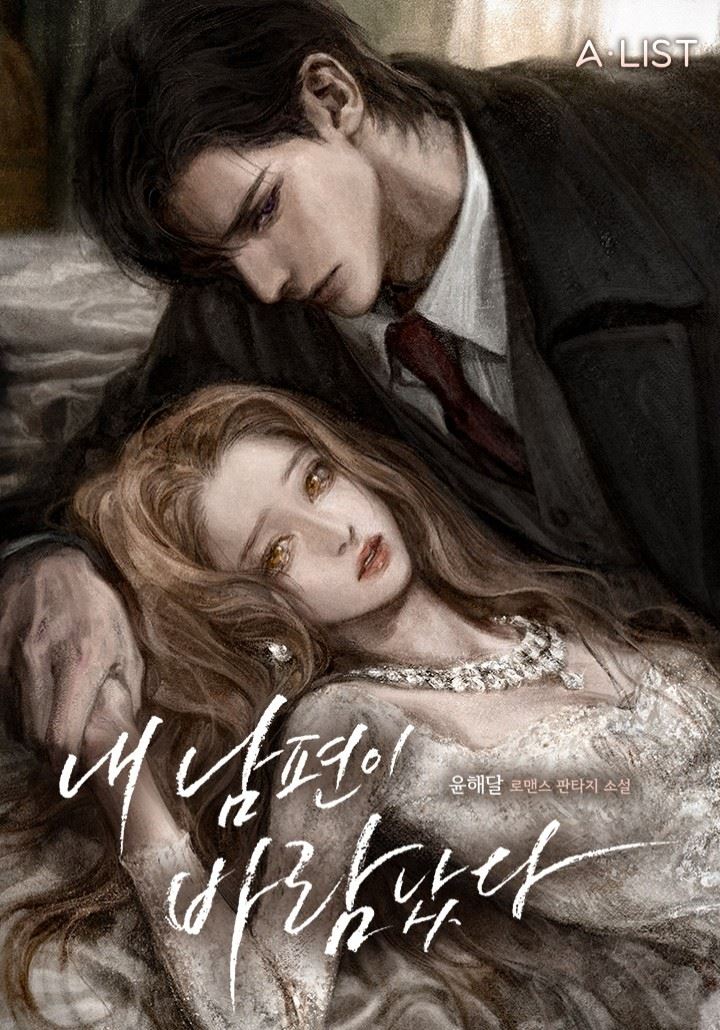
I Ran Away And Ended Up With A Husband
+Add to Custom List
Genres:
Novel Info
  • Author:
  • Status:Ongoing

Summary

... Read More

April Bright is the illegitimate daughter of Duke Bright, born from a union between the duke and a maidservant who was subsequently murdered by the duchess. Raised within the Bright ducal residence as a servant among family, April endures systemic abuse from her father, who views her solely as a financial asset, and her half-siblings, Wendy and Aaron, who treat her with contempt. The duchess resents April’s existence as a living reminder of the duke’s infidelity and her own lost status. April has secretly saved money for years, hoping to purchase her freedom and escape the capital. Her plans are shattered when her father announces that she has been selected to marry the Second Prince, Calsion Isper, a decision made by the Emperor to strengthen political alliances upon the prince’s return from the borders.

The Second Prince is a figure shrouded in dark rumors. Known for his military conquests and rumored ruthlessness, he has spent his youth away from the palace to escape the current Empress, Helena, who sought to assassinate him. Upon his return, the Emperor orders his marriage to April to secure the support of the Bright Duchy, one of the two most powerful ducal families in the Isper Empire. April, terrified of the Prince’s alleged cruelty and the dangerous court politics involving the Empress and the rival Princes, resolves to flee on the night of the announcement. She disguises herself as a maid and attempts to escape through the back door, carrying her savings and a sapphire brooch belonging to her sister Wendy, which she intends to sell for passage out of the empire.

While navigating the dangerous back alleys of the capital, April is ambushed by a thug. She is rescued by a man dressed entirely in black, who displays exceptional combat skills. During their brief interaction, April offers him the sapphire brooch as payment for his help. When her headscarf falls away, revealing her signature golden hair, the man identifies her as April Bright and correctly deduces she is attempting to run away. Instead of reporting her to the authorities, he intimidates her into returning to the mansion. This man is revealed to be Calsion himself, who had been monitoring the situation in disguise. He ensures she returns safely, realizing that a bride who defies an imperial decree possesses the strength he requires for his political ambitions.

Calsion arrives at the Bright residence earlier than scheduled, posing as the captain of the Second Prince’s knights to avoid public attention while he assesses the family’s loyalty and stability. He observes April’s mistreatment firsthand, including an incident where Wendy murders a wounded bird April had been nursing. When Wendy physically assaults April in retaliation, Calsion intervenes, threatening Wendy with death if she returns. This marks a shift in April’s dynamic with her family; she begins to assert herself, leveraging her upcoming status as Princess Consort to deter further abuse. However, the Duchess, enraged by the humiliation, hires an assassin to kill April in her bedroom. Calsion discovers the plot and kills the assassin, saving April’s life. He later confesses his true identity to her, revealing that he is the Second Prince.

Despite the trauma and the danger, April agrees to proceed with the marriage, viewing it as her ticket out of the Bright household and her path to eventual divorce and independence. She understands that the Emperor’s order is absolute and that refusal would result in death. On the wedding day, Calsion arrives late, apologizing with a casual demeanor that contrasts sharply with the gravity of the situation. As they walk down the aisle, he reveals that he recognized her from their encounter in the alley and had intended to surprise her. The ceremony is small and stark, devoid of the extravagance typical of royal weddings. April signs the marriage certificate, formally entering the imperial family, while Calsion maintains a calculated composure. The union is established not on affection, but on mutual necessity: April seeks freedom from her abusive family, and Calsion requires a loyal consort to secure his position against the Empress’s faction in the succession struggle.

Latest Release
DateGroupRelease
2026-10-03dusk blossoms c122
2026-10-03dusk blossoms c121
2026-10-03dusk blossoms c120
2026-10-03dusk blossoms c119
2026-10-03dusk blossoms c118
2026-10-03dusk blossoms c117
2026-10-03dusk blossoms c116
2026-10-03dusk blossoms c115
2026-10-03dusk blossoms c114
2026-10-03dusk blossoms c113
2026-10-03dusk blossoms c112
2026-10-03dusk blossoms c111

Community Reviews

Rating(0 / 5.0, 31votes)
5 stars
0(0%)
4 stars
0(0%)
3 stars
0(0%)
2 stars
0(0%)
1 stars
0(0%)

Popular reviews

... Read More
Okay so the Duke Bright situation is genuinely brilliant plotting. The man played the LONG game—pretending to offer his legitimate eldest daughter to the Second Prince while secretly hedging his bets with the Third Prince. Classic noble politics. But what I love is how Calsion flipped it around instead of just seething. The dowry scene? Three thousand gold coins. He tells April directly that he's giving it to HER because he resents what the Duke did. This is such a layered move—punishing the Duke, investing in April, and signaling to everyone watching that he won't be played. Also the whole detail about the emperor pressuring noble families for the Third Prince's marriage? The Duke used that as an excuse too. Everything connects. No loose threads. And then Barbara showing up out of nowhere? At first I thought it was just worldbuilding, but no—it sets up the empress rivalry AND gives April someone who actually understands palace survival. This story doesn't waste a single element.
... Read More
I cannot stop thinking about this exchange. Let me just lay it out because it's comedy gold wrapped in tension: April, trying to be polite after he literally saves her life: "May I know your name and where you live...?" His response: "Why? So you can climb into my bed if I tell you?" April's internal screaming: "What kind of crude language was that?" But here's what's brilliant — and I say this as someone who appreciates sharp dialogue — EVERY character has a DISTINCT voice. The duke speaks in formal, cutting pronouncements. "Consider it an honor. It's none other than the Second Prince." He's performative even when being cruel. April's inner monologue is snarky, observant, wildly informal compared to her exterior politeness. She's doing the noble daughter act while internally roasting everyone. "Tch! How petty." After saying it so he'd hear it? Chef's kiss. And Calsion? His dialogue is minimal but EACH WORD lands. He doesn't waste syllables. When he says "I can hear you, you know" — deadpan, right after she mutters about him talking down to her — it's perfectly calibrated. Flirty? Threatening? Both? The ambiguity is delicious. The author knows exactly how to make dialogue do double duty — advancing plot AND revealing character simultaneously.
... Read More
Can we talk about that moment when April's hair turns silver? I literally gasped. Not because of the magic system, but because of what it cost her. Think about it: she's been playing small, hiding her power to avoid becoming a commodity for the duke's house. She's terrified of being "offered" to the temple, of having her life stripped away for family gain. And then here she is, in the second prince's palace, watching him bleed out, and she just... lets go. No hesitation. She pours out divine power like it's nothing, ignoring the physical toll, because saving him matters more than keeping her secret. The emotional shift is so sharp. Earlier, she's almost cheerful about their contract marriage—"ideal married life," no clinging, just freedom and money. But when Calsion takes that sword, her entire calculus collapses. Her first thought isn't love; it's panic. "If this man dies here, what will happen to me?" And yet, she saves him anyway. That contradiction is everything. She's not some rom-com heroine pining away; she's a survivor who calculates risk and then chooses, in a split second, to bet on someone else's life over her own safety. And Jarenne covering her head with a curtain? That quiet act of loyalty, realizing April's secret without saying a word—it added this whole layer of unspoken connection. By the time April wakes up to find her hair silver again, the reader feels this mix of awe and dread. She's gained power but lost anonymity. Her emotional journey in these chapters went from guarded neutrality to explosive, selfless action, and it left me emotionally wrecked in the best way.
... Read More
There's so much going on beneath the surface of this text and I want to unpack at least a few things. The handkerchief. "April Snow" embroidered like a rose. A rose—symbol of beauty, but also of thorns, of something precious that can draw blood. April herself is this delicate-looking noblewoman who runs away from imperial marriages and fights her sisters for respect. She's the rose. And Calsion carries her handkerchief in his pocket like a trophy or a talisman. That imagery stayed with me. Then there's the sword. Calsion drawing it during the duke meeting isn't just intimidation—it's a symbol of everything he is. A weapon forged by war, returned to a court that fears him. The duke's face reflected in the blade is perfect visual storytelling: the aristocracy literally seeing themselves through the eyes of the military powerhouse they've been ignoring. And later, Calsion pretending to be a knight captain while actually being the prince himself? That's the whole theme right there—identity as performance, power as something you reveal or conceal strategically. But the deepest symbolism for me is the ghost of the dead empress. Calsion's mother. Helena killed her—or so the rumors say. The current empress tried to kill young Calsion. He fled to the battlefield to survive. And now the emperor is forcing him into marriage as a way to neutralize him, to bind him to the court instead of letting him return to war. The empire is built on the bones of women—Calsion's mother died in suspicion and betrayal, and now April is being offered up as a political tool just like everyone before her. The marriage isn't romance. It's captivity with a wedding dress. And yet...
... Read More
"April Bright." Just two words. Two simple syllables. And yet the entire energy of that scene SHIFTS when he says them. Think about it — up until that point, he's been this looming mysterious figure in black, handling the thug with terrifying ease, speaking in commands. Then her handkerchief falls, her golden hair spills out, and he just... knows her name. Not "who are you?" Not "what's your name?" He drops it like he's been watching her. Like he already knows EVERYTHING about her. That's such a power move and also genuinely unsettling. It changes the entire dynamic from stranger-to-stranger to something way more loaded. And April's reaction? She doesn't faint or scream. She CALCULATES. She weighs her options, realizes going back to the duke is a death sentence of a different kind, and then does the most April thing possible — she gets SASSY. "You'll regret this, you know." Stealing back her brooch while glaring at a man who could literally have her killed. The audacity. I love her. Calsion's internal monologue afterward is equally fascinating. He's weighing whether she's an asset or a liability. Whether her family's treacherous nature makes her dangerous. And his conclusion is both pragmatic and chilling. He sees her fire and... likes it? Wants her as a consort not despite her spirit but BECAUSE of it? That's a relationship dynamic I am HERE FOR.
... Read More
This book knows how to set a scene and I'm here for it. Let me start with Calsion visiting the duke—like, the imagery in that entire meeting? The duke is sitting there trying to play host while Calsion barely touches his tea, legs crossed, back straight, radiating authority without saying much. And then he draws his sword. Just slowly pulls it out and watches his own reflection in the blade while talking to the duke. The duke sees his own face on that sharp metal surface and flinches. I literally got chills. That's not just a threat—that's cinema. The author doesn't need to describe a single ominous detail because the sword reflection does all the work. But then you have April's corridor scene—the darkness of the Bright Ducal residence, the empty hallways, her tiptoeing back like a thief in her own home. The contrast between these two worlds is everything. One is all cold authority and political calculation; the other is stifling wealth where a young woman escapes through back doors because she has no other option. And don't even get me started on the palace banquet gossip scene. Noble ladies whispering about the second prince's supposed ugliness and scars, the countess fanning herself while dropping rumors like bombs. The whole atmosphere of the capital shifting on gossip alone—words passing from mouth to mouth until Calsion becomes this monstrous figure nobody wants near their daughters. The world feels so lived-in, so politically suffocating, and every setting tells you exactly where the power lies.
See all reviews

Custom lists

See all custom Lists