I Picked Up An Ancient Transmigration Killer To Be A Wife - Reviews

I Picked Up An Ancient Transmigration Killer To Be A Wife
+Add to Custom List
Sort
Add review
... Read More
I literally screamed when Guo Ming twisted that guy's wrist. One second she's the polite girl sending champagne back, the next she's dropping bodies like it's nothing. And the way the author handles this reveal is so smooth — instead of just exploding into action, it's gradual. First the toast, then the sneer, then 'Is the beautiful woman not giving me face?' and you KNOW something bad is coming. The tension builds so naturally. But what really got me is how the aftermath shifts the entire tone. Instead of lingering on the fight, we cut straight to Wu Yuanyuan's shocked face and this humble-brag conversation about 'Pang family swordsmanship.' It's funny AND it tells us everything we need to know about these characters. Then BAM — the transmigrator reveal. Not even addressed directly, just dropped in like 'over here, getting married and living a life together is not just about character!' Two people who have been hiding this whole time finally let it slip casually while folding clothes. That's how real people talk when they're tired and half-asleep. The plot doesn't shout its twists, it whispers them.
... Read More
'Ah pretty sister~~~' I want to talk about how this entire scene is set up like a theater production and everyone knows their role except maybe Zeng Miaomiao herself. The hospital room becomes this tiny stage where Guo Ming is the prize, Wu Yuanyuan is the worried partner trying not to cry, and Zeng Miaomiao is... well, she doesn't even know her own part. She's just performing because that's what she's always done. The details matter here. The bowl of hot porridge. The fruit fork. The tablet that's 'not good-looking.' These small objects anchor the scene in physical reality while the emotional dynamics play out above them. You can literally see Wu Yuanyuan sitting aside, scrolling through her phone, pretending not to watch while absolutely watching everything. But the most interesting worldbuilding element is the contrast between this sterile hospital environment and the lush, almost fever-dream interiority of the narration. The narrator goes off on these tangents about youth and sexuality and attraction that have nothing to do with the hospital room but somehow make it feel more intense. Like the walls are closing in not because of the physical space but because of all these thoughts pressing against the characters' minds. And that ending - the nurse leaving, just the two of them left, Guo Ming saying 'Baby, the phone is definitely not as good looking as me, come and look at me!' - it creates this bubble of intimacy in what should be a public, clinical space. The hospital room transforms from a place of healing into a place where love is being tested and repaired in real time.
... Read More
The chapter structure here is interesting because it does this weird double landing. First you get the big dramatic beat—Guo Ming wakes up after internal organ bleeding, massive relief, everybody's crying and bringing chickens to the balcony like it's some village festival. That's the emotional climax. Then instead of riding that high, the author immediately pivots to... Zeng Miaomiao showing off her healed legs and asking to peel an apple. It's almost comically mundane after the near-death stuff, and I think that's deliberate. The tension doesn't come from whether Guo Ming survives (we know she does), it comes from the tiny social earthquake that follows. And then it drops again when Guo Ming and Wu Yuanyuan have that one soft baby-act moment, only to get crushed the next day when Miaomiao returns with a tablet. The pacing is basically: big drama → small drama → tiny drama → tiny drama again. It's not dragging, but it does feel like the author is saving the real conflict for when the stakes feel smallest, which is kind of genius actually.
... Read More
Okay can we just talk about how deeply human Guo Ming is in this chapter? Everything about her character comes through in the smallest moments. She packs her suitcase full of gifts instead of her own clothes—that single detail tells you everything about her loneliness and her fierce desire to belong. When she says to the parents, "I have had no parents since I was a child. This is the first time I get to celebrate the Chinese New Year at home"—I actually had to pause and stare at the ceiling. That line destroyed me because it's so understated. She doesn't beg for acceptance or act dramatic. She just states a fact, and the weight of it crushes you. And then the scene in the kitchen where she kisses Wu Yuanyuan secretly and gets that blushing "Be good~!" response—what a shift from the heavy stuff. Their dynamic is so tender. The way Wu Yuanyuan immediately becomes protective, insisting on taking her mom for a scan, showing her around the city—that's love expressed through action, not words. Meanwhile, Father Wu and Mother Wu are painting this picture of what a warm family actually looks like, and Guo Ming is just... absorbing it all like someone who's been starving. I keep thinking about whether Guo Ming's internal monologue where she thinks "I am best at using poison, but I don't want to talk about it" reveals something darker about her past. The contrast between her medical skill and her secret expertise in poison—it makes me wonder what kind of person she was before meeting Wu Yuanyuan.
... Read More
Okay so this chapter starts with the team prepping for the mission and I am already invested. Getting bulletproof vests and weapons is cool, but then Pang Deyou pulls out this massive knife—like one foot long, half a foot wide—and starts showing off his moves in this empty hall? I literally laughed. The guy just chops through flower pots and support frames like they are nothing. Sun Zhicheng's reaction? 'Brother Pang is really an expert!' while his house gets destroyed. That contrast between his polite 'it's fine' smile and the chaos unfolding is peak comedy. Then Guo Ming can't wear the suit because she has nowhere to put her weapons. 'Just wear a white coat over it'—this is the kind of practical problem solving that makes me love these characters. The transition to the banquet scene is smooth too. From gear check to luxury hotel parking lot full of black cars and bodyguards who look like they could fight. And then the metal detector scene! Guo Ming gets cleared because she only has acupuncture needles and moxibustion medicine. Sun Zhicheng's internal monologue about whether she plans to 'poison the bad guys' is gold. This author knows how to balance tension with humor perfectly.
... Read More
Okay so here's the thing — this chapter does something I rarely see pull off. It has TWO complete narrative arcs in one sitting and neither one gets railroadled. The first half is the healing scene. It starts slow, almost clinical. Doctor Guo lays out the timeline — a month to heal, six months for meridians. You get the sense of dread building because she immediately follows it with 'this is going to hurt.' And then the pain hits and it doesn't let up for thirty minutes of reading time. Every needle insertion is a beat. Every drop of sweat is a comma. The pacing here is agonizingly deliberate, and that's the point — you're supposed to feel every second of those forty minutes. Then Chapter 38 basically kicks the door down. One paragraph break and we're at a police station. The tempo doubles. Information gets dumped at us — Tomorrow Group, twenty-four arrests, a burglar with a grudge, a heist planned for end of month, drug dealers from another province tying into food factory samples. It's a lot, but the author trusts you to keep up because the energy is propulsive. And then the sparring request? Chef's kiss. After all that exposition, we get action. Captain Chen wants to test them and gets absolutely dismantled in three moves. It's a relief valve — the chapter exhales. But my only complaint? The transition between the two halves is almost too clean. One scene ends with a medical explanation about Qi and the next opens with 'It was already afternoon.' I kind of wish there'd been a breath between them, a moment where the reader could process what just happened before being yanked into conspiracy territory. Still, I can't say I minded staying up late to finish it.
... Read More
I have to talk about how the author structures this chapter because it's doing some real work. You start with Pang Deyou's proposal planning—completely lighthearted, funny even—with the cake ring incident and the Ferris wheel vomiting fear. Pure wholesome energy. Then it pivots HARD into Wu Yuanyuan and Guo Ming's internal monologue about why their love isn't blessed. The tonal whiplash is intentional, I think. The engagement invitation arriving less than a week later is like the universe saying "here's their happy moment, deal with it." The pacing is interesting because the main plot thread isn't really advancing in a traditional sense. There's no big twist, no cliffhanger. What's happening is emotional architecture—building the contrast between two couples at different stages of the same journey. Pang Deyou gets to kneel with a ring publicly. Wu Yuanyuan gets to try on dresses with her partner and think about whether she'll ever tell her family. "This seems to be the biggest problem they face. What they experienced was a love that was destined not to be blessed." This line sits in the middle of the chapter like a stone in a stream, redirecting everything that comes after it.
... Read More
This batch has some of the tightest pacing I've seen in a while. Let me trace the rhythm: It opens with Guo Ming's internal monologue about financial constraints and Tianrong Country — a quick worldbuilding beat that grounds us, then immediately pivots to the dinner invitation. That pivot is crucial. The author could have spent two more paragraphs on Guo Ming's economics, but instead she lets the dialogue do the work: 'Guo Ming, there is no need to pick me up tonight.' Four words and we already know Yuanyuan is avoiding something. Then the restaurant scene itself — slow burn. The author stretches out every moment: the handshake, the stare, the eating, the waiter's fear. You can feel the seconds ticking by. And just when you think it might drag... BAM — the cinema scene, and the pace PICKS UP. The ticket swap, the popcorn feeding, the finger in the mouth, the heavy breathing, the 'naughty!' — all of this happens in what feels like three paragraphs. It's breathless. Then — and this is the masterstroke — it cuts to Yuanyuan waking up from a dream. The transition from 'Ah~~~ there~~~ Don't~~~~' to 'Suddenly she woke up' is jarring in the BEST way. It's like the reader gasps with her. The dream doesn't fade gently; it CRASHES into reality, and that shock is exactly what the narrative needs before we enter Yuanyuan's long reflective monologue. And then the review-of-past-weeks sequence — this is where the pacing deliberately SLOWS down. Each memory hits like a small hammer: first meeting, daily commutes, the rescue, the short hair, the hand-holding. The author lists these like beads on a string, and by the fifth or sixth one, you're not just watching Yuanyuan have a realization — you're experiencing it with her. The final thought — 'find a chance to test her!' — lands like a drumbeat. Cliffhanger energy without being cheap. What I love most is how the batch moves from EXTERNAL tension (the restaurant awkwardness) to INTIMATE tension (the cinema touching) to PSYCHOLOGICAL tension (the dream and self-questioning). Each act raises the stakes without raising the volume. The story doesn't need shouting to be thrilling.
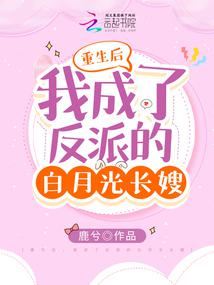
... Read More
Okay, can we just talk about ONE scene because I'm still recovering? When Guo Ming hears that breathing outside the door at 4pm — I literally sat up. The author describes her rising instantly and using both hands and feet to conceal herself on the ceiling in a room WITHOUT BEAMS. Just... hanging there like a spider. That detail is everything. It's not just action, it's worldbuilding through body mechanics. She's trained since childhood, right? That's how we know. But the ceiling thing — no beams to grab onto — she's just scaling drywall with bare hands? That's hardcore. And then the transition from that terrifying quiet scene to the next morning when Zhang Qiang is yelling about parkour videos? The contrast hit me so hard. One moment: cold needle to eyeball, suppressed breathing, assassination attempts. Next morning: foam on Wu Yuanyuan's face, someone watching street fight TikToks. It's jarring in the best way. Like the world didn't pause just because danger showed up at Guo Ming's door. The ordinary world keeps spinning, and that's kind of beautiful, isn't it? I also want to mention the bathtub medicine scene. Zhang Qiang is soaking in some boiling potion that Guo Ming prepared, while Guo Ming sleeps on the sofa. The image of this ancient-looking martial artist in a modern apartment, brewing strange herbal concoctions and having people bathe in them — it paints such a weird, cozy, almost domestic atmosphere around something that's clearly supernatural. I love when the extraordinary just sits quietly inside a normal Beijing apartment.
... Read More
Okay so let me just say this chapter does something I didn't expect — it starts with this almost slice-of-life moment between Guo Ming and Wu Yuanyuan, talking about opening a medical clinic, and then BAM cuts to a full-blown emergency. The tonal whiplash is real and honestly? It works. That opening scene about the clinic gives you this warm, domestic feeling and then immediately shatters it with Zhang Renyi choking up on the phone. It makes the stakes feel even more visceral because you just had a taste of normalcy. The plot structure here is interesting — it's essentially a rescue narrative compressed into a handful of chapters. Guo Ming gets called in, assesses the situation, makes a decision that goes against the grain (skipping hospital protocol entirely), and holds the line while everyone else panics. What I loved was the pacing: the author doesn't linger on explanations. We get the essentials — burned leader, poisonous smoke, organ failure — and then we're immediately in the ICU with her. No filler. The prescription detail with the poisonous ingredients was a nice touch too, showing that her approach is unorthodox but calculated, not reckless.
... Read More
The silver needle scene is doing so much thematic work. Guo Ming uses an acupuncture needle—a tool for healing—to demonstrate lethal precision. That contradiction is the whole story right there. These people are capable of both care and violence, and the line between them is thinner than a needle thread. She doesn't harm the guy; she just pins a piece of tobacco to wood. A warning, not an attack. The message is clear: I could have hurt you, but I chose not to. Then there's the smoke in the conference room, physically obscuring faces, making people unreadable. Everyone is hiding something—undercover officers pretending to be students, skilled operatives in T-shirts and hiking pants, drug suspects with 'clean' fronts. Nobody is what they appear. The Hongyun Food Factory itself is a symbol of this duality: a 43-year-old canned seafood company that went online, producing 'internet celebrity products' while secretly moving drugs. The ordinary masks the extraordinary. Pang Deyou wanting a chopper that's comically oversized is also symbolic in its own way—he embodies the idea that true power doesn't need to look the part. His actual knife from Factory 208 is probably far more effective than a hundred-catty butcher blade. The story keeps reminding us: appearance deceives, readiness matters, and the quietest person in the room is the one you should fear most.
... Read More
'Do you remember Jiang Jiu, the person you arrested in country M?' Half a month ago, the assailant whose jaw was broken was handed over to us... As far as we know, the assailants were from the same group of people who instructed Jiang Jiu.' This is where the stakes suddenly escalate from personal danger to something much bigger. The attack on the engagement banquet wasn't random—it was targeted, connected to operations Guo Ming was involved in. The bad guys aren't just lurking somewhere; they're organized, they have hierarchy, and they're willing to send armed men to kill people at a celebratory gathering. What's terrifying is the implication that if the assassins were already planning something this elaborate, what else is in motion? Captain He getting personally involved, the fact that the arrested assailant only started talking when confronted with Jiang Jiu's photo—it all suggests this network is deeper and more dangerous than anyone realized. The personal stakes (Wu Yuanyuan's life, Guo Ming's guilt) are now tangled with professional stakes (an ongoing investigation, potentially dangerous criminal organizations). The tension here isn't just about whether someone will get hurt next—it's about how big this web really is and whether Guo Ming can protect the people she loves while taking down the whole thing.

Leave a comment

You must be logged in to leave comments. or
